Temperature has a very strong effect on insulation resistance: as the winding warms up, resistance falls, and as it cools, resistance rises. Roughly, the reading halves for every 10 °C rise; that is why comparing two measurements taken at different temperatures without correcting them to the same reference temperature leads to the wrong decision.
Why does insulation resistance fall when the winding warms up?
The small leakage current flowing through and across the insulation material passes more easily as temperature rises; in other words, the material behaves as a better conductor when it is warm.
Varnish, slot insulation and wire enamel are all polymers, and since the number of free charge carriers in these materials grows exponentially rather than linearly with temperature, even a few degrees make a visible difference on the display. The thin film of moisture and dirt on the surface also changes its conductivity with heat. As a result, the megohm value the megger shows can differ widely even on the same winding, cold in the morning and hot at the end of a shift.
On site this means: a high value on a cold motor should not reassure you, and a low value on a hot motor is not, on its own, a reason for alarm. First, the temperature at which the measurement was taken must be written down. A megohm value without its temperature is half the information.
How is the halving-every-10 °C rule applied?
The measured resistance is converted to the reference temperature by multiplying it by a temperature correction factor; the common field approach takes 40 °C as reference, and the value changes by a factor of two for every 10 °C difference.
R40 = RT × 0.5(40 − T) / 10
In the formula RT is the resistance read at temperature T. If the winding is below 40 °C the factor is less than 1 and the reading is pulled down; if it is above, the factor is greater than 1 and the value is corrected upwards.
This rule, found in guides such as IEEE 43, is an approach widely used in the field. The real factor depends on the insulation system and moisture; in some windings the doubling happens over a wider range than 10 °C. If you have records of the same motor at different temperatures, deriving your own curve gives a more accurate result than the general rule (general information; confirm with the instrument manufacturer's instructions).
Hypothetical calculation: the same motor measured in the morning and in the afternoon
Suppose the winding of an 18.5 kW motor reads 2000 MΩ at 15 °C in the morning. The same day, right after the motor is stopped and the winding is at 55 °C, a second measurement shows 280 MΩ.
Corrected to 40 °C, the first reading becomes: 2000 × 0.52.5 ≈ 2000 × 0.177 ≈ 354 MΩ. The second: 280 × 0.5−1.5 ≈ 280 × 2.83 ≈ 792 MΩ.
Someone looking at the raw values would think the insulation dropped to a seventh during the day. They would be wrong. Most of the gap between the two results comes from temperature, and the remaining deviation is a sign of moisture collected on the winding in the morning. In a plant with overnight condensation, a cold winding reading lower than expected is a familiar picture.
The numbers in the example are hypothetical. The method stays the same: record the temperature first, then bring the value to the reference, and only after that put it side by side with older records.
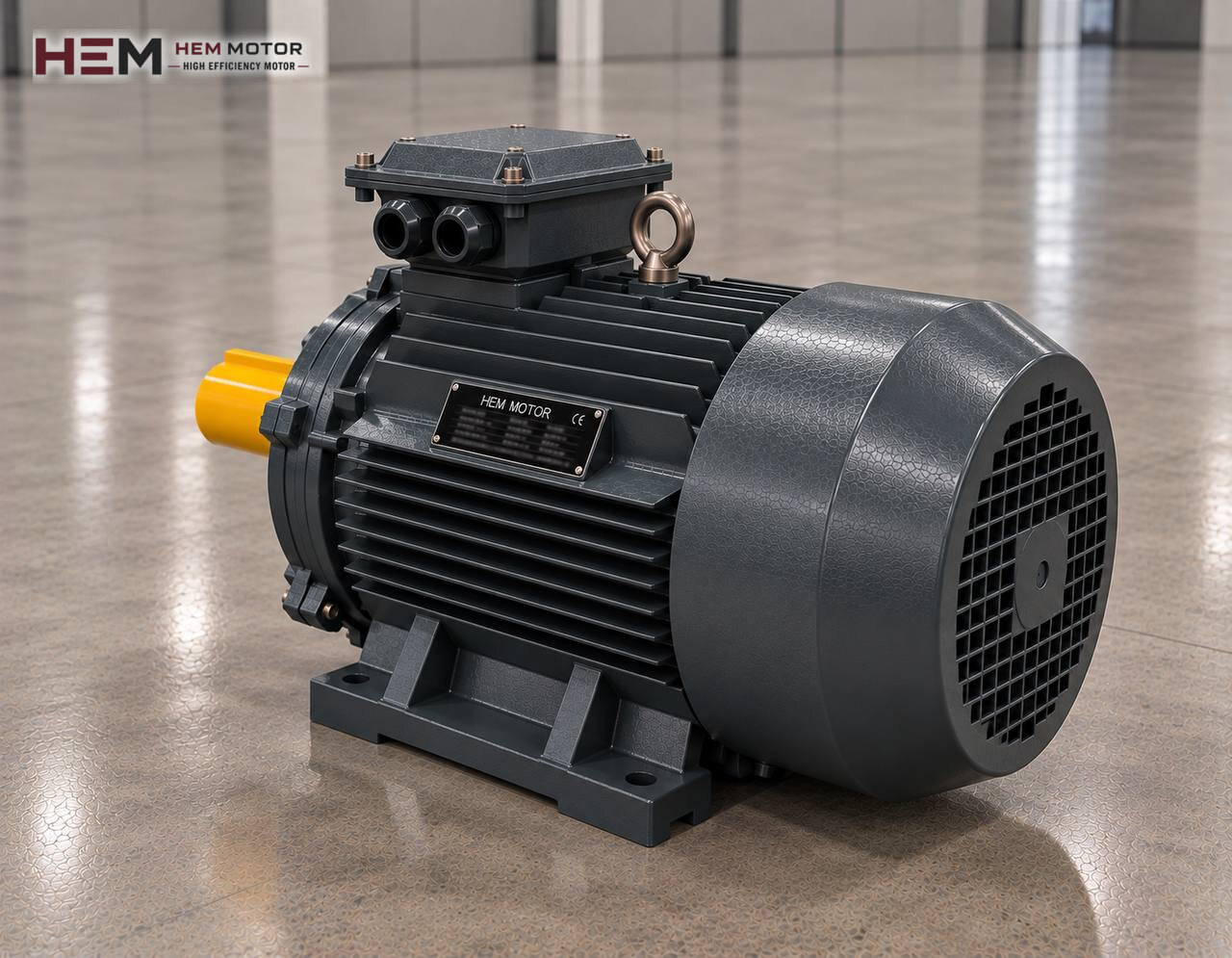
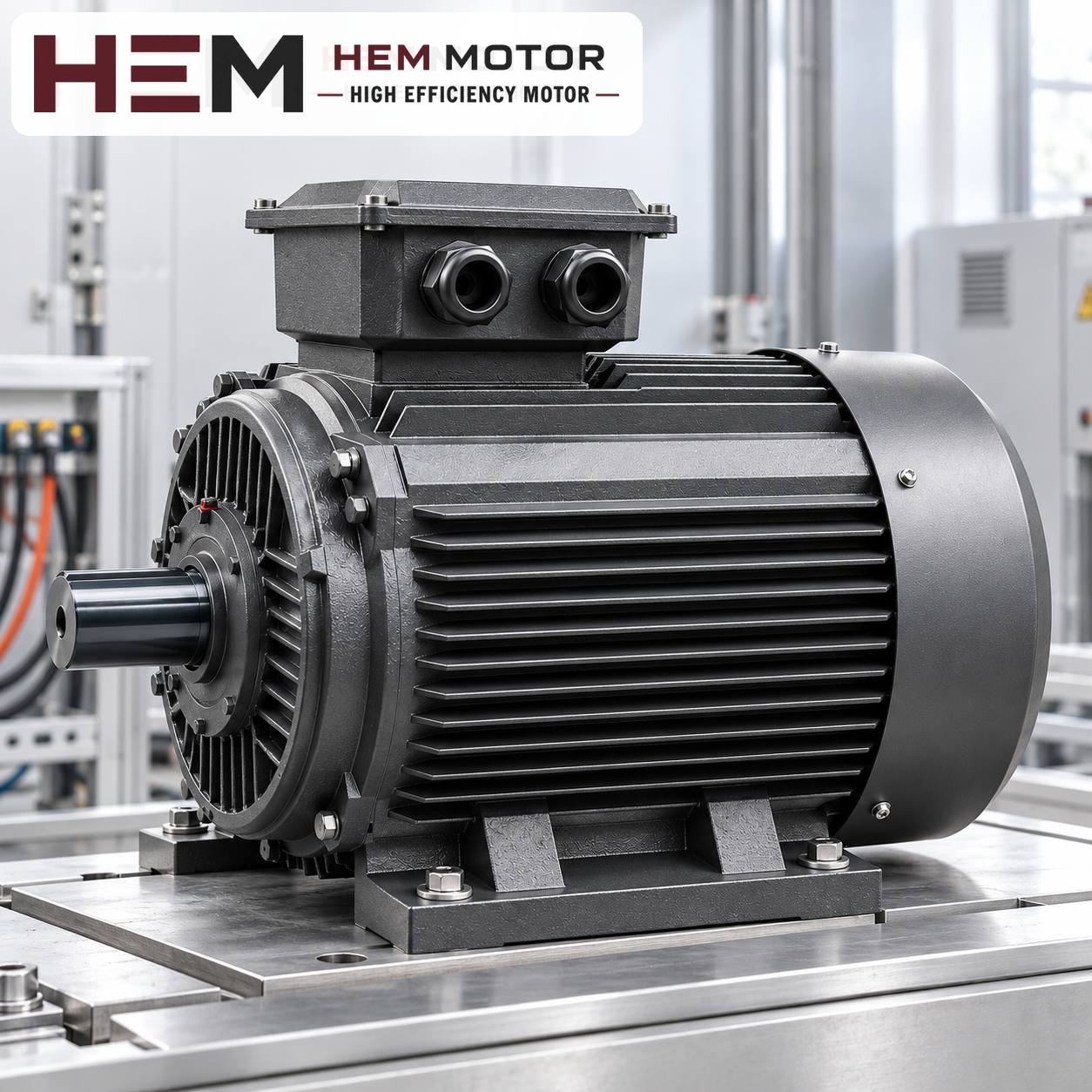
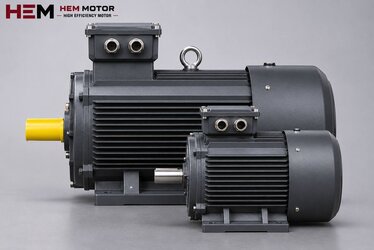
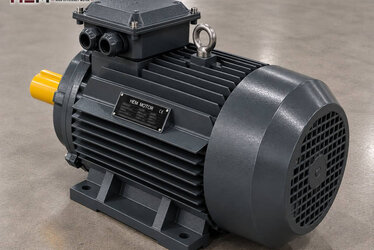
Unless winding temperature is written next to the insulation reading, the value cannot be compared with another measurement (representative image).
How is winding temperature measured on site?
The most reliable method is to calculate temperature from winding resistance; in practice, frame temperature gives a good enough approximation if the motor has been stopped for a long time.
If the motor has been standing for hours, winding, frame and surroundings have reached the same temperature. The job is easy. Pointing an infrared thermometer at a fin-free spot on the frame, or placing a contact thermometer there, is enough. On a motor that has just stopped, however, the frame cools faster than the winding; the reading taken outside shows the winding colder than it really is.
A more accurate way is to work from the resistance of the copper winding. Resistance between two phase terminals is measured with a micro-ohmmeter and compared with the cold reference value:
Thot = (Rhot / Rcold) × (235 + Tcold) − 235
The figure 235 is the constant for copper. If the winding has PTC or PT100 sensors, the job is even easier; a PT100 gives temperature directly. These sensors are an order option on HEM motors; confirm with the order whether they are included.
Prices and technical data are on the product pages; choose a model and order online.
Stop the motor, isolate and lock off the supply, disconnect the cable ends from the motor terminals. If a drive or capacitor is connected, always remove it.
Note the winding temperature and ambient humidity.
Select a test voltage suited to the winding's rated voltage; for 400 V and 690 V windings the 500 V or 1000 V DC range is usually used.
Short the three phases together and measure against the frame; read the value at the 1st and the 10th minute.
After the measurement, discharge the winding by earthing it for at least as long as the test lasted.
Correct the reading to 40 °C and enter it in the logbook.
The ratio of the 10-minute value to the 1-minute value is the polarisation index (PI). PI is far less affected by temperature than the raw value, because both readings are taken at the same temperature. When the raw megohm value looks doubtful because of temperature, checking the PI helps separate insulation that is truly damp from insulation that is merely warm.
Which mistakes make the measurement misleading?
The most common mistake is comparing a value taken on a hot motor directly with an old record taken cold. Forgetting to discharge after measuring and measuring with the cable still connected come next.
If the measurement is taken with the cable connected to the motor, the reading also includes the cable insulation, and especially with a cable running tens of metres from the panel to the motor and left damp inside a duct, that contribution can be large enough to overshadow the winding's own value. Dust and moisture in the terminal box create surface leakage too. Measuring without wiping the terminals with a dry cloth makes a problem appear that is not in the winding.
Condensation is a separate trap. Dew forms on the winding of a motor brought from a cold store into a warm workshop, and the first reading comes out low. Details for spare motors kept on the shelf for a long time are in the spare motor storage article. In such a case, leave the motor at room temperature for a few hours and measure again. In permanently humid environments an anti-condensation heater is an order option; the models for which you can request it are sorted by frame on the electric motor sales page.
When does a measurement result call for replacing the motor?
If the corrected value keeps falling compared with earlier records, if PI is low, or if the value does not recover after drying, the winding has aged seriously. At that stage, evaluating the winding at a rewind shop or replacing the motor is discussed.
The decision is not made from a single measurement; the motor's age and the cost of downtime also count. If replacement is needed, cast iron models with class F insulation and IP55 protection are a good starting point: 100L2-4 (3 kW, 6.02 A), 180M-4 (18.5 kW, 33.5 A) and 225M-4 (45 kW, 80.2 A). All power steps are listed in the electric motor shop, and the family page is under asynchronous electric motors.
Take an insulation reading before commissioning the new motor as well, and keep this first value together with its temperature; all later measurements are interpreted against it. If you share your measurement records and a photo of the motor nameplate through our contact page, we will determine a suitable replacement model together. You can compare the options by frame and power on the HEM Motor product page.
Frequently Asked Questions
Should insulation be measured with the motor hot or cold?
Either works, as long as winding temperature is recorded and the value is corrected to the same reference temperature. For trend tracking, measuring under similar conditions each time is the soundest approach.
Is the polarisation index affected by temperature?
Much less than raw resistance, because both readings are taken at the same temperature. Still, if the winding cools quickly during the test, PI can drift too.
What should be done if a new motor shows a low insulation value?
First make sure the terminals are clean and dry and the cable is disconnected. If the motor came from a cold store, leave it at room temperature and measure again; if the value is still low, let us know with a nameplate photo.
Does the 10 °C rule apply to every motor?
It is a handy field approximation, not a strict law. Once records of the same motor at different temperatures accumulate, deriving your own factor gives a more accurate result.
HEM Motor Models Related to This Article
The cards show example models related to the topic. A suitable motor is not chosen by power alone: compare speed, voltage, mounting, shaft and connection dimensions on the product page; if unsure, send a photo of the existing motor’s nameplate on WhatsApp.
Checking that electric motor pulleys lie in the same plane means seeing whether the side faces of both pulleys meet on one straight line. In practice a taut string, a steel straigh... More Details
If an electric motor's coupling element fails often, the first thing to investigate is shaft misalignment, followed by coupling selection, starting and shock loads, environmental e... More Details
The quickest way to tell foundation looseness from unbalance in electric motor vibration is to loosen the foot bolts one at a time while measuring and watch the change, and to comp... More Details
When building a sound enclosure around an electric motor, cooling is preserved by giving the enclosure a labyrinth or silenced inlet large enough for the air the motor fan draws, p... More Details
In an electric motor running in a hot environment, winding and bearing temperatures are monitored separately because they heat up from different sources, have different limits and ... More Details
When an electric motor is started for the first time at sub-zero temperatures, three things need checking: winding insulation resistance and any moisture or ice inside, bearing gre... More Details
We use necessary and optional cookies to improve your experience, enhance content and analyse traffic. Under the GDPR, optional (analytics/marketing) cookies are only used with your explicit consent. Please choose your preference below.
Cookie Policy
 English
 Français
 Türkçe
 Español
 Русский
 العربية
 Deutsch
 Italiano