English
 Français
 Türkçe
 Español
 Русский
 العربية
 Deutsch
 Italiano

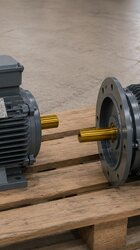
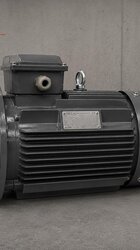
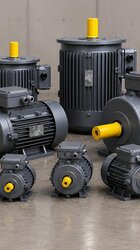
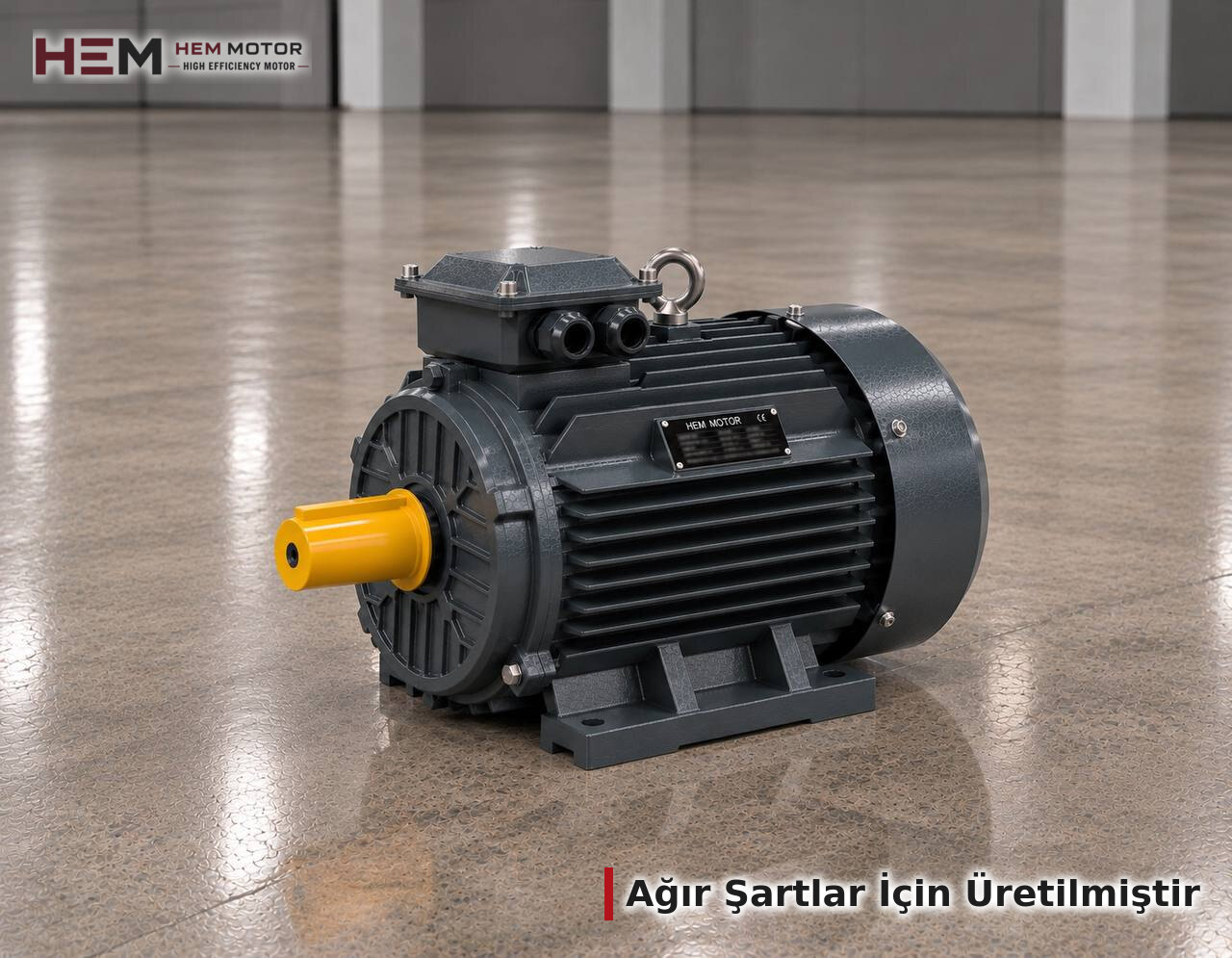

The frame of an electric motor running in the sun becomes noticeably hotter than the same motor in the shade, because in addition to the heat from the motor's own losses it absorbs solar radiation. This extra heat is passed straight on to the winding, since the frame is no longer just a surface that rejects heat from the winding to the surroundings but also one that takes heat in. The size of the effect depends on the sun angle, paint colour, wind, motor loading and how hot the cooling air is; the solution is often a simple sunshade and correct positioning.
How is the solar energy falling on the frame calculated?
On a clear summer noon, solar radiation striking a surface at right angles is in the order of 1000 W/m²; this is a general reference used in the field. The power absorbed by the frame is found approximately with P_solar ≈ α · G · A_proj: α is the paint's solar absorptance, G the irradiance and A_proj the projected area of the frame surface facing the sun. For a cylindrical motor this area is roughly the frame diameter multiplied by its length. Three values are enough for the calculation.
A hypothetical example: a frame 0.3 m in diameter and 0.6 m long has a projected area of about 0.18 m². Taking α as about 0.9 for a dark paint, the absorbed power is 0.9 · 1000 · 0.18 ≈ 160 W; with a light paint where α drops to around 0.3, the figure falls to about 55 W. Light paint cuts the absorbed power to roughly a third. These numbers are general knowledge; consult the paint manufacturer for real paint values and the motor manufacturer for motor heating.
How significant is this extra heat for the motor?
In the same example, if the motor's total loss at rated load is in the order of a few hundred watts, the 160 W from the sun amounts to an extra load equal to a considerable share of the losses. In small motors the ratio is even larger, because the loss is small while the frame surface is large relative to the loss. In large motors the ratio shrinks, but the absolute temperature rise is still measurable.
How do paint colour and surface condition affect frame temperature?
Solar absorptance increases with the darkness of the colour. Black and dark navy surfaces swallow most of the incoming light; white, light grey and glossy surfaces reflect a significant part of it back. A white frame therefore stays cooler. At night the same surface radiates heat back as infrared; for most paints this emittance is high regardless of colour, so the property that determines daytime gain is solar absorptance.
A surface that collects dust, fades or becomes oily over time can behave darker than its original paint. A layer of dust darkens light paint. That is why keeping outdoor motors clean matters not only for airflow over the cooling fins but also for keeping solar gain low. When repainting a motor, avoid filling the gaps between fins with thick layers of paint; a thick coat weakens heat conduction.
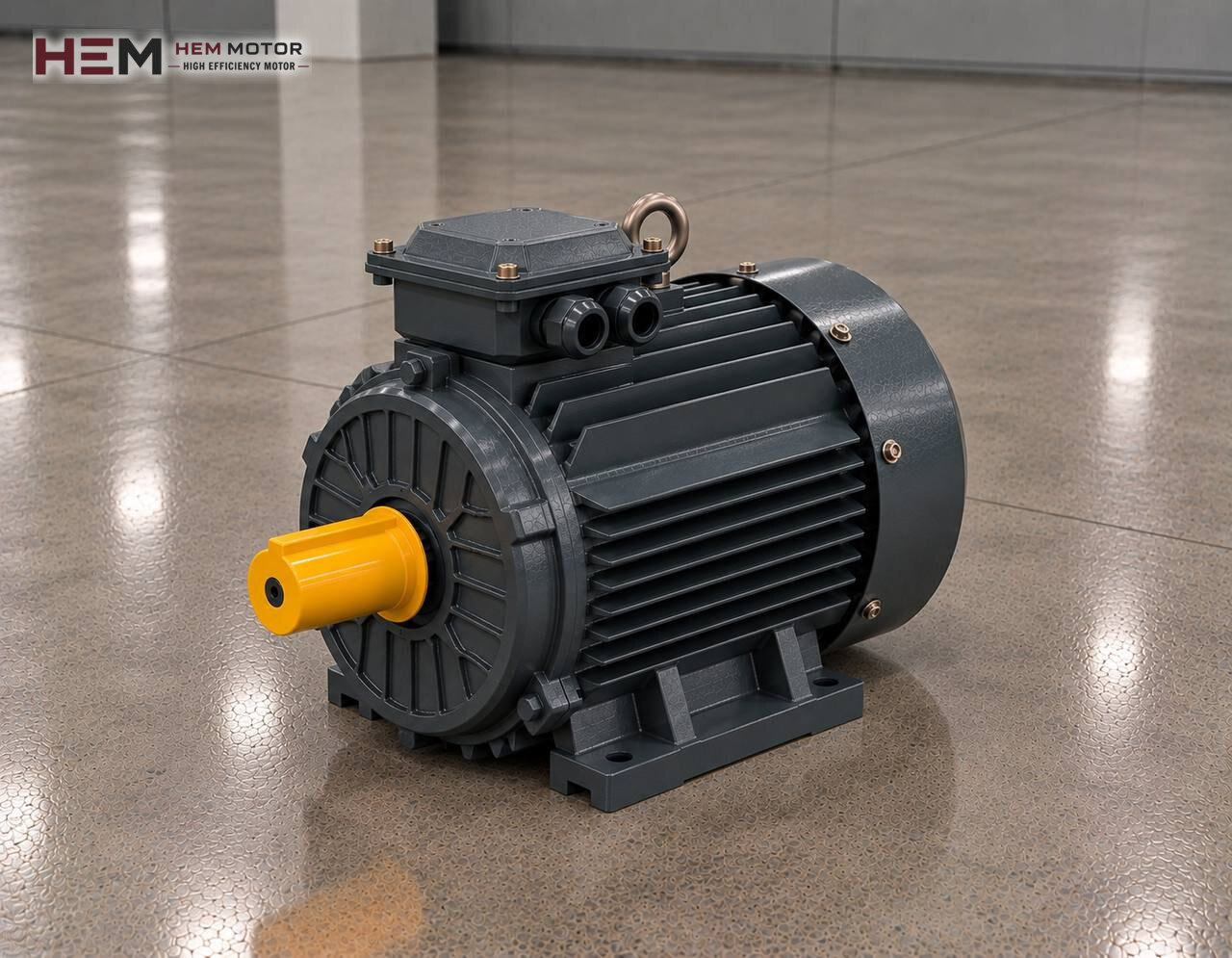
Why is hot intake air a problem in fan cooling?
The fan draws in hot air from above sun-heated ground. In surface-cooled, self-ventilated motors (IC411), the fan draws air in at the rear of the motor and blows it along the fins. In the sun, the ground, concrete base and steel structure around the motor heat up too; the air drawn in by the fan can be a few degrees, sometimes much more, warmer than the measured shade temperature. The real ambient temperature the motor sees is this intake air.
If the motor is installed in the corner of a wall, under a hot sheet-metal roof or near a south-facing concrete floor, warmed air collects in front of the fan cowl. Leaving enough clearance between the fan cowl and the obstacle and providing a path for hot air to escape upwards can be as effective as a sunshade. For cooling methods and the effect of the installation site, see our article on IC411 and IC416 cooling methods.
How is frame temperature measured and interpreted on site?
Take one reading in the sun and one in shade; the difference shows the extra heat on the winding.
- Take two measurements on the same day, at the same time and at roughly the same load: one in the sun, one some time after temporarily shading the motor.
- Measure with a surface thermometer or thermal camera on the sun-facing and shaded sides of the frame, at the base of the fins.
- If you use a thermal camera, enter the paint's emissivity correctly and do not read from shiny metal surfaces.
- Measure the air temperature at the fan intake with a separate thermometer and compare it with the shade temperature.
- Record the motor current with a clamp meter; if the load has changed, do not attribute the temperature difference to the sun.
The frame surface is cooler than the winding and does not show winding temperature on its own. The difference between the sunny and shaded measurement, however, is a good indicator of the extra heat loading the winding. If the difference is large and the motor is already running close to rated load, action is needed.
| Site condition | Effect on frame temperature | Recommended measure |
|---|---|---|
| Dark frame, midday sun | Marked rise on the sun-facing side | Sunshade or canopy, compare morning and midday readings |
| Motor close to hot concrete or sheet metal | Intake air hotter than shade temperature | Clearance in front of the fan cowl, raise the base |
| Windless, enclosed corner | Heat build-up, slow cooling | Open up airflow, change the position |
| Motor running close to rated load | Winding margin shrinks quickly | Next power step, PTC in the winding |
| Dusty or faded surface | Solar absorptance increases | Regular cleaning, keep the fins clear |