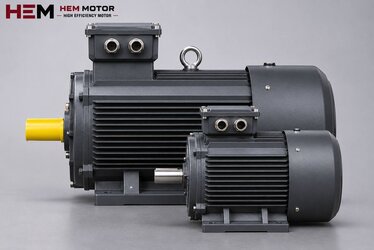
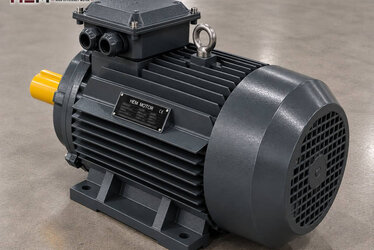
In an area with chemical vapour, the sheath of the cable feeding an electric motor gives up long before the motor housing does, so the sheath material should be chosen according to the type of vapour present. As a general direction, PUR or rubber-based sheaths last longer than PVC in oil and solvent vapour, PE or halogen-free polyolefin sheaths in acid and alkali vapour, and fluoropolymer sheaths in environments that are both hot and aggressive. The final decision, however, is made with the cable manufacturer's chemical resistance table, the plant's vapour measurements and a simple immersion trial.
How does chemical vapour age the cable sheath?
Chemical vapour attacks the sheath in three different ways. Solvent and oil vapour penetrate the polymer, and the sheath swells, softens and loses its mechanical strength. Some vapours dissolve the plasticiser inside PVC and carry it out; over time the sheath hardens and hairline cracks open where it is bent.
The third route is oxidation, with strong oxidisers such as chlorine and ozone chalking the surface. Moisture and chemicals entering through the cracked sheath reach the core insulation; a phase-to-earth leak usually starts a few centimetres before the motor terminal, at the point where the cable moves most and enters the gland. That is why the fault is often mistaken for a motor winding failure. The mistake is common.
How do sheath materials behave against chemicals?
Each sheath material resists some chemicals and is weak against others; none suits every environment.
The table below shows the general tendency; the formulations of materials with the same name vary from manufacturer to manufacturer (general information; confirm with the cable manufacturer's resistance table).
Sheath material
Environment where it is strong
Environment where it is weak
PVC
Dilute acid and alkali, water, general industry
Aromatic solvents, ketones, high temperature; hardening through plasticiser loss
PUR (polyurethane)
Oil, grease, fuel, abrasion, continuous movement
Hot water and steam, strong acid, hydrolysis
PE / halogen-free polyolefin
Acid and alkali vapour, moisture
Oil and solvent, fire performance in some types
Chloroprene and EPR rubber
Ozone, weathering, flexibility
Aromatic solvents, some oils (depending on type)
Silicone
High and low temperatures
Tearing, oil and solvent, mechanical impact
Fluoropolymer (FEP, PFA)
Almost all chemicals, high temperature
Flexibility and cost; only where truly needed
The weaknesses in the table are not absolute; concentration, temperature and exposure time change the result considerably. The same ammonia vapour that causes no trouble in a cold store can wear out a sheath within a few months in a hot process area.
How can the cable sheath be tested on site?
If you have no table, or the mixture in the environment is not listed, you can compare candidate cables with a trial lasting a few weeks. The method does not replace a laboratory test, but it quickly eliminates options:
Cut short pieces of equal length from the candidate cables and seal their ends with heat-shrink sleeve or resin.
Weigh each piece on a precision scale, measure its outer diameter with a calliper and note the values.
Hang the pieces where the chemical vapour is dense, or keep them in a closed container above the chemical without touching the liquid.
After one, two and four weeks, take the pieces out, weigh them again, measure the diameter and look for cracks by bending the sheath around your finger.
The mass change is calculated as: Δm % = (mfinal − minitial) / minitial × 100. Hypothetical example: if a 12.40 g piece weighs 13.15 g after four weeks, Δm ≈ 6%; the sheath has absorbed the vapour. Another candidate that goes from 12.10 g to 12.15 g under the same conditions is clearly more resistant. A PVC piece that loses mass and hardens shows that it has lost plasticiser.
The trial is for comparison only; the acceptance limit and final choice should be based on the cable manufacturer's data.
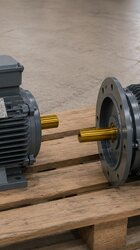
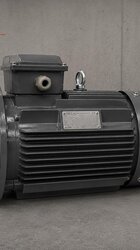
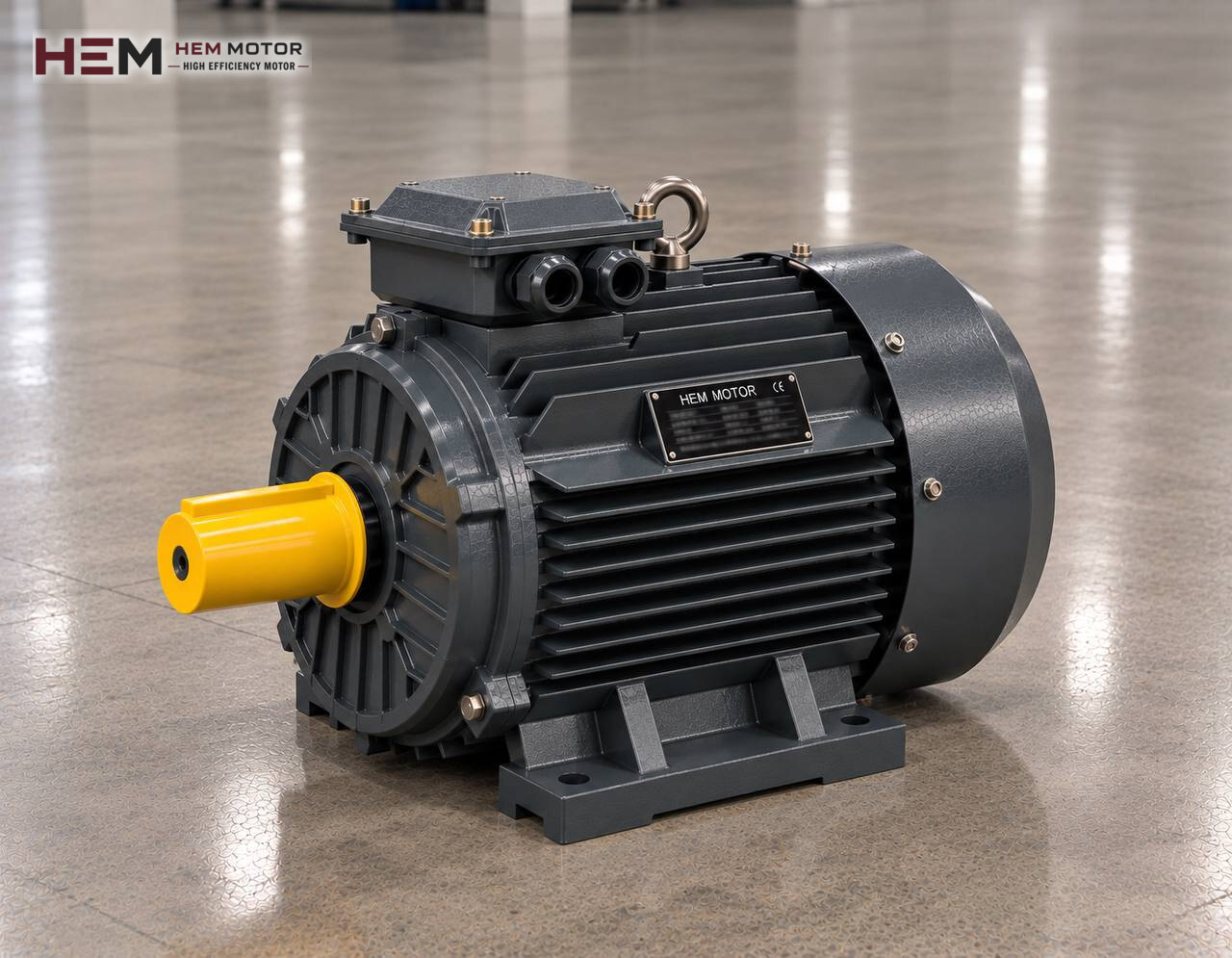
On process pumps the cable is exposed to both vapour and vibration where it enters the motor terminal box (representative image).
Prices and technical data are on the product pages; choose a model and order online.
What should be watched at the gland, terminal box gasket and cable route?
Even with the right sheath, the gland where the cable enters the motor can be the weak link. Nickel-plated brass glands corrode in ammonia and some acid vapours; polyamide glands can swell in solvents; stainless steel glands are safer in most environments. The inner seal of the gland is exposed to the same chemical as the sheath, so its material should be chosen with the same logic. The gland matters as much as the sheath.
Along the route, keep the cable away from ceiling voids where vapour condenses, from the front of tank vents and from floors with spill risk. Condensation collecting inside a cable trunking leaves the sheath permanently under a chemical film. A drip loop before the gland and checking the terminal box cover gasket during periodic maintenance prevent vapour being carried into the box. The route is part of the protection.
How do temperature and a chemical environment affect cable sizing?
A chemical environment also indirectly affects the cable's current-carrying calculation. An aggressive area is often a hot area; as ambient temperature rises, the current the cable can carry falls. When the cable is placed in closed trunking or a protective conduit to protect the sheath, heat dissipation decreases, and this is also part of the calculation.
For this reason the cross-section and protective device rating should not be guessed as figures but calculated by the project or panel engineer. The information needed for the calculation is: rated current and voltage from the motor nameplate, starting method, cable length and permitted voltage drop, installation method and other cables in the trunking, maximum ambient temperature and the conductor temperature permitted by the chosen sheath material. The logic of selecting protective relays and fuses is explained in the thermal relay, fuse and MPCB guide.
Any fault that makes the motor switch on and off more often or raises its current in an aggressive environment also heats the cable. A PTC fitted in the winding can be requested as an order option; catching motor overheating early also prevents unnecessary heating of the cable. You can review the frames and ratings that can be supplied with the winding sensor option on our shop page.
Example models for chemical process areas
For pump, mixer and fan drives in chemical, fertiliser, detergent and treatment plants, a cast iron housing is generally a more resistant choice against aggressive vapour. General information on the series is on the three-phase asynchronous electric motors page. The pairings below are hypothetical:
For a dosing tank mixer, the 4 kW, 4-pole cast iron 112M-4: 1450 rpm, 26.3 Nm, 400/690 V.
For an acid transfer pump, the 7.5 kW 132M-4: 1460 rpm, 49.1 Nm.
For a gas scrubber fan, the 18.5 kW 180M-4: 1470 rpm, 120.2 Nm.
Besides these ratings, you can compare the other steps by housing type in our electric motor shop. If solvent vapour can create an explosive atmosphere in the area, this duty needs a special motor; it may fall outside the scope of the standard series in HEM Motor's 2026 catalogue, so ask us with the nameplate and application details.
If you send the list of chemicals in the area, a photo of the motor's location and the existing nameplate through the nameplate submission page, we will assess the motor and housing side together and clarify what information should be given to the panel engineer on the cable side. All cast iron and aluminium frame models are listed on the HEM Motor products page.
Frequently Asked Questions
Which sheath is preferred for motor cables in an ammonia cold store?
PE, halogen-free polyolefin or suitable rubber sheaths that stay flexible at low temperature and resist ammonia are commonly used. Choosing a stainless or suitable plastic gland instead of brass is also important.
Why does a PVC cable sheath harden and crack over time?
Some vapours and heat draw out the plasticiser that keeps PVC flexible. A sheath that has lost its plasticiser hardens and develops hairline cracks where it is bent.
Can I choose the cable cross-section myself in a chemical environment?
Cross-section and fuse rating should be calculated by the project engineer from rated current, length, installation method and ambient temperature. Since a chemical environment usually raises temperature, this information must be included in the calculation.
How can a cable fault be told apart from a motor fault?
The cable is disconnected from the motor and the winding and cable are measured separately with an insulation tester. If the low value appears only on the cable, the problem lies in the sheath and core insulation.
HEM Motor Models Related to This Article
The cards show example models related to the topic. A suitable motor is not chosen by power alone: compare speed, voltage, mounting, shaft and connection dimensions on the product page; if unsure, send a photo of the existing motor’s nameplate on WhatsApp.
Checking that electric motor pulleys lie in the same plane means seeing whether the side faces of both pulleys meet on one straight line. In practice a taut string, a steel straigh... More Details
If an electric motor's coupling element fails often, the first thing to investigate is shaft misalignment, followed by coupling selection, starting and shock loads, environmental e... More Details
The quickest way to tell foundation looseness from unbalance in electric motor vibration is to loosen the foot bolts one at a time while measuring and watch the change, and to comp... More Details
When building a sound enclosure around an electric motor, cooling is preserved by giving the enclosure a labyrinth or silenced inlet large enough for the air the motor fan draws, p... More Details
In an electric motor running in a hot environment, winding and bearing temperatures are monitored separately because they heat up from different sources, have different limits and ... More Details
When an electric motor is started for the first time at sub-zero temperatures, three things need checking: winding insulation resistance and any moisture or ice inside, bearing gre... More Details
We use necessary and optional cookies to improve your experience, enhance content and analyse traffic. Under the GDPR, optional (analytics/marketing) cookies are only used with your explicit consent. Please choose your preference below.
Cookie Policy
 English
 Français
 Türkçe
 Español
 Русский
 العربية
 Deutsch
 Italiano