English
 Français
 Türkçe
 Español
 Русский

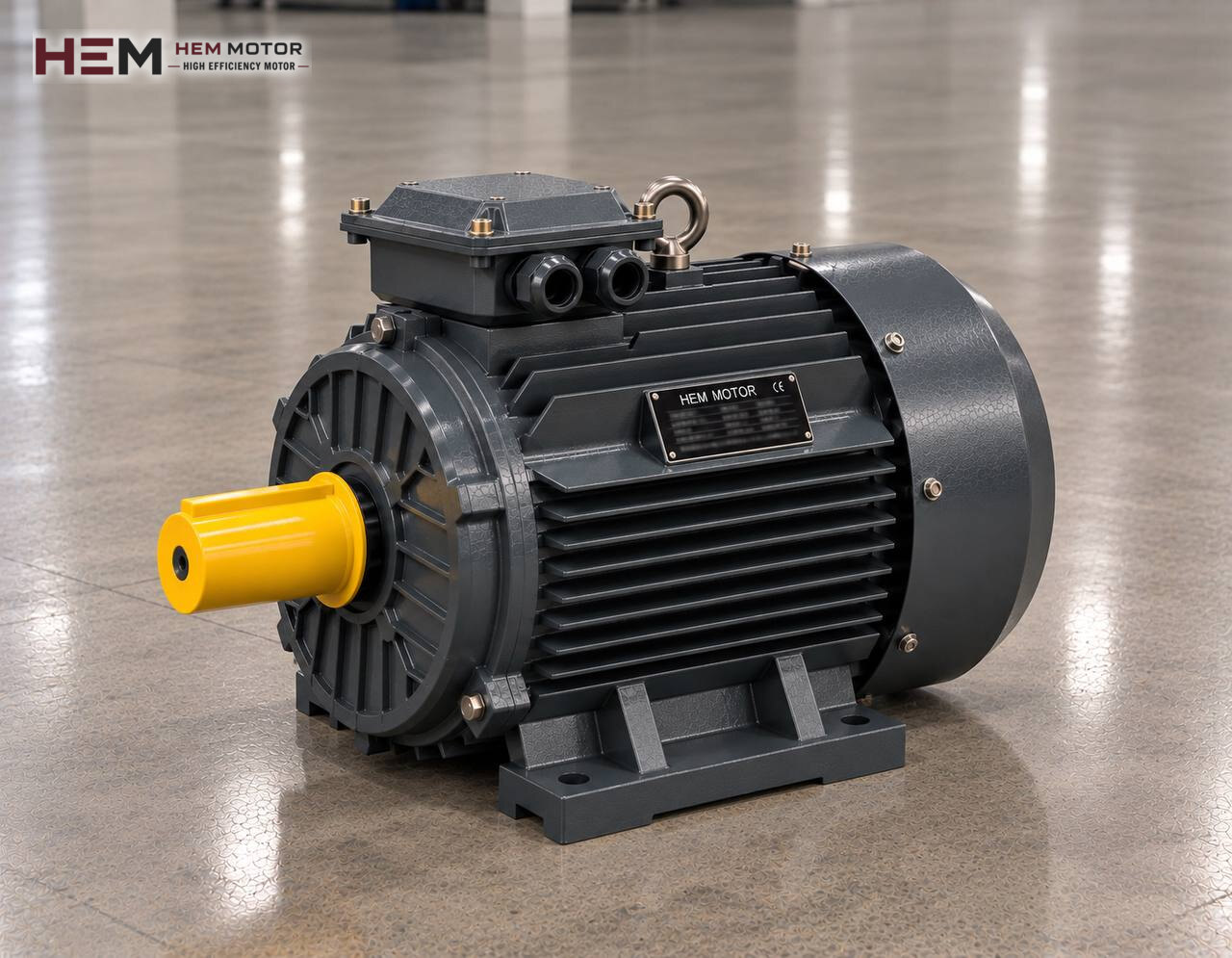
A plastic washing line cleans shredded PET, PE and PP film or rigid plastic pieces of labels, adhesive, soil and oil residue, separates them by density and dries them ready for the pelletising line. You can see all the machines in the sector on the plastic and rubber processing motors page. On this page we describe the load, placement and protection of the motors that work among water and wet material in a washing line.

Line sequence and where the motors sit
A washing line is not one machine but a series of stations. First a pre-wash drum or a wet granulator loosens coarse dirt and paper labels. Then comes the sink-float tank: PE and PP stay on the surface, PET and PVC sink; paddle rollers along the tank and a screw at the bottom move the material forward. Friction washers scrub the pieces hard, and a hot wash tank dissolves adhesive and oil. At the end a centrifugal dryer throws off the water and a thermal dryer removes the remaining moisture.
Each link in this chain has one or more motors, and most run continuously. When one station stops, the tank behind it overflows or the machine in front runs empty; so all motors are started together and the controls are interlocked.
Friction washer and hot wash tank
In a friction washer a paddle rotor turns at high speed inside an inclined housing. Wet pieces are cleaned by rubbing against the rotor paddles and against each other, and water carries the dirt out through the perforated housing. The motor usually drives this rotor through belts and pulleys. The load is continuous but fluctuates with the density of the feed; if a lot of wet material arrives in the hopper at once, current rises.
In the hot wash tank a vertical-shaft agitator stirs hot, chemical-dosed water together with the material. The agitator motor sits on top of the tank, usually connected to the shaft through a gearbox, in a vertical position. Hot steam rising from the tank surface means the motor's cooling air is both hot and humid. A stand or a raised gearbox connection that keeps the motor away from the steam improves cooling. For details of vertical mounting see the foot and flange electric motors page.
Sink-float tank, paddle rollers and screws
The paddle rollers in the sink-float tank push the floating material forward, and the screw at the bottom carries the sinking fraction out. These drives turn slowly and have gearboxes; motor power is small but they run all day. Motors mounted at the edge of the tank are the closest to water splashes. For small geared drives the electric motors for gearboxes page is a guide.
There are also inclined screw feeders that carry the material from one station to the next. Because they move wet, heavy material, it matters whether the screw is full at start; a full screw strains the motor at start-up.
Centrifugal dryer and thermal drying
In a centrifugal dryer a paddle rotor turning at high speed throws the wet pieces against a screen basket; water passes out through the screen and the pieces move upwards. This machine is one of the highest-speed and often most powerful drives in a washing line. The rotor is heavy; start-up takes a few seconds. The bearings take load from the imbalance caused by wet material, so keeping the rotor clean and balanced also protects the motor bearings.
In a thermal dryer a fan blows heated air through a pipeline, and the material is carried with this air to a cyclone. The fan motor is direct-coupled and runs continuously. For fan details see the fan and exhaust fan motors page.
Water, chemicals and the limit of IP55
Contact with water is unavoidable in a washing line, but where and how the motor is placed is decisive. HEM's standard motors are IP55: protected against dust and against low-pressure water jets from any direction. They are not designed for operation under water, washing with pressurised water or continuous chemical spray. If water will be hosed onto the motors during line cleaning or a motor sits very close to the tank, the machine builder's protective measure (protective hood, splash screen, raised mounting) or a special motor is needed; state this in your order.
On motors standing in a wet environment, condensation can form in the housing as it cools at night and warms up in the morning. An anti-condensation heater, available as an order option, keeps the winding warm while the motor is stopped. A PTC or PT100 sensor can also be requested to monitor winding temperature on the hot wash tank agitator. Sealing the terminal box cable entries with suitable glands and placing the box facing downwards makes it harder for water to creep in.
Plants that want to adjust the speed of pumps, dryers and friction washers can drive the motor from a frequency inverter; our series are suitable for this. If the inverter is in a panel next to the hot tank, it is enough to mention in your order points such as panel cooling, a dv/dt or sine filter for long cables, and a separate fan for long periods of load at low speed.
Example motors by station
| Station | Load on the motor | What to check | Example HEM model |
|---|---|---|---|
| Friction washer | High-speed rotor, fluctuating feed | Pulley ratio, hourly capacity | 22 kW 180L-4 (1,470 rpm) |
| Hot wash tank agitator | Geared, vertical, hot steam | Mounting type, tank temperature | 7.5 kW 160M-6 (970 rpm) |
| Centrifugal dryer | Heavy rotor, start of a few seconds | Rotor diameter, starting method | 30 kW 200L-4 (1,475 rpm) |
| Process water pump | Continuous, constant speed | Flow, head | 5.5 kW 132S1-2 (2,930 rpm) |
| Sink-float roller, screw | Slow, geared, long running | Gearbox flange, water splash | 1.5 kW 100L-6 aluminium (949 rpm) |
The models give an idea only. Actual power and speed are fixed by the line's hourly capacity, the material, the station's transmission and the machine builder's data. The best starting point is the nameplate of the existing motor.
What to include when asking for a quote
Your message should contain: the machine or station name (friction washer, centrifugal dryer, hot tank, pump, screw), motor power (kW) and speed (rpm), plant voltage, mounting type (foot, flange, vertical), how close the motor sits to water, inverter use and quantity. You can send the old motor's nameplate in the way described on the send a motor nameplate page.
Models with published prices are on the buy electric motors page, and WhatsApp and phone details are on the contact page.
Frequently Asked Questions
Is a standard IP55 motor enough for a washing line?
For water splashes and a humid environment IP55 is used at most stations. However, if the motor will be under water, washed with pressurised water or exposed to continuous chemical spray, the standard motor is not designed for that condition; protection on the machine side or a special motor is needed.
Why does the centrifugal dryer motor need bearing changes so often?
Wet material building up on the rotor and worn paddles create imbalance; this vibration also passes to the motor bearings. Cleaning the rotor regularly, checking paddle wear and setting belt tension correctly extend bearing life.
Why do the motors struggle when the line is started in the morning?
Wet material left overnight in the tanks and screws creates extra load at the morning start. Starting the line from the back to the front, beginning at the discharge end, and emptying full screws first makes starting easier.
What do you recommend for washing line motors that stand idle for a long time?
An anti-condensation heater helps on motors standing in a humid plant. Having the winding insulation measured before start-up and checking that the terminal box is dry is also a good habit.