English
 Français
 Türkçe
 Español
 Русский

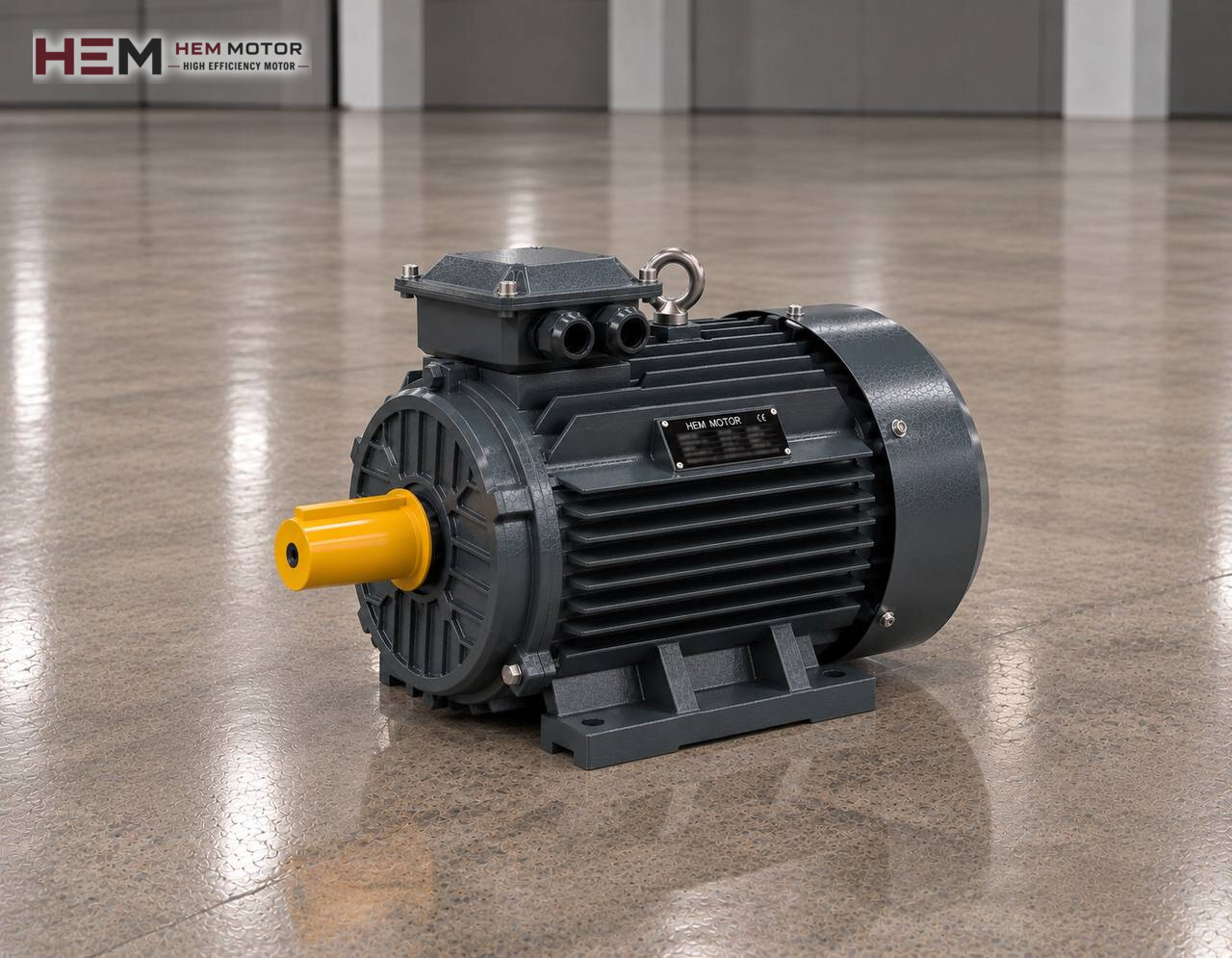
A water-cooled chiller transfers the heat it draws from a building or process to a second water circuit in the condenser. The pump in this second circuit carries the warmed water to a cooling tower, a dry cooler or a heat exchanger and brings the cooled water back to the condenser. If the pump stops, the chiller's high-pressure safety shuts the unit down within a short time; the condenser water pump motor is therefore a quiet but decisive link in the plant's cooling continuity. For the sector as a whole, see our HVAC sector electric motors page.

What Does the Motor Turn in the Condenser Circuit?
The motor turns the impeller of the condenser water pump and keeps the water circulating through the circuit. The refrigerant takes the heat in the condenser; the tower fan or dry cooler fan rejects it to the air. So the pump motor alone determines neither cooling capacity nor condensing temperature; it only ensures that the design flow circulates. The tower fan motor is a separate subject, covered on the cooling tower motor page.
This article is aimed at industrial and commercial facilities with a central cooling system. Fan and pump spare parts inside domestic air conditioners or small packaged units are not covered here.
The Difference Between an Open Tower Circuit and a Closed Circuit
In the most common arrangement, condenser water is drawn from the basin of an open cooling tower. This water carries dust, leaves, scale and biological deposits from the tower, and chemical treatment runs continuously. As the strainer on the suction line clogs, the pump's operating point changes, the risk of cavitation grows and the motor sees an unexpected change in load. When the basin level drops, the pump may draw in air.
In closed circuits the water circulates inside a dry cooler or a closed-circuit tower coil and is usually a glycol mixture. Glycol changes the density and viscosity of the water, which can increase the shaft power the pump draws. That is why it matters to request pump data for the glycol percentage. In both arrangements the motor itself is the same standard induction motor; the difference lies in the pump data.
Information to Gather for Motor Selection
When asking for a condenser pump motor, having the following together speeds up selection:
- Pump nameplate or data sheet: flow, head, impeller diameter, speed
- Height difference between condenser and tower; position of the tower basin relative to the pump
- Type of fluid: open-circuit tower water or closed circuit with glycol
- Whether the pump runs with its own chiller or from a common header
- Installation location: plant room, beside the tower or on the roof
- Supply voltage, starting method and any converter
Power and Speed: Pump Curve and Existing Nameplate
Motor power is set by the pump's shaft power at the design point and by the power rise in the region where the curve moves towards maximum flow. In the condenser circuit this second part matters: if the static height between tower basin and pump is small and the circuit is empty at first fill, the pump runs for a while against very low back-pressure, i.e. at the right end of the curve. So that the motor is not overloaded at that moment, the motor power recommended by the pump manufacturer is taken as the basis.
Speed comes from the impeller design. Four-pole motors are common on high-flow condenser pumps; in some circuits with high head, where the tower is far above the building, two-pole motors are also used. If an existing motor is being replaced, the kW and rpm values on its nameplate are the safest starting point; looking only at a power figure, you cannot say it is "enough for a condenser pump".
Checking Base, Coupling and Flange Dimensions
The IEC frame of the motor to be replaced (e.g. 160M, 225M) is the first point of comparison. On end-suction pumps the motor stands on a common baseplate with a foot-mounted (B3) frame and is connected by a flexible coupling; here foot hole spacing, shaft centre height, shaft diameter and key size are compared one by one with the old motor. On vertical inline pumps the motor is flange-mounted; flange type (B5 or B14), spigot size and bolt circle are checked. On the electrical side, voltage, connection and rated current must match the protection setting in the panel.
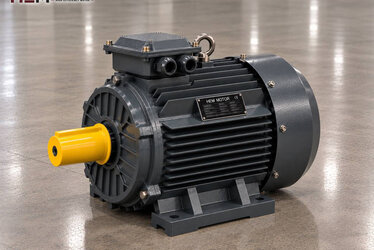
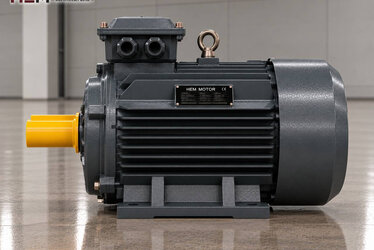
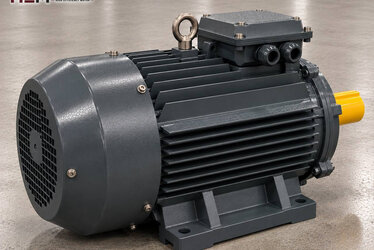
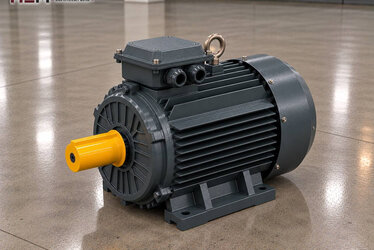
The HEM Motor three-phase range is offered in B3, B5, B14, B34, B35 and vertical V1, V3, V5, V6, V15 arrangements depending on frame; flange and shaft dimensions are confirmed in the order. You can read which mounting arrangements are possible in the mounting arrangements question. Re-aligning the coupling after a motor change directly affects bearing life on condenser pumps.
Installation Next to the Tower: Moisture, Chemicals and Outdoor Air
Condenser pumps are often installed right next to the tower, in the open or on the roof. Drift from the tower, vapour from treatment chemicals and direct sun stress the motor housing. Our motors have IP55 protection and class F insulation; this protects against rain and splashing water, but it is not a special design for running continuously under tower drift or in chemical vapour. A simple canopy, placing the motor behind the tower wind and pointing the cable entry downwards work well in such layouts.
Catalogue values apply to ambient temperatures from −15 to +40 degrees and altitudes up to 1,000 m. At sites where the tower stops in winter, the motor stays cold and damp for long periods, so an anti-condensation heater, and a PTC or PT100 sensor for monitoring winding temperature, can be added as order options. Please state these conditions in the order.
Variable Speed, Chiller Staging and Number of Starts
The condenser pump usually starts and stops together with the chiller. At sites where several chillers run in sequence, each unit's pump starts separately; the number of starts depends on the chiller control logic. If very frequent starts are required, this information should be included in motor selection.
In recent years designs in which condenser pumps are also driven by a frequency converter have become more common. The point to watch is that the flow through the condenser stays within the range allowed by the chiller manufacturer; the minimum frequency is set according to chiller data. On the motor side, our three-phase ranges can be used with a converter; for long periods at low speed with full torque a separate fan, and for long cables a dv/dt or sine filter, are assessed. Details are on the inverter-compatible motors page.
Example Motor Table: Condenser Circuit Types
| Circuit type | Pump location | Example HEM model |
|---|---|---|
| Small process chiller, closed-circuit dry cooler | Plant room, glycol water | 3 kW 100L2-4 (1,450 rpm, cast iron) |
| Compact pump feeding a high-level tower | Basement, long vertical riser | 15 kW 160M2-2 (2,945 rpm, cast iron) |
| Large building, open tower circuit | Beside the tower, common baseplate and coupling | 45 kW 225M-4 (1,485 rpm, cast iron) |
These examples are not a final selection; the motor's suitability for the pump is verified separately according to the pump curve, speed, mounting arrangement and installation location.
Information to Send for a Spare or Failed Motor
The first thing we ask for in a replacement request is a legible photo of the motor nameplate; the send motor nameplate page shows how. You can send the request via WhatsApp; the numbers are on the contact page. Sending the following list together is enough.
- Photo of the old motor's nameplate: power, speed, voltage, current
- Pump nameplate or brand and type
- Mounting type: foot-mounted on a common baseplate or vertical inline
- Coupling-side shaft diameter and flange size
- Installation location: beside the tower, roof or enclosed plant room
- Whether it runs with a converter or star-delta starting
- Quantity and any spare motor requirement
Related Motor Categories in the Shop
You can see all models on the buy electric motors page. For condenser pumps used outdoors and on large baseplates, the cast iron frame motors category is a good starting point. The product links in the table are examples; suitability for the pump is verified separately. For general solutions used on base-mounted pumps, the centrifugal pump electric motor page, and for general information the pump electric motors page, are also helpful.
Frequently Asked Questions
What happens to the chiller if the condenser pump stops?
Because heat cannot be rejected from the condenser, condensing pressure rises and the chiller stops on its high-pressure safety. That is why keeping a standby pump and a spare motor is common at critical sites.
The tower water is dirty; does this affect the motor?
Not directly, but through the pump. A clogged strainer and a worn impeller change the operating point and increase vibration, which wears the motor bearing. Strainer cleaning matters for motor life too.
Is a motor of the same power enough in a closed glycol circuit?
Not always. As the glycol percentage rises, the power drawn by the pump can increase. Ask the pump manufacturer for data corrected for the glycol percentage and size the motor accordingly.
Does a rooftop pump motor need extra precautions?
A simple protective canopy against direct sun, rain and tower drift is recommended. If the ambient temperature may exceed the catalogue limit, or the motor will stand idle for long periods, state this in the order.