English
 Français
 Türkçe
 Español
 Русский

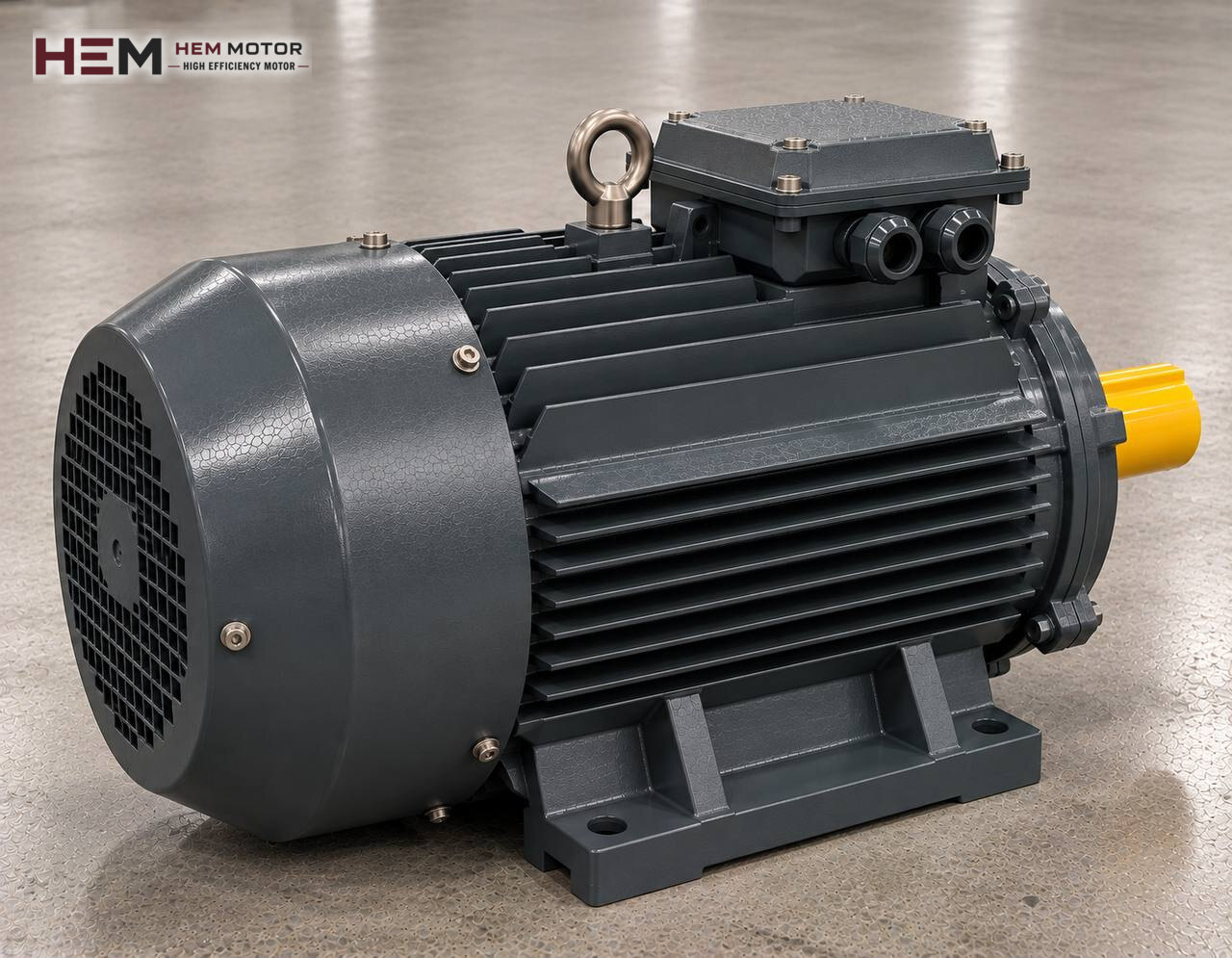
In a boiler room, heat is produced in the boiler, but getting it to the building or the process depends on pumps. The boiler circuit pump, radiator and underfloor heating branches, the heating coil of the air handling unit, the domestic hot water calorifier and process heating lines are each fed by separate pumps. In factories, central heating plants of residential complexes, and large buildings such as schools, hospitals and hotels, most of these pumps are turned by three-phase motors mounted on a base or on the pipework. This page explains how to select those motors in terms of the boiler room's own conditions; for the sector as a whole, see our HVAC sector electric motors page.

Pumps in the Boiler Room and the Motor's Share
The motor circulates hot water by turning the pump shaft. The boiler and burner heat the water; mixing valves, boiler controls and thermostats control its temperature. The motor does none of these jobs; it only supplies the torque the pump needs to deliver its design flow. The burner's combustion air fan is also a separate motor and is covered on the burner fan electric motor page.
A typical industrial or commercial boiler room has the following pumps: the boiler circuit (shunt) pump that protects the boiler from low return water temperature, a zone pump for each heating zone, a calorifier charging pump and, where needed, a process heating pump. Each has a different flow, head and running time, so it is normal to see motors of very different powers in the same room.
Wet rotor compact circulators found in smaller buildings are products in which motor and pump form a single unit; these compact units and their EC motor versions are not included in HEM Motor's 2026 catalogue. This page concerns dry rotor pumps whose motor can be removed and replaced as a separate part. For a broader description of general circulation applications, there is the circulation pump motor page.
What Is Needed to Select a Motor for a Hot Water Pump
The information that helps us most when selecting a motor for a boiler room pump is: pump brand and type, design flow and head, the circuit the pump belongs to (boiler, zone, calorifier, process), the maximum operating temperature of the water, whether the pump is single or twin, the supply voltage and the present nameplate values of the motor. Water temperature does not change motor power directly, but it affects the pump's gland or mechanical seal arrangement and the heat passed to the motor bearing; so it needs to be noted.
From Heating Load to Pump Power, and from There to Motor Power
In a heating circuit, the pump flow is calculated from the amount of heat the circuit must carry and the temperature difference between flow and return water. The head is the sum of the resistances of pipes, valves, heat exchangers and boiler. This calculation is the job of the installer or design engineer; what we need on the motor side is the curve of the pump finally selected. The shaft power at the operating point on the curve and the highest power reached as flow increases are used to determine the motor's rated power.
A common situation in heating systems is the circuit being throttled as thermostatic valves close. In a throttled circuit flow falls, and a fixed-speed pump moves to the left side of its curve. The reverse can also happen: if a zone valve sticks open due to a fault, the pump moves to the right of the curve. So that the motor remains safe in both cases, the motor power recommended by the pump manufacturer is taken as the basis.
As for speed, both two-pole and four-pole motors are found in boiler rooms. Small-diameter high-pressure pumps generally run at around 2,900 rpm, large-flow low-pressure pumps at around 1,450 rpm. The motor is selected with the number of poles for which the pump was built; changing speed changes the pump's flow, pressure and power draw all together.
Base Mounting, Inline Housing and Dimension Comparison
If a replacement is planned, the IEC frame size is compared first. Two layouts are common in boiler rooms. The first is inline pumps connected directly into the pipe run; the motor stands vertically and is flanged onto the pump casing. Here the flange type (B5 or B14), spigot size, shaft diameter and shaft length are decisive. The second is end-suction pumps on a common baseplate; the motor is foot-mounted and coupled, and foot hole spacing and shaft height are important. In both cases voltage and current values must suit the overload relay or motor protection breaker in the panel.
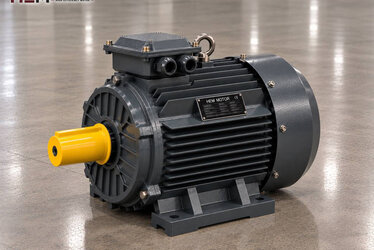
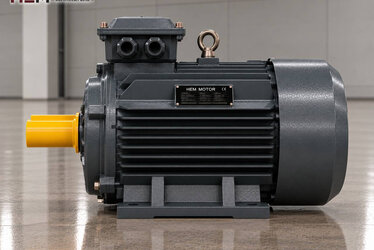
Our three-phase motors can be supplied in foot-mounted, flange-mounted, foot-and-flange and vertical versions depending on frame; flange and shaft dimensions are verified in the order. For flange options, see the flange-mounted electric motors page. If the old motor is from another manufacturer, do not assume "same frame, same dimensions" without comparing the dimensions one by one.
Hot Plant Room Conditions and Summer Shutdown
A boiler room is a particular environment for a motor. In winter the boiler shell, flues and uninsulated pipe sections heat the air; in poorly ventilated rooms the ceiling zone gets quite hot. Our catalogue values apply to ambient temperatures from −15 to +40 degrees and altitudes up to 1,000 m. A motor sitting right next to the boiler or the flue connection, in the rising hot air, may push this limit; if the room temperature is high or the site is at high altitude, state this in the order.
Heat from the pump is a separate matter. The casing and shaft of a pump carrying hot water warm up, and this heat is conducted towards the motor. The intermediate piece and seal arrangement provided by the pump manufacturer should therefore be kept, and the lantern or adaptor flange between motor and pump should not be removed.
In summer, heating circuits stand idle for weeks. Condensation can form in the housing of a motor waiting in a cold, damp basement room; this is one of the frequent reasons for problems at the first start in winter. An anti-condensation heater can be added as an order option; also, running the pumps briefly every few weeks during long shutdowns is a good habit for both the pump seal and the motor bearing.
Night Setback, Inverters and Twin Pump Duty Rotation
In modern heating systems, zone pumps are often driven by a frequency converter that adjusts speed according to differential pressure; night setback and weekend programmes run the pump at low speed for long periods. Our three-phase ranges are suitable for speed control with a converter. If long periods at low speed with full torque are expected, a separate fan is assessed, and if the cable between motor and panel is long, a dv/dt or sine filter; these conditions are stated in the order. The inverter-compatible motors page gives guidance.
In twin pumps, two motors run in alternation and when one fails the other takes over. If the changeover period is short, the number of starts increases; if it is long, the idle motor waits for a long time. In systems where a converter or soft starter makes starts smooth, no additional requirement arises on the motor side, but if very frequent direct-on-line starts are made, this information should be shared in the order. A PTC or PT100 sensor for monitoring winding temperature can also be requested.
Example Motors by Pump Duty
| Duty in the boiler room | Common pump design | Motor-side note | Example HEM model |
|---|---|---|---|
| Calorifier charging pump | Small inline pump | Flange type, vertical mounting | 0.75 kW 80M2-4 (1,420 rpm, cast iron) |
| Boiler circuit (shunt) pump | Compact, high pressure | Heat from the pump, seal arrangement | 2.2 kW 90L-2 (2,895 rpm, cast iron) |
| Main heating zone pump | End-suction on a common baseplate | Inverter, twin duty rotation | 15 kW 160L-4 (1,465 rpm, cast iron) |
These models are only to give an idea and are not a final selection; suitability for the pump is verified separately with the pump curve, speed, mounting dimensions and plant room conditions.
Pre-Season Motor Replacement: What to Share with Us
If a motor that needs replacing turns up during the check before the heating season, start with a clear photo of the old motor's nameplate; what to photograph is explained on the send motor nameplate page. You can send the information via WhatsApp; the numbers are on the contact page.
- Motor nameplate: power, speed, voltage and current; also the pump or packaged unit nameplate if available
- Pump duty: boiler circuit, zone, calorifier or process
- Mounting type: vertical inline with flange, or foot-mounted on a base
- Flange size, shaft diameter and shaft length
- Single or twin pump; with converter or direct-on-line starting
- Ventilation of the boiler room and shutdown during summer
- Required quantity and any spare motor requirement
Product Groups to Look at in the Shop
All models are listed on the buy electric motors page. For base-mounted and inline pumps in boiler rooms, see the cast iron frame motors category, and for low-power pumps the aluminium frame motors category. The products linked in the table are examples; suitability for your pump is verified separately. The general framework for pump motors is on the pump electric motors page.
Frequently Asked Questions
The heating water is very hot; will it damage the motor?
The motor does not come into contact with the water; heat is conducted through the pump casing and shaft. As long as the pump manufacturer's intermediate piece and seal arrangement are kept, this heat is not a problem. The main thing to watch is the ambient temperature of the room.
Can I replace the motor of my wet rotor circulator?
In wet rotor units, motor and pump are a single product; motor parts for this type of unit are not included in HEM Motor's 2026 catalogue. A standard motor can be offered for dry rotor pumps whose motor can be removed separately.
Why does the motor struggle at the first start?
After a long summer shutdown, the pump seal may have stuck, the shaft may have seized or moisture may have collected in the motor housing. Turning the shaft by hand before starting and having the insulation resistance measured is a good start.
Should I replace both motors of a twin pump together?
It is not mandatory, but if both motors are the same age and have the same running hours, the second may also need replacing soon. Keeping a spare motor is an option.