How Can Condensation Be Reduced in an Electric Motor Terminal Box?

How Can Condensation Be Reduced in an Electric Motor Terminal Box?

Condensation in an electric motor terminal box is reduced by closing the paths through which moist air enters the box, turning the cable entry in the right direction and keeping the internal temperature slightly above ambient while the motor is stopped. In most cases the water comes not from outside but from the cable conduit or from the air inside a box that cools at night.

Why does water collect in the terminal box?

The air inside the box warms up with the motor during the day and cools when the motor stops at night. Cooling air can hold less moisture, and the surplus turns into droplets on the coldest surface of the box, usually the inside of the cover and the terminal studs.

There is also a pumping effect. The box works like a lung.

When the box warms, the air inside expands and leaks out through gland and gasket gaps; when it cools, it draws the surrounding damp air back in. This breathing in and out, repeated every day, can leave a visible pool of water at the bottom of the box within months.

The cable conduit is a separate path. If a flexible or steel conduit runs down from a warm panel room to a cold site, the air inside the conduit also condenses, and if the conduit slopes towards the motor the water flows straight into the terminal box.

What signs reveal condensation on site?

The most reliable observation is opening the cover first thing in the morning after a cold night. Droplets on the inner edge of the cover gasket, whitish deposits on the terminal board or green oxide on copper ends show that condensation keeps recurring.

The second sign is electrical. The insulation tester is connected between winding and frame with the motor disconnected from its supply cable; if the morning reading is clearly lower than the afternoon reading, moisture is circulating inside (general information; which test voltage to use and which value to accept follow the recommendations of the motor and instrument manufacturers).

If there is a PTC or PT100 sensor in the winding, no insulation tester is connected to its leads. If the sensor sits on separate terminals, those terminals are taken out of circuit before measuring.

The third sign is smell.

In a box that has stayed damp for a long time, a smell of mould and oxide is noticed as soon as the cover is opened. That smell is an early warning that the terminal studs are also starting to loosen; resistance rises at the oxidised connection, that point heats up under load, and the next step is finding a single phase end blackened. When cleaning such a box, the maintenance team does not just tighten the studs but replaces oxidised washers and nuts with new ones, and if necessary cuts the cable ends back to clean copper.

How should the cable entry and gland be arranged?

The rule is simple: the cable enters the box from below or from the side, never from above. A gland facing the floor lets droplets running along the cable fall to the ground rather than into the box.

The cable is fixed so that it makes a small downward sag just before entering the gland. This drip loop lets water travelling along the cable sheath drip off at the lowest point.

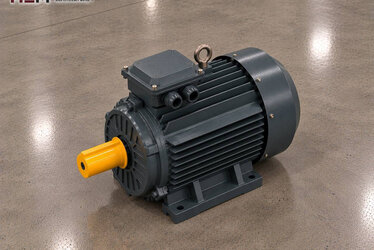
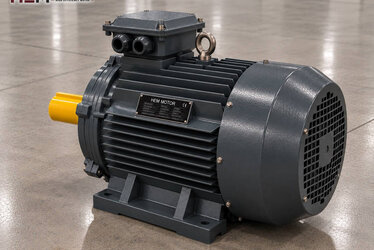
Gland size must match the cable's outer diameter. When a thin cable is fitted in a large gland, the seal does not grip the cable fully and the ring-shaped gap becomes an open door for both dust and moisture; unused gland holes are closed with blanking plugs. The terminal box layout on different frames can be seen in the model photos in the HEM Motor store.

The mounting direction of the box may vary with the frame. If the motor is to be fixed to a wall or in a vertical position, the direction the terminal box will face is discussed with the order, because a box with its gland facing up carries risk with every rain.

How is moisture coming through the cable conduit cut off?

If the conduit comes down to the motor from above, in the last metre it is brought in from below with an elbow. Water collecting inside the conduit then gathers at the lowest point of the elbow instead of reaching the motor.

The conduit end is sealed on both the panel side and the motor side by placing a suitable filler compound or cable seal between cable and conduit. The warm air of the panel room is thus not carried along the conduit to the motor.

In food and beverage plants where washing is done, this step is not skipped. When a pressure washer jet is aimed at the conduit mouth, water that floods in can travel metres and appear in the terminal box.
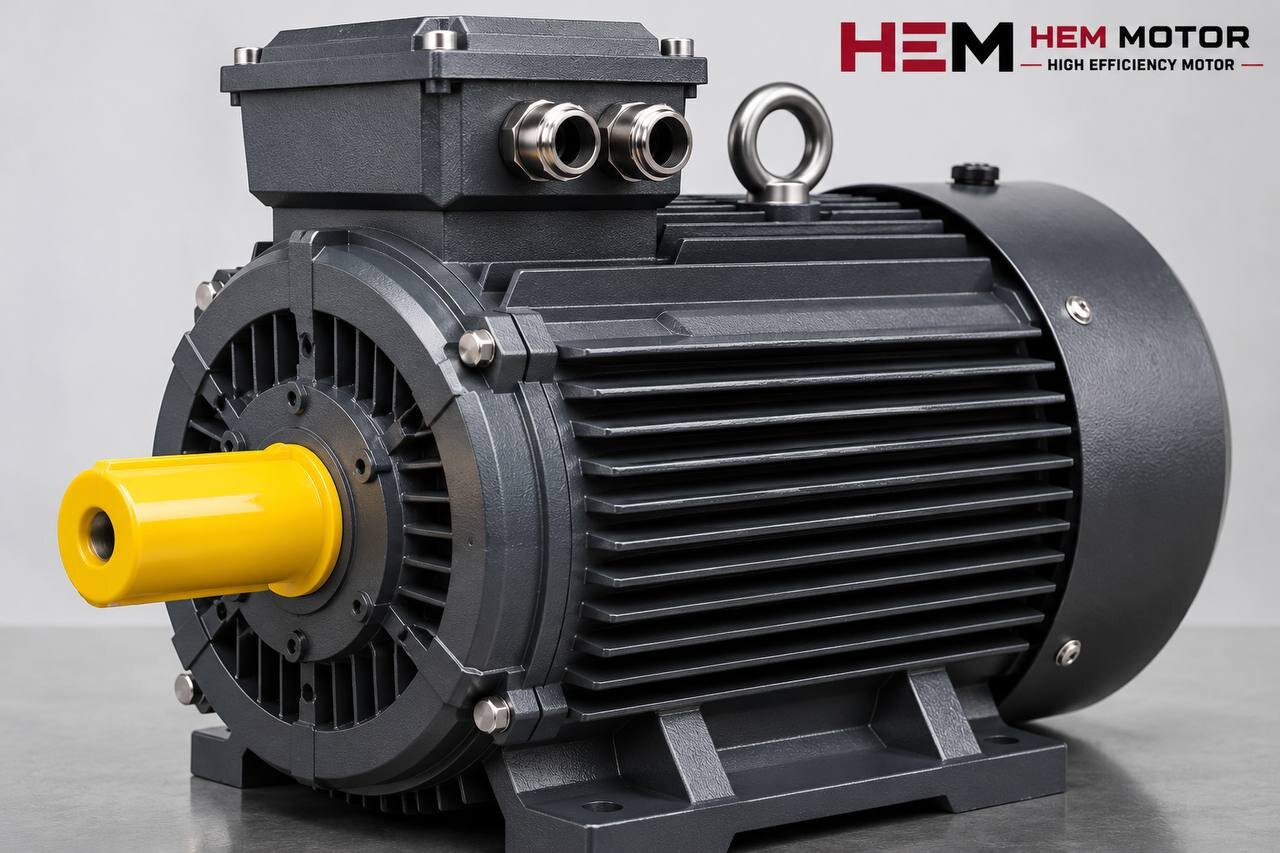

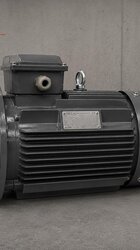
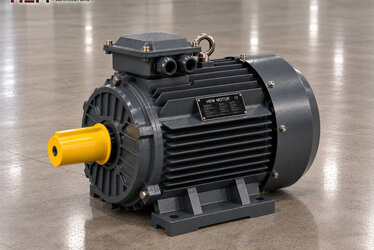
Three-phase electric motor with visible terminal box
The gland direction and gasket of the terminal box are the first line of defence against condensation (representative image).

Prices and technical data are on the product pages; choose a model and order online.

When is an anti-condensation heater needed?

A heater is a sensible measure for a motor that does not move for weeks and stands in an environment where temperature swings noticeably between night and day. A standby pump, a seasonal irrigation motor and a cooling tower fan idle in winter are typical examples.

The anti-condensation heater is an order option for HEM Motor. The heater switches on when the motor stops and is cut off by the contactor's auxiliary contact while the motor runs; this keeps the winding and the inside of the box a few degrees warmer than ambient.

On a motor without a heater, some drives can provide similar heating by feeding a low DC current into the winding at standstill. Whether this function exists and how it is set is checked in the drive manufacturer's manual.

Whether there is a condensate drain hole under the frame, and whether it comes plugged, has not been verified for HEM models here; it must be confirmed with the order.

Which measure fits which symptom?

The table below gives a starting point for linking the sign seen on site to a measure:

Sign seenLikely sourceFirst measure
Morning droplets inside the coverNight-day temperature differenceGasket check, heater at standstill
Water at the bottom of the boxWater running through the conduitConduit elbow, sealing the conduit end
Rust marks around the glandMismatched gland or entry from aboveCorrect size gland, entry from below
Low insulation resistance in the morningMoisture reaching the windingDrying, heater, closing entry paths

A motor whose insulation resistance has dropped is not energised again before drying. The drying method and duration are decided together with a rewinding shop or the manufacturer, according to the condition of the winding.

What motor information should be written on the order for a damp environment?

In the HEM Motor standard series protection is at IP55 level, winding insulation is class F and the motors carry CE marking. The IP55 rating describes external protection against dust and sprayed water; since condensation forms inside the box, the protection rating alone is not the answer.

The order states whether the motor will stand outdoors or in a wash-down area, whether it will stand idle for long periods, and its mounting position. Options such as a heater and a temperature sensor embedded in the winding are added according to this information; IP56 can also be considered as a special order.

Examples of cast iron steps often used in damp environments (all 4-pole, 400/690 V):

  • 112M-4: 4 kW, 1450 rpm, 7.95 A on a 400 V supply.
  • 132M-4: 7.5 kW, 1460 rpm, 14.3 A on a 400 V supply.
  • 160M-4: 11 kW, 1465 rpm, 20.4 A on a 400 V supply.

Series information is on the asynchronous electric motors page. For the first checks after installation, see the commissioning guide.

Share three photos showing the open terminal box, the cable entry and the rating plate through the nameplate submission page; we will settle the heater and gland needs together and pick the right model from the sales list.

Frequently Asked Questions

Is it right to drill a hole in the terminal box to drain water?

A hole drilled afterwards spoils the protection rating and lets dust in. If drainage is needed, the drain arrangement foreseen by the manufacturer is asked about with the order.

Does sealing the cover edge with silicone prevent condensation?

It stops outside water for a while but does not prevent the air inside the box from condensing. The lasting solution is closing the entry paths and keeping the internal temperature up at standstill.

Should the anti-condensation heater stay energised while the motor runs?

No, it is usually cut off while the motor runs. A running motor already warms up from its own losses; the heater is for standstill.

HEM Motor Models Related to This Article

The cards show example models related to the topic. A suitable motor is not chosen by power alone: compare speed, voltage, mounting, shaft and connection dimensions on the product page; if unsure, send a photo of the existing motor’s nameplate on WhatsApp.

4 kW 1500 rpm Cast Iron Frame Electric Motor 112M-4

112M-4

4 kW · 1500 rpm

  • Cast iron frame · IEC 112M
  • 1450 rpm · IP55
  • Mounting: B3 foot; flange (B5/B14/B35) depending on frame, confirmed with the order

US$249.49 (€228.34)

View product
7.5 kW 1500 rpm Cast Iron Frame Electric Motor 132M-4

132M-4

7.5 kW · 1500 rpm

  • Cast iron frame · IEC 132M
  • 1460 rpm · IP55
  • Mounting: B3 foot; flange (B5/B14/B35) depending on frame, confirmed with the order

US$387.29 (€354.46)

View product
11 kW 1500 rpm Cast Iron Frame Electric Motor 160M-4

160M-4

11 kW · 1500 rpm

  • Cast iron frame · IEC 160M
  • 1465 rpm · IP55
  • Mounting: B3 foot; flange (B5/B14/B35) depending on frame, confirmed with the order

US$557.82 (€510.52)

View product

Similar Articles