English
 Français
 Türkçe
 Español
 Русский
 العربية
 Deutsch
 Italiano

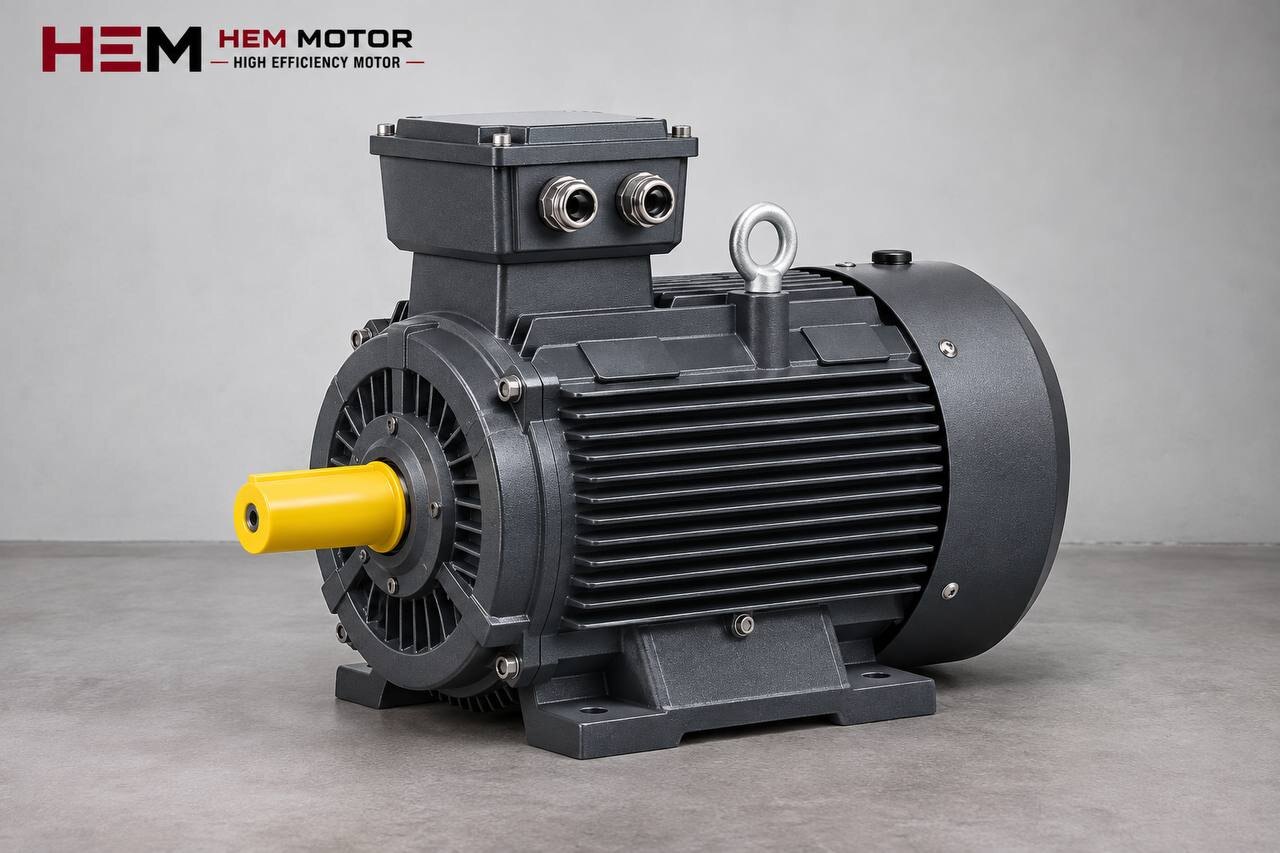

The enamel class of the winding wire in an electric motor expresses two things together: the thermal class showing at what temperature the varnish coating on the copper wire can operate for long periods, and the thickness grade of that coating. The insulation class on the motor nameplate (e.g. F) is the class of the entire insulation system; enamelled wire is only one part of that system and is usually chosen in a higher thermal class than the system. Knowing the enamel class when having a motor rewound or reading a workshop report directly affects the motor's life and its ability to withstand inverter operation.
Where does enamelled wire sit in the motor's insulation system?
Different insulating materials work together in the winding of an induction motor: wire enamel (insulation between conductors), slot liner paper or film (between winding and lamination stack), phase separators (between phases), lacing cord, lead wires and the impregnating varnish that bonds them all. The insulation class on the nameplate is the class of these materials tested together.
So "class F motor" does not mean that every component was chosen exactly for class F temperature.
In practice enamelled wire is often chosen one thermal class above the system, so that even at the hottest point of the winding the wire stays away from its limit. The weak link of the system is usually not the enamel but voids where the impregnation has not filled properly, or the slot insulation.
What does the thermal class of enamelled wire show?
The thermal class of enamelled wire is derived from its thermal index, which shows the temperature the wire can withstand over a defined service life. Manufacturers' catalogues give this value in °C; common enamelled wires come in thermal classes of 155 °C, 180 °C, 200 °C and 220 °C. As the figure rises, the coating chemistry changes: polyurethane and polyester based enamels sit in the lower classes, while polyester-imide with a polyamide-imide overcoat, i.e. dual-coat enamels, sit in the upper classes.
Winding life is very sensitive to temperature. A practical rule often used on site is that insulation life roughly halves for every increase of about 10 °C in winding operating temperature (general information; confirm with the material and motor manufacturer's data). Hypothetical example: a winding running 10 °C below its thermal class limit can be expected to last about twice as long as the same winding running at the limit.
This rule also explains why raising the enamel class helps. With the motor running at the same temperature, wire of a higher thermal class stays further from its limit and leaves margin for hot spots, voltage surges or temporary overloads.
What does the enamel thickness grade (Grade 1, 2, 3) mean?
The second classification of enamelled wire is coating thickness. The IEC 60317 family defines grades for the same copper diameter according to whether the enamel is thin, medium or thick. Grade 1 is the thinnest and Grade 3 the thickest coating; Grade 2 is the most widely used in electric motor windings.
Thicker enamel increases breakdown strength between conductors, but less copper fits into the same slot. If the slot fill factor drops, either the number of turns or the wire cross-section has to be reduced, which changes the motor's characteristics.
So if the rewinding workshop changed the enamel grade of the original winding, it should state clearly whether it was able to keep the same wire diameter and number of turns.
When the wire diameter is measured with a micrometer, the enamel thickness is included in the result. To find the copper diameter, the enamel is burnt off or stripped chemically and the bare diameter measured; otherwise the calculated cross-section comes out larger than it really is.
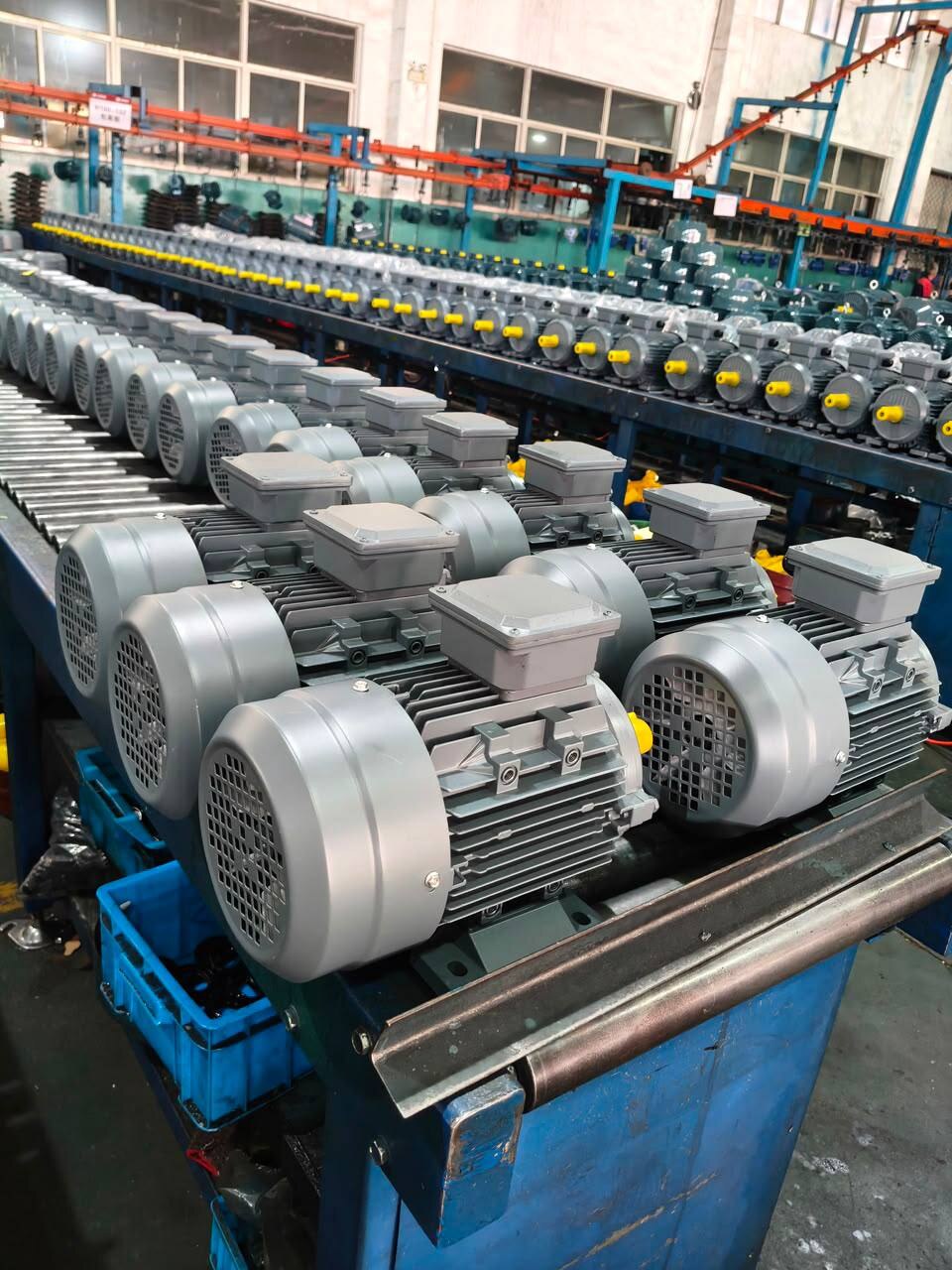
Why is the enamel stressed more in an inverter-driven motor?
The output of a frequency converter consists of voltage pulses with very short rise times. As the cable gets longer, impedance mismatch between cable and motor makes these pulses reflect and grow at the motor terminals. The largest voltage difference appears between the first turns of the winding and between phases, exactly where the enamel is thin.
If the pulse voltage exceeds the enamel's partial discharge inception voltage, partial discharges start in tiny air voids at the wire surface. They slowly erode the enamel and can lead to an inter-turn short circuit within months. Against this risk, partial-discharge resistant (corona resistant) enamelled wire, extra insulation on the first turns and a well-filled impregnation are used.
On the drive side the measures are known: our three-phase series are suitable for speed control with a frequency converter; for long periods of full-torque operation at low speed a separate fan may be needed; if the drive–motor cable is long, a dv/dt or sine filter is considered; these conditions are stated in the order.