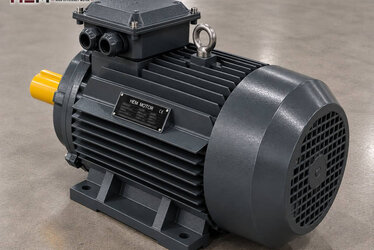
The Margin Between Thermal Class and Operating Temperature in an Electric Motor

The Margin Between Thermal Class and Operating Temperature in an Electric Motor

The margin between an electric motor's thermal class and its operating temperature is the difference between the highest temperature the insulation material can withstand and the hottest spot the winding actually reaches in service. The wider the gap, the more slowly the insulation ages. As the gap shrinks, winding life shortens rapidly. The main factors that consume the margin are high ambient temperature, permanent overloading, low supply voltage or phase imbalance, dirty cooling paths, altitude and frequent starting.

What does the insulation class letter tell you, and what does it not?

The insulation class indicates the temperature level for which the material system used in the winding is designed to last over the long term. In the widely accepted IEC 60085 classification, the letter B represents 130 °C and the letter F represents 155 °C. This value is not the frame temperature of the motor but the limit that the hottest spot inside the winding must not exceed.

An F on a motor's nameplate does not mean the winding will run comfortably up to 155 °C under all conditions. The letter only shows the upper limit of the material. The real question is how far the motor stays from that ceiling under its own load and in its own environment. HEM Motor's standard series use class F insulation. A higher insulation class can only be requested as a special-order option.

How is the hottest spot of the winding calculated?

The hottest spot of the winding can be thought of as the sum of three parts: ambient temperature, the average temperature rise of the winding and the additional difference between the average and the hottest spot. As a formula: T_hot spot ≈ T_ambient + ΔT_rise + ΔT_extra. In the IEC 60034-1 family, nameplate values are mostly given on the basis of cooling air of at most 40 °C and an installation height of up to 1000 metres above sea level.

As general knowledge, the temperature rise limit measured by the resistance method is in the order of 80 K for class B and 105 K for class F. Many manufacturers use class F material together with a class B level of temperature rise, so that the difference turns directly into a life margin. Confirm the temperature rise of the model you buy from the catalogue or manufacturer data. The figures given are general knowledge. They should be checked against the instructions of the measuring instrument and machine manufacturers.

A hypothetical budget example

Assume a class F motor rises by 75 K at rated load and the difference between average and hot spot is 10 K. At 40 °C ambient the hot spot is about 125 °C. A margin of 30 K remains to the 155 °C limit. If the same motor is moved to a boiler room that reaches 55 °C in summer, the hot spot approaches 140 °C and the margin is halved.

How does the 10-degree rule turn the margin into life?

According to the approximate rule widely used in the field, when the winding runs 10 °C hotter the expected insulation life roughly halves, and when it runs 10 °C cooler it roughly doubles. The reason is chemistry. Insulation ageing is a chemical process and speeds up with temperature. The rule is not an exact law. The coefficient varies with the material system, but it is a powerful tool for comparison.

In the example above, the extra 15 K of heating can cut the life expectancy to roughly a third. Conversely, choosing the motor one power step higher or improving the cooling air pulls the hot spot down by a few degrees and gains years.

Calculating the margin is a job for the selection stage, not for after a failure.
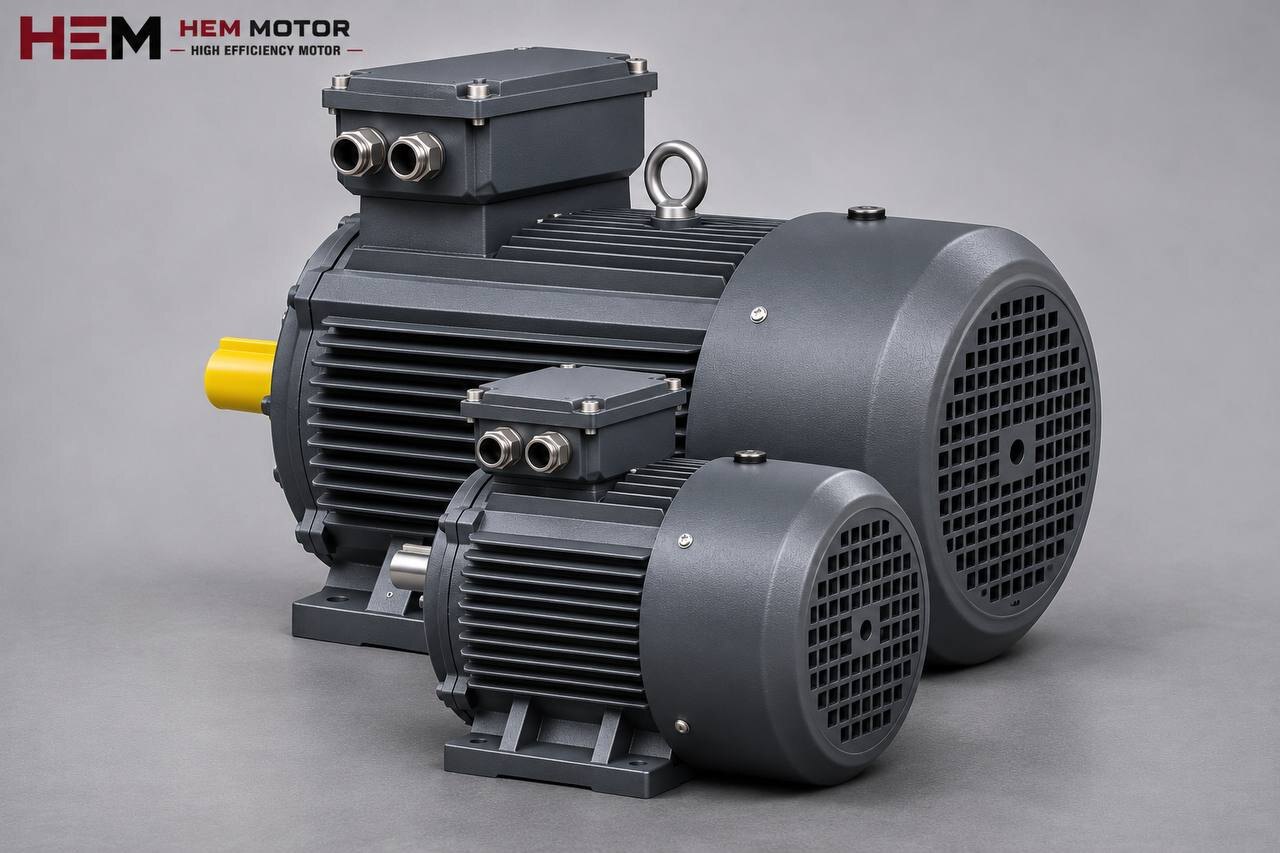
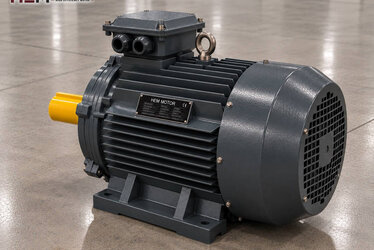
Rear view of the fan cowl and cooling fins of a three-phase electric motor
Air entering through the fan cowl and flowing along the frame fins is the first element protecting the temperature margin (representative image).

Which site conditions quietly erode the margin?

ConditionEffect on the marginMeasure that can be taken on site
Ambient above 40 °CThe hot spot rises directly with the ambientVentilation, moving the motor away from heat sources, power reserve
Altitude above 1000 mThin air weakens coolingState the altitude when ordering, calculate derating with the manufacturer
Low or unbalanced voltageCurrent and copper losses increaseMeasure phase voltages, eliminate the imbalance
Clogged fins, dirty fan cowlHeat cannot be rejected from the frameRegular cleaning, maintenance interval suited to the dust
Frequent starting and brakingRotor and stator take heat loads in a short timeAccount for starts per hour, PTC monitoring
Long periods at low speed on an inverterThe shaft-mounted fan delivers too little airConsider an external fan

Prices and technical data are on the product pages; choose a model and order online.

How is the real winding temperature measured on site?

The most reliable method is the resistance method. The cold winding resistance (R1) and its known temperature (T1) are recorded. Once the motor has reached equilibrium under load, it is stopped quickly and the hot resistance (R2) is measured. For a copper winding the average winding temperature is found with T2 = (R2 / R1) · (235 + T1) − 235. Touching the frame cannot give you this information.

The frame surface is noticeably cooler than the winding. A surface thermometer or thermal camera is useful for tracking trends but does not show the hot spot directly. For permanent monitoring, a PTC or PT100 temperature element embedded in the end windings is an option that can be added when ordering. We explain how to record current and temperature at first start-up in our checklist for before and after first energising.

Common measurement mistakes

  • Delaying the measurement after stopping the motor; the winding cools quickly and the result comes out low.
  • Measuring the cold resistance before the motor has reached ambient temperature.
  • Including the resistance of the connecting cable in the winding resistance.

What can be done in motor selection to win back the margin?

If ambient temperature and altitude are known, the soundest approach is to state them clearly when ordering and, if the calculation is tight, to move up one kilowatt step. A cast iron frame carries short loads more evenly thanks to its thermal mass. An aluminium frame dissipates heat quickly where the load is light and ventilation good. The IE3, IE4 and IE5 efficiency classes also keep the winding cooler at the same load to the extent that they reduce losses. You can filter suitable power steps by number of poles and frame material in our electric motor shop.

Example models for the hot ambient and full load scenario (the pairings are hypothetical):

  • For a pump where 15 kW is enough in a cool plant room, the cast iron 160L-4; 1465 rpm, rated current 27.3 A.
  • If the same pump is moved to a boiler room constantly around 50 °C, the next step up, the 180M-4; 18.5 kW, 1470 rpm.
  • For a hot roof extractor drive, the 5.5 kW, 4-pole 132S-4; 1460 rpm, 400/690 V.

A summary of frame options for harsh environments is available on the cast iron frame series page.

Which data are needed for the temperature margin?

To find the right counterpart, the motor's actual load current, the highest ambient temperature in summer, the altitude, the number of starts per hour and, if available, the measured winding resistance are enough. If the existing motor often runs hot, send us its nameplate photo and these measurements via the find an equivalent from the nameplate page; together we will assess the power and frame that will rebuild the thermal margin. Other models are listed in the HEM Motor product list.

Frequently Asked Questions

If the frame is too hot to touch, is the motor faulty?

Not always; the frame of a healthy motor can also get too hot to touch. To decide, measure the winding temperature by the resistance method or compare the current with the nameplate value.

With class F insulation, is it a problem to run the motor permanently above nameplate current?

Yes; class F is only the upper limit of the material. Continuous overload increases heating, erodes the margin and, according to the 10-degree rule, shortens winding life.

What should be reported for a motor installed at high altitude?

The altitude of the installation site and the ambient temperature should be stated when ordering. Because thin air reduces cooling, these details are used to calculate whether derating or a larger frame is needed.

Does a PTC sensor increase the temperature margin?

It does not increase the margin, but it catches the moment the margin runs out. When the winding approaches its limit temperature, the protection circuit stops the motor and prevents permanent damage to the insulation.

HEM Motor Models Related to This Article

The cards show example models related to the topic. A suitable motor is not chosen by power alone: compare speed, voltage, mounting, shaft and connection dimensions on the product page; if unsure, send a photo of the existing motor’s nameplate on WhatsApp.

15 kW 1500 rpm Cast Iron Frame Electric Motor 160L-4

160L-4

15 kW · 1500 rpm

  • Cast iron frame · IEC 160L
  • 1465 rpm · IP55
  • Mounting: B3 foot; flange (B5/B14/B35) depending on frame, confirmed with the order

US$665.08 (€608.69)

View product
18.5 kW 1500 rpm Cast Iron Frame Electric Motor 180M-4

180M-4

18.5 kW · 1500 rpm

  • Cast iron frame · IEC 180M
  • 1470 rpm · IP55
  • Mounting: B3 foot; flange (B5/B14/B35) depending on frame, confirmed with the order

US$856.68 (€784.05)

View product
5.5 kW 1500 rpm Aluminium Frame Electric Motor 132S-4

132S-4

5.5 kW · 1500 rpm

  • Aluminium frame · IEC 132S
  • 1460 rpm · IP55
  • Mounting: B3 foot; flange (B5/B14/B35) depending on frame, confirmed with the order

US$320.18 (€293.04)

View product

Similar Articles