Electric Motor Runs in Star but Stops in Delta: What Should Be Checked?

Electric Motor Runs in Star but Stops in Delta: What Should Be Checked?

If an electric motor runs in star but stops when it changes over to delta, the fault is in one of four places: the delta contactor never pulls in, a phase is missing or reversed on the delta side, the motor plate does not suit this starting method, or the load is too heavy to reach speed in star. The first job is to tell whether the motor coasts down freely at changeover, brakes to a stop, or whether the protection opens.

Why should you first separate what happens at changeover?

Because each symptom points to a different circuit, and starting in the wrong place costs hours. If the motor slows quietly, as if put in neutral, no energy is reaching the winding; if it stops suddenly with a hard hum and a jolt, energy is arriving but arriving wrongly.

In the third case the motor runs in delta for a moment, then the thermal overload relay, motor protection breaker or fuse opens. Watching the changeover with the panel door open is enough to make this distinction. Which contactor drops out and which one pulls in can be seen and heard; a contactor gives a metallic click as it closes.

Nobody should be alone while observing. One person stands at the panel, one beside the motor, and they talk by radio or phone.

If the delta contactor never pulls in, what is checked in the control circuit?

If the star contactor releases and the delta contactor does not close, the motor stays idle even with the main contactor closed, because the second ends of the windings are connected to nothing. The symptom is a free coast-down to standstill; there is no hum in the panel.

The search follows the control diagram. First the timer relay output is measured: when the set time expires, the lead going to the delta coil must receive voltage. If voltage is present, next comes the normally closed auxiliary contact of the star contactor; this contact is the electrical interlock that stops both contactors closing at once, and it must close when the star contactor releases. A dirty or burnt auxiliary contact makes this lock permanent. Finally the resistance of the delta coil is read with a multimeter, and an open-circuit coil shows up at once.

On mechanically interlocked contactor pairs, if the interlock block has slipped out of place, the delta contactor cannot close physically either. The coil is energised and hums, but the armature does not move.

If protection trips at changeover, is the problem the connection or the load?

If protection opens as soon as the motor goes to delta or within a few seconds, check the connection first and the load second. The practical way to separate them is to uncouple the motor and try it at no load.

If the same happens at no load, the problem is electrical: the motor plate, cable order or a contactor contact. If it changes over cleanly at no load and trips under load, the motor is not reaching enough speed in star. Starting torque in star is about one third of the direct-on-line value (general information; confirm with the machine manufacturer). A centrifugal spin dryer with a full drum or a conveyor with material left on it cannot get close to rated speed with that torque; when changeover happens at low speed the current drawn is almost as high as direct starting current, and the protection rightly cuts it.

The timer relay setting is decisive here. A clamp meter goes on one cable of the star branch, the moment the current falls from its peak and settles at a steady value is noted with a stopwatch, and the relay is set slightly above this time. Leaving the time on instinct with "5 seconds will do" is the most common mistake on heavily loaded machines.

What happens if the phase order on the delta contactor is reversed?

At changeover the motor meets a field opposing its own direction of rotation, brakes hard, draws very high current and the protection usually opens. This comes from the second ends of the windings being connected to the delta contactor in the wrong order.

If the motor was reconnected after maintenance, or one of the six cables was replaced, this possibility goes to the top of the list. With the correct arrangement the direction of the field turning in star stays the same in delta. To check, the supply is isolated and locked, and the cables are matched one to one by their numbers at the motor terminals and in the panel; a cable that has lost its number ring has to be found with a continuity test.

The same picture appears when the start and end of one winding are swapped. The field of that winding is reversed, in delta the motor draws unbalanced current, vibrates and loses speed. In star this fault is less obvious, so the technician believes the motor is healthy.
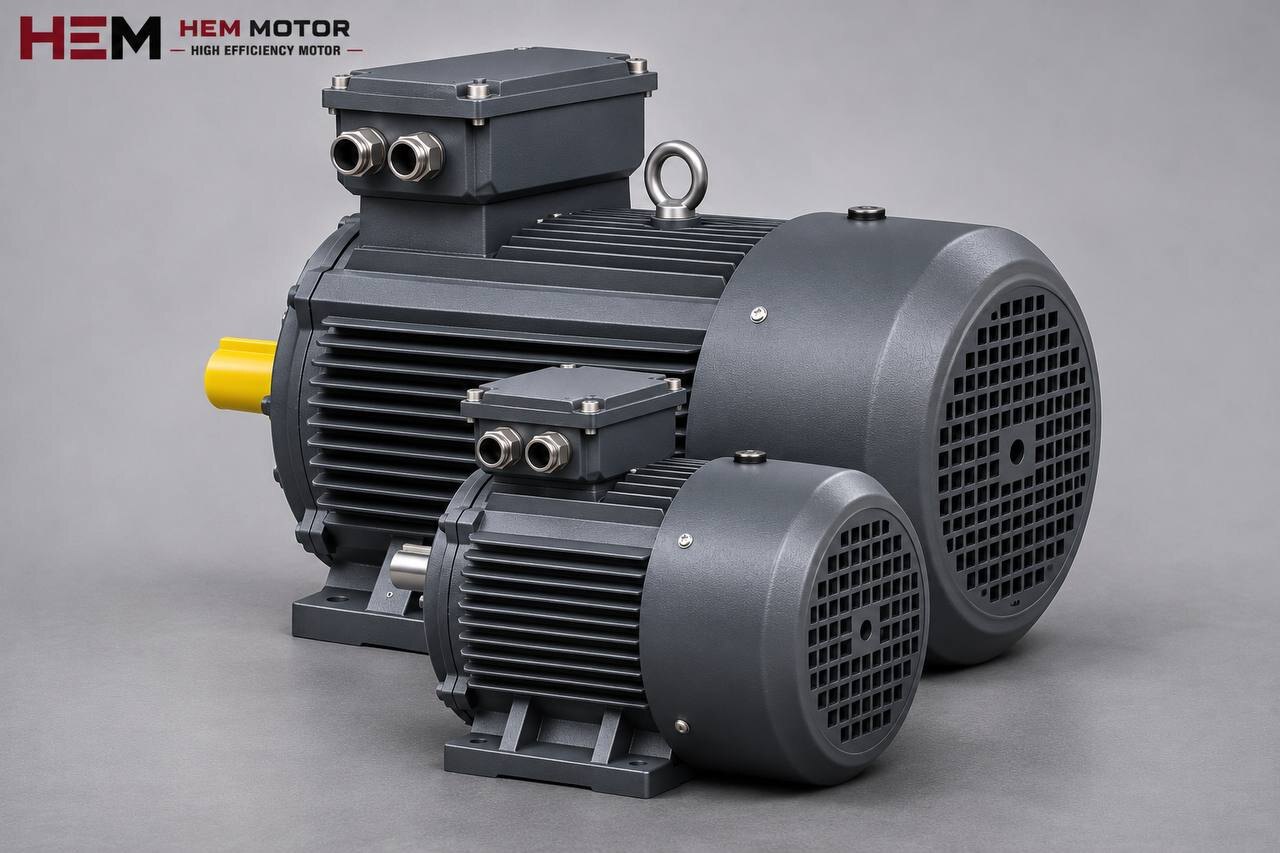

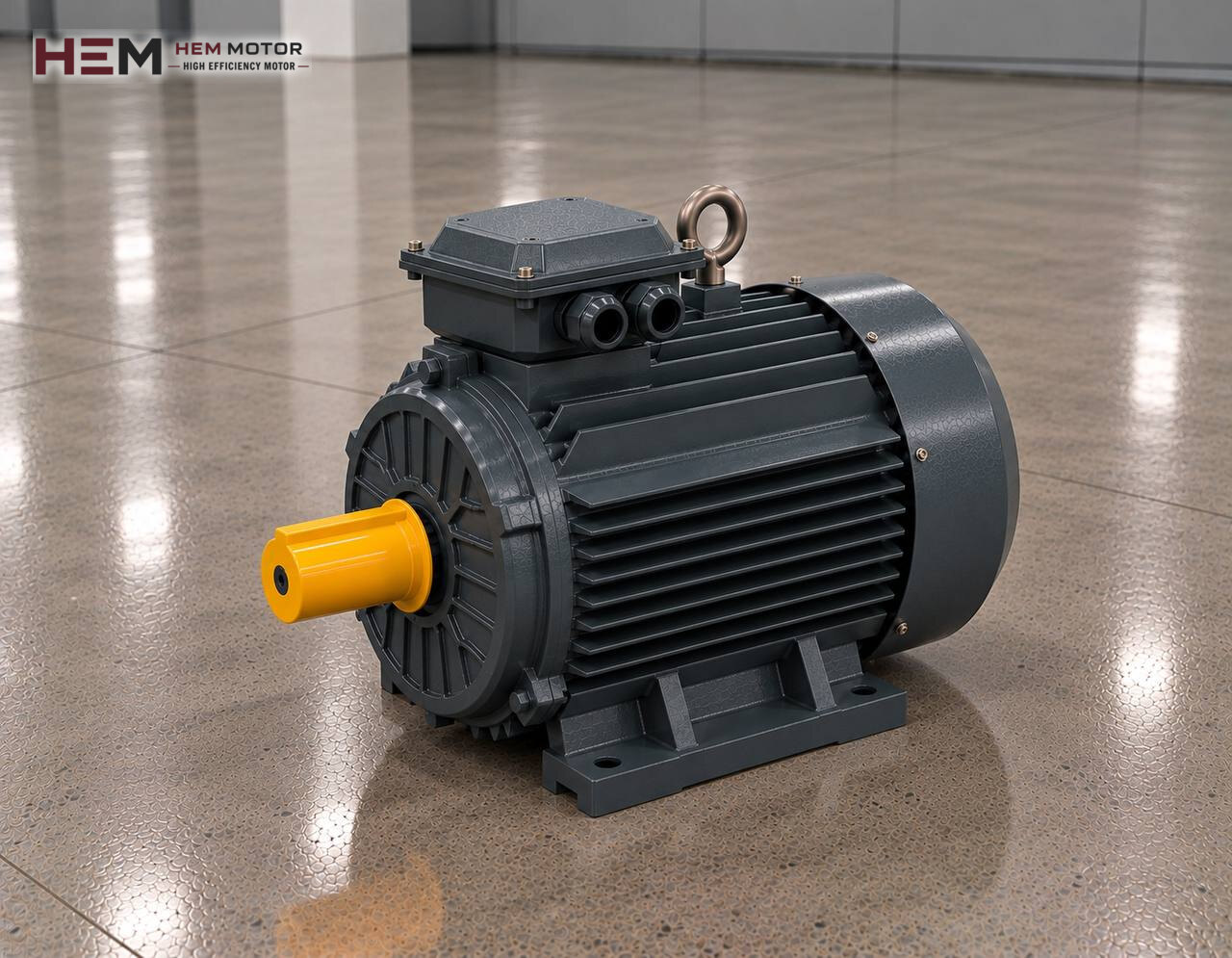
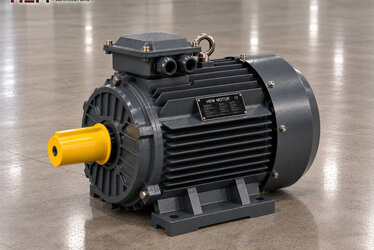
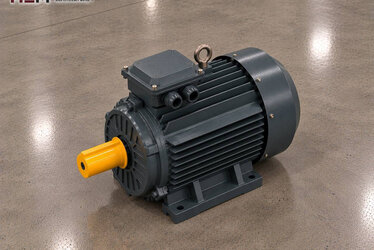
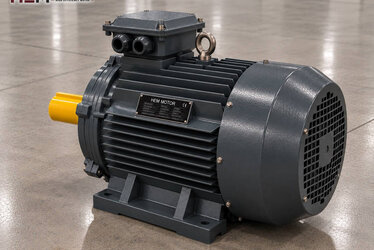
Three-phase electric motor seen from the fan cover side
During the changeover test one person stands beside the motor watching direction of rotation and sound (representative image).

Prices and technical data are on the product pages; choose a model and order online.

Is the motor plate suitable for star-delta starting?

If the factory supply is 400 V, star-delta starting only works correctly with a motor plated 400/690 V. A motor plated 230/400 V is already wound to run in star at 400 V; the moment it goes to delta its winding sees √3 times its design voltage and the protection opens within seconds.

This fault usually appears after a replacement. A failed 400/690 V motor is replaced with one of the same power and speed but plated 230/400 V, and at the first start everything looks normal in star. Reading the voltage line on the plate before the replacement removes this problem from the outset; on the model pages in the store the voltage is also written next to power and speed.

Quick check table from symptom to cause

Seen at changeoverLikely causeFirst check
Motor slows quietly and stopsDelta contactor not pulling inTimer relay output, auxiliary contact of star contactor, coil resistance
Hard braking, high current, protection opensPhase order reversed on delta sideNumber matching of the six cables
Protection trips within seconds even at no load230/400 V motor being switched to deltaVoltage line on the plate
Trips only under load, normal at no loadChangeover before speed settles in starCurrent decay time with a clamp meter
Vibration and hum in delta, low speedOne winding reversed or one pole burnt on delta contactorPhase currents, contact surfaces

When checking contactor poles, the contact surface is inspected with a torch after removing the cover. A blackened, cratered or welded pole leaves one phase missing in delta, and the motor struggles round on two windings in an open-delta arrangement. Such a motor runs at no load and stalls under load.

Write down the measured values and observations. When the fault recurs, comparing with the previous note gives a result much faster than searching by guesswork.

If the winding is damaged, how is a new electric motor chosen?

Repeated failed changeovers overheat the winding; if insulation measurement shows a drop, the motor goes to the rewind shop or is replaced. The new motor must be plated 400/690 V, power and speed must match the old one, and the IEC frame number and mounting type must be compared.

Examples from 4-pole steps often used in star-delta panels:

  • 112M-4, cast iron, 4 kW, 1450 rpm, 400/690 V, 7.95 A at 400 V. The first rating in the range where the 400/690 V plate begins.
  • 160M-4, cast iron, 11 kW, 1465 rpm, 400/690 V, 20.4 A at 400 V.
  • 180L-4, cast iron, 22 kW, 1470 rpm, 400/690 V, 39.7 A at 400 V.

The models are IP55 with class F insulation and carry CE marking; which of the IE3, IE4 and IE5 classes can be supplied is confirmed per model with the order. Other ratings are in the electric motor store, and a summary of the family is on the asynchronous electric motors page. For the first start-up sequence after installation, the commissioning checklist can be used.

Photograph the plate of the failed motor and the inside of its terminal box and send them through the find-an-equivalent-by-nameplate page; we will check the voltage line and frame match and choose a suitable model together from the HEM Motor sales list.

Frequently Asked Questions

How many seconds should the star-delta changeover time be?

There is no fixed value; the time for current in star to fall and settle is measured and the relay is set slightly above it. A few seconds are enough at light load, while the time gets longer on machines with heavy inertia.

What should be done if the motor runs backwards in delta?

The order of the second ends going to the delta contactor is wrong; the cables are rematched according to the diagram so that direction agrees with star. Swapping the main supply phases reverses direction in both positions at once and does not correct this fault.

Is leaving a motor permanently in star a solution?

A motor plated 400/690 V left in star at 400 V gives about one third of its rated torque and overheats under load. Even as a temporary measure, load and temperature must be watched closely.

Is a short current surge at changeover normal?

Yes, a brief current surge is seen when changing from star to delta. If the surge is large and long, changeover is happening at low speed or the gap between contactor release and pull-in is longer than necessary.

HEM Motor Models Related to This Article

The cards show example models related to the topic. A suitable motor is not chosen by power alone: compare speed, voltage, mounting, shaft and connection dimensions on the product page; if unsure, send a photo of the existing motor’s nameplate on WhatsApp.

4 kW 1500 rpm Cast Iron Frame Electric Motor 112M-4

112M-4

4 kW · 1500 rpm

  • Cast iron frame · IEC 112M
  • 1450 rpm · IP55
  • Mounting: B3 foot; flange (B5/B14/B35) depending on frame, confirmed with the order

US$249.49 (€228.34)

View product
11 kW 1500 rpm Cast Iron Frame Electric Motor 160M-4

160M-4

11 kW · 1500 rpm

  • Cast iron frame · IEC 160M
  • 1465 rpm · IP55
  • Mounting: B3 foot; flange (B5/B14/B35) depending on frame, confirmed with the order

US$557.82 (€510.52)

View product
22 kW 1500 rpm Cast Iron Frame Electric Motor 180L-4

180L-4

22 kW · 1500 rpm

  • Cast iron frame · IEC 180L
  • 1470 rpm · IP55
  • Mounting: B3 foot; flange (B5/B14/B35) depending on frame, confirmed with the order

US$901.75 (€825.30)

View product

Similar Articles