If there is looseness in an electric motor bearing housing, fitting a new bearing does not cure the problem; the bearing outer ring still turns in the worn seat, and within a short time the new bearing produces the same vibration and heating. The housing bore diameter is measured first; if it is out of tolerance, the end shield or seat is repaired or replaced, and only then is the new bearing fitted.
What does looseness in a bearing housing mean?
The front and rear end shields of a motor contain a cylindrical seat in which the bearing outer ring sits. This seat is machined to the bearing outside diameter with a defined fit; the bearing goes in without force but without play.
Looseness is the seat diameter growing or becoming oval over time. The outer ring then slowly turns in the seat, which is also called creep. The turning ring wears the seat further. The cycle feeds itself. Something similar can happen on the shaft side: if the shaft seat carrying the bearing inner ring wears, the inner ring slips on the shaft. The two cases get confused, but the repair routes are different.
What are the signs of looseness?
The clearest sign is the same noise and vibration returning shortly after a bearing change. The new bearing is flawless. The problem is the seat.
When the end shield is removed, a shiny, polished band or circumferential scratches are seen on the seat surface, and the bearing outer ring shows the same shine, often as a strip the same width as the mark in the seat. Reddish-brown powder in the seat is a sign of fretting corrosion and shows that the two surfaces have been moving against each other.
If the bearing area is noticeably hotter than the other end shield during operation, if vibration measurement shows an increase at running frequency and if an irregular knocking comes from the bearing side, the seat joins the list of suspects.
There is one more clue.
If no resistance is felt when fitting the bearing into the seat and the bearing drops in by itself, the fit has been lost.
How is seat looseness measured?
The measurement is made with a bore gauge or inside micrometer after the end shield has been removed and cleaned. The diameter is read at at least two depths. At each depth, readings are taken in two directions at right angles; this shows both growth and ovality.
Reading
What it shows
What is needed for a decision
Average diameter
Overall growth of the seat
Bearing outside diameter and the tolerance on the end shield drawing
Difference between two directions
Ovality
Two readings at the same depth
Difference between two depths
Taper
Readings at the mouth and bottom of the seat
Bearing outside diameter
Whether the bearing itself is the correct size
Bearing catalogue value
The permitted tolerance varies with bearing size and application; the bearing manufacturer's housing tolerance table and the motor end shield drawing are consulted (general information; confirm with the bearing and motor manufacturer).
The shaft side is measured the same way with an outside micrometer. If the shaft seat is also worn, repairing the housing alone is not enough; the shaft is also brought back to size either by build-up and grinding or by replacement.
Why does fitting a new bearing not work?
The new bearing's outside diameter is at catalogue value; in an enlarged seat the gap stays exactly the same. When the bearing starts running, the ring turns again, and within a few weeks or months the new bearing wears too.
Some workshops try to close the gap by centre-punching the seat, raising punch marks or applying liquid adhesive. These get by for a short time. But they spoil the even seating of the bearing, can make the bearing oval and make later removal harder; they do not count as a permanent fix.
Looseness also has a cause, and any repair made without removing that cause ends with the same picture returning a few months later.
Prices and technical data are on the product pages; choose a model and order online.
The most common cause is coupling or pulley misalignment and excessive belt tension. A radial load constantly acting on the shaft end pushes the bearing in the same direction in the seat on every turn.
An unbalanced fan, impeller or pulley also creates a rotating load. Vibration loosens the fit over time. The result is the same for a motor fixed with loose foot bolts or to a base that is not flat.
In earlier bearing changes, knocking the bearing off and on with a hammer, or inserting it at an angle, can scratch the seat. A bearing seizing and its outer ring spinning fast in the seat can ruin the seat in one go. In inverter drives, damage done to the bearing by shaft currents can also be at the start of the chain.
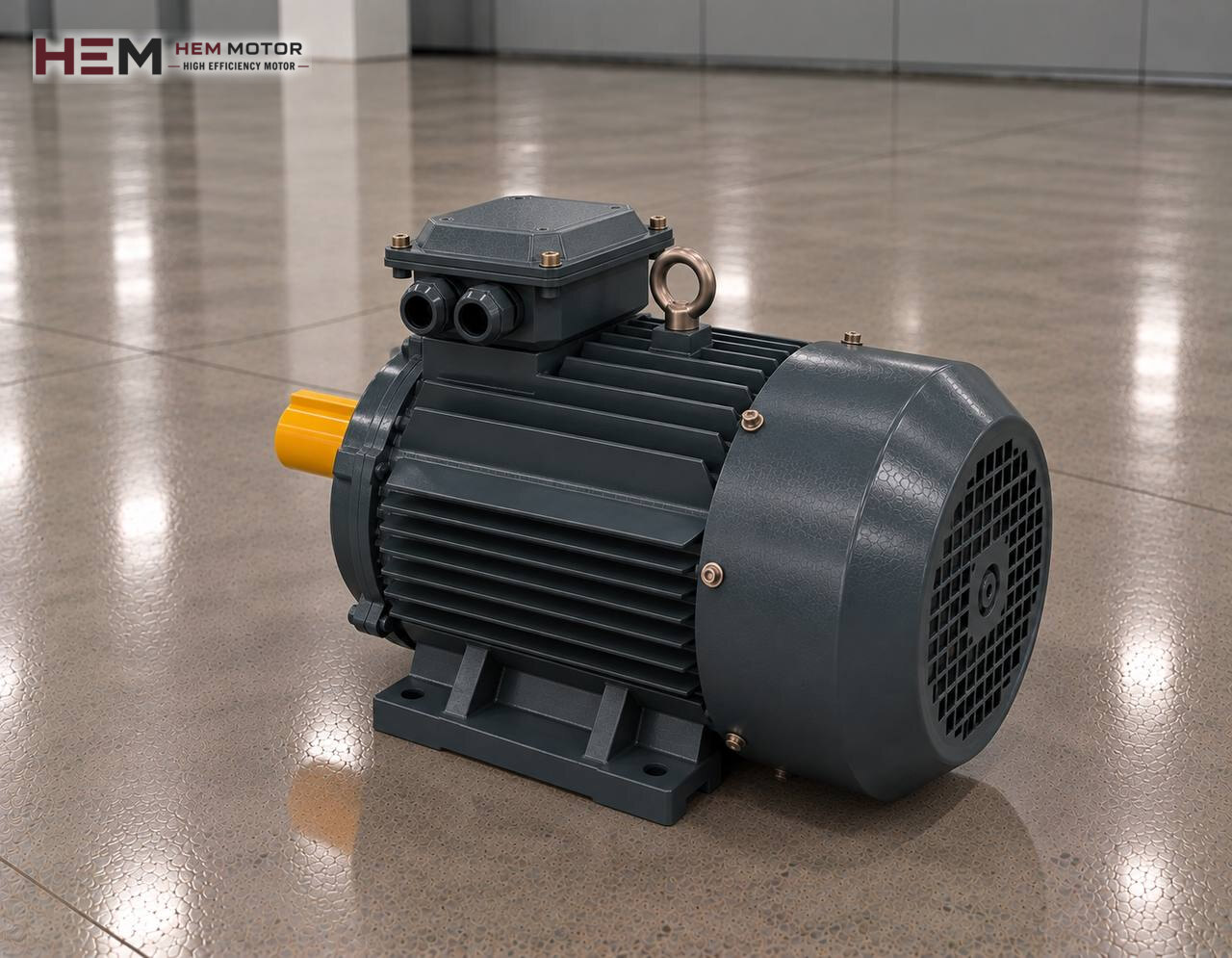
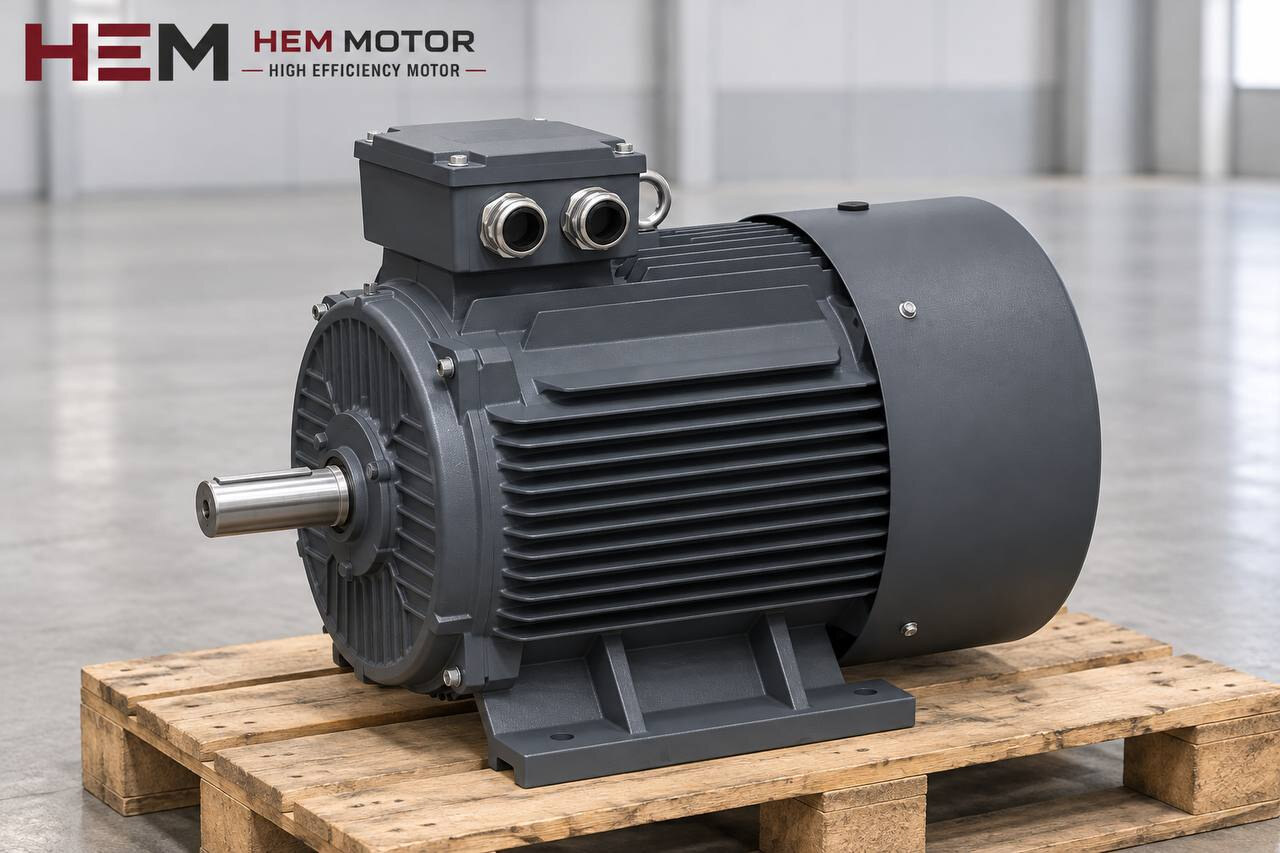
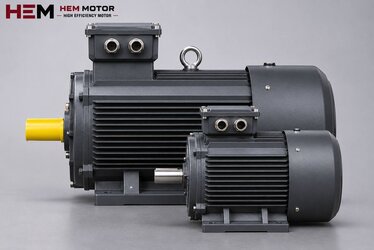
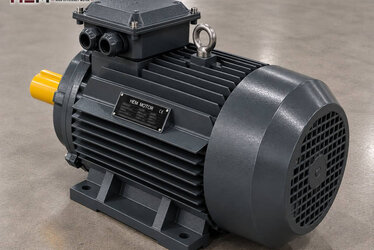
The bearing seat is in the front and rear end shield; the load pulled by the pulley reaches this seat first (representative image).
How is a loose seat repaired?
Repair options depend on how far the seat is worn and the end shield material. Which one is chosen is decided by the measurement result and the criticality of the motor together.
Sleeving: The seat is enlarged on a lathe, a steel sleeve is pressed in and the sleeve is machined to bearing size. Common on cast iron end shields.
Coating and machining: Metal spraying or weld build-up is applied to the seat, then it is machined to size. Because heat input can distort the end shield, it needs an experienced workshop.
End shield replacement: A new end shield is fitted. If the motor model and frame size are known, this is the cleanest route.
End shield replacement needs the motor model code and frame size; power and speed steps of the same frame can be compared on the shop page. Whichever route is chosen, the repaired seat must be concentric with the shaft axis. If concentricity is lost, the bearing runs at an angle and the air gap narrows on one side.
What is checked after the repair?
The new bearing is fitted with a suitable heater or puller tool; it is not hammered on. After the end shield is seated on the housing, the shaft is turned by hand; there must be no rubbing or binding. Once the motor is connected in place, alignment and belt tension are set from scratch. At first start-up, bearing area temperature and vibration are measured and recorded; these values are the reference point for later maintenance. Commissioning steps are listed in the first start-up checklist.
If the seat has been repaired several times and the housing is ageing too, replacing the motor may make more sense.
What is done if replacing the motor instead of repairing it is being considered?
The replacement decision is based on the motor's nameplate, frame size, mounting arrangement and shaft end dimensions. How to find an equivalent from nameplate data is explained on the send your nameplate, find an equivalent page.
Three four-pole cast iron housing options preferred in belt-driven drives with high radial load: 180M-4 (18.5 kW; 1470 rpm; 120.2 Nm; 33.5 A at 400 V), 200L-4 (30 kW; 1475 rpm; 194.2 Nm; 53.8 A) and 225M-4 (45 kW; 1485 rpm; 289.4 Nm; 80.2 A). These models are 400/690 V, IP55 with class F insulation. The family's other frames are on the cast iron electric motors page.
If you send the seat diameters you measured, the bearing number and the motor nameplate through our contact page, we will assess together whether repair or replacement is more suitable. Supply of spare end shields is asked about per model with the order. For current prices, the HEM Motor product list can be opened.
Frequently Asked Questions
Can the motor keep running if the bearing is turning in its seat?
Creep wears the seat a little more on every turn and can go as far as the rotor rubbing the stator. The motor should be stopped as soon as possible and the seat measured.
How is seat looseness told apart from shaft looseness?
If the shiny wear mark is on the bearing outer ring and the end shield seat, the problem is in the seat; if it is on the inner ring and the shaft, the problem is in the shaft seat. The final decision is made by micrometer measurement.
Does a sleeve repair shorten bearing life?
A sleeve repair done with the right material, the right fit and concentric machining allows the bearing to run normally. A badly machined sleeve becomes a new source of vibration.
What can be done to prevent looseness?
Coupling alignment and belt tension are measured at intervals, rotating parts are balanced and bearings are fitted with proper tools. Vibration and temperature records give early warning.
HEM Motor Models Related to This Article
The cards show example models related to the topic. A suitable motor is not chosen by power alone: compare speed, voltage, mounting, shaft and connection dimensions on the product page; if unsure, send a photo of the existing motor’s nameplate on WhatsApp.
Checking that electric motor pulleys lie in the same plane means seeing whether the side faces of both pulleys meet on one straight line. In practice a taut string, a steel straigh... More Details
If an electric motor's coupling element fails often, the first thing to investigate is shaft misalignment, followed by coupling selection, starting and shock loads, environmental e... More Details
The quickest way to tell foundation looseness from unbalance in electric motor vibration is to loosen the foot bolts one at a time while measuring and watch the change, and to comp... More Details
When building a sound enclosure around an electric motor, cooling is preserved by giving the enclosure a labyrinth or silenced inlet large enough for the air the motor fan draws, p... More Details
In an electric motor running in a hot environment, winding and bearing temperatures are monitored separately because they heat up from different sources, have different limits and ... More Details
When an electric motor is started for the first time at sub-zero temperatures, three things need checking: winding insulation resistance and any moisture or ice inside, bearing gre... More Details
We use necessary and optional cookies to improve your experience, enhance content and analyse traffic. Under the GDPR, optional (analytics/marketing) cookies are only used with your explicit consent. Please choose your preference below.
Cookie Policy
 English
 Français
 Türkçe
 Español
 Русский
 العربية
 Deutsch
 Italiano