The Most Common Electric Motor Failures on Construction Sites and How to Prevent Them

The Most Common Electric Motor Failures on Construction Sites and How to Prevent Them

The three problems that most often stop electric motors on construction sites are unbalanced supply from a temporary distribution board or generator, drainage pumps running dry or swallowing mud, and motors being knocked about in transport, left in the rain or half buried in mud. Most of these failures come not from the motor itself but from the temporary layout of the site; putting the cable route, starting sequence, pump suction and the ground the motor stands on in order removes most of the risk.

Below we go through the machines on site one by one, from excavation through the structural frame to finishing work.

From excavation to finishing: what kind of life does an electric motor lead on site machinery?

Unlike a factory, a building or infrastructure site changes its face every month. During foundation excavation, drainage pumps drawing groundwater run day and night; in the structural phase the concrete pump, screed and plastering machines, the material hoist and the rebar bending bench come into play.

When finishing work begins, some of the same motors are removed and moved to another floor, or even to another project.

This nomadic routine wears the motor in three ways: the supply is rebuilt at every new layout, the machine is shaken at every move and the motor is often left in an area without a roof. A motor that a maintenance technician sees every day in a factory may go unnoticed for weeks on a construction site.

The table below summarises the picture most often met in the field.

Site machineCommon failurePreventive step
Foundation excavation drainage pumpDry running, mud ingestion, crushed cableLevel float, suction strainer, routing the cable away from the excavation edge
Concrete and screed pumpOvercurrent in a blocked line, sudden load from hose pressureLine flushing routine, correctly set thermal protection
Plastering machine and mortar mixerStarting against hardened mortar, dust and moistureEnd-of-day cleaning, keeping the fan cover clear
Material hoist and crane driveBrake and starting problemsKeeping the special motor specified by the manufacturer
Mobile screen and conveyor beltBearing and belt damage, installation on a slopeLevel ground, belt tension check

What threatens the motor on temporary boards and generator supply?

The most common cause of burnt windings on site is a phase that drops out silently.

An extension cable crushed by an excavator, a loose plug pin or a junction box filled with rainwater cuts one of the three phases; the motor keeps turning on two phases, its current rises and if the thermal protection reacts late the winding heats up quickly. If a phase is missing at start-up the motor does not turn at all, it only hums and heats.

On generator-fed sites the picture is different: when the tower crane, concrete pump and drainage pumps switch on together, the voltage drops noticeably. The start-up moment is the hardest. On an undervoltage line a motor draws more current to hold its torque and the winding heats.

Bringing large motors in step by step, sizing the generator for the start of the largest motor and adding a phase monitoring relay to the board reduce this risk. Cable cross-section should not be decided without knowing line length, motor power and starting method; this calculation is done by the site electrical supervisor or the panel engineer.

What happens to the motor when the drainage pump runs dry or swallows mud?

When the water level falls, the pump draws water mixed with air, the gland dries out and heats, and leakage begins; the leaking water can find its way along the shaft to the motor bearing and from there to the winding. If the water in the pit is muddy, the impeller wears, the pump goes out of balance and the vibration quickly ruins the motor bearings. Either way, the damage reaches the motor.

On plots with a high water table, surface centrifugal pumps run continuously to keep the excavation pit dry.

A simple level float stops the pump when the water runs out, while a strainer at the suction keeps coarse particles out. Setting the motor end of the pump on a slightly raised base away from mud splashes also makes a difference on rainy days.

If a submersible pump lowered into the water is preferred, this duty requires a special motor; since it may fall outside the standard series in HEM Motor's 2026 catalogue, you can consult us with the nameplate and application details of the existing pump.
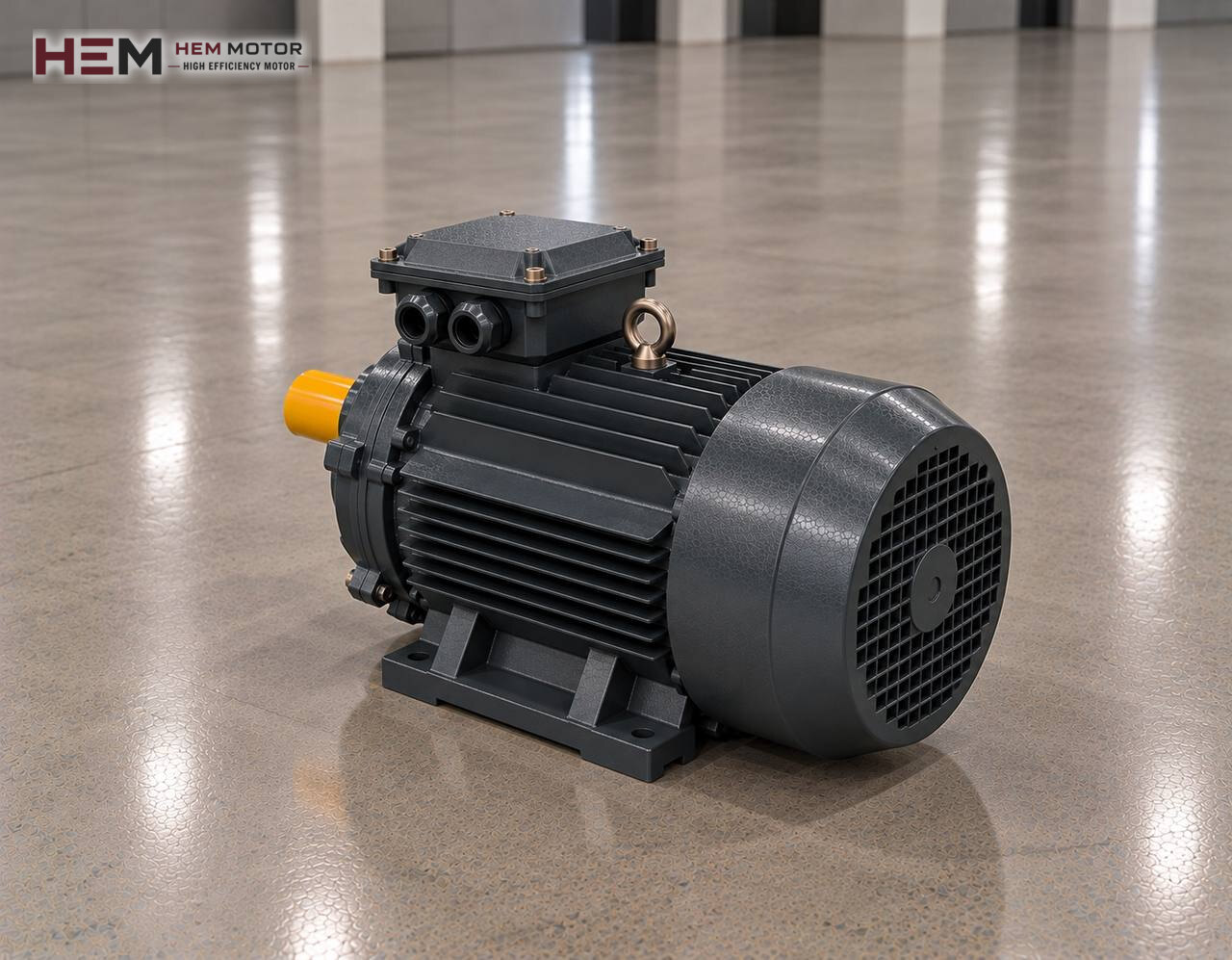
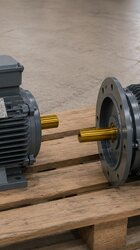
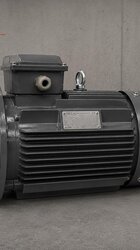
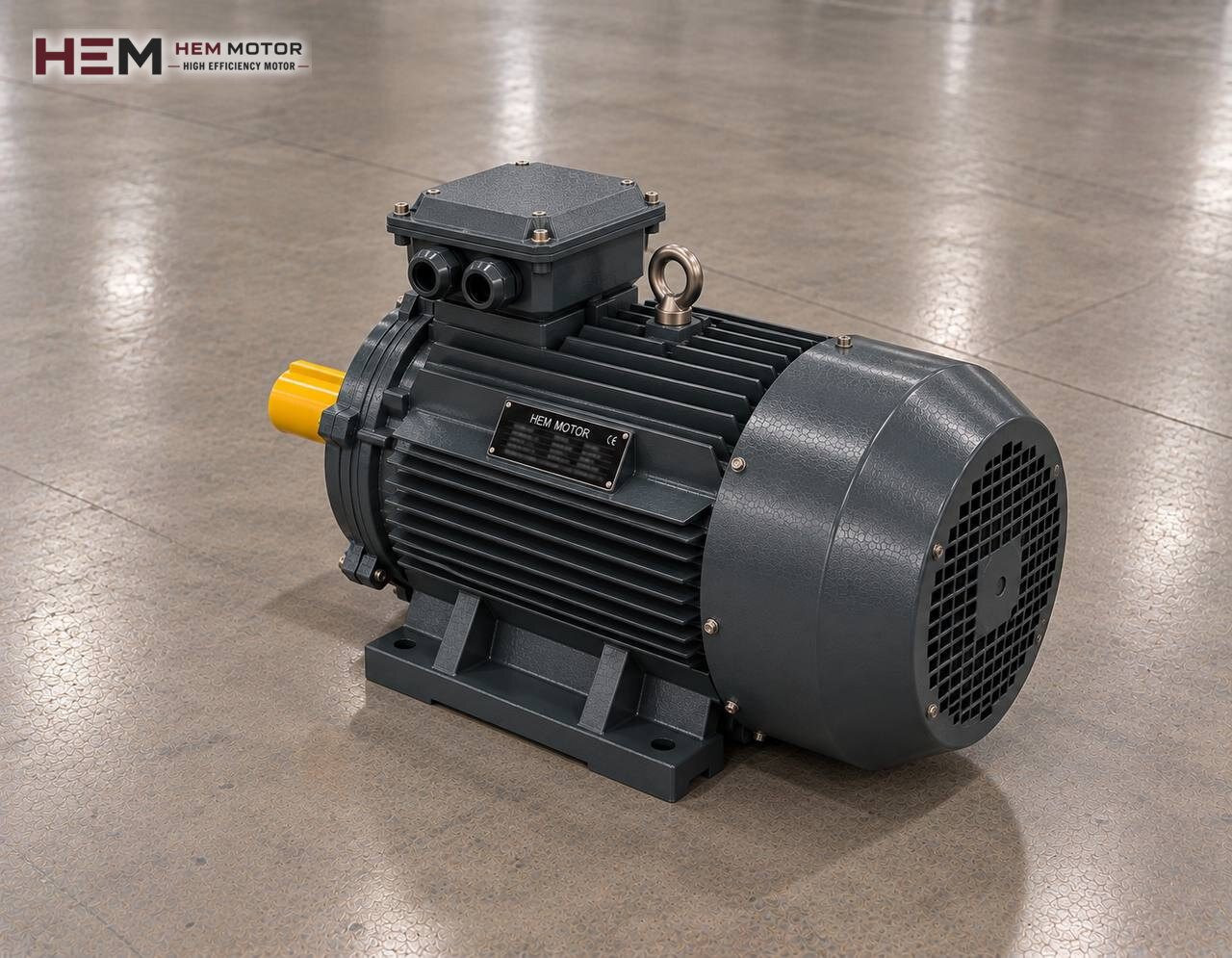
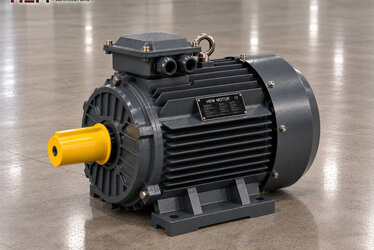
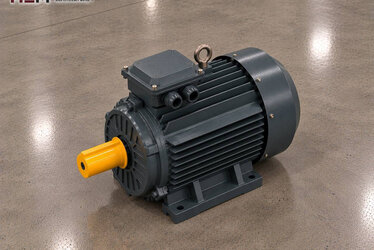
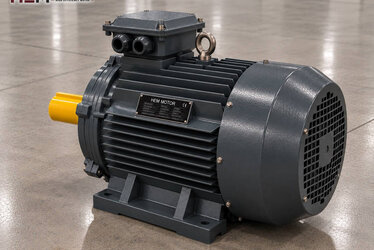
Three-phase electric motor driving a water pump on a construction site
Electric motor for driving a water pump in site and concrete work (representative image).

Where does overcurrent come from in the concrete pump, screed machine and plastering machine?

In the structural phase, the heaviest electrical load is often the stationary concrete pump and the screed and plastering machines.

A plug of dried concrete in the hose pushes the motor driving the pump's hydraulic unit up to the pressure limit; the motor draws high current for short periods and, if this repeats often, the winding insulation ages. In plastering machines, mortar left uncleaned at the end of the day hardens overnight and at the first start in the morning the motor tries to turn an almost locked screw. The first start in the morning is the heaviest moment.

Flushing the line with water after every pour and leaving no mortar inside the machine largely removes this load. Thermal protection should be set to the current on the motor nameplate; raising the setting because it trips often does not solve the problem, it burns the winding.

When dust and cement residue stick to the fan cover cooling drops, so brushing the cover clean while dry should be part of the weekly routine. For a pump or mixer drive due for replacement, you can make a pre-selection by filtering the models in our store by power and speed.


Prices and technical data are on the product pages; choose a model and order online.

How do transport, rain and mud damage a site motor?

A significant share of site motors are damaged not in operation but in transport.

A motor laid in a truck bed on its shaft or fan cover takes blows on a rough road that leave marks in its bearings; these come back as hum and vibration at the first start. The bearing does not forget these blows. A motor lifted by a forklift by its terminal box ends up with a cracked cover and a displaced gasket, and the box now lets water through.

Rain and mud are the second big threat. The standard IP55 protection class suits dusty environments with splashing water, but it is not enough for a motor left buried in mud or standing in a puddle.

Motors should be raised off the ground, the cable entry should face downwards and insulation resistance should be measured before the first start after a long standstill. For motors that will wait on an open site through the winter, an anti-condensation heater can be requested with the order; at a point washed with pressurised water, IP56 is considered as a special-order option.

What are the limits for the material hoist, tower crane and rebar bending bench?

Lifting drives are a separate class on site. Tower crane and facade hoist motors have a brake because they must hold the load in the air, and they are usually special types defined by the machine manufacturer. Such a drive requires a special motor; as it may fall outside the standard catalogue series, the right way is to ask us with the nameplate and application details.

Rebar cutting and bending benches, on the other hand, usually run on a standard foot- or flange-mounted three-phase motor. The problem here is countless starts and sudden load impacts throughout the day; a cutting machine with a blunt blade strains the motor needlessly. A sharp blade protects the motor too.

Mounting type is critical on replacement: B3, B5, B14, B34, B35 and vertical V1, V3, V5, V6, V15 arrangements are offered according to frame size, and the flange size is confirmed with the order. The IEC frame number is the first clue; fit is not settled until shaft dimensions, foot hole spacing, flange and nameplate values have been compared. For dimensions you can refer to the technical drawings.

Which electric motor can replace a failed site motor?

On replacement, first record the power, speed, voltage and mounting data on the burnt motor's nameplate.

If a speed-controlled pump or belt is involved, HEM Motor's three-phase series are suitable for operation with a frequency converter; however, if the motor will run at low speed with full torque for long periods an independent cooling fan may be needed, and if the cable between panel and motor is long a dv/dt or sine filter is considered. Both conditions must be stated with the order.

For a general overview of concrete and mortar machinery you can also look at the concrete plant motors page. The examples below are chosen for power ratings often seen on site; the final choice should be made with the machine manufacturer's data:

  • For a surface drainage pump in the excavation pit, the 5.5 kW cast iron 132S1-2 with a rated speed of 2930 rpm can be considered.
  • For a mortar mixer, rebar bender or small material belt, the 4 kW 112M-4 with a rated speed of 1450 rpm is a suitable candidate.
  • For the feed belt of a mobile screening unit or the hydraulic unit of a stationary concrete pump, the 15 kW 160L-4 can be considered; it is supplied at 400/690 V.

Why draw up the site motor inventory when the project opens?

Listing the pump, mixer and belt motors that will arrive on site before foundation excavation starts settles the cable route, generator capacity and spare needs from the outset. Photographing and keeping the nameplate of every motor on this list saves a panicked search for labels on the day of a breakdown.

You can find equivalents for drives that need replacing by kilowatt and speed in the HEM Motor store. If you struggle to read a nameplate covered by mud or concrete, follow the photo steps in the guide to finding an equivalent from the nameplate, and we will pin down together the frame that fits the machine on your site.

Frequently Asked Questions

Why does a motor on a generator-fed site stall and hum at start-up?

In most cases a phase has dropped out, or the generator cannot hold the voltage because several motors switch on at once. Plug, cable and junction box should be checked, and large motors started one after another.

Why is the drainage pump motor damaged when the water runs out?

In a dry-running pump the gland heats and starts to leak, and the leaking water can reach the bearing and winding. A level float breaks this chain by stopping the pump when the water runs out.

Can a motor that has stood outdoors for weeks be started straight away?

It is not recommended. The terminal box and gaskets should be checked first, insulation resistance measured and the motor dried if there is moisture.

Can a standard motor be fitted in place of a tower crane motor?

A crane drive needs a brake motor that holds the load in the air and is a special type specified by the machine manufacturer. You should consult us with the nameplate details.

HEM Motor Models Related to This Article

The cards show example models related to the topic. A suitable motor is not chosen by power alone: compare speed, voltage, mounting, shaft and connection dimensions on the product page; if unsure, send a photo of the existing motor’s nameplate on WhatsApp.

5.5 kW 3000 rpm Cast Iron Frame Electric Motor 132S1-2

132S1-2

5.5 kW · 3000 rpm

  • Cast iron frame · IEC 132S
  • 2930 rpm · IP55
  • Mounting: B3 foot; flange (B5/B14/B35) depending on frame, confirmed with the order

US$332.20 (€304.04)

View product
4 kW 1500 rpm Cast Iron Frame Electric Motor 112M-4

112M-4

4 kW · 1500 rpm

  • Cast iron frame · IEC 112M
  • 1450 rpm · IP55
  • Mounting: B3 foot; flange (B5/B14/B35) depending on frame, confirmed with the order

US$249.49 (€228.34)

View product
15 kW 1500 rpm Cast Iron Frame Electric Motor 160L-4

160L-4

15 kW · 1500 rpm

  • Cast iron frame · IEC 160L
  • 1465 rpm · IP55
  • Mounting: B3 foot; flange (B5/B14/B35) depending on frame, confirmed with the order

US$665.08 (€608.69)

View product

Similar Articles