English
 Français
 Türkçe
 Español
 Русский

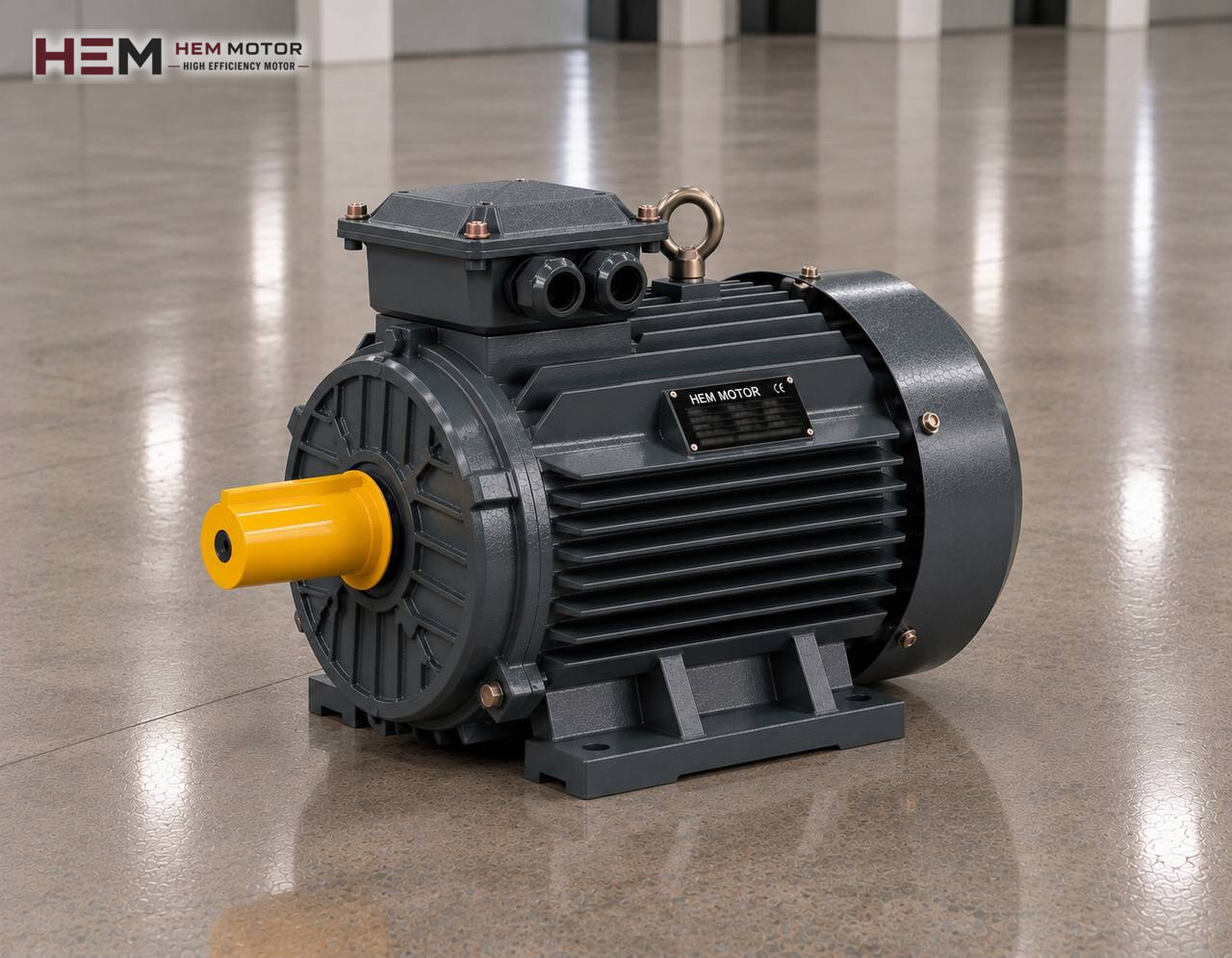
In a feed mill, raw material changes place many times: from the weighbridge to the silos, from the silo to the grinder, from the grinder to the mixing bin, then on to the pellet press and packing. Bucket elevators handle the vertical lifts along this route, while screw conveyors take care of horizontal and inclined transfers. This page explains how to choose and operate the motors that turn these conveyors in a feed plant; for all the machines in the plant, go back to the feed machinery electric motors page.

Where conveyors sit in a feed plant
A typical compound feed plant has dozens of conveyors. The first elevator lifts maize, barley and wheat from the intake pit to the silos; screws under the silos feed the weighing bins; ground material is collected by a screw and lifted to the mixing floor by a second elevator. After the pellet press, hot pellets travel to the cooler and cooled pellets go to the sifter and the product silos, again by elevator. Each one needs a small or medium motor, yet all of them are links in the same control chain.
That is why a conveyor motor in a feed plant is treated as part of the line rather than on its own. A stopped screw fills the boot of the elevator behind it; a choked elevator in turn stops the grinder in front of it. The order in which the motors start and stop matters as much as their power.
What load does feed material put on a conveyor?
The material in a feed plant changes character several times a day. Whole maize is free-flowing and heavy; ground raw material is lighter but dusty; soybean meal and bran pack easily; a mash with added oil or molasses becomes sticky; pellets are brittle and turn into fines under hard impacts.
- Whole grain: Because of its high bulk density, the intake elevator and silo screws are the most heavily loaded conveyors in the plant.
- Ground, flour-like material: It is light but can bridge at the screw inlet and cut off the flow; it creates a dust cloud in the elevator boot.
- Mash with oil or molasses: It sticks to the flights and inside the buckets, gradually narrowing the conveying cross-section and slowly raising the motor current.
- Pellets: Conveyor speed is kept low because high speed breaks the pellets; that means a larger gear ratio and a lower output speed.
If different materials will pass through the same casing, the motor is chosen for the heaviest one. When the material changes on an existing line, comparing the current on the nameplate of the running motor with the current measured by a clamp meter is the quickest way to understand the new load.
Start sequence, interlocking and stopping full
On a feed line the conveyors are started one after another against the direction of flow: first the last screw, then the elevator that feeds it, and finally the grinder or the silo outlet. When stopping, the order is reversed; once the feed is cut, the conveyors keep running for a while to empty. This sequence prevents material from piling up in the line and avoids loaded starts.
A sudden power cut breaks this order; screws and elevator boots are left full. At the next start the motor has to break away the packed mass, and if the feed has absorbed moisture the job becomes even harder. For this reason elevator boots and long screws should have cleaning doors, and a choked conveyor should not be started again and again before it is emptied by hand. Setting the motor protection breaker to the nameplate current and wiring the speed sensor to the controls catches a blockage before the winding heats up.
Cross-contamination and line cleaning
A topic specific to feed plants is not leaving residue between recipes. If another product will pass through the same line after a medicated or additive-rich feed, the screw and elevator boot should be emptied as far as possible. For this purpose some screws keep running empty for a while after each batch; in some plants the screw is briefly turned in reverse for cleaning.
Reverse running is not used on elevators because of the backstop; it is done only on screws and only where the manufacturer allows it. The direction of a three-phase motor is changed by swapping two phase leads, but the change should be made only after the motor has come to a complete stop. During a cleaning run the conveyor turns empty, so the motor load is low; the real point to watch is the heat that frequent stops and starts build up in the winding.
Drive arrangement and plant environment
Most elevators and screws in a feed plant run with geared motors. At the elevator head the motor is usually flange-mounted on the gearbox and sits on a narrow platform; on long silo screws the gearbox sits on the end plate of the casing. Short, light screws also use chain-and-sprocket drives. The gearbox flange size and shaft diameter decide the frame choice. For foot-mounted, flange-mounted and vertical HEM frames that match gearboxes, the electric motors for reducers page is a good starting point.
As an environment, a feed plant is dusty and at times humid. Conveyors close to the steam-using pellet section run in hot, damp air; outdoor intake elevators face rain and day-night temperature swings that cause condensation. IP55 protection limits dust ingress; an anti-condensation heater and a PTC winding sensor can be added to the order. In an area classified for dust explosion, a standard IP55 motor is not designed for that condition; if you have such an area, state it in the order.
Example HEM models and selection table
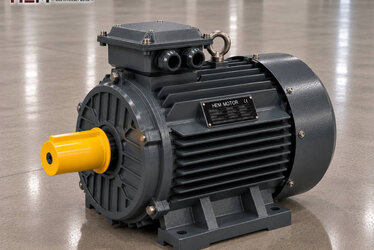
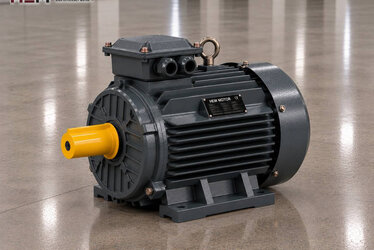
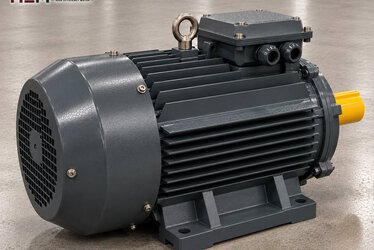
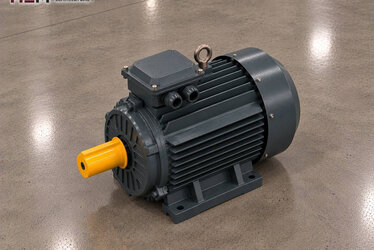
Conveyors in feed plants most often use 4-pole motors; the screw or pulley speed is set by the gearbox. On a short screw under a bin, the 1.5 kW aluminium 90L-4 delivers 9.91 Nm at 1,445 rpm. For a medium-height elevator up to the mixing floor, the 3 kW cast iron 100L2-4 (1,450 rpm, 19.8 Nm) is a model worth checking. For a grain intake elevator and a long silo screw, the 7.5 kW cast iron 132M-4 (1,460 rpm, 49.1 Nm) and the 11 kW cast iron 160M-4 (1,465 rpm, 71.7 Nm) can serve as examples.
| Conveyor | Material carried | Point to watch | Example HEM model |
|---|---|---|---|
| Short screw under a bin | Ground raw material | Bridging, frequent stop-start | 90L-4, 1.5 kW |
| Mixing floor elevator | Flour-like compound feed | Dust in the boot, emptying time | 100L2-4, 3 kW |
| Grain intake elevator | Whole grain, high capacity | Loaded start, backstop | 132M-4, 7.5 kW |
| Long silo discharge screw | Heavy grain, long casing | Gear ratio, current monitoring | 160M-4, 11 kW |
These pairings are only meant to give an idea; the final motor is defined by the capacity of the conveyor in your plant, its length or lift height, the required output speed, the connection method and the ambient conditions.
Information to send for a quotation
Tell us in which machine or line section the conveyor works (intake, after grinding, mixing, pellets), whether it is an elevator or a screw, the feed it carries and its approximate length or height. Add the motor power (kW), speed (rpm), plant voltage, mounting type, gearbox connection and quantity. If you need motors for several conveyors, sending them as a list makes the work easier. A nameplate photo of the motor to be replaced is often enough to start.
Small-power models are listed under aluminium frame motors, and all models with current prices are in the shop. For WhatsApp and phone, see the contact page.
Frequently Asked Questions
Does it make sense to use the same motor on all conveyors in a feed plant?
Choosing the same frame and speed for conveyors of similar power reduces the number of spare motors. However, downsizing a heavily loaded intake elevator to the motor of a small screw is not right; it is more practical to split the conveyors into power groups and standardise each group within itself.
Why is a pellet elevator run slowly?
It is not the motor itself but the bucket speed that is reduced, through the gearbox or pulley ratio. At high speed pellets break as they fill the buckets and strike the discharge spout, and the share of fines in the product rises.
Can the capacity of a screw be adjusted by slowing it with an inverter?
Yes, our three-phase motors can be driven by a frequency inverter. If the screw will run for long hours at low speed under heavy load, the motor's own fan may not be enough for cooling; the need for a separate fan and a cable filter is assessed together with the order.
If the elevator boot chokes often, is a bigger motor the answer?
Usually not. Choking generally comes from a feed rate above the elevator capacity or from sticky material. The feed and the condition of the buckets should be corrected first; a bigger motor only shifts the problem to the belt, chain and gearbox.