English
 Français
 Türkçe
 Español
 Русский

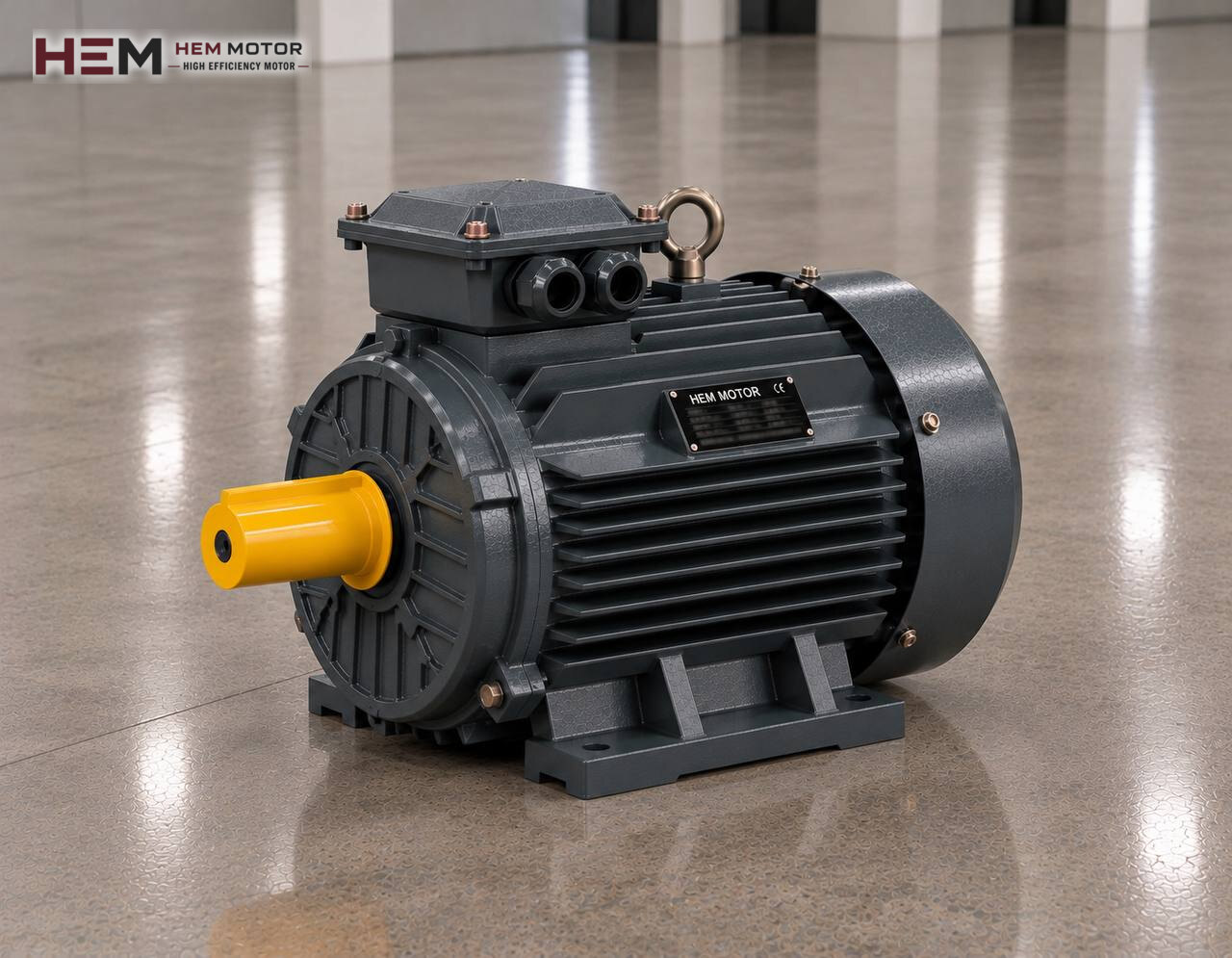
A feed mixer blends weighed grain, oilseed meal, minerals, vitamin premix and liquid additives within a few minutes so that every handful carries the same proportions. A correct recipe is not enough on its own; if the mix is not homogeneous, an animal gets too much additive in one meal and too little in the next. This page covers the motor that turns the mixer shaft and the moments that strain it; for the other machines in a feed plant, see the feed machinery electric motors page.

Mixer types and how they mix
Three mixer families stand out in feed plants. Each moves the material in a different way, and this difference directly changes the load on the motor.
Horizontal ribbon mixer
A shaft with inner and outer helical ribbons turns inside a U-shaped trough. The outer ribbon carries the material towards one end and the inner ribbon towards the other, so the material circulates back and forth in the trough. The shaft turns slowly, the load is spread along the trough and mixing time is a few minutes. This is the most common type in industrial feed plants.
Twin-shaft paddle mixer
Paddles on two parallel shafts rotate in opposite directions and lift the material into the air in the middle of the trough; for a short time the mix behaves like a fluidised bed. Mixing is very fast, the shaft speed is higher than in a ribbon mixer, and the two shafts are often driven from a single motor through a gearbox.
Vertical screw mixer
A vertical screw in the centre of a conical bin carries the material upwards; the material spills from the top to the sides and moves down again. It is used on farms and in small plants; mixing takes longer but the motor power is relatively small. The screw is usually driven from below by belt or gearbox.
Moments that strain the motor: filling, liquid addition and discharge
The load on a feed mixer does not stay constant during a batch. During filling the trough fills gradually and the current rises. The main increase comes when liquid additives such as oil, molasses or water are sprayed in: the flour-like mix becomes damp and lumpy, and the resistance met by the ribbons or paddles grows markedly. In recipes with a high molasses share this effect is even stronger.
During discharge the bottom doors open and the trough empties quickly; the motor load drops. Before the next batch, material left in the trough can stick to the ribbons, especially with oily mixes, and form a permanent extra load. Regular cleaning prevents both cross-contamination and a slowly creeping motor current.
The motor is chosen for the heaviest recipe and for a full trough after liquid has been added. The mixer manufacturer takes this into account in the design; on an existing machine, if the recipe changes, the current measured at the moment of liquid addition shows how much margin the motor is running with.
Starting with a full trough
In normal operation a ribbon mixer is started empty and filled while the shaft is turning. The problem arises when there is a power cut or emergency stop in the middle of a batch: the trough is full and, if liquid has been added, the mix is packed. The motor then has to set the whole mass in motion; if the starting torque is not enough, the rotor stays locked and the winding heats up quickly.
For this reason the starting method on a feed mixer is chosen with care. Direct-on-line starting gives the full starting torque; star-delta starting lowers the current but also the torque, and may fall short with a full trough. A soft starter smooths the shock; a frequency inverter allows starting with high torque at low speed. Which one suits depends on the mixer manufacturer's starting requirement and on the plant's supply conditions. If a full start is unavoidable, partly emptying the trough by hand is safer than forcing the motor.
Transmission: gearbox, chain and gear unit
On ribbon mixers the motor is usually flange-mounted on a gearbox at the shaft end, or a foot-mounted motor drives the gearbox by belt or coupling. On some machines power is passed from the gearbox output to the shaft by chain and sprocket. On twin-shaft paddle mixers a gear unit turns the two shafts in sync; here the coupling alignment between motor and gear unit matters for vibration and bearing life.
On large mixers needing low shaft speed and high torque, a 6-pole motor may be preferred to reduce the gear ratio; in most applications a 4-pole motor is enough. For frames matched to gearboxes see the electric motors for reducers page, and for combined foot and flange mounting the B34 and B35 motors page.
Small farm mixers and the single-phase option
Farms that prepare their own feed use vertical screw mixers or small horizontal mixers. These sites often have only a single-phase supply. HEM Motor's single-phase series covers 0.18–5.5 kW; for small mixers in this range you can see the options on the single-phase electric motor page. The starting torque of a single-phase motor depends on its capacitor arrangement; if starting with a full trough is required, state this in the order.
If a three-phase supply is available, an aluminium frame three-phase motor is also a practical choice for small mixers. A farm environment may contain ammonia and moisture; IP55 protection should be considered together with regular cleaning of the frame, and an anti-condensation heater should be considered for machines that stand idle for long periods.
Example HEM models and selection table
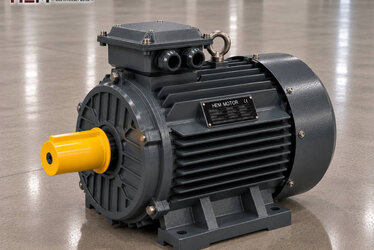
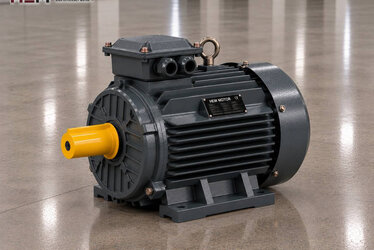
On a small farm mixer the 2.2 kW aluminium 100L1-4 delivers 14.5 Nm at 1,450 rpm. For medium-sized ribbon mixers the 15 kW cast iron 160L-4 (1,465 rpm, 97.8 Nm) is a model worth checking. On large-capacity or twin-shaft mixers the 30 kW cast iron 200L-4 produces 194.2 Nm at 1,475 rpm. On heavy mixers where a lower gear ratio is wanted, the 6-pole 11 kW cast iron 160L-6 delivers 108.3 Nm at 970 rpm.
| Mixer | Nature of the load | What to check | Example HEM model |
|---|---|---|---|
| Vertical screw farm mixer | Long cycles, low power | Supply type, belt or gearbox | 100L1-4, 2.2 kW |
| Medium ribbon mixer | Current rise during liquid addition | Starting method, gearbox input | 160L-4, 15 kW |
| Large or twin-shaft paddle mixer | Short, intense cycles | Gear unit coupling, frequent starts | 200L-4, 30 kW |
| Heavy, low-speed mixer | High shaft torque | Gear ratio, full start | 160L-6, 11 kW |
The pairings in the table are examples; the right motor is determined by the batch volume of the mixer, the liquid share in the recipe, the shaft speed, the transmission type and the plant environment.
Request details for a mixer motor
Tell us the machine type of the mixer (ribbon, paddle, vertical), the batch volume and whether liquid additives are used. Then add the motor power (kW), speed (rpm), supply voltage (single or three phase), mounting type, transmission type, starting method and quantity. If you are replacing an old motor, send a photo of the nameplate; we confirm the shaft and flange size from it.
You can review the models and current prices on the buy electric motors page. Our contact page is open for WhatsApp and phone.
Frequently Asked Questions
Why does the mixer motor trip when molasses is added?
Molasses makes the mix lumpy and increases the resistance on the ribbons. Slowing the liquid addition, not overfilling the trough and cleaning build-up off the ribbons usually solves the problem. If it persists, measure the current and compare it with the motor nameplate.
Is star-delta starting enough for a feed mixer?
With an empty trough it is usually enough. If the mixer has to start with a full trough after a power cut, the low torque in star connection may not be sufficient; a soft starter or an inverter are safer options.
Does changing the mixing speed with an inverter improve the mix?
A mixer is designed for a specific ribbon or paddle speed; changing the speed arbitrarily can spoil homogeneity. The inverter is used mainly for soft starting and process adjustment; any speed change should be agreed with the mixer manufacturer.
Is a single-phase motor enough for a small farm mixer?
If the required power does not exceed 5.5 kW, the single-phase series is an option. If a full-trough start and a long cable are involved, state these conditions in the order; where a three-phase supply exists, a three-phase motor generally starts more easily.