English
 Türkçe

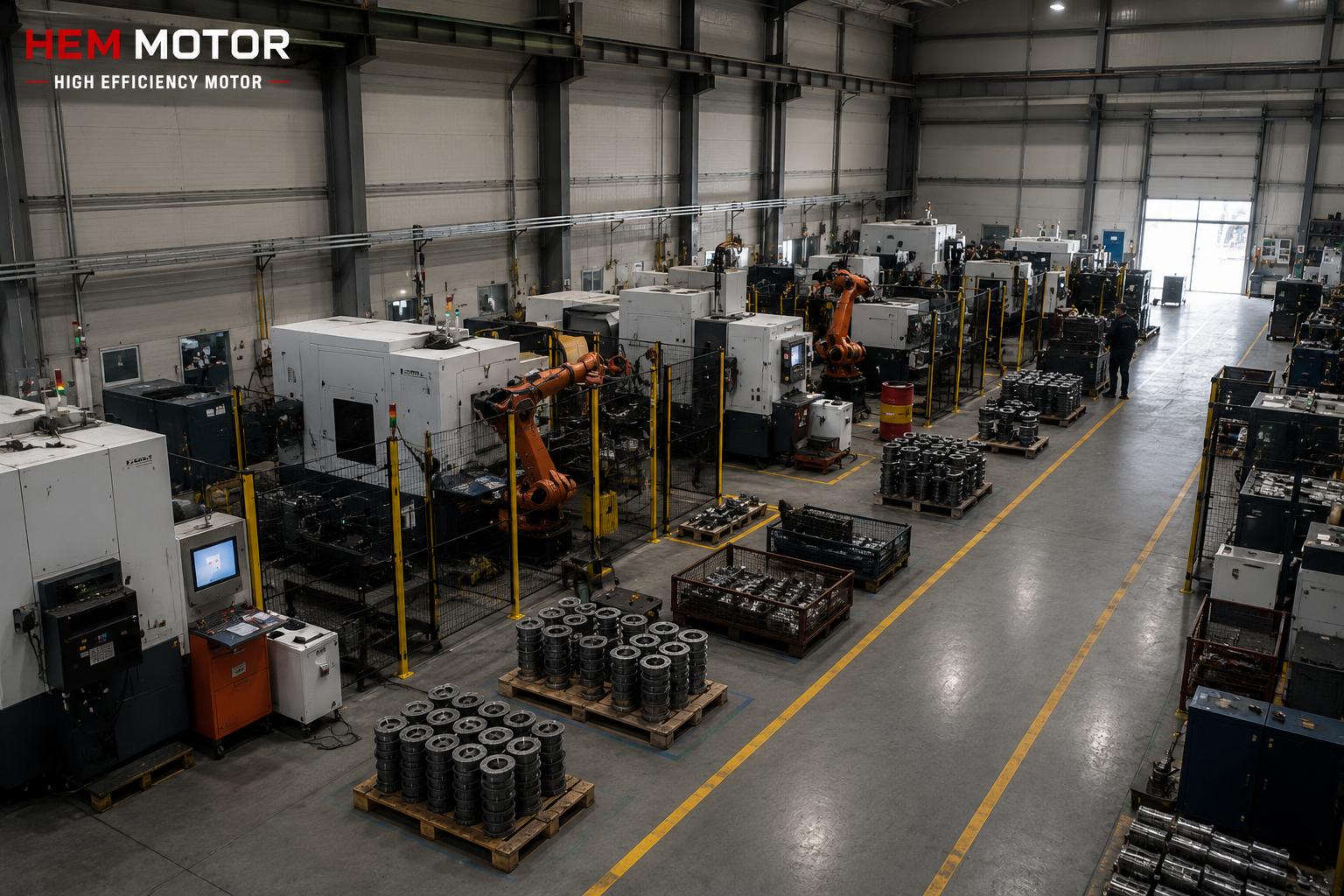

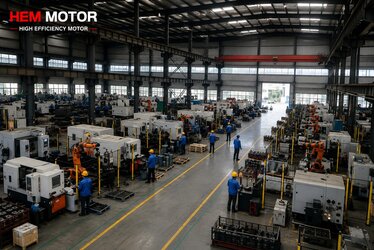
Glass wool and rock wool insulation material production relies on critical electric motors operating in a high-temperature, high-speed and dusty environment, from melting the raw material to forming fibers, from curing to cutting and packaging. From the combustion air fan of the cupola/melting furnace to the high speed of the spinning disc, from the curing furnace circulation fan to the cutting line drive, every stage demands a different motor profile. This article maps the motor requirements of a glass wool and rock wool factory, insulation class selection in hot environments, IP65 protection in dusty environments and the special requirements of high-speed applications such as the spinning disc.
Motor Map in an Insulation Factory
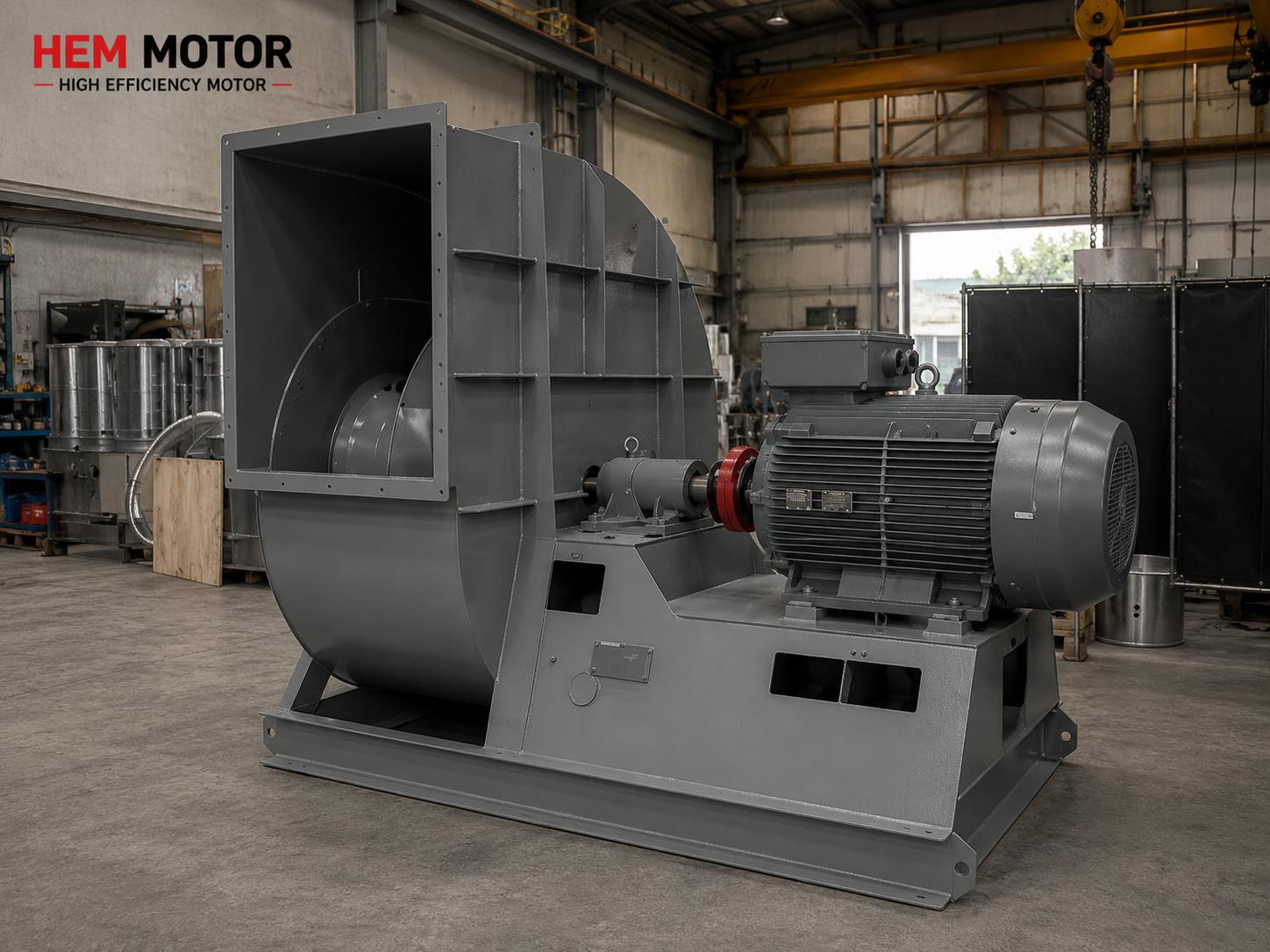
In a glass wool/rock wool plant motors fall into three main groups: melting and combustion air fans (high temperature), fiber forming/spinning drives (high speed) and the curing-cutting-packaging line (continuous drive). Each group has different temperature, speed and protection needs; for correct supply each machine is treated as a separate load item.
Cupola/Melting Furnace Combustion Air Fan: High Temperature
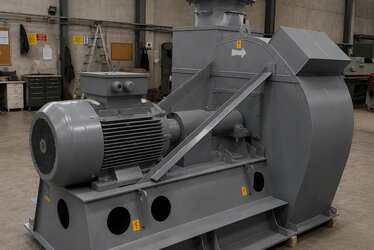
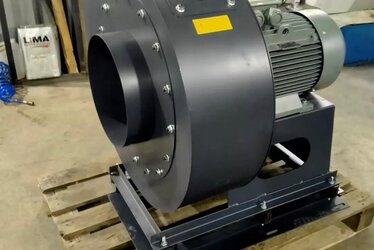
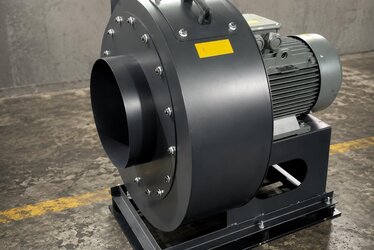
In rock wool production basalt and slag are melted at very high temperature in a cupola furnace, in glass wool the glass raw material in a melting furnace. The fans pushing combustion air to the burners and cupola directly determine furnace efficiency. These fans are centrifugal and draw 15 kW to 200 kW. Because they operate in a hot environment, Class F insulation is standard and Class H insulation is preferred at critical points. The principles of our article on glass and ceramics factory furnace fan supply apply here too. For power matching by fan type see our centrifugal and axial fan motor selection article.
Spinning Disc: High Speed
The melted material is poured onto rotating spinning discs (spinners) and turned into fine fibers by centrifugal force. These discs rotate at very high speed and require a balanced, low-vibration motor. 3000 rpm (2-pole) motors and often speed control with a variable frequency drive (VFD) are used. In high-speed applications bearing selection and dynamic balancing are critical. Our articles on VFD with asynchronous motor and low-vibration motor support this application. For speed and pole selection see our 2/4/6-pole selection guide.
Curing Furnace Circulation Fan
Fibers coated with binder are heat-cured in the curing furnace. The hot air circulation fans in the curing furnace are critical motors that determine product quality. Because they run continuously (S1) in a hot environment, Class H insulation and high-temperature-resistant bearings are preferred. Our article on insulation class F and H clarifies this selection. For aspiration and dust collection see our aspirator and dust collection fan motor guide.
Hot and Dusty Environment: Insulation and Protection
An insulation factory is both a hot (furnace zones) and dusty (fiber and mineral dust) environment. This double challenge determines the motor insulation class and protection class selection.
Why Class H Insulation?
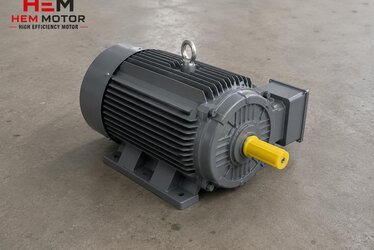
Class F insulation withstands 155 °C, Class H 180 °C winding temperature. The high ambient temperature around the melting and curing furnaces raises the motor winding temperature. Class H insulation widens this margin, preserving motor life and reliability. At high ambient temperatures a power derating calculation must also be done and a larger frame selected if needed.
IP65 in a Dusty Environment
Fiber and mineral dust can enter the motor and shorten bearing and winding life. IP65 protection should be preferred in dusty areas. Our article on dust sealing and IP65/IP66 protection explains the dusty environment strategy. Knowing the relationship between bearing life and dust in dusty environments is important for the maintenance plan.
Cast Iron Frame and Continuous S1 Duty
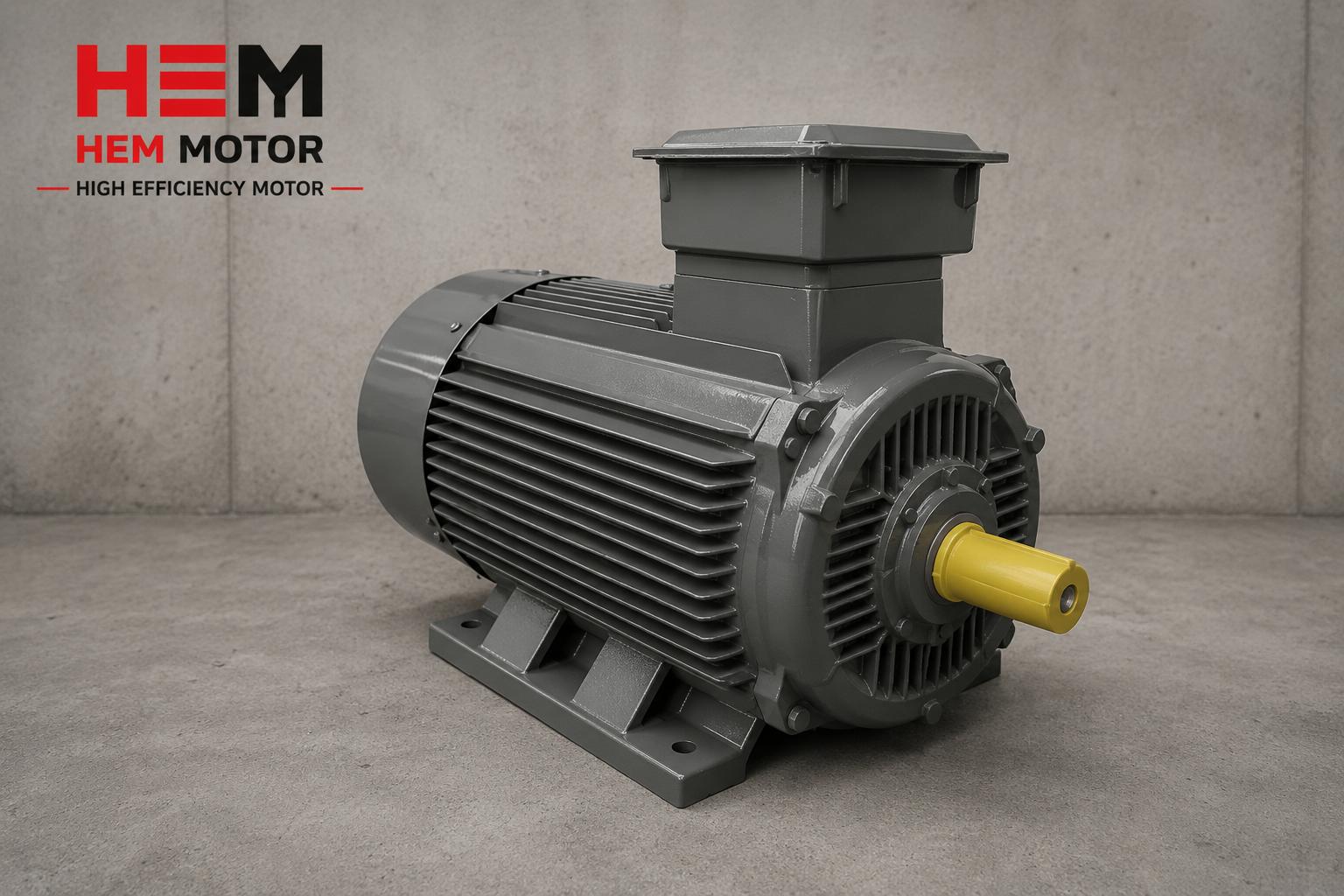
In an insulation factory motors usually run continuously (S1). A cast iron frame provides high strength and good heat dissipation in a hot and vibrating environment. In the cast iron vs aluminum frame decision, the hot-continuous environment favors cast iron. For motors running at low speed with a VFD, cooling fan design and forced cooling where needed are important.
Power, Speed and Efficiency Class
Insulation factory motors range from 0.55 kW small auxiliary drives to 355 kW large furnace fans. Fans commonly use 1500/3000 rpm, spinning discs 3000 rpm, cutting and conveyor drives 1500 rpm + reducer. In a continuously running plant the efficiency class directly determines energy cost.
IE3 and IE4 Efficiency
Per regulation, IE3 is mandatory for 0.75-1000 kW and IE4 for 75-200 kW. In large furnace fan and circulation fan motors, high efficiency pays back quickly under continuous operation. Our articles on IE3 vs IE4 investment and TCO calculation clarify the decision. For regulation see our IE3-IE4 efficiency mandate article.
High Power and Correct Sizing
For large furnace fans above 90 kW, review the high power motor supply above 90 kW plan. For correct sizing our motor load ratio and correct sizing article guides you. For motor cooling in hot environments see the continuous full-load cooling principles.
Mounting, Reducer and Mechanical Fit
Fans are usually foot-mounted (B3) or combined (B35); cutting and conveyor drives are connected with a flange (B5/B14) reducer. On low-speed lines a bevel helical reducer or worm gear reducer matching is used. When replacing an old motor, the mounting type and shaft-key dimensions must match exactly. For the product range see our high efficiency electric motors and worm gear reducers pages.
Stock and Emergency Replacement
A melting furnace fan or spinning disc motor failure can stop the entire line; the loss is large because the furnace cannot be cooled. Spares of critical motors must be kept in stock. Our articles on the critical spare motor list and emergency replacement help with the stock plan. For three-shift plants see our motor fleet management guide.
Cutting, Winding and Packaging Line Drives
The cured wool is cut to the desired thickness and size and packaged as rolls or slabs. Cutting saws, transport conveyors and winding units are motor-driven. These drives usually use reducer-driven motors for low speed-high torque; a variable frequency drive is engaged where speed adjustment is needed. Our articles on variable speed motor selection and conveyor drive motors explain the correct power-speed combination for these lines. A bevel helical reducer is preferred for low-speed cutting and winding.
Starting Method and Inrush Current
Large furnace fans and high-speed spinning disc motors can draw high current at startup. Direct-on-line starting is suitable at small powers; star-delta or a soft starter is preferred on large fan motors. When the spinning disc is driven by a VFD, the inrush current is already controlled by the drive. Our star-delta and soft starter article explains the starting selection. In generator-fed plants, generator kVA - motor kW matching accounts for the inrush current.
Energy Efficiency and Savings in Continuous Operation
An insulation factory consumes high energy with its large furnace fans and circulation fans. In these continuously (S1) running motors, high efficiency significantly lowers the annual energy cost. Adjusting air flow on fans with a variable frequency drive provides large savings compared to throttling at constant speed. Our articles on high efficiency motor + VFD savings and TCO calculation explain how to correctly calculate savings in a continuously running plant.
Maintenance, Temperature Monitoring and Bearing Life
In motors operating in hot and dusty environments, the bearing is the most critical wear item. Because high ambient temperature shortens grease life, a suitable lubrication interval and high-temperature grease where needed are used. On large furnace fans, failures are prevented by monitoring winding and bearing temperature (PT100/thermistor). Our articles on motor protection devices and periodic maintenance schedule explain the protections to request at order time and the maintenance plan.
Information Gathering and the Quote Process
In a plant with furnace fans, spinning discs and line drives such as an insulation factory, the technical data of each motor must be gathered for an accurate quote. The power (kW), speed, voltage, frame size, mounting type, shaft diameter, protection class (IP) and insulation class (F/H) on the old motor nameplate are the key to selecting an equivalent. Our articles on information to provide when requesting a quote and nameplate matching explain what to clarify before ordering. For a motor with an unreadable nameplate, the catalog data table guides you.
Lead Time, Shipping and Commissioning
If a large melting furnace fan motor is not in stock, the lead time must be planned; because the furnace cannot be cooled, the replacement must be done quickly. Our articles on from-stock delivery vs production order and the commissioning checklist help with this planning. To spot damage early at delivery, see our shipping damage checklist guide. When replacing an old brand motor, the equivalent selection must match frame, shaft and flange.
Frequently Asked Questions
What should I watch for in a spinning disc motor?
The spinning disc rotates at very high speed and must run balanced and low-vibration. Therefore dynamically balanced, quality-bearing 2-pole (3000 rpm) motors are preferred. When a variable frequency drive (VFD) is used for speed control, fiber fineness is managed by speed adjustment. Because bearing life and vibration level are critical at high speed, these criteria come to the fore in motor selection.
Is Class H insulation required in a curing furnace fan motor?
Because hot air is continuously circulated in the curing furnace, the motor ambient temperature is high. Class F insulation may be marginal; therefore Class H insulation is recommended in hot zones. Class H extends motor life by widening the winding temperature margin. A derating calculation should also be done according to ambient temperature and a larger frame selected if needed.
Which protection class is suitable for a dusty environment in an insulation factory?
Because fiber and mineral dust is dense, IP65 protection should be preferred in dusty areas. IP65 provides complete protection against dust and resists low-pressure water jets. IP55 is sufficient in general areas with low dust density. The right decision is made according to the dust level of the area where the motor is located and the cleaning method.
Get a Quote
We supply electric motors in the correct power, speed, insulation and protection class for the cupola/melting furnace combustion air fan, high-speed spinning disc drive, curing furnace circulation fan and cutting-packaging line of your glass wool and rock wool insulation factory, from stock and with fast delivery. For Class H insulated, IP65-protected, IE3/IE4 efficient motors suited to hot and dusty environments, contact us: +90 (532) 345 49 86. For a fast quote reach us via our contact page.
Purchasing and Selection Checklist
- Machine and duty: Melting furnace fan, spinning disc, curing fan, cutting line listed separately.
- Power and speed: kW and rpm; fan curve for fans, high speed (2-pole) for spinning disc.
- Insulation class: Class H in furnace zones, Class F elsewhere; derating by ambient temperature.
- Protection class: IP65 in dusty areas, IP55 in general areas.
- Frame material: Cast iron in hot/continuous environments.
- Efficiency class: IE3/IE4 per regulation; TCO advantage under continuous load.
- VFD compatibility: Drive-compatible windings on spinning and cutting drives.
- Spare/stock: Stock plan for critical furnace and spinning motors.