English
 Türkçe


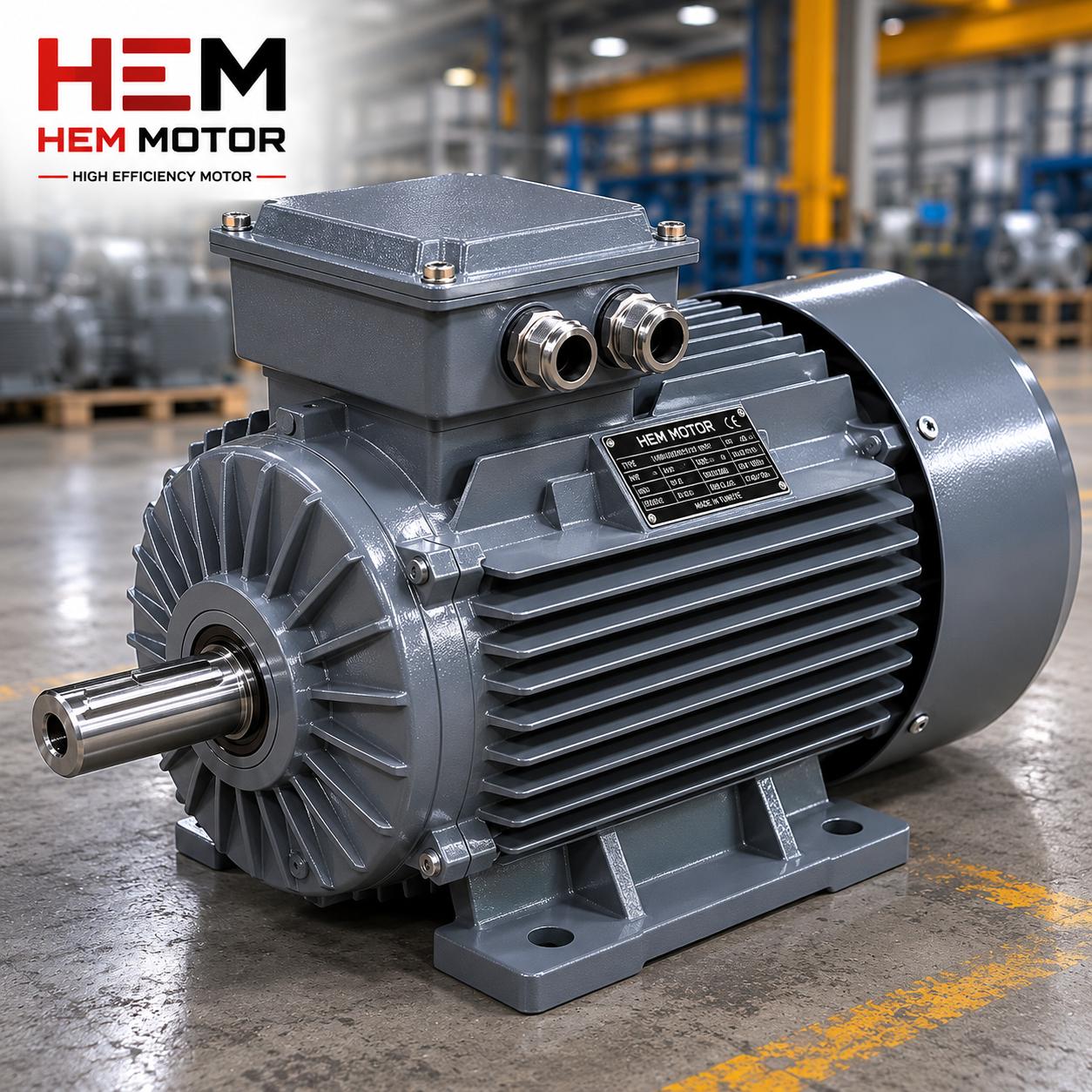

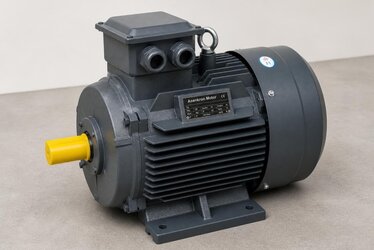
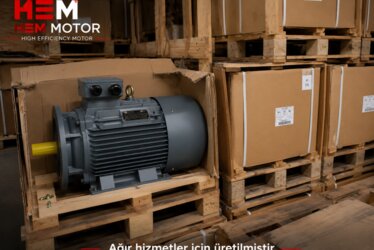
The true quality of an electric motor cannot be measured by the power and efficiency figures on its nameplate alone. The noise a motor makes while running, the vibration it transmits to its frame and foundation, and how cool it stays under load are the most honest indicators of its engineering quality. Quiet and low-vibration operation in IE4 super premium motors is not merely a comfort feature; it is the outward expression of the manufacturing precision built into the motor's internal structure.
Low vibration means a well-balanced rotor, a solid cast frame free of resonance, and quality bearings with a low noise level. If a motor runs quietly, the rotating mass inside it is balanced, the gear and bearing clearances are controlled, and the assembly tolerances are tight. For this reason, quietness is also a herald of durability. A motor with high vibration will quickly wear out its bearings, its seals, and even the bearings of the machine it is coupled to.
In environments such as hospitals, hotels, laboratories, studios and precision production lines, a quiet IE4 motor is not a luxury but a sound engineering investment. In this article we examine, with technical detail, how quiet operation is achieved in IE4 super premium motors, the sources of vibration, the measurement methods, and how a correct motor choice contributes to long life. We will also touch on the supply and quote process for the low-vibration IE4 motors in our stock.
Why the IE4 Super Premium Efficiency Class Also Brings Quietness
The IE4 efficiency class denotes the super premium efficiency level according to the IEC 60034-30-1 standard. To reach this class, the manufacturer must minimise the losses in the motor. Reducing losses has a positive effect directly on noise and vibration, because a large part of the losses turns into heat and the remainder into mechanical and magnetic noise.
The methods used to reduce losses in an IE4 motor also reduce vibration:
- Thin, low-loss steel laminations: Reduce magnetic noise and magnetisation-related hum.
- Optimised slot geometry: The harmony between the number of teeth on the rotor and stator reduces magnetic force fluctuations and therefore electromagnetic noise.
- Higher-quality copper windings: Lower resistance means less heating and less thermal expansion, which keeps the air gap stable.
- Precise rotor balancing: In IE4 class motors the rotor is usually balanced to a higher balance quality grade (G2.5 or better).
For this reason, choosing an IE4 super premium motor often means choosing a quieter, lower-vibration motor at the same time. Efficiency, quietness and durability are three different faces of the same engineering discipline. As a motor's efficiency rises, the unnecessary energy loss inside it decreases, and the part of that loss which turns into noise and vibration also shrinks.
The Main Sources of Vibration in a Motor
Vibration in an electric motor does not come from a single cause. To find the right solution, the source must be correctly diagnosed. We can group the sources of vibration under three main headings: mechanical, magnetic and aerodynamic.
Mechanically Induced Vibration
- Rotor imbalance: If the centre of gravity of the rotating mass deviates from the axis of rotation, a vibration that increases with speed is produced. This is the most common and the most easily diagnosed type of vibration.
- Bearing wear or wrong selection: Clearances, surface defects and lack of lubrication in ball or roller bearings produce high-frequency vibration.
- Misalignment: A poor coupling alignment between the motor and the machine it drives stresses both the motor and the machine.
- Loose feet or frame slack: A weak foundation or loose bolts raise the motor's vibration and trigger resonance.
Magnetically Induced Vibration and Noise
- Air gap irregularity: An unequal air gap between stator and rotor creates magnetic pull forces that vary over each rotation.
- Magnetic saturation and harmonics: Especially in motors driven by a variable frequency drive, PWM-related harmonics cause additional hum.
- Magnetostriction: The very slight change in the dimension of the lamination stack under a magnetic field produces a hum at twice the supply frequency.
Aerodynamically Induced Noise
- Fan noise: The number of blades, the geometry and the speed of the cooling fan make up an important part of the motor's total sound level.
- Airflow turbulence: The design of the cooling channels and the fan cover must ensure a smooth airflow.
In a quiet IE4 motor, all three of these sources are balanced at the design stage. When a low-noise fan, a balanced rotor and an optimised slot geometry come together, both noise and vibration remain below acceptable levels.
How Vibration and Noise Are Measured
When it comes to a motor's quietness and low vibration, measurable values are used instead of subjective expressions. Requesting these values during the supply and quote stage is critical for selecting the correct motor.
Vibration Measurement
Vibration is usually measured in mm/s as the root mean square (RMS) value of velocity. The ISO 10816 and ISO 20816 standards define the acceptable vibration levels for motors. In a quality IE4 class motor, the vibration level is kept low according to the balance grade declared by the manufacturer. The measurement is taken at the bearing housings in three directions: horizontal, vertical and axial.
Sound Level Measurement
The sound pressure level is measured in dB(A), from a standard distance (usually 1 metre) and during no-load operation. The ISO 1680 standard defines the method of this measurement. As the motor size grows, the sound level naturally increases, but a well-designed IE4 motor is significantly quieter than a standard motor of the same power.
When selecting a motor for sensitive environments, it is correct to request the following values:
- The declared sound pressure level (dB(A)) and the measurement conditions.
- The rotor balance quality grade (for example G2.5).
- The vibration level at no load and under load (mm/s RMS).
- The bearing type and lubrication details.
For an in-depth look at these topics, you can review our electric motor vibration measurement guide and our IE3 IE4 IE5 efficiency class comparison content.
The Link Between Quiet Operation and Durability
Quietness and low vibration are directly related to the motor's lifespan. Vibration creates a fatigue load on the bearings, the most sensitive component of the motor. In a high-vibration motor, bearing life is seriously shortened, the oil film breaks down and metal fatigue accelerates.
A low-vibration IE4 super premium motor provides the following advantages:
- Extended bearing life: A balanced rotor places minimum dynamic load on the bearings.
- Less maintenance: Vibration-related loosening, leaks and wear are reduced.
- Protection of connected equipment: The motor's vibration is also transmitted to the coupling and the bearings of the driven machine. A quiet motor protects the whole system.
- More stable production: In precision machining, filling and measuring machines, low vibration directly raises product quality.
For this reason, the extra cost paid for a quiet motor is quickly recovered through the reduction in maintenance costs and downtime. From a total cost of ownership perspective, a low-vibration IE4 motor is almost always more economical.
Which Environments Require a Quiet IE4 Motor
In some applications quietness is a preference; in others it is a necessity. Using a low-vibration IE4 motor is extremely critical in the following environments:
- Hospitals and healthcare facilities: Quiet operation is required in ventilation, water circulation and medical gas systems for patient comfort and hygiene.
- Hotels and accommodation facilities: Low noise in air handling units, lift machine rooms and pump rooms directly affects guest satisfaction.
- Laboratories and precision measurement environments: Vibration must be kept to a minimum because it can disturb the readings of sensitive instruments.
- Studios and broadcast facilities: Quiet ventilation is essential because background noise is unacceptable.
- Precision production and assembly lines: In electronics, optics and pharmaceutical production, vibration can cause product defects.
When selecting a motor for these environments, not only noise and vibration but also parameters such as mounting type, protection class (IP) and thermal class should be evaluated together. For pump and fan applications, our motor selection for pump and fan guide is a practical starting point.
Points to Watch When Working With a Quiet IE4 Motor
Buying a quiet motor alone is not enough. For the motor to stay quiet, the installation and operating conditions must also be correct:
- Solid foundation: The motor must be mounted on a sufficiently rigid base that does not resonate.
- Correct alignment: The coupling or belt-pulley alignment must be set precisely.
- Vibration isolators: Where necessary, rubber mounts or spring isolators should be used to prevent vibration from passing into the structure.
- Regular lubrication: Timely renewal of bearing grease is essential for maintaining quietness.
- Drive settings: In motors running with a frequency drive, correctly setting the switching frequency reduces magnetic hum.
When the correct installation and operating conditions are met, a quiet IE4 motor maintains the same low noise and vibration level for years. This provides a sustainable gain in terms of both comfort and long life.
For current electric motor prices and stock availability, you can visit our electric motor prices page and request a quote from us for the low-vibration IE4 motor that suits your needs. Thanks to our wide IE4 stock, we offer fast supply and commissioning support.
Frequently Asked Questions
How much quieter is a quiet IE4 motor than a standard motor?
An IE4 super premium motor of the same power and speed usually has a sound level a few dB(A) lower than a standard efficiency class motor. Because the dB scale is logarithmic, even a difference of a few dB corresponds to a noticeable reduction in perceived noise. The exact value depends on the motor's power, number of poles and fan design, so we recommend requesting the declared sound pressure level at the quote stage.
Does low vibration really extend the motor's life?
Yes. Vibration creates a continuous dynamic load on the motor's bearings, and this load accelerates metal fatigue. A well-balanced, low-vibration rotor places minimum load on the bearings, which significantly extends bearing life and therefore the total life of the motor. Low vibration also protects the coupling and the machine bearings connected to the motor.
Will the motor be noisier if I run it with a frequency drive?
In motors running with a drive, a magnetic hum due to PWM switching can occur. The intensity of this hum depends largely on the drive's switching frequency setting. Choosing the switching frequency correctly and using suitable output filters reduces this noise considerably. A quality IE4 motor, with a matched drive and correct commissioning, continues to run quietly.