English
 Türkçe


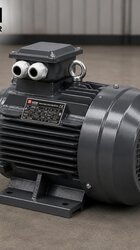
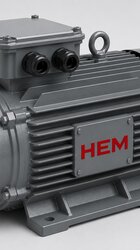

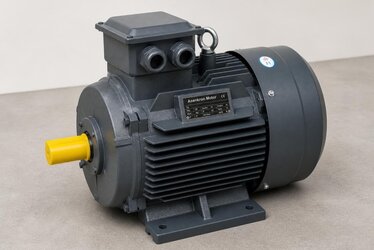
A screw air compressor is one of the longest-running pieces of equipment in most facilities; it often runs continuously at full load 16–24 hours a day. For this reason, selecting the motor that drives the screw compressor is critical for both operational safety and energy cost. This is where the IE4 Super Premium efficiency class comes into play: at high running hours, every efficiency point turns into tangible savings at the end of the year. In this guide we explain step by step how to determine power, speed, duty type, starting torque and protection class when selecting an IE4 screw compressor motor; the difference between direct and belt drive; and when using a drive in the load/unload cycle makes sense.
Direct or Belt Drive in a Screw Compressor?
In screw compressors the motor drives the air end in two ways. In direct (coupled) drive the motor shaft is connected directly to the air end with a coupling; mechanical loss is low, maintenance is minimal and efficiency is high. In belt drive there is a belt-pulley between the motor and the air end; this provides flexibility to adjust the speed ratio but brings belt loss and periodic belt maintenance. To fully enjoy the advantage of a high-efficiency motor such as IE4, direct drive is generally more suitable, because belt loss lowers the total efficiency.
In belt drive the motor speed and compressor speed are set with pulley diameters; we addressed this logic in our motor speed and pulley-belt speed adjustment article. For shaft and coupling compatibility, our coupling selection and shaft alignment article is useful. You can find compressor motor replacement and matching in our compressor motor replacement article.
Continuous S1 Full Load: Why Is Duty Type Important?
In most applications a screw compressor runs uninterrupted at full load for hours. This operating mode is S1 continuous duty; the motor reaches thermal equilibrium at this load and stays there for a long time. The motor's rated values must be given according to the S1 duty type; a motor sized for intermittent duty heats up at continuous full load and shortens its life. We explained the details of duty types in our duty type (S1-S6) selection article.
In a motor running at continuous full load, heat management is decisive. The insulation class (F or H) and the temperature rise class show whether the motor will run safely in this regime. We examined this topic in our temperature rise class and rise article, and for hot/dusty environments in our motor in a hot and dusty environment article. Our IE4 motor in continuous process article on using efficient motors in continuous process is also useful.
The Value of IE4 Efficiency at High Running Hours
Most of a motor's lifetime cost is not the purchase but the electricity it consumes. This is even more pronounced in a screw compressor running 16–24 hours a day. The IE4 Super Premium class significantly reduces losses compared to standard motors; at high running hours this efficiency difference is directly reflected in the annual bill and shortens the payback period of the investment. We addressed the IE4 threshold in continuously loaded compressor applications in our IE4 threshold in pumps, fans and compressors article.
To make the transition decision based on running hours and power, our IE4 vs IE3 transition decision article offers a clear framework. We calculated the real gain of replacing an old motor with IE4 in our replacing an old motor with IE4 article. To see the total cost of efficiency classes, you can look at our how to calculate TCO article.
2 Pole or 4 Pole? Speed Selection
In a screw compressor the motor speed is selected according to the speed the air end needs. 2-pole motors run at a rated speed of about 3000 rpm, 4-pole motors at about 1500 rpm. In directly coupled high-speed air ends 2 poles are generally preferred, while in belt systems a 4-pole motor can be used and the speed set with the pulley. We explained the effect of pole and speed selection on efficiency and application in our 2, 4, 6 pole selection article.
We addressed high-speed (2-pole) motor selection for compressors in our IE4 2-pole 3000 rpm motor article. If you wonder why the actual speed is slightly below the rated speed (slip), our slip and actual speed article is explanatory. Our compressed air and screw compressor motors article on selecting screw compressor motor power and speed according to continuous load is complementary.
High Starting (Locked-Rotor) Torque and Starting Method
A screw compressor needs high starting torque when it begins to rotate the air end under pressure. When selecting the motor, the suitability of the starting (locked-rotor) torque and starting current for the application must be checked. At high powers, direct-on-line (DOL) starting draws a high starting current; in this case the starting current is reduced with star-delta or a soft starter. We examined why the starting current is high and how to reduce it in our starting current (LRA) article.
For starting method selection, our star-delta or soft starter article is a guide. We addressed the relationship between rated torque and starting torque in our rated torque and starting torque article. You can find cable, fuse and contactor selection according to rated current in our rated current and protection elements article.
IP55 Protection and Hot Environment
Compressor rooms are generally hot and dusty, because the compressor itself emits heat and the ambient air can be dusty. For this reason a screw compressor motor should be at least IP55 protection class, with a cast iron frame and good cooling. IP55 prevents harmful amounts of dust ingress and water jets from any direction. To select the right IP class, you can look at our IP protection class selection article.
In a hot environment the motor power may drop (derating); this must be taken into account at ambient temperatures above 40 degrees. We addressed this topic in our cast iron motor at high ambient temperature article. Dirt accumulated on the motor's cooling fins weakens cooling; we examined this in our cooling fins and dirt build-up article. You can find cooling methods in our cooling methods (IC411/IC416) article.
Load/Unload Cycle and VFD: When Does It Make Sense?
Screw compressors generally run with a load/unload cycle: when the air demand drops the motor idles, and when demand rises it loads again. An idling motor consumes energy but produces no air; this creates efficiency loss at partial loads. This is where the variable frequency drive (VFD) compressor comes in: the VFD changes the motor speed according to the air demand and eliminates idling loss. In facilities with fluctuating air demand, a VFD solution provides significant savings; in facilities running at continuous full load, a fixed-speed IE4 motor is generally sufficient.
We explained when a VFD is needed and how to select it in our VFD with asynchronous motor article. We addressed the real gain of reducing speed with a VFD using the affinity law in our energy savings with VFD article. Against the risk of harmonics and additional heating in VFD operation, our VFD and harmonic-induced heating article is important. You can review our other IE4 motor options in our IE4 motors category.
Correct Power (kW) Selection: Over- and Under-Sizing
The power of a screw compressor motor is selected according to the continuous full-load power requirement of the air end. An under-sized motor is constantly overloaded, heats up and fails early. An over-sized motor means both unnecessary investment and a loss of efficiency and power factor at low load. The most correct approach is to base it on the motor power specified by the compressor manufacturer and, if you are replacing an existing motor, to match the nameplate values exactly.
We addressed what load is right to run a motor at and correct sizing in our what load to run a motor at article. You can find the required kW calculation for pumps, fans and conveyors in our motor power calculation article, and matching the existing motor exactly from its nameplate in our avoid the wrong motor article. To do the HP-kW conversion correctly, you can look at our HP or kW article.
Terminal Connection and Voltage Selection
A screw compressor motor usually runs on a three-phase 380/400V mains. The bridging (star or delta) in the motor terminal box is done according to the voltage; the wrong bridging can lead to the motor burning out. If star-delta starting is used at high powers, the terminal connection must be planned accordingly. We addressed terminal connection and voltage selection in detail in our terminal connection: star and delta article.
We examined the effect of mains voltage fluctuations on the motor in our voltage tolerance and grid fluctuation article. You can find the star-delta wiring diagram in our star-delta wiring diagram article. The correct rotation direction of the motor is critical for the air end to rotate in the right direction; we addressed this in our rotation direction and phase sequence article.
Maintenance, Bearings and Preserving Efficiency
In a continuously running compressor motor, maintenance preserves both reliability and efficiency. Bearing greasing, cleaning of the cooling fins and shaft alignment keep the motor's efficiency high throughout its life. In a neglected motor, bearing wear creates extra friction and therefore energy loss. Regular maintenance is essential to preserve the IE4 motor's efficiency advantage over the years.
We addressed the effect of maintenance on motor efficiency in our effect of maintenance on motor efficiency article. You can find the periodic maintenance schedule in our maintenance and periodic check schedule article, and bearing greasing and lubrication in our bearing greasing and lubrication article.
Frequently Asked Questions
Should I buy a 2-pole or 4-pole motor for my screw compressor?
This depends on the speed the air end needs. In directly coupled high-speed systems 2 poles (about 3000 rpm) are generally preferred. In belt systems a 4-pole (about 1500 rpm) motor can be used and the speed set with pulley diameters. The most precise method is to base it on the existing motor's nameplate and the speed recommended by the compressor manufacturer.
What is the advantage of an IE4 motor in a continuously running compressor?
Most of a motor's lifetime cost is the electricity it consumes. In a compressor running 16–24 hours a day, the efficiency difference IE4 provides turns into large energy savings throughout the year and shortens the payback period of the investment. The higher the running hours, the more pronounced the advantage of IE4.
Is a VFD always necessary in a screw compressor?
No. In facilities where the air demand is continuous and constant and the compressor always runs at full load, a fixed-speed IE4 motor is generally sufficient. In facilities where the air demand changes during the day and a lot of time is spent in the load/unload cycle, a VFD provides significant savings by eliminating idling loss.
Get a Quote
Let us select together an IE4 motor with the right power, speed and protection class that will run safely at continuous load for your screw compressor. We evaluate direct/belt drive, starting torque and, if needed, the VFD requirement according to your application. For a fast quote call our line at +90 (532) 345 49 86 or reach us through our contact page. You can review our full product range from our home page and all related content from our IE4 motors category.
Purchasing and Selection Checklist
- Clarify the daily running hours and load profile (continuous/variable) of the compressor.
- Determine whether it is direct (coupled) or belt drive.
- Select a 2 or 4 pole motor according to the air end speed.
- Specify the duty type as S1 continuous full load.
- Prefer the IE4 Super Premium efficiency class for high running hours.
- Verify the suitability of starting torque and starting current for the application.
- Plan the starting method (star-delta/soft starter) at high power.
- Request at least IP55 protection and a cast iron frame; do a derating calculation in a hot environment.
- If the air demand is variable, evaluate a VFD solution instead of load/unload.
- Verify shaft diameter, coupling and flange compatibility before ordering.