English
 Türkçe

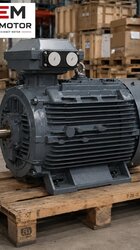
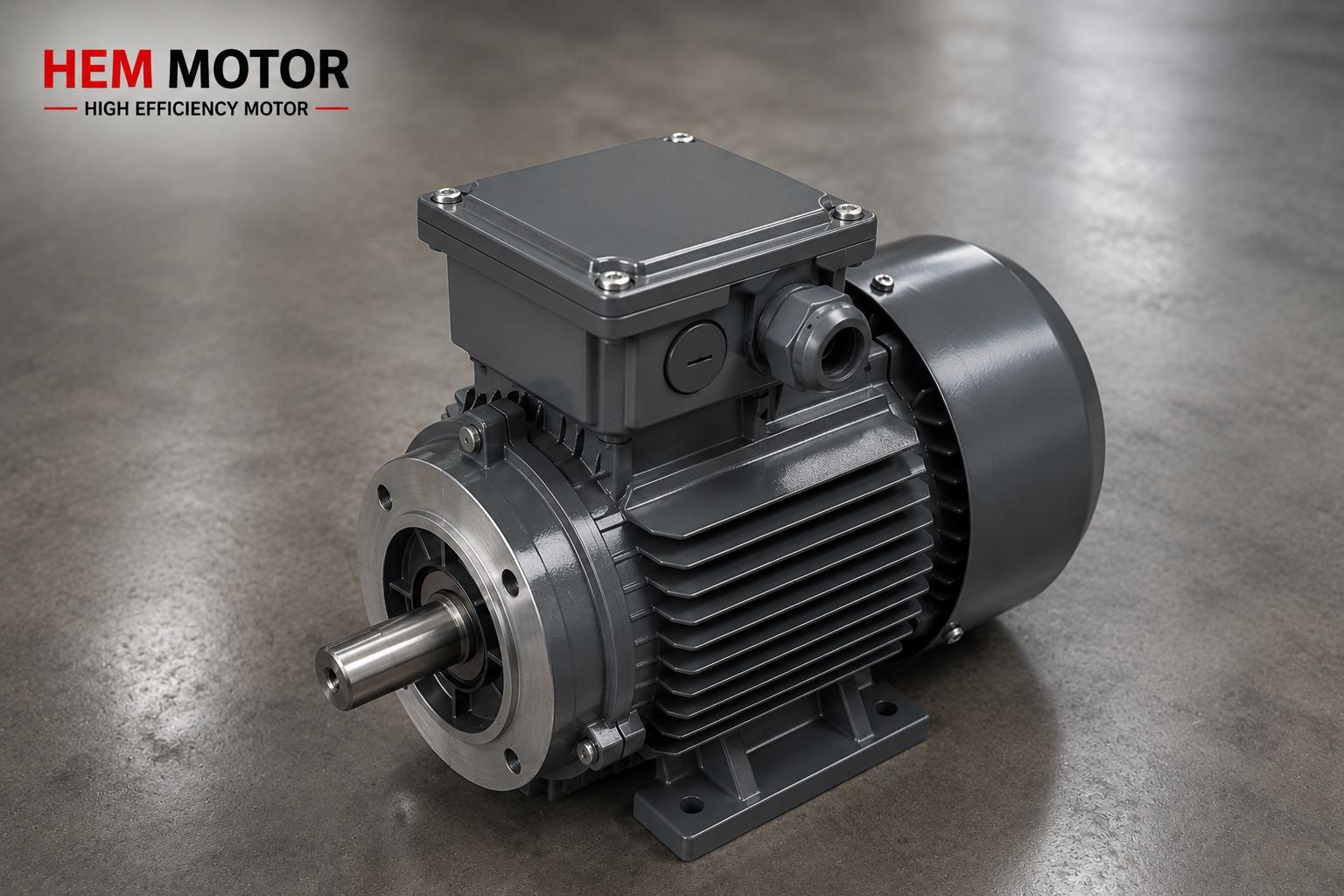

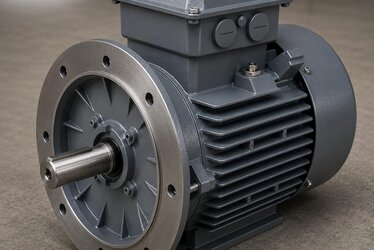
Consider two IE3 motors: both rated at the same kW power, both in the same efficiency class, both from the same brand. Intuitively, you would say "they do the same job." Yet these two motors can behave very differently in terms of starting torque and breakdown torque. That is because the torque a motor produces depends not only on its power, but also on its speed (the number of poles) and its torque class. If you are going to drive a load with direct-on-line (DOL) starting, selecting the motor by looking at kW alone is a serious mistake; the choice must be made according to the torque characteristic of the load (whether it is constant or variable). In this article we explain what rated torque and starting torque are, why lower-speed motors produce higher torque, and how to choose the correct IE3 motor for the load in DOL applications. As a manufacturer and seller of electric motors, we supply IE3 motors in the correct power, speed and torque class to match the load profile of your application.
Direct-on-line (DOL) starting is the simplest and most common method of running a motor, by connecting it straight to the mains supply. However, that simplicity means the motor's starting torque and current characteristics depend entirely on its own design; because no drive sits in between, the motor delivers exactly what it is capable of producing. For this reason, correct motor selection in DOL is only possible when the motor's torque curve meets the torque demand of the load at every point.
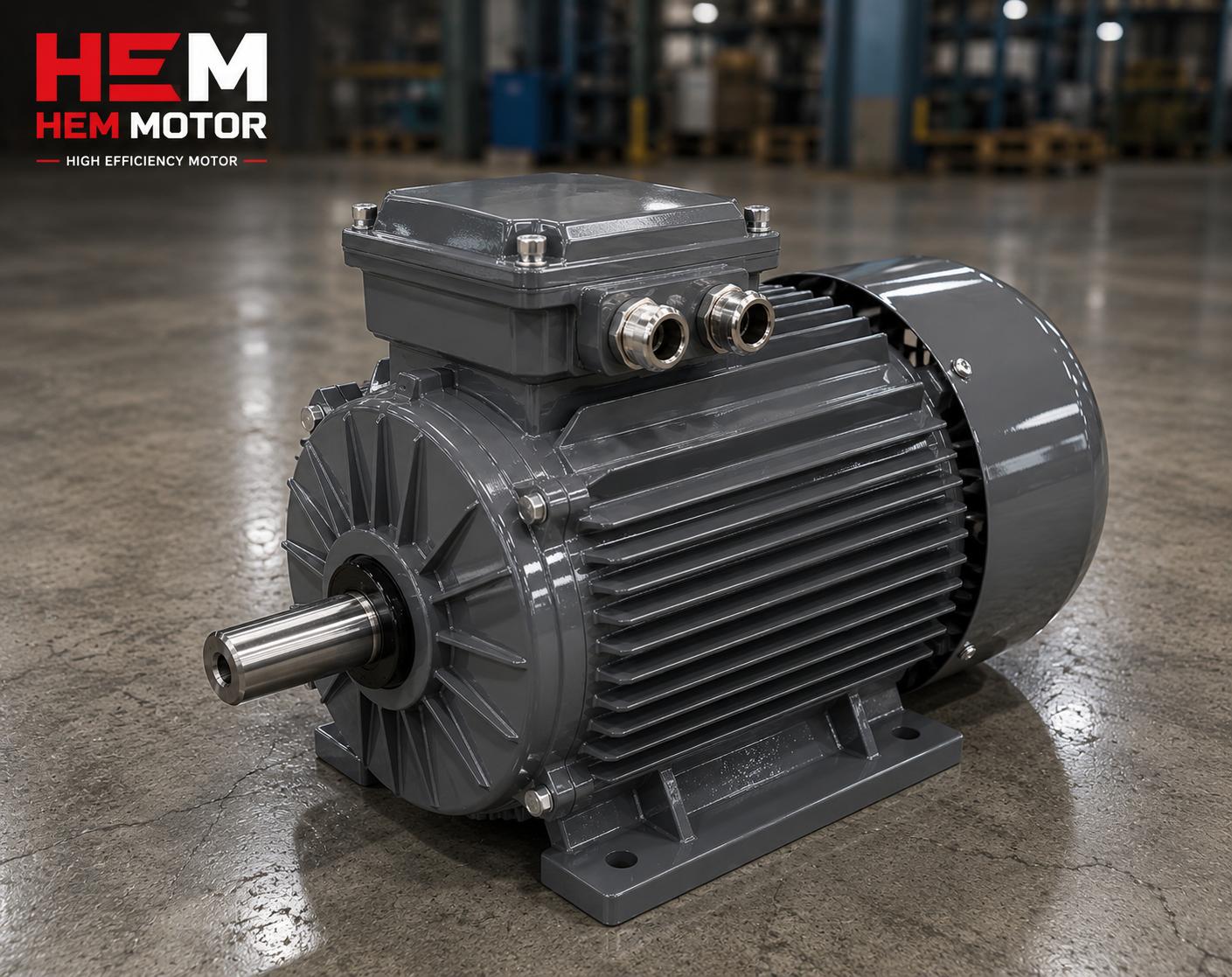
What Are Rated Torque and Starting Torque?
A motor's rated torque is the torque it produces at its nominal power and nominal speed. Rated torque depends on the ratio of the motor's power to its speed; at the same power, the lower the speed, the higher the rated torque. This is a direct consequence of shaft power being proportional to the product of speed and torque.
A motor's starting torque (locked rotor torque) is the torque it produces while the rotor is stationary, that is, before the motor has begun to turn. For a motor to be able to lift its load, the starting torque must be higher than the load's initial torque. In addition, the breakdown torque, which is the highest torque the motor produces during run-up, is also important; the motor cannot exceed this point, and if the load exceeds the breakdown torque the motor stalls, that is, it stops. Correct selection in DOL requires that all three of these torques meet the load's demand.
Same kW, Different Torque
Now let us come to the most critical point: why do two IE3 motors of the same kW power produce different torque? The answer lies in the number of poles, and therefore in the speed. Because shaft power is proportional to the product of speed and torque, at the same power, if the speed drops, the torque rises. For this reason a low-speed (high-pole) motor produces higher rated torque than a high-speed (low-pole) motor of the same power.
- 2 poles (3000 rpm): Highest speed, lowest rated torque. At a given power, this motor has the least torque.
- 4 poles (1500 rpm): Roughly twice the rated torque of the 2-pole motor. The most balanced and most common choice.
- 6 poles (1000 rpm): Roughly three times the rated torque of the 2-pole motor. For slow applications that need high torque.
- 8 poles (750 rpm): Even higher torque; preferred for low-speed heavy loads.
This table clearly shows why saying "I need a 10 kW motor" is insufficient. A 10 kW 2-pole motor and a 10 kW 6-pole motor produce very different torque. If your application requires high torque at low speed, you are obliged to choose the high-pole motor. On the subject of pole and speed selection, our article on pole selection in asynchronous motors complements this topic.
Load Torque Characteristic: Constant or Variable?
The second critical dimension of correct motor selection in DOL is the torque characteristic of the load. Depending on how torque changes with speed, loads fall into two main groups: constant-torque loads and variable-torque loads. This difference directly determines how hard the motor will work during starting and operation.
Constant-Torque Loads
Conveyors, crushers, hoists and positive-displacement pumps are constant-torque loads; the load demands an approximately constant torque regardless of speed. With these loads the motor needs high torque right from the start, because full torque is required to set the stationary load in motion. For this reason, with constant-torque loads the motor's starting torque must be sufficiently high; otherwise the motor cannot lift the load and stalls during starting.
Variable-Torque Loads
Centrifugal pumps, fans and exhausters are variable-torque loads; in these loads torque varies with the square of speed and power with the cube of speed. The load demands very low torque when stationary, and torque rises as it speeds up. For this reason starting is usually easy with variable-torque loads; the motor starts with low torque and the load increases as it reaches speed. With this type of load the starting torque is generally not a problem, but the motor's breakdown torque reserve must still be adequate.
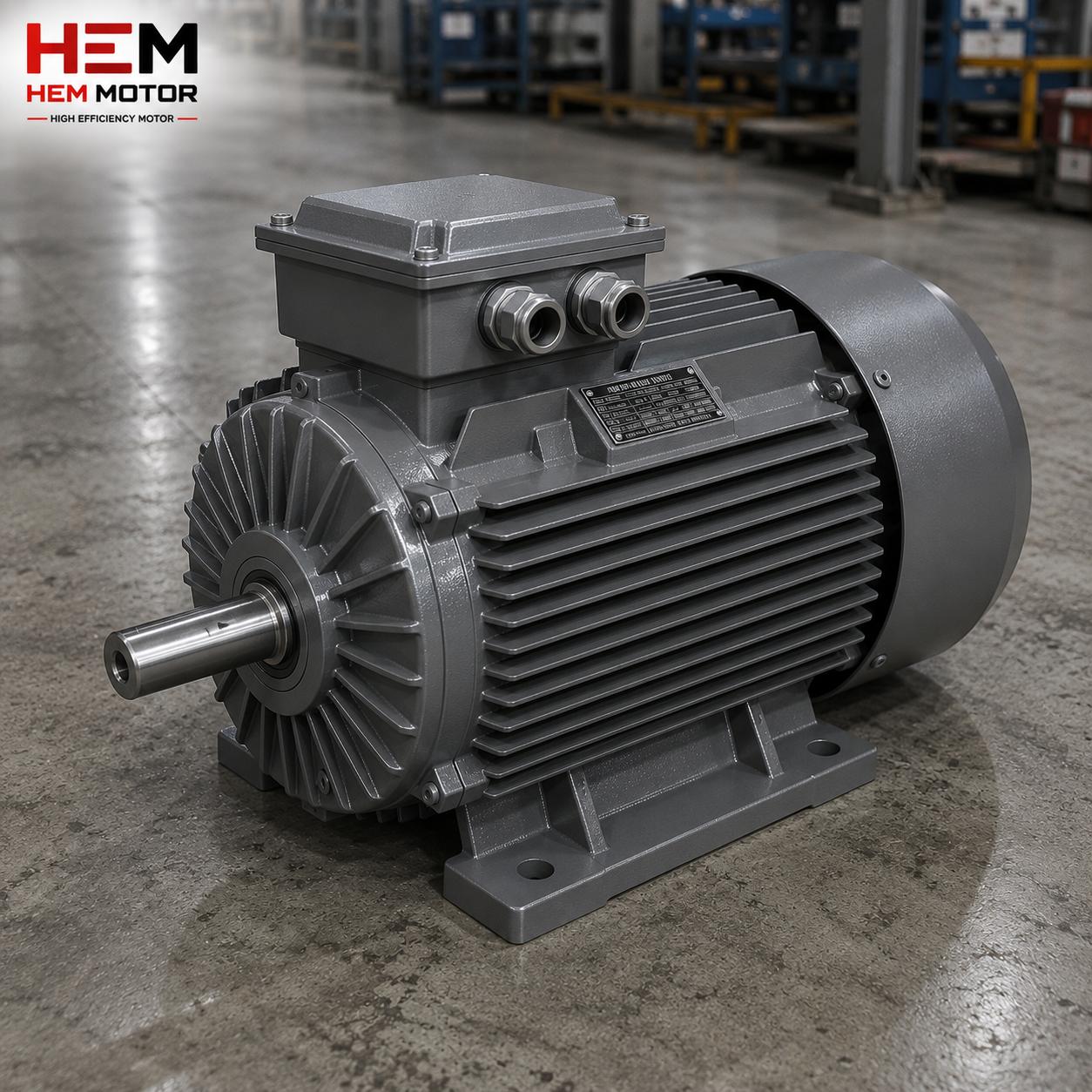
Torque Class (Design N, Design H)
According to IEC standards, motors are divided into torque classes based on their starting torque and starting current characteristics. Design N motors have standard starting torque and are sufficient for most general applications such as fans, pumps and conveyors. Design H motors, on the other hand, produce higher starting torque and are preferred for setting heavy stationary loads (crushers, heavy conveyors, high-inertia loads) into motion. If you are going to lift a demanding load in DOL, the choice of the motor's torque class becomes decisive. For the difference between torque classes, our article on the torque class (Design N/H) provides detailed information.
Steps for Selecting an IE3 Motor in DOL
When selecting an IE3 motor for direct-on-line starting, following these steps gives the correct result: first, the shaft power required by the load is calculated. Then the speed required by the application (the number of poles) is determined; if high torque is needed at low speed, a high-pole motor is chosen. Next, the torque characteristic of the load (constant/variable) is addressed and you make sure that the motor's starting torque is sufficient. For demanding loads, a torque class (Design H) is preferred. Finally, it is checked that the high starting current that will arise in DOL does not create a problem for the supply and the protection devices. As a manufacturer and seller, we ensure that IE3 motors are selected correctly not only by power but also by speed, torque class and load characteristic.
Practical Examples from the Field
Consider a stone crusher and a centrifugal water pump, both requiring a 15 kW motor. These two applications, despite needing the same power, demand completely different torque characteristics. The crusher is a constant-torque load and must overcome a heavy, stationary charge at start-up; it therefore needs a motor with high starting torque, often a Design H torque class, and frequently a lower speed for higher rated torque. The water pump, on the other hand, is a variable-torque load that starts easily with low torque; for it, a standard Design N motor at the appropriate speed is sufficient. Selecting the same "15 kW motor" for both without considering the load characteristic would either leave the crusher unable to start or unnecessarily oversize the pump motor.
Another common example is a conveyor belt that must start fully loaded. A conveyor is a constant-torque load, and starting under full load means the motor must produce high torque from standstill against the weight of the material already on the belt. Here, both the starting torque and the breakdown torque reserve are decisive; an undersized or low-torque motor will stall and fail to move the belt. These field examples show why DOL motor selection always returns to the same principle: match the motor's torque curve to the load's torque demand at every point, not just the kW rating. The right speed, the right torque class and adequate torque reserve together ensure a reliable start every time.
Frequently Asked Questions
Why do two motors of the same kW power produce different torque?
Because shaft power is proportional to the product of speed and torque. At the same kW power, the lower the speed, the higher the torque the motor produces. For this reason a low-speed (high-pole) motor delivers higher rated torque than a high-speed (low-pole) motor of the same power. For example, a 4-pole motor produces roughly twice the rated torque of a 2-pole motor of the same power. This is why, in motor selection, not only kW but also speed and therefore torque must be taken into account.
Why is selecting a motor by kW alone insufficient in DOL?
Because in direct-on-line starting no drive sits in between; at start-up the motor produces the torque permitted by its own design. If the load is constant-torque and heavy, a motor with low starting torque cannot lift the load and stalls during starting. For this reason, in DOL the motor must be selected according to the load's torque characteristic (constant/variable) and the motor's starting torque, in addition to kW. Looking at kW alone can lead to selecting a motor of the correct power but the wrong torque characteristic.
What is the difference between a Design N and a Design H motor?
Design N motors have standard starting torque and are sufficient for most general applications such as fans, pumps and light conveyors. Design H motors, on the other hand, produce higher starting torque; they are preferred for setting heavy stationary loads into motion, for example crushers, heavy conveyors and high-inertia loads. If you are going to lift a demanding load in DOL, choosing a torque class with high starting torque such as Design H ensures the motor lifts the load safely.
Let Us Determine the Right IE3 Motor Together
When selecting an IE3 motor to run in direct-on-line starting, the speed, torque class and load characteristic are decisive in addition to power. As a manufacturer and seller, we evaluate the load profile of your application and determine the IE3 electric motor with the correct power, speed and starting-torque characteristic. Share the type of your load (constant/variable torque), the speed you require and, if available, the nameplate data of the existing motor; let us select together the correct motor that will start safely in DOL.