English
 Türkçe



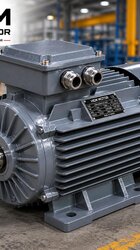
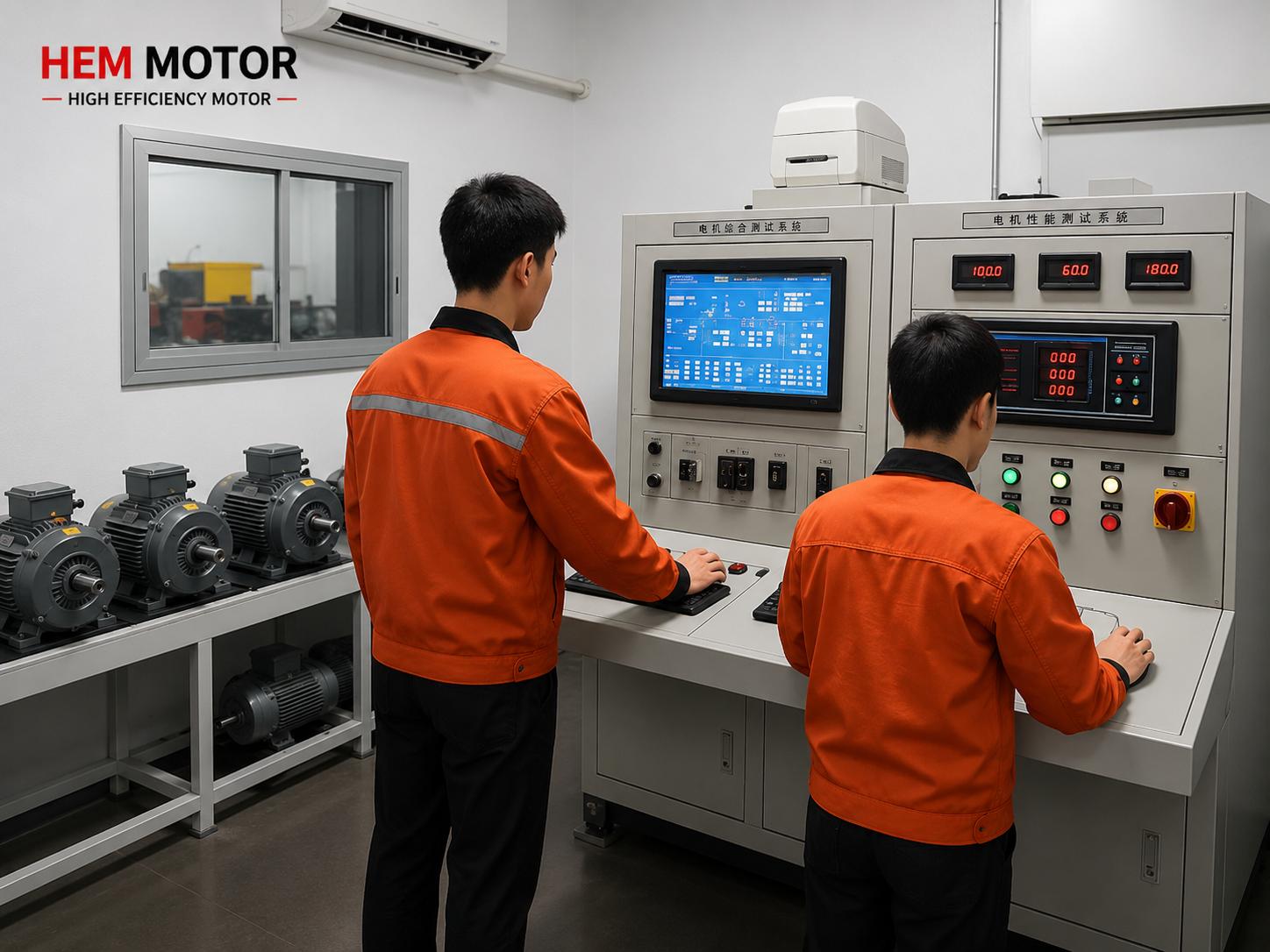

Buying a high-efficiency IE3 or IE4 motor is only the beginning of the savings. The efficiency printed on a motor's nameplate is maintained in the field only when the motor is run with correct maintenance. A bad bearing, insufficient or wrong lubrication, shaft misalignment and excessive belt tension quietly make even the most efficient motor inefficient; consumption rises, heating increases and life shortens. In this article we cover the effect of maintenance on motor efficiency under the headings of bearings and wear, lubrication, shaft alignment and belt tension, and explain how to preserve IE3/IE4 efficiency with periodic and predictive maintenance and which measurements should be taken.
Why Does Maintenance Affect Efficiency?
A motor's efficiency is how much of the electrical energy it can convert into mechanical work. The difference turns into heat as loss. Lack of maintenance enlarges these losses by increasing friction and mechanical resistance; that is, the motor draws more electricity to do the same work. Nameplate efficiency is measured under laboratory conditions; the real efficiency obtained in the field depends on the quality of maintenance. We covered this difference in our nameplate vs field efficiency article.
The extra money paid for IE3 and IE4 motors is recovered only if efficiency is preserved in the field. Efficiency dropping due to lack of maintenance wastes the investment made in a high-efficiency motor. We covered the role of correct sizing and maintenance in a high-efficiency motor in our efficiency class and correct sizing article and the measurement of annual savings in our measuring and documenting annual savings content.
Bearings and Wear
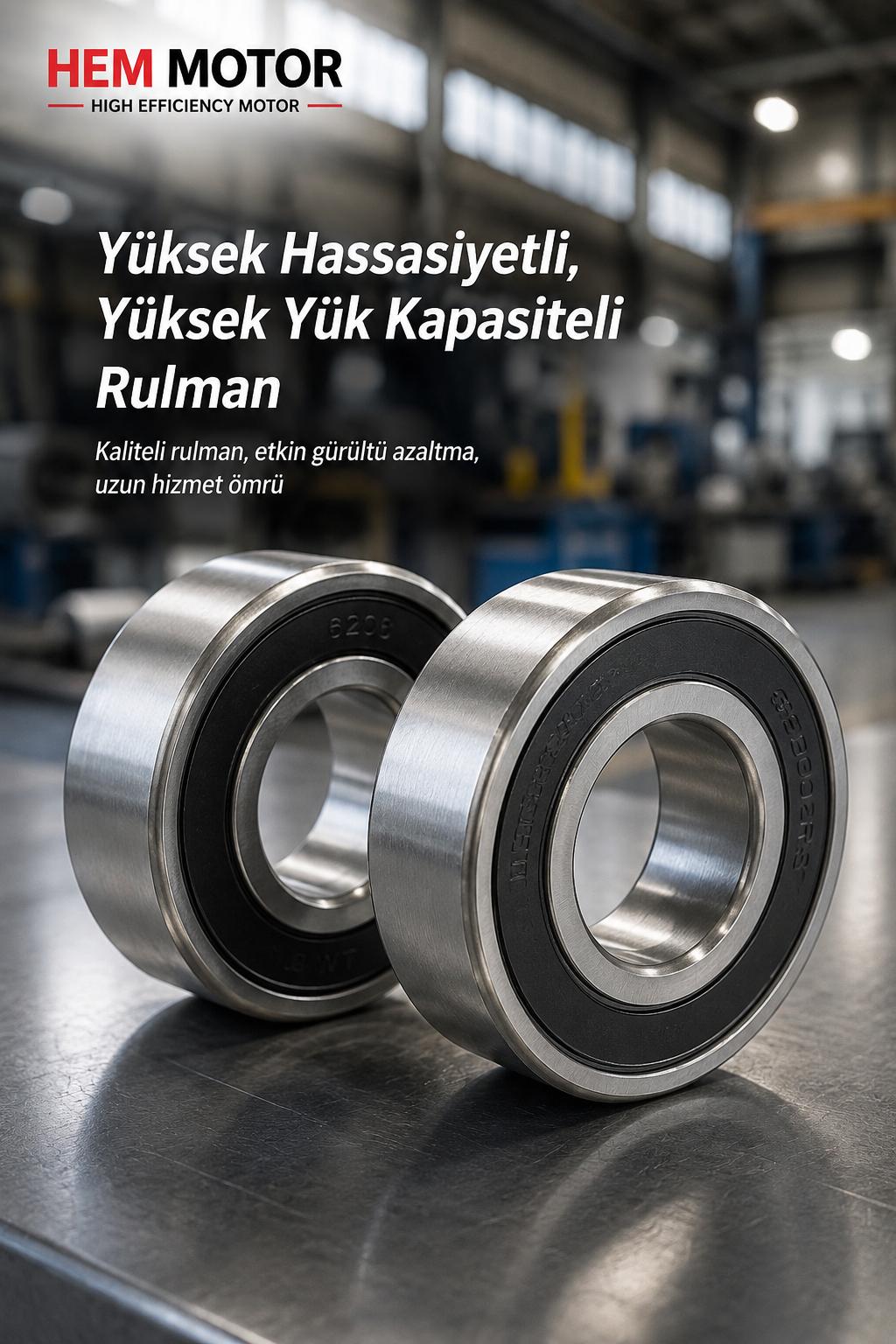
Bearings are the mechanical heart of the motor. A worn, contaminated or dry-running bearing increases friction loss; this loss appears directly as a drop in efficiency and heating. Advanced wear increases vibration and eventually leads to the bearing seizing, that is to sudden failure and downtime. Among the early signs of bearing failure are increased noise, abnormal heating and vibration. We covered bearing type and life in asynchronous motors in our bearing type and life article.
In drive (VFD) systems, electrical discharge currents passing through the shaft can damage the bearing over time; in this case an insulated bearing or shaft grounding is needed. You can find the quality markers of bearing and seat life in cast iron motors in our bearing and seat life content. We compiled early failure causes in our motor life and early failure causes article.
Lubrication: Too Little and Too Much Are Both Harmful
Bearing lubrication is one of the most error-prone topics in maintenance. Insufficient lubrication leads to metal-to-metal contact and rapid wear; excessive lubrication creates pressure and heat inside the bearing, causing grease degradation and again an increase in friction. Correct lubrication means the right grease type, the right amount and the right interval. Following the manufacturer's recommended grease intervals is one of the easiest ways to preserve efficiency. A common mistake in lubrication is mixing different grease types; incompatible greases can react with each other, lose consistency and lose their lubricating property. Another mistake is straining the bearing seal by applying excessive pressure with a grease gun. Therefore, grease addition should be done in a measured way, while the motor is running and with the drain plug open.
Greaseable bearings require periodic grease addition, while sealed (lifetime-lubricated) bearings require complete replacement when their time comes. We covered the effect of bearing greasing and lubrication on maintenance cost in IE3 motors in detail in our bearing greasing and lubrication article. You can find the importance of oil seal and sealing in dusty and oily environments in our oil seal and sealing content.
Shaft Alignment: Invisible Efficiency Loss
Shaft misalignment between the motor and the machine it drives is the most frequently overlooked efficiency reducer. When the shaft axes do not exactly coincide, a constant strain forms on the coupling and bearings; this strain both spends energy as friction loss and shortens the life of the bearing and coupling. Misalignment is divided into parallel (offset) and angular; both produce vibration and heating. The insidious side of misalignment is that it is not noticeable to the eye; the motor appears to run, but inside the bearings are constantly strained and energy is quietly lost. Over time, this strain leads to early bearing failure and unplanned downtime. So shaft alignment provides a two-way gain in terms of both instant efficiency and long-term reliability.
Correct alignment must be checked during installation and in periodic maintenance; measurement is done with a dial indicator or a laser alignment device. Although a flexible coupling tolerates some misalignment, correct alignment is always a priority. We covered coupling selection and shaft alignment in our coupling selection and shaft alignment article and shaft and key compatibility in our shaft diameter and key dimensions content. The shaft diameter, key and coupling article is also useful for mechanical matching in cast iron motors.
Belt Tension: A Two-Way Error
In belt-pulley drives, tension causes damage both when too loose and when too tight. A loose belt slips; this slip both reduces power transmission and produces heat and wear. An over-tight belt, on the other hand, puts a lateral load on the motor and machine bearings; this shortens bearing life and increases friction loss. Correct tension must be kept at the value specified by the manufacturer and checked periodically.
If speed adjustment is done with belt-pulleys, the correctness of the pulley diameters and alignment also affects efficiency; we covered this in our speed adjustment with pulley-belt article. Pulley misalignment, similar to shaft misalignment, produces vibration and early wear; therefore, in belt systems, pulley alignment must also be part of the alignment check.
Cooling and Cleaning
The motor's cooling is also directly related to efficiency. Dust, dirt and oil accumulating on the cooling fins prevent heat from being dissipated; the motor runs hotter, which both lowers efficiency and shortens insulation life. A blocked fan cover or a damaged fan produces the same result. Regular cleaning is a simple but effective efficiency-preservation step. We covered the effect of dirt accumulation on the cooling fins on efficiency in our cooling fins and dirt accumulation article.
You can find the difference between cooling methods (IC411 forced fan cooled, IC416 externally fanned) in our cooling methods IC411 and IC416 content. For power derating in hot environments, the high ambient temperature and derating article is a guide.
Running at the Correct Load Is Also a Maintenance Topic
When maintenance is mentioned, lubrication and alignment usually come to mind; but running the motor at the correct load is also part of preserving efficiency. An oversized motor runs continuously at low load and stays in the inefficient region of the efficiency curve; at the same time the power factor (cos phi) drops and the risk of a reactive penalty arises. Therefore, when replacing or renewing a motor, selecting the power that suits the actual load provides a more permanent efficiency gain than any maintenance done afterwards. We covered the effect of load ratio on efficiency in our load ratio and correct sizing article and partial-load efficiency in an IE4 motor in our part and low load efficiency content.
Power factor and reactive draw are a topic to watch especially in motors running at partial load. We covered power factor and the reactive penalty in a high-efficiency motor in our power factor and reactive penalty article. When the correct load, the correct grease and the correct alignment come together, the efficiency the IE3/IE4 motor promises on its nameplate is obtained in the field too.
Periodic and Predictive Maintenance
Maintenance is done with two approaches. Periodic maintenance is planned checks at certain intervals: grease addition, alignment check, belt tension, cleaning and measurements. Predictive maintenance, on the other hand, is based on continuously monitoring the motor's condition to predict failure in advance: with vibration, temperature and current analysis, the early deterioration of a bearing or a misalignment is noticed early. We covered the periodic maintenance schedule in our maintenance and periodic check schedule article.
The basic measurements of predictive maintenance are temperature and vibration. You can find winding temperature monitoring with PT100 and PTC thermistors in our motor temperature monitoring article and vibration acceptance values in our vibration and balance ISO 10816 article. To read failure symptoms in advance, we recommend our motor failures symptoms and causes content.
Which Measurements Should Be Taken?
To preserve efficiency, the following measurements should be taken regularly: the current the motor draws (an indicator of overload or efficiency drop), winding and frame temperature, vibration level and, when needed, insulation resistance. We covered insulation resistance measurement (megger test) in our insulation resistance and megger test article. You can find the relationship of current and load ratio with efficiency in our load ratio and correct sizing content.
Regular recording of these measurements shows the trend over time; a value slowly worsening is a herald of a failure. To record baseline values during commissioning, we recommend our commissioning and first startup check article, and for protection devices, our protection devices content. You can review our product range on the high efficiency electric motors, IE3 electric motors and IE4 electric motors pages, and reach other categories via our HEM Motor home page.
Frequently Asked Questions
Does lack of maintenance really lower efficiency?
Yes. A worn bearing, wrong lubrication, shaft misalignment and belt problems increase friction and mechanical resistance; the motor draws more electricity to do the same work. Even an IE3 or IE4 motor with high efficiency printed on its nameplate cannot preserve that efficiency in the field due to lack of maintenance, and the return on the investment decreases.
Is over-lubrication harmful?
Yes, over-lubrication is as harmful as under-lubrication. Excessive grease creates pressure and heat inside the bearing, causing the grease to degrade and friction to increase. Correct lubrication means the right grease type, the amount specified by the manufacturer and the interval. The interval schedule must be followed in greaseable bearings.
How do I check shaft alignment?
With a dial indicator or a laser alignment device, the parallel and angular offset between the shaft axes of the motor and the machine is measured. Alignment must be checked both at installation and in periodic maintenance. Although a flexible coupling gives some tolerance, correct alignment minimizes vibration and efficiency loss.
Get a Quote
If you would like support in preserving the efficiency of your existing motors, planning renewal or supplying new IE3/IE4 motors, get in touch with us. If you share the power, speed and application details of your motors, we will determine the most suitable solution together. You can reach us at +90 (532) 345 49 86 or send your request via our contact page.
Maintenance and Efficiency Preservation Checklist
- Regularly monitor bearing noise, vibration and temperature; intervene early if there is a symptom.
- Follow the manufacturer's recommended grease type, amount and interval; avoid under- and over-lubrication.
- Check shaft alignment at installation and in periodic maintenance with a dial indicator/laser.
- Keep belt tension at the correct value; check pulley alignment.
- Regularly clean the cooling fins and the fan cover.
- Record current, temperature and vibration measurements to track the trend.
- Record baseline values at commissioning and compare.
- Predict failure in advance with predictive maintenance to prevent unplanned downtime.