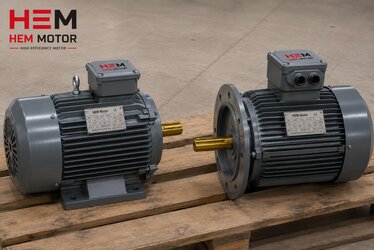
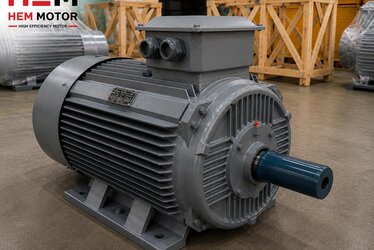
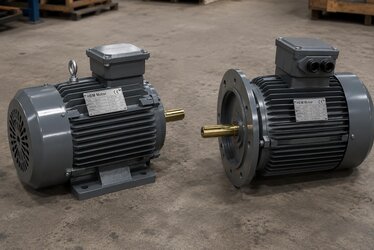
The rated power of electric motors is determined against a standard reference condition: usually 40C ambient temperature and up to 1000 meters altitude. When the ambient temperature rises above this standard, the power the motor can deliver falls; this is called power reduction, or derating. Around furnaces, in foundry and rolling mill lines, in hot process zones and in poorly ventilated enclosed rooms, the ambient temperature easily exceeds 40C. To select the motor correctly in such environments you must either reduce the power, increase the frame size, or provide thermal reserve with a higher insulation class. In this article we cover cast iron motor selection in high ambient temperature, the logic of derating above 40C, and the concepts of temperature rise class and temperature rise.

Cast iron motor in high ambient temperature power reduction derating above 40 degrees

What Is Derating and Why Is It Needed?

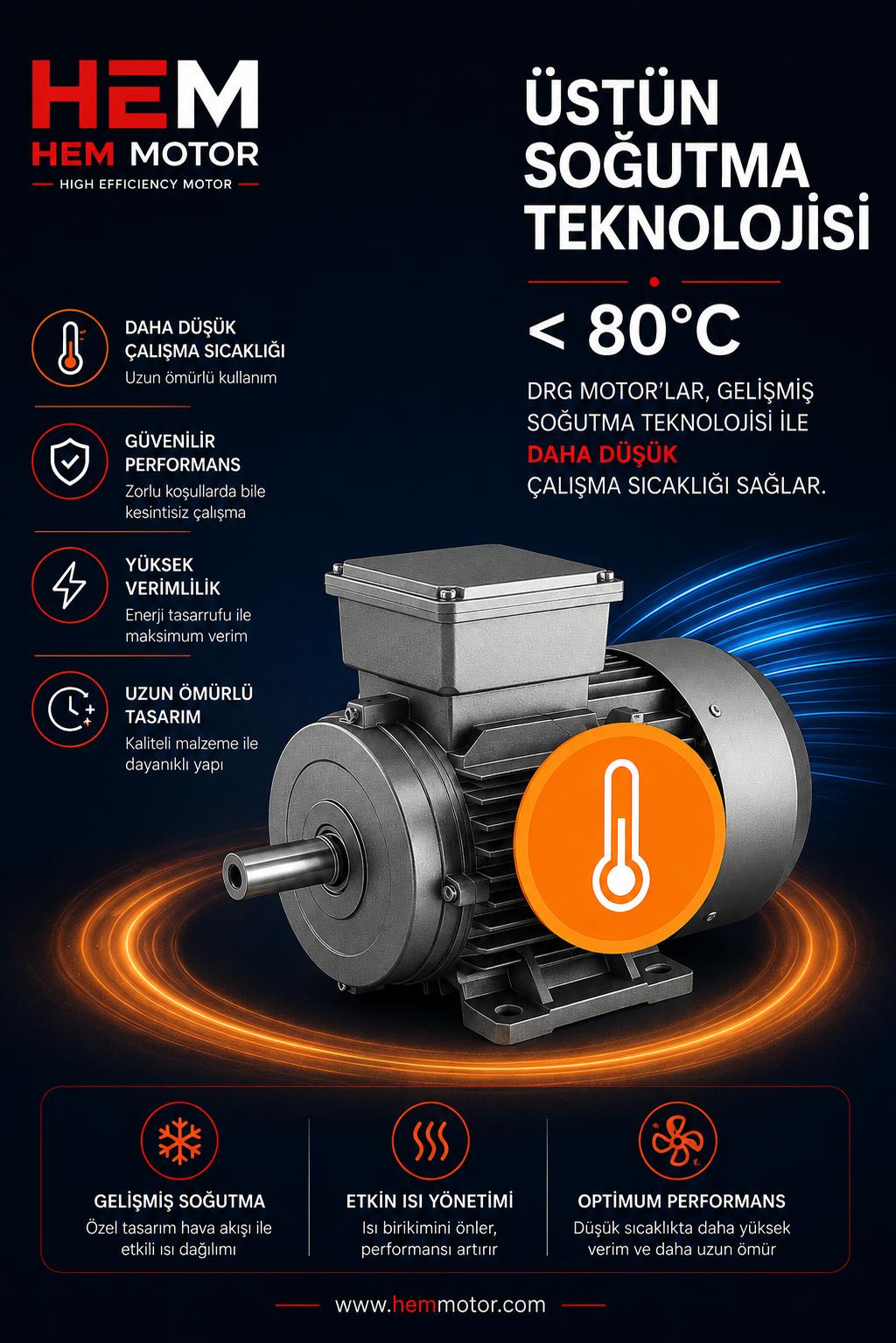
The power a motor delivers is limited by the ability to dissipate the heat generated in the winding. When running at rated power, the winding temperature rises to the limit allowed by the insulation class. When the ambient temperature rises, it becomes harder for the motor to dissipate heat; delivering the same power makes the winding even hotter and the insulation limit can be exceeded. So at high ambient temperature, the power the motor can safely deliver is reduced. Derating is a mandatory measure to protect the motor's thermal life. The life of the insulation material is inversely related to temperature: as the winding temperature exceeds the allowed limit, insulation aging accelerates and the motor's life shortens. As a common rule, a certain rise in winding temperature roughly halves the insulation life. So not reducing power in high ambient temperature, although it looks like getting more power in the short term, leads to early motor failure and unplanned stoppages in the long run.

The key concept here is temperature rise: how far the motor's winding rises above the ambient temperature. The insulation class determines the allowed total winding temperature. As the ambient temperature rises, the allowed temperature rise margin narrows; this requires running at lower power or choosing a motor with higher thermal reserve.

The 40C Standard and Above

Standard motors are designed for 40C ambient temperature. As the ambient rises above 40C, a power-reduction factor to be applied to the rated power comes into play: the higher the temperature, the more the deliverable power falls. So at high ambient temperatures like 50C or 60C, you must either select a larger motor or use the motor at reduced power to do the same job. Correct selection starts with realistic measurement of the ambient temperature. A common mistake here is confusing the ambient temperature with the facility's general temperature; the local point where the motor runs, near a furnace, boiler or hot line, can be much higher. The real peak temperature of the room where the motor sits should be measured, if possible considering summer conditions and the moment when ventilation is weakest. Otherwise a standard motor, although sufficient on paper, will continuously overheat in the field and have a much shorter life than expected.

The Thermal Advantage of the Cast Iron Frame

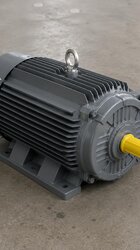
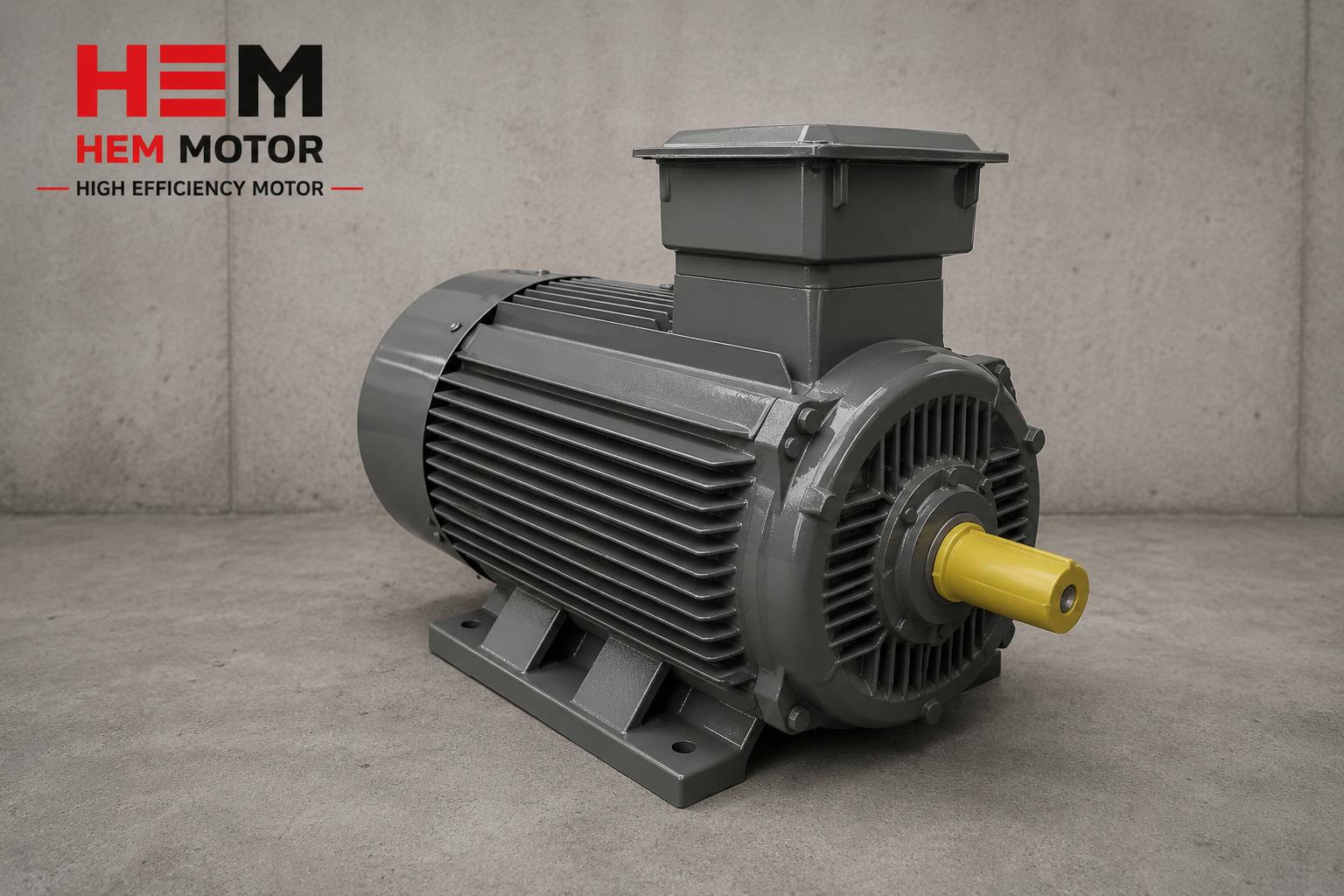
In a high-temperature environment the frame material directly affects the motor's heat management. The cast iron frame dissipates heat effectively thanks to its high thermal mass and the cooling fins on the frame. When cast iron and aluminum frames are compared, cast iron offers more stable thermal behavior in hot and harsh environments. This is an important advantage in environments with high radiant heat such as around furnaces and foundries. Although an aluminum frame conducts heat quickly, it is not mechanically as durable as cast iron in hot and corrosive environments; also, in motors running near a radiant heat source, the mass of cast iron softens temperature fluctuations, reducing sudden thermal stress on the winding. So in motors around hot lines, the frame material is not just a mechanical choice but also a thermal reliability decision.

The cast iron frame's high thermal mass makes the winding temperature rise more slowly during short temperature fluctuations. But under continuous high ambient temperature this advantage alone is not enough; the insulation class and derating must be evaluated together. The choice of insulation class and cast iron frame in hot and dusty environments handles these two factors together.

Cast iron motor in high temperature insulation class F H thermal reserve and frame upsizing

Insulation Class and Thermal Reserve

The insulation class is one of the strongest cards in high ambient temperature. The difference between class F and H insulation appears in the allowed winding temperature: class H withstands higher temperature than class F and so provides a wider thermal reserve. This reserve can reduce the derating need in high ambient temperature.

A common approach is to design the motor to a class F temperature rise but use class H insulation; this leaves an extra safety margin between the winding and the insulation limit. In high ambient temperature, this margin lets the motor run more safely at the same power or reduces how much the power must be cut. The insulation class choice should be made together with ambient temperature and load profile. Thermal reserve is useful not only for safety but also for the motor to withstand unexpected overloads or short temperature rises. A motor running with a narrow thermal margin in a hot environment hits the protection limit even with a small load increase, while a motor with a wide reserve handles these fluctuations smoothly.

Upsizing the Frame or Reducing the Power?

There are two basic strategies in high ambient temperature. The first is to use the motor at reduced power (derating): the motor runs below its rated power so the winding heats up less. The second is to move to a larger frame size and do the same job at a lower load ratio; this thermally relieves the motor. Cast iron motor frame sizes (IEC 56-355) form the reference for this choice.

Which strategy is more suitable depends on the application's power need and mechanical constraints. Upsizing the frame may require more space and cost, while reducing power is economical when the actual job can really be done at lower power. The right load ratio and sizing form the basis of this decision.

The Combined Effect of Altitude and Temperature

Derating is not limited to temperature; high altitude also affects the motor's cooling. Above 1000 meters the air density decreases, so the cooling provided by the motor's fan weakens and additional derating may be needed. In a motor running at high altitude and in a hot environment, these two effects combine. Motor selection and derating in high altitude and hot environments requires evaluating both factors together.

This shows the importance of knowing in advance the real conditions of the environment where the motor will run. If both temperature and altitude are high, the derating factors stack and further limit the power the motor can deliver; so the selection should be made for the worst-case condition. Since the air is thinner at high altitude, the air passing around the motor frame carries less heat; at the same time, high ambient temperature further reduces this air's cooling capacity. The combination of the two effects causes a motor that would run trouble-free at sea level in a cool environment to need significant derating at a high-altitude, hot facility. So especially in mining, cement and power plants on high plateaus, both factors must be accounted for when selecting a motor.

Hot Line Applications

High ambient temperature most often appears in certain sectors. In rolling mill and foundry plants, motors run close to hot metal and furnace radiant heat; here derating and a high insulation class are mandatory. In foundry and casting mold plants the ambient temperature is similarly high.

Furnace fans, drying lines and motors around hot processes also fall into this category. For example, in galvanizing and hot-dip coating plants and lime kiln and calcination plants, motors are exposed to high temperature. In these applications the cast iron frame is preferred for both thermal endurance and mechanical robustness. In such hot-line environments the motor is usually exposed not only to high ambient temperature but also to dust, vibration and at times radiant heat. So the selection should rest not on a single factor but on a holistic evaluation that considers temperature, protection class, insulation and frame durability together. The robust structure of the cast iron frame meets the common need of these multi-factor harsh environments with a single choice.

Duty Type and Interaction with Continuous Load

The effect of high ambient temperature should be evaluated together with the motor's duty type. A motor running continuously (S1) drives the winding temperature to a steady peak value; if the ambient temperature is high, this peak is much closer to the insulation limit. The duty type (S1-S6) selection directly affects the derating need in a hot environment: in intermittent duty types the motor gets a chance to cool, while under continuous load it does not.

So in a motor running continuously in a hot environment, derating is more decisive than in an intermittent one. If the load profile is continuous and near full load, raising the insulation class and reducing power may both be needed together. Knowing the motor's real load ratio prevents applying excessive derating and oversizing the motor; field efficiency and real load assessment guides this point.

How Does the Derating Factor Scale?

The power-reduction factor grows gradually as the ambient temperature rises. Conceptually: at 40C the motor delivers its full power, and as the temperature rises by each step, the deliverable power decreases by a certain ratio. For example, at 50C the motor runs somewhat below its rated power, and at 60C even further below. Although these ratios are made precise with the motor manufacturer's tables, the logic is always the same: as temperature rises, the thermal margin narrows and power falls.

This scaling shows why measuring the ambient temperature realistically is critical. An estimate wrong by a few degrees leads either to oversizing the motor needlessly or to undersizing and overheating. Correct measurement is the basis for the right selection in terms of both cost and reliability. An unnecessarily large motor means both investment and a loss of efficiency and power factor at a low load ratio; an inadequate motor means constant heating and early failure. When the load profile and temperature are known together, the motor power calculation is made more robust.

Corrosion and Sealing in Hot Environments

Around hot lines there can be not only temperature but also moisture, steam and corrosive gases. In that case protecting the frame against corrosion also becomes important. Cataphoresis coating and painting protect the cast iron frame in hot and humid environments. In addition, oil seal and sealing solutions prevent dust and moisture ingress in a hot environment, extending the motor's life.

Temperature Monitoring and Protection

In a motor running in high ambient temperature, monitoring the winding temperature is an effective way to protect life. Temperature monitoring with PT100 and thermistor gives a warning or shutdown when the winding temperature approaches a critical level. Used together with derating, this layers the motor's thermal safety. Also, keeping the cooling fins clean preserves the cooling capacity in a hot and dusty environment.

Purchase and Selection Checklist

  • Measure the real ambient temperature where the motor will run (above 40C?).
  • Check the altitude; above 1000 m additional derating may be needed.
  • Determine the power-reduction factor to apply based on ambient temperature.
  • Choose the insulation class (F/H) according to the thermal reserve need.
  • Decide between upsizing the frame and reducing power based on power and space constraints.
  • Prefer the cast iron frame for thermal endurance in hot, harsh environments.
  • Verify IP protection and sealing in hot and dusty environments.
  • Add winding temperature monitoring (PT100/thermistor).
  • Make the selection for the worst-case (highest temperature + altitude) condition.

From our range, see the efficient electric motors and, for hot environments, the IE4 cast iron motors pages, and reach us via the HEM Motor homepage for the right derating and insulation class.

Frequently Asked Questions

Why is motor power reduced when the ambient temperature exceeds 40C?

The power a motor delivers is limited by dissipating the heat in the winding. When the ambient temperature rises, the motor sheds heat less easily; if it delivers the same power, the winding can exceed the insulation limit. So above 40C, to protect the winding, the deliverable power is reduced by a factor (derating).

In high temperature, is upsizing the frame or reducing power better?

Both are valid strategies. If the job can really be done at lower power, reducing power is economical. If the same job must be done at full power, moving to a larger frame and running the motor at a lower load ratio relieves it thermally. The decision depends on the power need and space constraint.

What does the insulation class change in high ambient temperature?

The insulation class determines the allowed winding temperature. Class H withstands higher temperature than class F and provides a wider thermal reserve. This reserve can reduce the required derating in high ambient temperature or let the motor run more safely at the same power.

Get a Quote

Let us determine together the right power, insulation class and derating for your high ambient temperature application. For hot environment motor selection, reach the HEM Motor experts at +90 (532) 345 49 86 or request a quote through our contact page.