English
 Türkçe


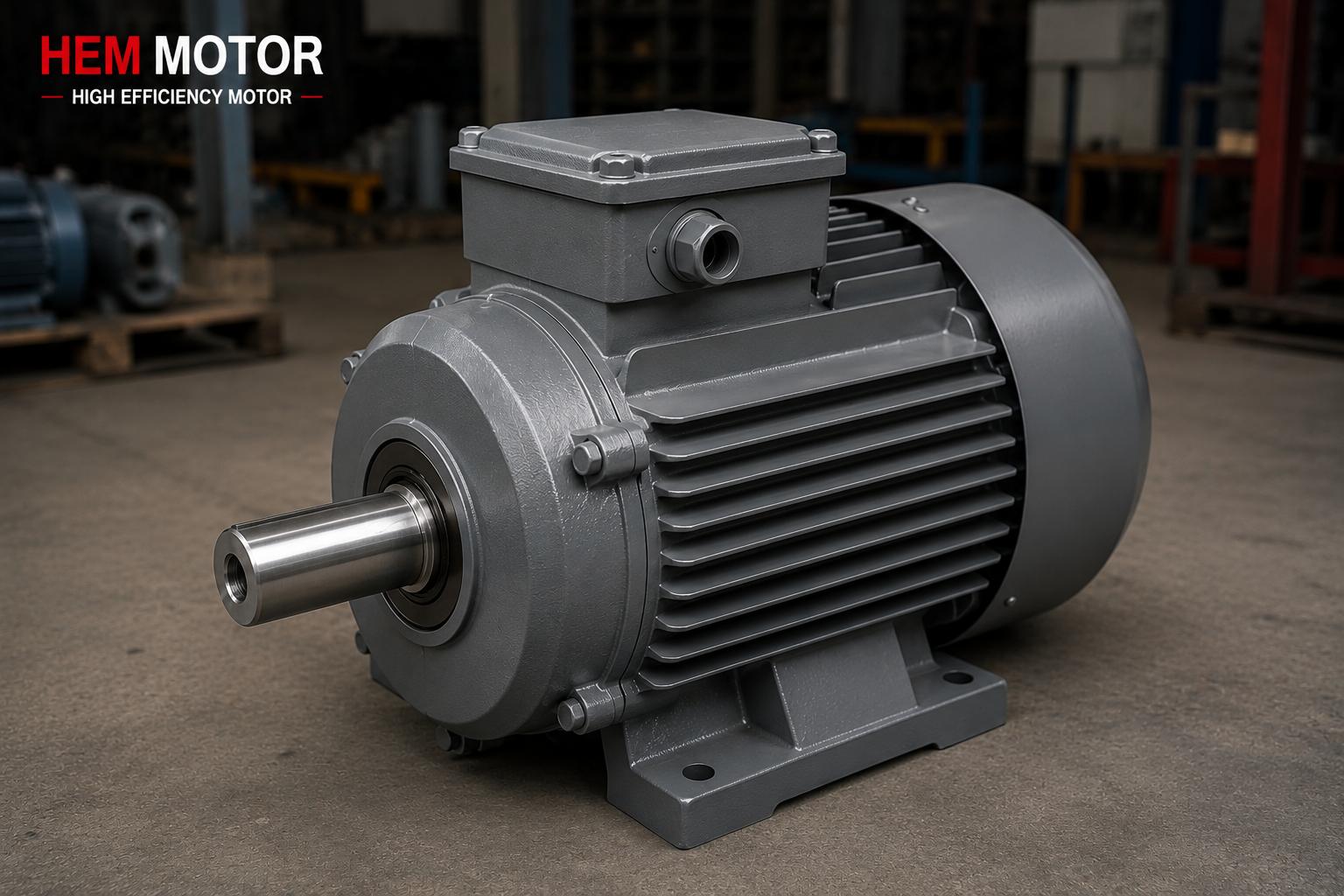

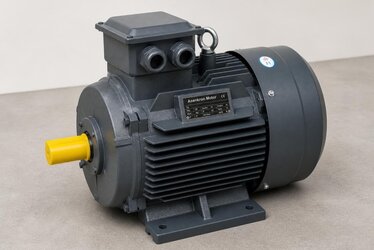
"Should I switch to an IE4 motor, or is IE3 enough?" is one of the most frequent questions businesses ask in this period of rising energy costs. The correct answer is not always "the highest efficiency class"; the answer depends on the motor power, annual runtime and energy price. For a small motor that runs rarely, the extra cost of IE4 may take a long time to return, while for a large motor running three shifts IE4 can pay for itself in a few years. In this guide we cover the efficiency difference between IE3 and IE4, the three key variables that determine the transition decision (power, runtime, energy price) and which class is sensible in which case, conceptually and proportionally without giving fixed numeric values.
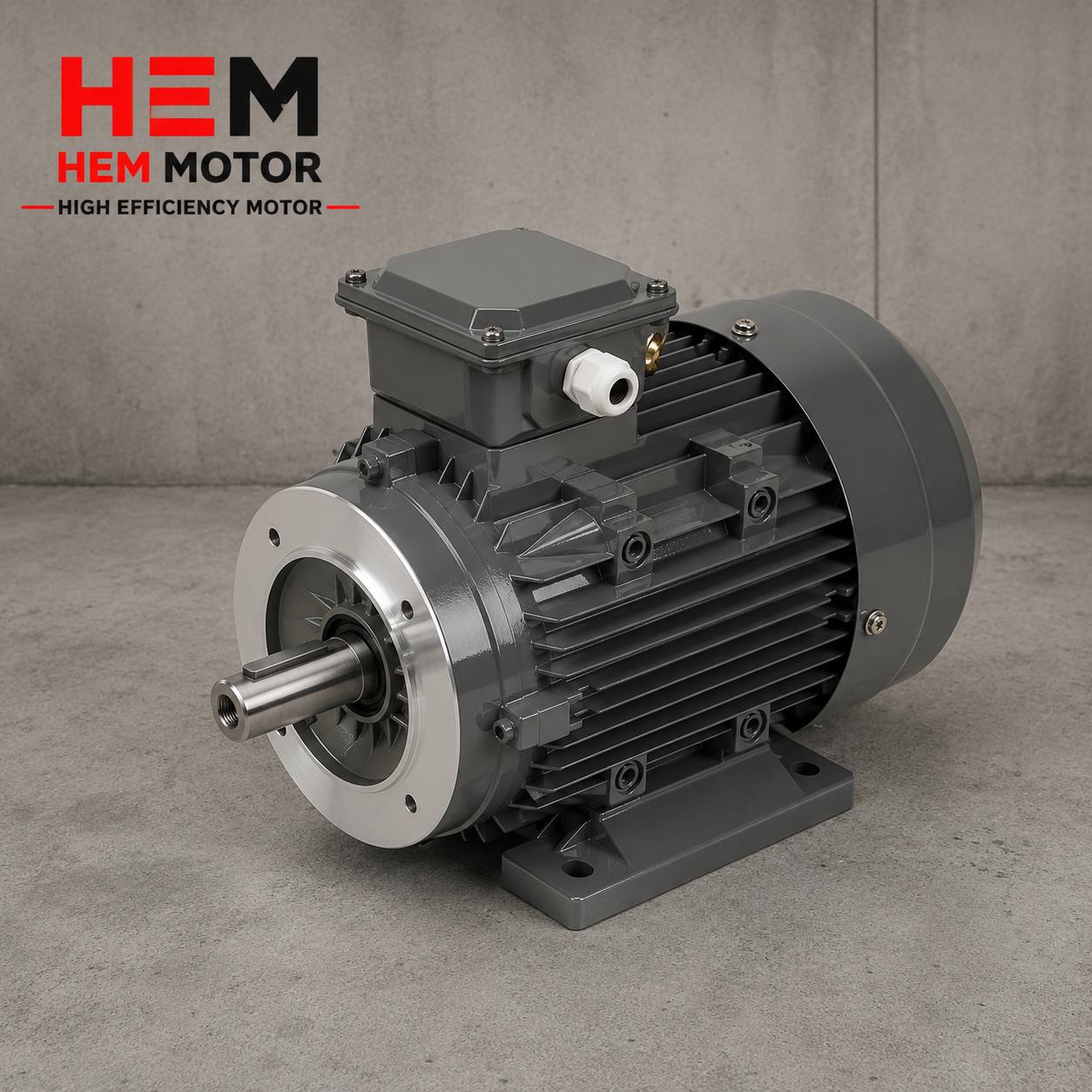
The Efficiency Difference Between IE3 and IE4
The IE (International Efficiency) classes rate the motor efficiency on a standard scale. The higher the ranking, the higher the efficiency:
- IE3 (Premium): today the most common mandatory efficiency class in industry.
- IE4 (Super Premium): the higher class that markedly reduces losses compared with IE3.
The efficiency difference between IE3 and IE4 looks small in absolute terms; but it gains meaning when thought of as a proportion of the energy lost. The main advantage of IE4 over IE3 is that it reduces the iron, copper and friction losses wasted inside the motor. We explained where these losses drop in detail in IE4 motor efficiency losses. For a general comparison between efficiency classes see our IE3 or IE4 electric motor investment article. For those considering the higher IE5 class, our IE5 or IE4 article guides you.
The Three Variables That Determine the Transition Decision
Three variables determine when an IE4 investment will return. A correct decision cannot be made without evaluating all three together.
1. Motor Power (kW)
The energy a motor consumes annually is directly proportional to its power. In a high-power motor, even a small efficiency difference turns into a large amount of energy by year end. So the payback of switching to IE4 accelerates as power grows. In small-power, occasionally running motors the difference remains negligible. We covered the importance of the efficiency decision at high powers in investment and payback in motors above 132 kW. For correct power selection see our motor power calculation article.
2. Annual Runtime
This is the most decisive variable of the decision. The more hours a motor runs per year, the more the efficiency difference turns into energy, and therefore into savings. A motor running three shifts continuously (S1) cannot be compared with one running only a few hours a month. Of two motors of the same power, making the continuously running one IE4 is far more sensible. We covered the importance of runtime in motor fleet management in three-shift facilities and duty type selection in duty type (S1-S6) selection.
3. Energy (Electricity) Price
The monetary value of the energy saved scales with the unit energy price. As the energy price rises, the same amount of energy saving means a larger monetary gain and the payback period of IE4 shortens. So in periods of rising energy prices the threshold for switching to IE4 falls; even smaller powers and fewer running hours can make the switch sensible. To see energy cost as a whole, our total cost of ownership (TCO) article offers a good framework.
The Payback Threshold Conceptually
An IE4 motor has a higher purchase price than IE3. This extra cost is repaid over time by the energy saving it provides. The payback period can be thought of conceptually as follows:
- Extra investment size: the purchase difference between IE4 and IE3.
- Annual saving size: efficiency difference x runtime x power x energy price.
The payback period is the ratio of the extra investment to the annual saving. As the annual saving grows (that is, as power, runtime and energy price rise), the payback period shortens. Conversely, in a small-power, low-runtime motor the annual saving is small, so the payback lengthens. The core idea here is: whether IE4 is sensible depends on how much energy the motor spends per year. We illustrated this calculation from the angle of replacing an old motor in replacing your old motor with IE4 and the real field saving in nameplate vs field efficiency difference.
In Which Case Is IE4 Sensible?
As the following conditions combine, IE4 pays back faster and becomes more sensible:
- High runtime: motors running continuously, three shifts, all season.
- Medium-large power: as power grows, the efficiency difference turns into more energy.
- Continuous loads such as pumps, fans and compressors: these applications are ideal candidates for IE4; see our IE4 threshold in pumps, fans and compressors article.
- High energy price region/period: the monetary value of the saving grows.
- Regulatory requirement: in certain power and pole ranges IE4 may already be mandatory; we explained this in IE3 and IE4 efficiency requirement.
On these motors the extra cost of switching to IE4 mostly returns in a reasonable time and then provides net savings every year.
In Which Case Is IE3 Enough?
Making every motor IE4 is not economically correct. In the following cases IE3 (or the class allowed by regulation) is generally enough:
- Low runtime: spare motors, emergency pumps, rarely engaged motors.
- Small power: at very small powers the monetary value of the efficiency difference is negligible.
- Short-term/intermittent duty: motors running briefly a few times an hour.
- Frequently changed/temporary installations: site, seasonal or rental applications.
In these cases the annual saving is small, so the extra cost of IE4 does not return for a long time. We covered the cases where staying with IE3 is sensible in detail in stay with IE3 or switch to IE4. For spare motor planning see our critical spare motor list article.
A Fleet-Based Approach: Which Motor First?
If a plant has dozens of motors, they need not all be replaced at once. The smart approach is to prioritise the most-running and highest-power motors, because the fastest payback comes from there. We explained this prioritisation in which plant to switch to IE4 first and in savings from a single motor to a fleet. To see the existing motor park, our creating a motor inventory article is a good start. To not miss mechanical compatibility during the switch, see our mechanical compatibility when switching to IE4 article.
The Moment of Replacing an Old Motor: The Most Sensible Time to Switch
The decision to switch to IE4 is most often triggered by a crisis: the existing motor fails and the business faces the question "should I rewind it or buy new?" This moment is the most sensible time to raise the efficiency class. Because the motor is already out of service and the installation and commissioning labour will be done anyway; at this point buying the new motor in a higher efficiency class means the extra cost is only the efficiency difference. By contrast, removing and discarding a healthy working motor purely for efficiency is usually not economical.
Rewinding an old motor looks cheap at first glance, but the efficiency of a rewound motor generally drops somewhat, because the original factory winding quality and automation cannot be fully reproduced in workshop conditions. On a continuously running motor even this small efficiency loss can cause more energy loss over the years than the rewind cost. So especially on frequently running, medium-large power motors, buying an IE4 replacement at the moment of failure stands out both technically and economically. We covered the rewind versus new purchase comparison in rewind the motor or buy new, the efficiency loss in rewinding an IE3 motor in rewinding an IE3 motor, and equivalent replacement selection during the switch in replacing an IE4 motor with an equivalent.
The Purchase Price Is Only the Tip of the Iceberg
The most common mistake when deciding between IE4 and IE3 is to look only at the label price. Yet the total cost a motor brings to the business over its life consists of three main items: purchase price, energy cost and maintenance cost. On a continuously running industrial motor, the purchase price often makes up a very small part of the total lifetime cost; the real burden is the energy bill paid over the years. Seen from this frame, the small IE4 premium paid at purchase is quickly overshadowed by the saving it provides in the energy item.
So the correct decision starts with seeing the motor not as a "purchase price" but as an "annual operating expense". The total cost of ownership (TCO) approach does exactly this: it gathers purchase, energy and maintenance into a single picture and shows which motor is actually cheaper. In most continuously running applications, IE4 turns out more economical than IE3 in TCO terms despite its higher purchase price. We explained step by step how the TCO calculation is done in total cost of ownership (TCO). We covered the carbon footprint reduction side in carbon footprint with high-efficiency motors.
How Do Incentives, Regulation and Export Pressure Change the Decision?
The IE4 transition decision is not limited to the energy calculation; regulation and incentives also change the equation. In certain power and pole ranges a high efficiency class has already become legally mandatory; in that case the decision is not "IE3 or IE4" but directly "which IE4 motor". We compiled which power requires which class from which date in IE3 and IE4 efficiency requirement.
Beyond this, government incentives and support programs for energy efficiency investments can cover part of the extra cost of IE4 and shorten the payback period even further. For exporting plants there is an additional pressure: the carbon border regulations and sustainability reporting requirements of customer countries turn an efficient motor park into a competitive advantage. We covered the incentive side in incentives for switching to high-efficiency motors and the export and carbon border side in carbon border (CBAM) and exporting plants. When these three factors (regulation, incentive, export) come together, the threshold for switching to IE4 falls even lower than the energy calculation alone shows.
Frequently Asked Questions
Is IE4 always better than IE3?
Technically IE4 is always more efficient; but whether it is a "better investment" depends on how the motor is used. On a motor that runs very little or has very small power, the extra cost of IE4 may not return for a long time. In that case IE3 may be the economically more correct choice. The decision is made by looking at annual energy consumption rather than at efficiency alone.
Should I replace my working IE3 motor with IE4?
Replacing a healthy working IE3 motor early is usually sensible only at very high runtime and large power. The general rule: if the motor has already failed or a rewind is on the agenda, buying the replacement as IE4 is the most sensible moment. Because at that point you are already making part of the investment. We illustrated the decision to replace an old motor in our articles.
Should I run my pump and fan with IE4 plus a frequency drive?
On variable-load pumps and fans, combining an IE4 motor with a variable frequency drive (VFD) provides large savings by reducing speed. This combination can consume far less energy than an IE3 motor running at fixed speed. If your application has variable flow, we strongly recommend evaluating this combination.
Get a Quote
Share the power, annual runtime and load profile of your motors; let us determine together on which motors switching to IE4 is more sensible and on which staying with IE3 is. For our IE3 and IE4 Super Premium motors, reach us via our contact page or request a quote on +90 (532) 345 49 86. You can find our product range on our efficient electric motors and worm gear reducers pages, and all our guides on our blog home page.
Transition Decision Checklist
- Determine the motor power (kW); the larger the power, the more sensible IE4.
- Calculate the annual runtime; this is the most decisive variable.
- Consider your unit energy price; a high price accelerates payback.
- Evaluate the load type; pumps, fans and compressors are ideal for IE4.
- Check the regulatory requirement; in some ranges IE4 may already be mandatory.
- Prioritise the fleet; start with the most-running and largest motor.
- Evaluate the VFD combination on variable loads.
- Check mechanical compatibility (frame, foot, shaft) during the switch.