English
 Türkçe



You replaced one motor with a high-efficiency model in your plant and saw the energy saving with your own eyes; now you want to spread this gain across your entire motor fleet, but you want to know where to start, what order to follow and what the total gain will be. This article is exactly for that: it explains, from a commercial point of view, how to build a scalable savings program starting from a single motor pilot and reaching the whole fleet, the priority order and the phased transition plan. At HEM Motor, we plan together an efficiency transformation that spreads from a single-motor trial to an entire plant, using the IE3 and IE4 high-efficiency motors we ship from stock. The goal is to help you obtain the fastest payback and the highest total saving by making the investment in the right order.
Why Does Starting with a Single Motor Make Sense?
Replacing all the motors in an entire plant at once is challenging both for the budget and for operations. Instead, starting with a single motor that promises the most gain lets you both see the return on investment in the real field and establish the measurement method. This pilot motor forms a reference point for the whole program: you learn the real consumption difference, the payback period and the commissioning process here. With the data obtained in the pilot, you can justify the investment in the rest of the fleet with much more confidence.
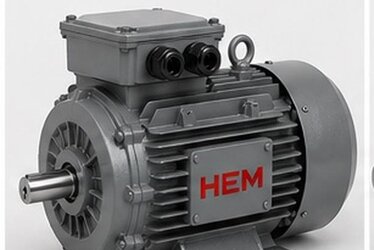
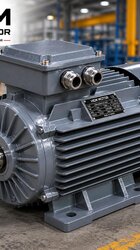
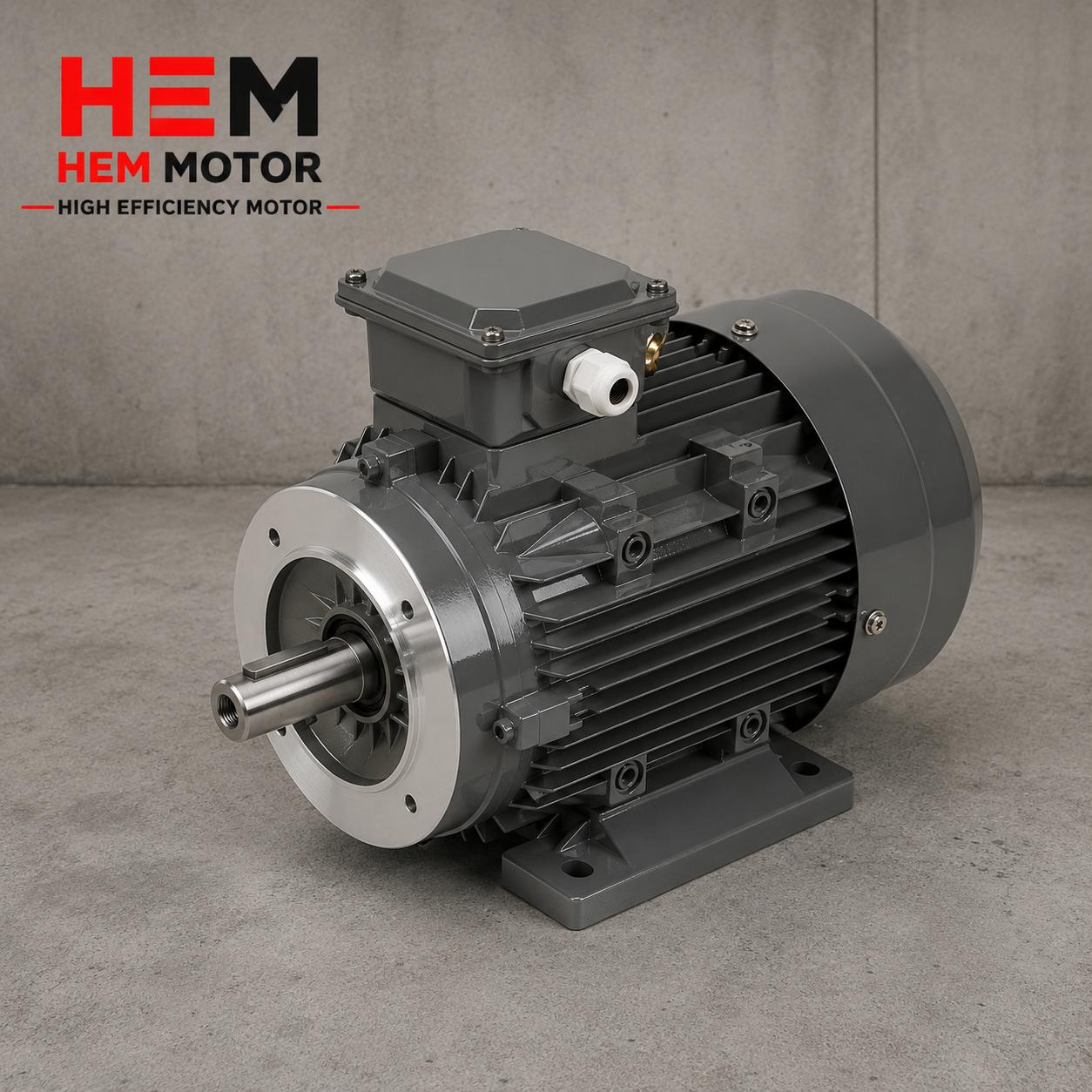
Choosing the pilot motor correctly is important; the highest gain comes from the motor that runs the most and has the largest power. We covered the real consumption calculation and payback period of replacing an old standard motor with IE4 in our replacing an old standard motor with IE4 article. Our IE3 or IE4 article clarifies the investment decision between IE3 and IE4 with an amortization calculation. Our high-efficiency motors are offered in IE3 Premium and IE4 Super Premium classes, across a 0.55 kW to 355 kW power range, with a cast iron body, IP55 protection and class F insulation.
What to Learn from the Pilot Motor
The pilot motor gives not only a savings figure but also teaches all the practical details of the transition process. The new motor's mechanical compatibility, connection dimensions, commissioning steps and real field efficiency are tested here. To correctly understand the difference between nameplate efficiency and field efficiency, our nameplate versus field efficiency article is important; because real saving comes not from the ideal value on the nameplate but from the operating conditions in the field. To measure and document the annual saving, our measuring and documenting annual energy saving article offers a method.
Priority Order: Operating Hours × Power
The simplest and most effective rule for setting the right order when spreading across the fleet is this: a motor's annual savings potential is directly proportional to its power multiplied by its annual operating hours. That is, a large motor running all day pays for itself far faster than a small motor running occasionally. For this reason, in the transition program priority should be given to the motors that run the most and have the largest power. Motors that run little or serve as spares are left to the end of the list.
To do this prioritization, you first need to take an inventory of the motors in the plant: each motor's power, efficiency class, annual operating hours and load. We covered preparing for an energy efficiency audit and taking a motor inventory in our energy efficiency audit and motor inventory article. Our which plant to switch to IE4 first article complements this in terms of sector priority.
Correct Sizing Also Saves
A point often skipped in a fleet transformation is that not only the efficiency class but also the correct sizing of the motor matters. An oversized motor runs at low load with lower efficiency and power factor; that is, the gain provided by the high efficiency class is wasted. For this reason, a fleet transformation is also an opportunity to re-size motors to the right power. For correct sizing, our efficiency class and correct sizing article guides you. Our motor load ratio and correct sizing article explains at what load a motor should be run.
Phased Transition Plan
When prioritization is complete, the transition is done not all at once but in planned phases. The first phase covers the few large motors with the highest gain validated by the pilot motor; this phase paying for itself quickly largely feeds the program's budget. In the second and following phases, you move to medium-gain motors according to the priority order. Motors that run little and have low power are usually replaced in the last phase or at their natural failure/renewal time.
The biggest advantage of this phased approach is that each phase can be financed by the saving of the previous phase; this way the program advances by producing its own energy. When planning the transition, preferring planned renewal over emergency replacement at the moment of failure reduces both cost and downtime risk. For fleet management and a replacement schedule in three-shift plants, our motor fleet management article is a directly relevant resource. To see the decision in terms of total cost of ownership (TCO), our TCO in high-efficiency motors article offers a holistic framework.
The Cost Advantage of Bulk Purchasing
A phased transition is also an opportunity to benefit from the advantage of bulk purchasing. Planning the motors to be replaced in a phase at the same time is more efficient both for supply and for commissioning. We covered ways to reduce cost in bulk motor purchasing in our reducing cost in wholesale electric motor purchasing article. For the right efficiency class and product choice, you can review our IE4 electric motor and IE3 electric motor product pages, and review all options in our high efficiency electric motors category.
Mechanical Compatibility and Fast Swap
A smooth transition in a fleet transformation depends on correct mechanical compatibility. When the new high-efficiency motor's frame size, foot dimensions, shaft diameter and connection type are exactly compatible with the existing motor, the swap happens quickly and without problems; otherwise additional modification is needed in the field and downtime lengthens. For this reason, at every motor swap, it should be verified in advance that the new motor's IEC connection dimensions match the old one. We covered mechanical compatibility in the transition to IE4 in our mechanical compatibility in the transition to IE4 article.
Determining the equivalent motor correctly in a replacement is also critical; a wrong match causes the line to stop longer than expected. For replacing an IE4 motor with an equivalent and IEC connection dimensions, our replacing an IE4 motor with an equivalent article guides you. In a planned transition, the dimensions of the motors to be replaced are taken in advance and the new motors are kept ready from stock; this approach minimizes downtime on the day of the swap.
Stock and Lead Time Planning
The success of a phased transition depends on the right motor being ready at the right time. Planning the motors to be replaced in a phase in advance ensures the supply time does not disrupt the production schedule. Since the lead time can lengthen especially for large and special motors, planning early is important. We covered the difference between delivery from stock and a production order and the lead times in our delivery from stock or production order article. When planning to keep spares for critical motors, our critical spare motor list article also guides you.
Total Saving and Additional Gains
When the fleet transformation is complete, the total saving means more than the sum of the gains of individual motors. Besides energy saving, additional gains such as a lower failure rate, less downtime, a better power factor and a reduced carbon footprint also come into play. We covered the effect of high-efficiency motors on power factor and reactive penalty in our power factor and reactive penalty article, and the effect on carbon footprint in our reducing carbon footprint article.
For exporting plants, this transformation is also gaining importance in terms of carbon border regulations; we examined this subject in our carbon border (CBAM) and exporting plants article. When all these gains come together, the transition to high-efficiency motors becomes not just an energy measure but a holistic investment that increases the plant's competitiveness.
Frequently Asked Questions
Which motor should I start the fleet transition with?
You should start with the motor that delivers the highest gain: this is usually the motor that runs the most and has the largest power. A motor's annual savings potential is directly proportional to its power multiplied by its annual operating hours. A large motor running all day pays for itself far faster than a small motor running occasionally. Choosing this motor as the pilot provides both the fastest gain and the reference data for the program.
Do I have to replace all motors at once?
No. On the contrary, a phased transition is a smarter approach for most plants. Starting from the most profitable motors according to the priority order, you can finance the next phase with the saving of each phase. Replacing motors that run little and have low power at their natural failure or renewal time lets you complete the transformation without straining the budget.
How do I calculate the saving I will get from the transition?
The saving is calculated from the difference between the efficiencies of the old and new motor, the motor's power and the annual operating hours. But the real saving comes not from the ideal value on the nameplate but from the motor's real load and operating conditions in the field. You obtain the most accurate result by measuring the real consumption of the pilot motor; we can plan this measurement together according to your need.
Get a Quote
Let us select the right pilot motor to transform your plant's motor fleet to high-efficiency motors, and build the priority order and phased transition plan together; obtain your total saving with the fastest payback. Reach us through our contact page or call now: +90 (532) 345 49 86. At HEM Motor, we are by your side with fast quotes and delivery from stock.