English
 Türkçe


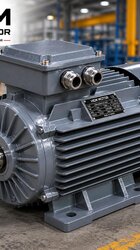

The strongest aspect of switching to high-efficiency motors is energy savings; but there is a second lever that significantly accelerates the payback of this investment: state incentives and support. Thanks to the Efficiency Increasing Project (VAP), KOSGEB support and energy efficiency incentives, the upfront investment burden of switching to an IE3 or IE4 motor decreases and the amortization period shortens markedly. This guide explains, from a buyer's point of view, which support mechanisms may come into play when switching to high-efficiency motors, how they speed up payback, and how this process integrates with the right motor supply. The aim is not to give tax advice but to clearly show which supports you should research when planning your efficient motor investment. As HEM Motor, we supply IE3 and IE4 high-efficiency motors from stock and provide the technical motor data and documentation you will need in your efficiency projects.
What Is the Efficiency Increasing Project (VAP)?
The Efficiency Increasing Project (VAP) is a mechanism designed to support industrial facilities' investments aimed at reducing energy consumption. Replacing old, low-efficiency (IE1/IE2) motors with IE3 or IE4 high-efficiency motors is a classic efficiency-increasing measure, and such projects can usually be evaluated within the scope of VAP. The basic logic of VAP is that a certain proportion of an investment delivering measurable energy savings is supported; this lowers the net cost of the motor replacement investment.
Identifying the efficiency class of a motor fleet and prioritising which motors should be replaced form the basis of a VAP application. Our article on preparing for an energy efficiency audit: facility motor inventory and efficiency class determination helps you build your facility's motor inventory step by step. Our article on which facility should switch to IE4 super premium motors first? guides which motor to switch first.
KOSGEB Support and Energy Efficiency Incentives
KOSGEB supports the machinery-equipment renewal and efficiency investments of small and medium-sized enterprises (SMEs) through various support programmes. Switching to high-efficiency motors is a typical modernisation investment for SMEs and can be evaluated within suitable programmes. In addition, various incentive and grant mechanisms in the field of energy efficiency can cover part of efficiency investments.
The scope, rates and application conditions of these support programmes are updated from time to time; therefore, for current and official information, we recommend always relying on the official channels of the relevant institution (KOSGEB and the Ministry of Energy and Natural Resources / relevant directorates) and a licensed financial advisor. Our contribution is to provide the motor technical data and efficiency documents required in these applications.
Payback and Amortization Accelerated by Support
The basic financial logic of switching to high-efficiency motors is that the energy a motor consumes over its lifetime far exceeds its initial purchase price. An IE3 or IE4 motor delivers significant annual energy savings compared to an old IE1/IE2 motor; these savings pay back the cost difference within a certain period. This is where incentives and support enter the equation as follows:
- The upfront investment burden decreases: When support covers part of the investment, the net amount to be paid back drops.
- The amortization period shortens: Because the net cost is lower, the same annual savings cover the investment in a shorter time.
- It scales across the fleet: Savings that are meaningful on a single motor become a much larger item when spread across the whole fleet.
We covered the real consumption calculation and payback period of replacing an old motor with IE4 in our article on what does replacing your old motor with IE4 gain you?, and how payback shortens with incentives in detail in our article on replacing an old standard motor with IE4: payback period and incentives. To calculate the total cost of ownership (TCO) correctly, our article on how to calculate total cost of ownership (TCO) for high-efficiency motors is a key resource.
Application Process and Correct Motor Supply
Incentive and support applications generally follow these steps: documenting the current situation (motor inventory, efficiency classes, consumption), calculating the savings to be achieved, determining the suitable support programme, and submitting the application. For this process to proceed smoothly, the efficiency class certificates, technical nameplate values and conformity documents of the motors you will supply are critical. We collected methods for measuring and documenting annual savings in our article on measuring and documenting annual energy savings in high-efficiency motors.
To scale savings from a single motor to the fleet, see our article on scalable savings when switching to high-efficiency motors. You can review our high-efficiency motor product family on the high-efficiency electric motors, IE4 electric motor and IE3 electric motor pages, reach all our efficiency content via our high-efficiency motors category, and the whole product range via the HEM Motor homepage.
Frequently Asked Questions
Can I benefit from incentives if I replace my old motors with IE4?
Replacing low-efficiency motors with high-efficiency (IE3/IE4) motors is a classic energy efficiency measure and can be evaluated within the scope of the Efficiency Increasing Project (VAP), KOSGEB programmes and energy efficiency incentives. However, the scope, rate and conditions of programmes are updated from time to time; therefore, for current eligibility, you should rely on the official channels of KOSGEB and the relevant ministry and a licensed financial advisor. We provide the motor efficiency certificates and technical data required in the application.
How much does an incentive shorten the payback period?
Because an incentive lowers the net cost of the investment, the same annual energy savings pay back the investment in a shorter time. That is, the amortization period calculated without support shortens by the support rate. The exact effect varies by the motor's power, operating hours, electricity tariff and the support rate provided. You can share your motor inventory and operating hours with us for a facility-specific payback estimate.
Which documents about the motors are required for the application?
Typically the motors' efficiency class (IE3/IE4) certificates, technical nameplate values (kW, speed, efficiency, cosφ) and conformity documents are requested; in addition, a project document calculating the savings between the current and new situation is required. By sharing the efficiency and technical documents of the motors we supply, we ease the technical side of this process. For the official application format, rely on the relevant institution's current guide.
Get a Quote
Are you switching to IE3 or IE4 high-efficiency motors for your efficiency project? Send us the power, speed and current efficiency class of the motors you want to replace, and we will quickly quote the suitable high-efficiency motors along with stock availability and technical efficiency documents. Call now: +90 (532) 345 49 86 or reach us via our contact page. We offer bulk pricing and documentation support for fleet-based motor renewal projects.