English
 Türkçe

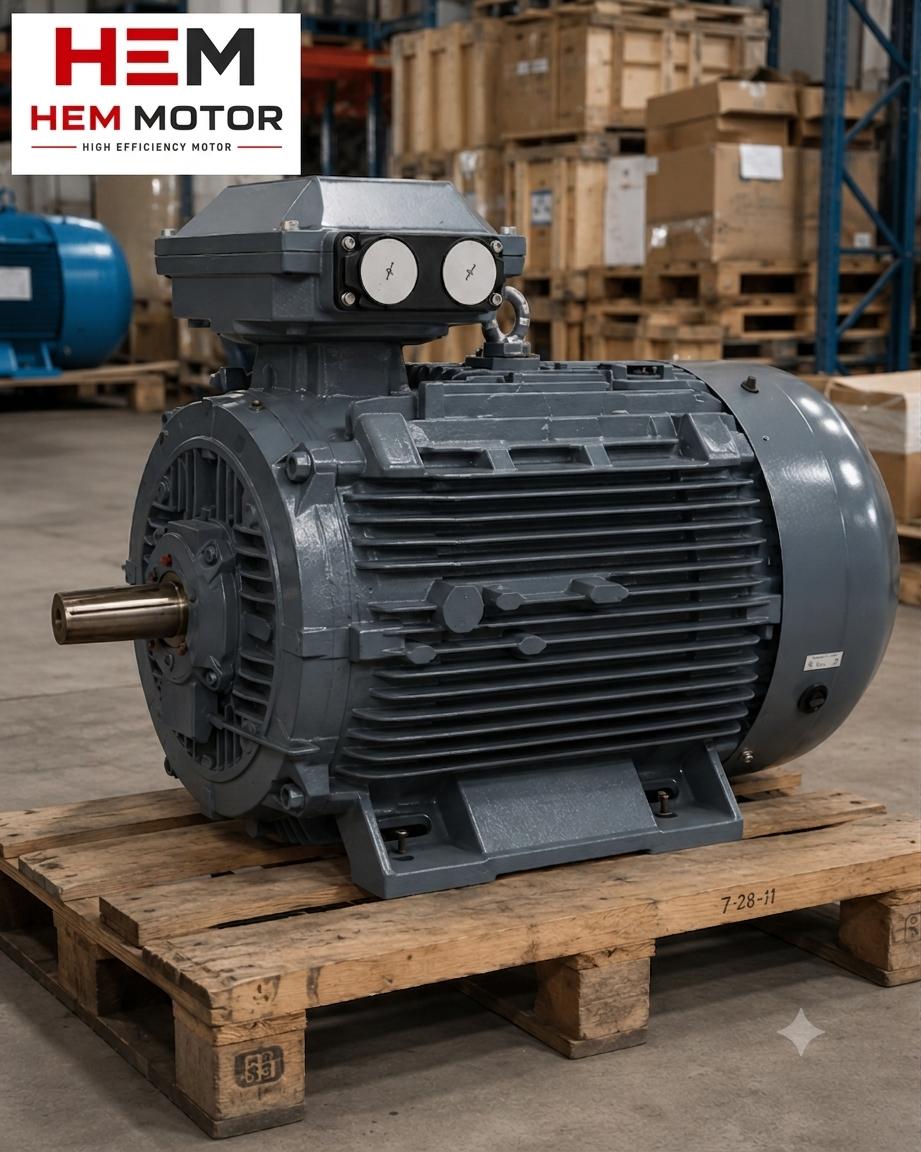

When buying a new motor or replacing an existing one, most businesses ask the same question: is it more sensible to stay with IE3 or move to IE4? The general narrative in the market always recommends the higher efficiency class; however, the purchasing decision is shaped not only by the efficiency class but by your operating hours, motor power, budget and regulatory obligations. In some cases, staying with IE3 is extremely sensible; in others, not moving to IE4 loses money. This guide sets out, with clear purchasing criteria, under which conditions it is sensible for a buyer of an IE3 three-phase motor to stay with IE3. As HEM Motor, with our identity as manufacturer and seller, we offer both IE3 and IE4 motors from stock and match the right class to your load profile.
First, the Regulation: Can IE3 Still Be Sold?
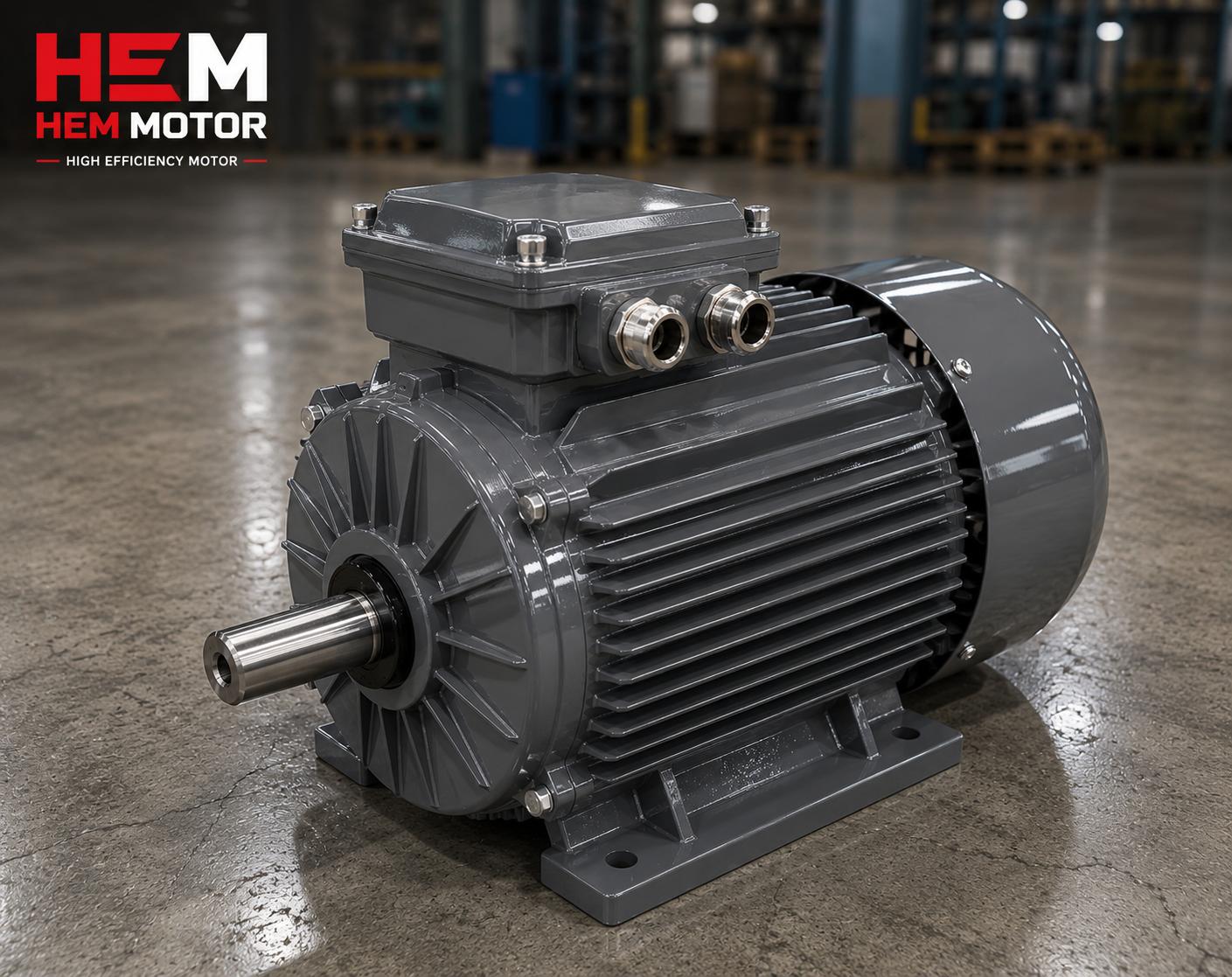
Before deciding, the legal ground must be clarified, because the choice is sometimes not left to you. According to Turkish and EU regulations, the minimum class for direct-on-line (DOL) three-phase motors between 0.75 kW and 1000 kW is IE3. However, from 1 July 2023, the minimum class for 2, 4 and 6-pole motors between 75 kW and 200 kW was raised to IE4. So if you are in this power range, staying with IE3 is not a choice but a regulatory violation. To clarify which class is mandatory at which power, our article on IE3 and IE4 efficiency mandate regulation details all dates and thresholds.
Power Ranges Where IE3 Is Still Valid
At many powers below 75 kW and above 200 kW, IE3 is still the legal minimum class. In these ranges, staying with IE3 is fully compliant and the decision rests entirely on economic grounds. To see the right class by power, our article on the IE3 efficiency class mandate power table offers a decision table.
Situations Where Staying With IE3 Is Sensible
IE4 is always more efficient, that is true. But a more efficient motor does not always mean more profitable in your application. The advantage of IE4 is that the efficiency difference it gains pays for itself through lifetime energy savings. If this payback does not happen, staying with IE3 is the right decision. Here are those situations.
1. Low Operating Hours
The energy saving of IE4 is directly proportional to annual operating hours. In a motor that runs only a few hundred hours a year, waits as a standby or is rarely engaged, the difference between IE3 and IE4 cannot pay back the extra investment for years. Staying with IE3 is economically correct for emergency pumps, standby fans or seasonally operated equipment.
2. Small Power (Low kW)
As motor power gets smaller, the absolute energy difference between IE3 and IE4 also shrinks. At small powers like 0.75 kW or 1.5 kW, the annual saving is often not significant, while the extra cost remains proportionally high. IE3 is sensible for motors running at small power and low hours.
3. Budget and Cash Flow Constraints
In a project where you must renew many motors at once, the total investment budget can be decisive. In such a case, moving high operating-hour critical motors to IE4 while leaving low-hour motors on IE3 is a smart prioritization strategy. Our article on the IE4 threshold in pumps, fans and compressors explains which motor you should move to IE4 first, by application.
4. Mechanical Compatibility and Stock Advantage
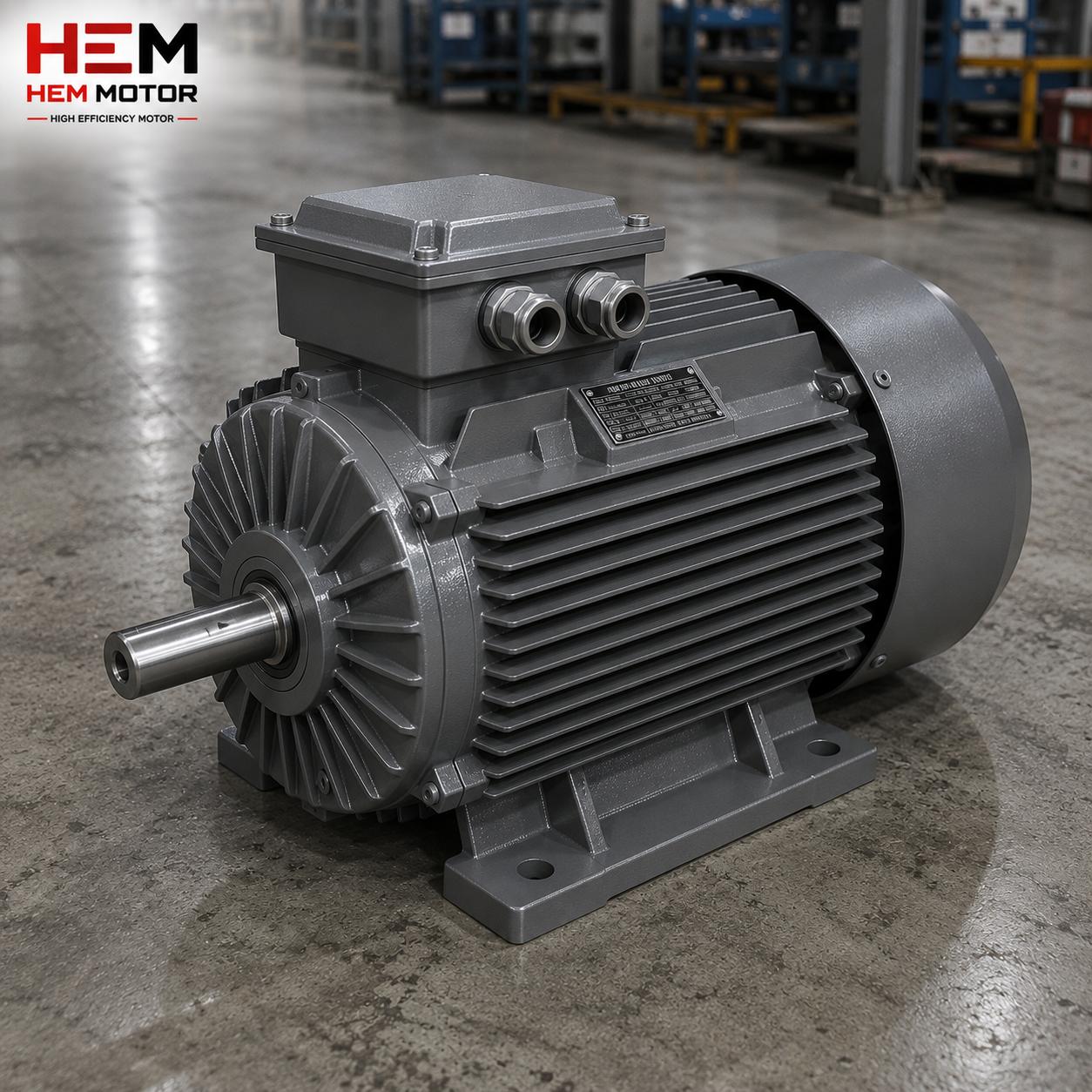
In some cases an IE4 motor may have a slightly longer frame or a different lead time. In an emergency failure replacement, a fully compatible IE3 motor waiting in stock can offer a faster solution than an IE4 that might require a production order. For emergency replacement scenarios, our article on conveyor belt motor emergency replacement provides a quick swap checklist.
Situations Where Moving to IE4 Is Definitely Sensible
Conversely, staying with IE3 loses money under these conditions: high operating hours (three shifts, continuous process), medium-large power (for example 22 kW and above), pump, fan, compressor and conveyor motors rotating under continuous load. In these motors, the efficiency difference of IE4 quickly pays for itself in the energy bill. To see the investment decision between IE3 and IE4 with a payback calculation, our article on IE3 vs IE4 electric motor investment offers a clear calculation. The return of replacing an old standard motor with IE4 is explained with a real consumption calculation in our article on replacing your old motor with IE4. An IE4 super premium motor is most often the most profitable choice for facilities with this profile.
Decision Summary: Which Questions Should You Ask?
To clarify your decision, answer these three questions in order. First: is my motor in the power range where IE4 is mandatory by regulation? If yes, the decision is already made. Second: are my annual operating hours high? If high, IE4 pays back. Third: is the motor power significant? If large, move to IE4. If all three are low, staying with IE3 may be economically correct. Share your motor power, speed and annual operating hours with us so we can look at this decision together.
Frequently Asked Questions
Is buying an IE3 motor legal, or is it now banned?
IE3 motors are still the legal minimum class for 0.75-1000 kW DOL motors and can be sold freely. Only from 1 July 2023 was the minimum class raised to IE4 for 2/4/6-pole motors between 75-200 kW; in this range you must buy IE4 instead of IE3. At other powers IE3 is fully valid.
Does moving to IE4 make sense for a low operating-hour motor?
Usually not. The extra cost of IE4 pays back through energy savings, and these savings are directly proportional to operating hours. For motors that run little and wait as standby, IE3 is economically more sensible. We can evaluate together, according to your load profile, whether the saving will cover the extra cost.
Can I replace an IE3 motor with IE4 later?
Yes. Since IE3 and IE4 motors usually have the same IEC frame and connection dimensions, replacing a high-hour motor with its IE4 equivalent later is easy in most cases. For mechanical compatibility, if you share your motor nameplate details, we will recommend a fully equivalent model.
Get a Quote
Should your motor stay with IE3 or move to IE4? Send us its power, speed, annual operating hours and application; as HEM Motor, from both our IE3 and IE4 stock, let us match the most profitable class for you and provide a fast quote. You can call us at +90 (532) 345 49 86 or reach us via our contact page.