English
 Türkçe


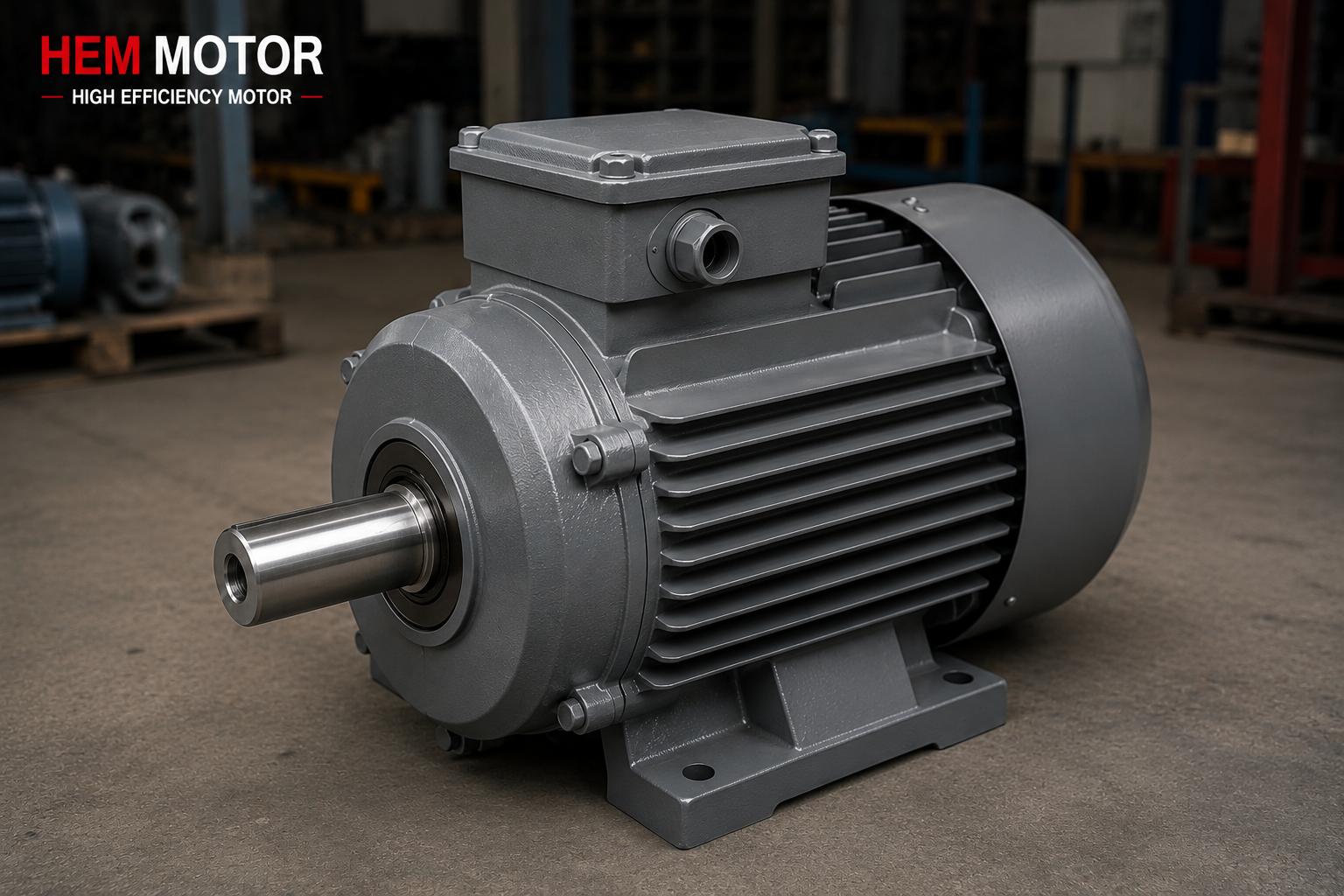

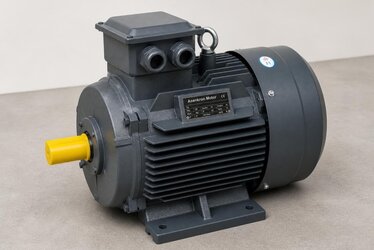
In high-speed applications such as centrifugal pumps, fans and blowers, 2-pole 3000 rpm motors are the standard. But choosing the right power in these applications is more delicate than choosing a four-pole motor: in a pump, the wrong power leads to cavitation, in a fan to noise and excessive current. When you choose IE4 as the efficiency class, you minimise losses at high speed and significantly lower the energy bill in continuously running systems. In this article we address the correct power selection of an IE4 2-pole 3000 rpm motor for pump and fan applications from a commercial perspective, turning practical topics such as the operating point, cavitation risk and noise into an order so you can determine the right motor the first time.
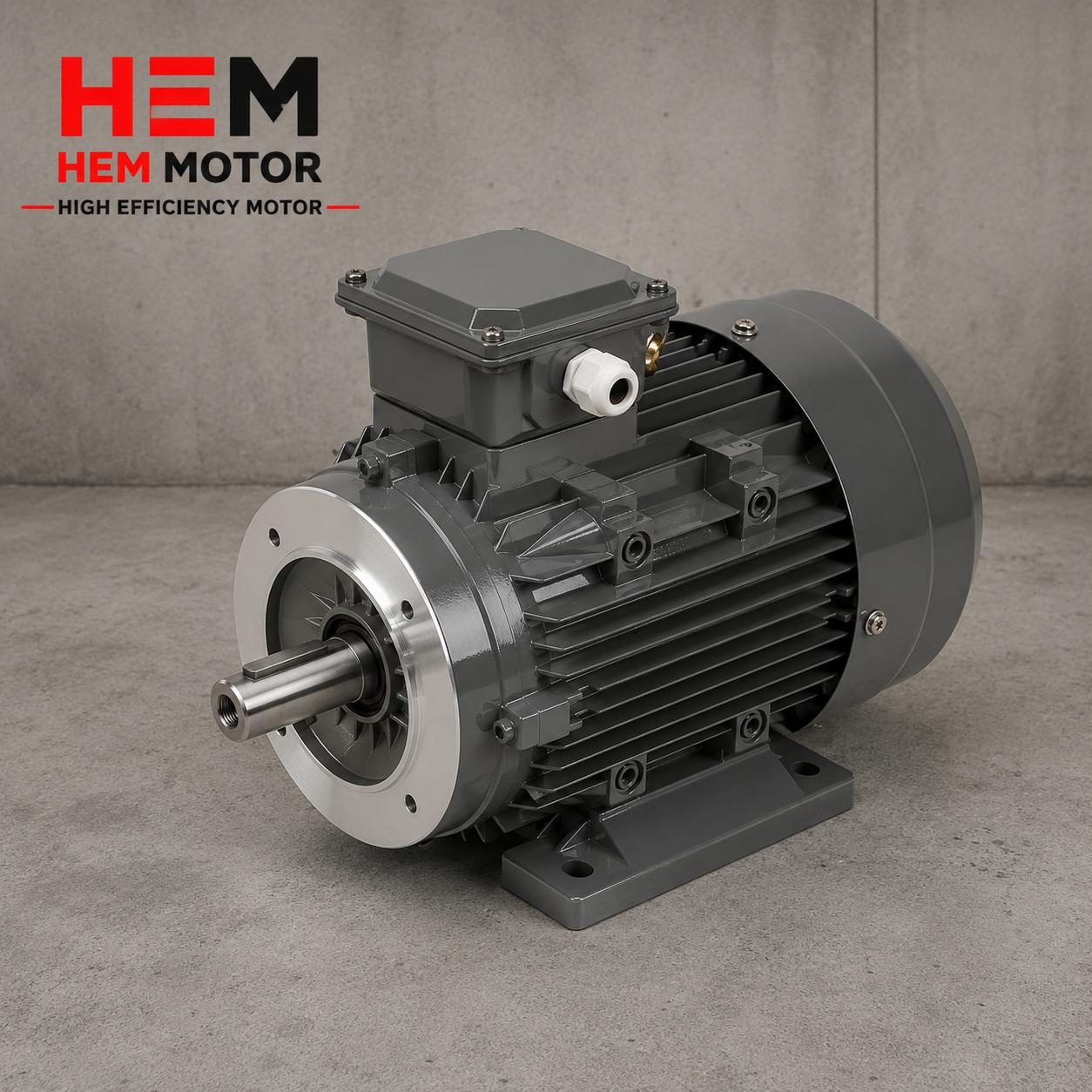
What Does 2-Pole 3000 rpm Mean and Where Is It Used?
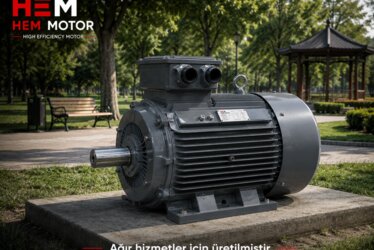
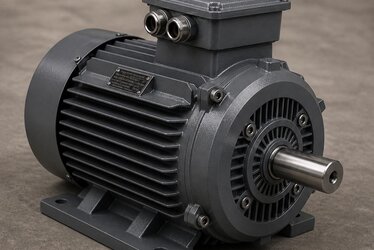
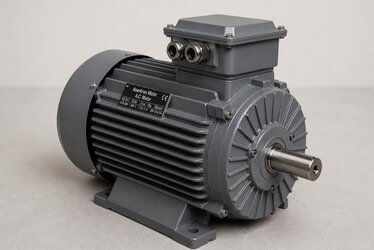
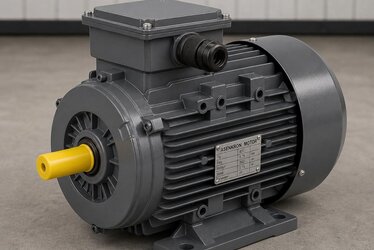
A 2-pole asynchronous motor turns at around the synchronous 3000 rpm on a 50 Hz grid; due to slip the actual speed is about 2850-2950 rpm. This high speed is ideal for directly coupled centrifugal pumps, high-pressure booster sets, radial fans and blowers, because the flow and pressure these machines deliver are directly related to speed. The IE4 motors in our catalogue are offered from 0.25 kW to 355 kW, with 1000/1500/3000 rpm speed options, IP55 protection and class F insulation.
Typical places where 3000 rpm is preferred: compact booster and high-pressure pump sets, fire pumps, water treatment blowers, and extraction and dust collection fans. We detailed which application requires the IE4 threshold in pumps and fans in our IE4 threshold in pumps, fans and compressors article. You can find power matching in centrifugal pumps in our centrifugal pump motor selection: flow and head article.
Correct Power in a Pump: Operating Point and Cavitation
In a centrifugal pump, the motor power is selected according to the power requirement at the pump's operating point (the flow-head combination). Running the pump at the wrong point on the curve creates two risks: at excessive flow the motor is overloaded and draws current, while at very low flow efficiency drops and cavitation risk rises. Cavitation is a harmful phenomenon that occurs when the pressure at the pump suction falls below the vapour pressure, wearing the impeller and bearings. The right power and the right operating point reduce this risk.
In practice we select the motor power by adding a certain power margin (usually 10-15%) to the power demanded by the pump, so the motor runs slightly below full load, in the highest-efficiency region. We showed how to calculate the required kW by load profile in our motor power calculation: required kW for pump, fan and conveyor article. We addressed at what load ratio it is right to run the motor for efficiency in our motor load ratio and correct sizing article. For the pump product range, you can look at our high-efficiency electric motors category.
Efficiency in a 2-Pole Motor and the IE4 Advantage
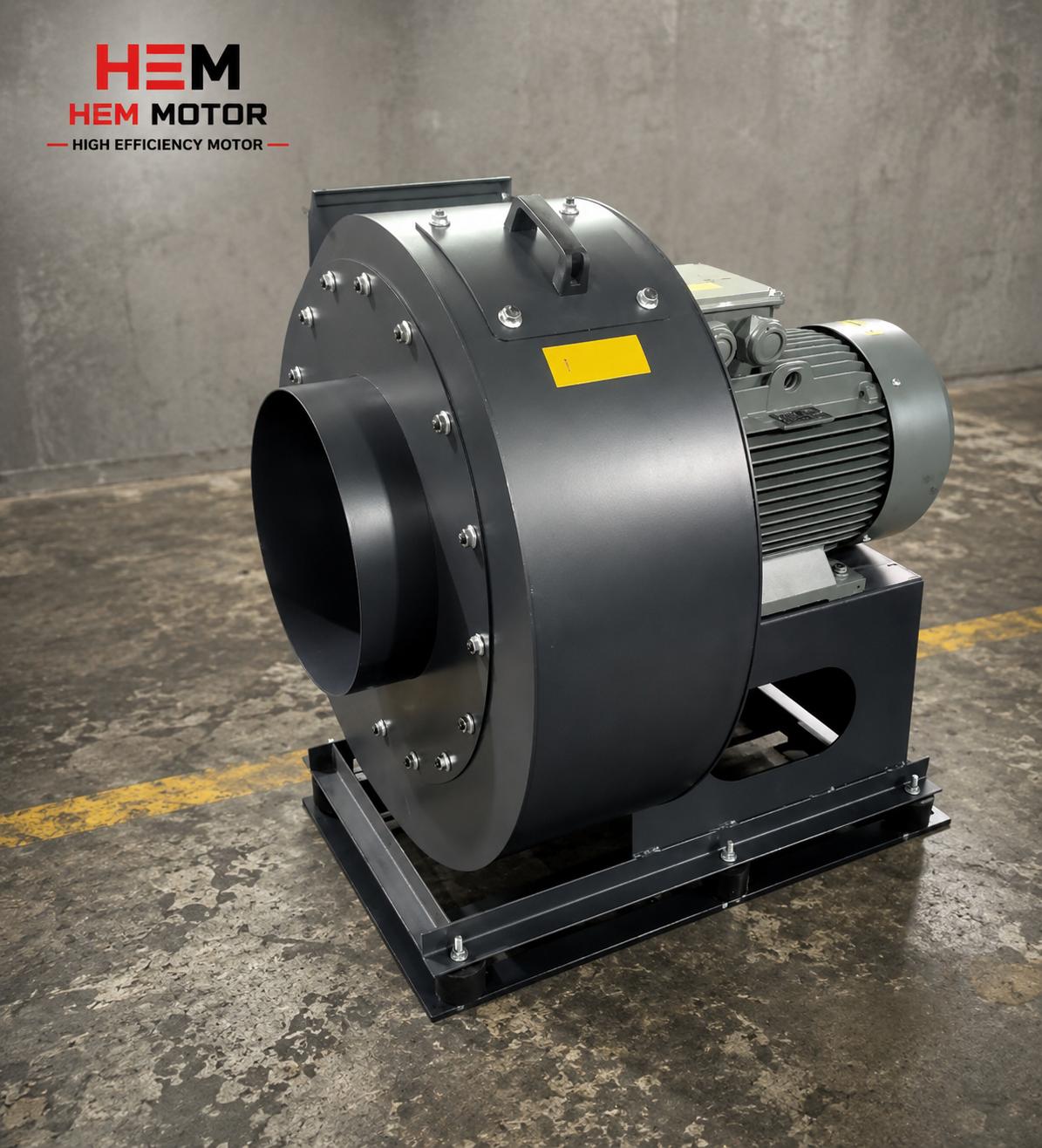
2-pole high-speed motors turn for thousands of hours a year in continuously running pump and fan systems. In this operating regime the efficiency difference is reflected directly in the energy bill. The IE4 Super Premium class does the same work at lower consumption by reducing iron, copper and friction losses. We explained where these losses are reduced in our efficiency losses in IE4 motors article. You can find the real consumption and payback calculation of replacing an old motor with IE4 in our replacing your old motor with IE4 article.
Power, Noise and Vibration in a Fan
In fan and blower applications, 3000 rpm provides high air flow and pressure, but high speed also tends to increase noise and vibration. That is why a balanced rotor, quality bearings and a low-vibration structure matter in a fan motor. In IE4 motors, an improved cooling fan design and a balanced rotor positively affect both efficiency and noise level. We addressed quiet and low-vibration operation in our quiet and low-vibration operation in IE4 motors article, and the effect of cooling fan design on efficiency in our cooling and fan design in IE4 motors article.
You can find the correct motor selection for extraction and dust collection fans in our extraction and dust collection fan motor selection article. You can reach the IE4 product range from the IE4 electric motors page, all our IE4 motor guides and our main HEM Motor page.
Speed and Flow Control with a Variable Frequency Drive (VFD)
In pump and fan applications, a fixed 3000 rpm is not always necessary; in most facilities the need changes during the day. This is where a variable frequency drive (VFD) lets you control flow and pressure by demand by adjusting the motor speed. Because in pumps and fans the power varies with the cube of the speed, even slightly reducing the speed brings significant energy savings. When an IE4 motor is used together with a VFD, both high motor efficiency and operating savings from variable speed combine; this combination stands out especially in variable-flow systems.
There are points to watch in terms of insulation, bearings and cooling when running an IE4 motor with a VFD; since its own fan may not cool sufficiently at low speed, additional measures may be needed in demanding regimes. We addressed pump-fan savings with a high-efficiency motor and a VFD in our high-efficiency motor and frequency drive article. We explained when an asynchronous motor with a VFD is needed and how to select it in our asynchronous motor with a frequency drive (VFD) article. If you share the flow variability in your system, we will assess together whether a fixed-speed or a VFD solution is suitable.
Mounting Type and Connection: B5, B35 Selection in Pumps and Fans
In high-speed pump and fan motors, the mounting type is chosen according to the connection surface of the application. A B5 large flange is preferred on directly flanged pumps, while a B35 combined mounting is used on sets that need both foot and flange connection. In fan applications, foot-mounted B3 or combined B35 structures are mostly seen. The wrong mounting type causes the motor not to seat on the pump or fan housing and requires an additional adapter on site; that is why determining the mounting type correctly from the start is important.
IE4 motors are offered with B3 foot, B5 flange and B35 combined mounting types, with IP55 protection and class F insulation. To see all mounting types on the product side, you can review our electric motor mounting types page. We addressed whether frame, foot and shaft compatibility is preserved when transitioning to an IE4 motor in our mechanical compatibility in IE4 motor transition article. If you send us the connection type of your existing pump or fan, we prepare a quote with the right mounting type.
Water Treatment, Fire Pump and Blower: Sectoral Applications
2-pole 3000 rpm IE4 motors stand out in many sectoral applications requiring continuous, high-speed operation. Blowers and high-speed pumps in water treatment and wastewater plants, high-pressure fire pumps in fire safety systems, and fans in cooling tower and chiller systems are typical areas of use for these motors. In these applications both the motor''s high efficiency and its resistance to external factors with IP55 protection are important, because most systems run outdoors or in humid areas.
We addressed water treatment and wastewater plant motors in our water treatment and wastewater plant motors article, and the questions to ask when selecting a fire pump motor in our 10 questions when buying a fire pump motor article. We shared the continuous-duty and sealing requirements in vacuum pump and industrial blower motors in our vacuum pump and blower motors article. If you tell us the sector of your application, we recommend the right motor with IP protection and a body suitable for the environmental conditions.
2-Pole vs 4-Pole Comparison: Same Job, Different Motor
A common question in pump and fan selection is whether the same job will be done with a 2-pole high-speed motor or a 4-pole lower-speed motor. 2-pole (3000 rpm) motors are compact, lighter and usually more economical; they are directly preferred in centrifugal pumps requiring high pressure and high flow. However, high speed increases the tendency for noise and vibration and is more sensitive in terms of bearing life in some applications. 4-pole (1500 rpm) motors, on the other hand, run quieter, produce lower vibration and give higher torque at the same power; but they are larger and usually more expensive.
The right choice depends on the design speed of the pump or fan. If the pump curve is drawn for an operating point around 2900 rpm, fitting a 4-pole motor to that pump will not give the desired pressure and flow. That is why, in replacement or new purchase, you must stay faithful to the design speed on the pump''s nameplate. We addressed the effect of pole count on efficiency in our efficiency and pole count in asynchronous motors article, and choosing poles by application in our which of 2, 4, 6 poles for which job article.
The IE4 efficiency class reduces losses in both 2-pole and 4-pole motors; however, the savings effect is more pronounced in continuously running high-speed systems because the annual running hours are high. We prioritised which motors in a facility should be transitioned to IE4 first in our which facility should move to IE4 super premium first article. If you send us the design speed and operating regime of your pump or fan, we prepare a quote with the right pole count, the right power and the right efficiency class.
Frequently Asked Questions
Should I use a 2-pole or 4-pole motor on my pump?
This depends on the pump's design speed. Centrifugal pumps that need high pressure and compact flow usually require 3000 rpm (2-pole); where lower speed and quieter operation are needed, 1500 rpm (4-pole) is preferred. If you send us the speed on your pump's nameplate, we will determine the right pole count and power together.
Why is a 3000 rpm motor more sensitive to cavitation?
At high speed the pressure drop at the pump suction can be more pronounced; if the suction conditions are not suitable, cavitation risk rises. Choosing the right power, running the pump in the highest-efficiency region and designing the suction line correctly reduce this risk. If you share your operating point, we will recommend the suitable power.
Is an IE4 motor really more efficient at 3000 rpm?
Yes. The IE4 Super Premium class does the same work at lower consumption by reducing losses in continuously running high-speed pumps and fans. In systems that run thousands of hours a year, this difference turns into measurable savings on the energy bill; we can prepare the payback calculation for you.
Get a Quote
Let us determine the right IE4 2-pole 3000 rpm motor for your pump or fan application together. Share your operating point (flow-head or air flow), and we will offer the suitable power and fast delivery options. Call us now at +90 (532) 345 49 86 or request a quote via our contact page.