English
 Türkçe

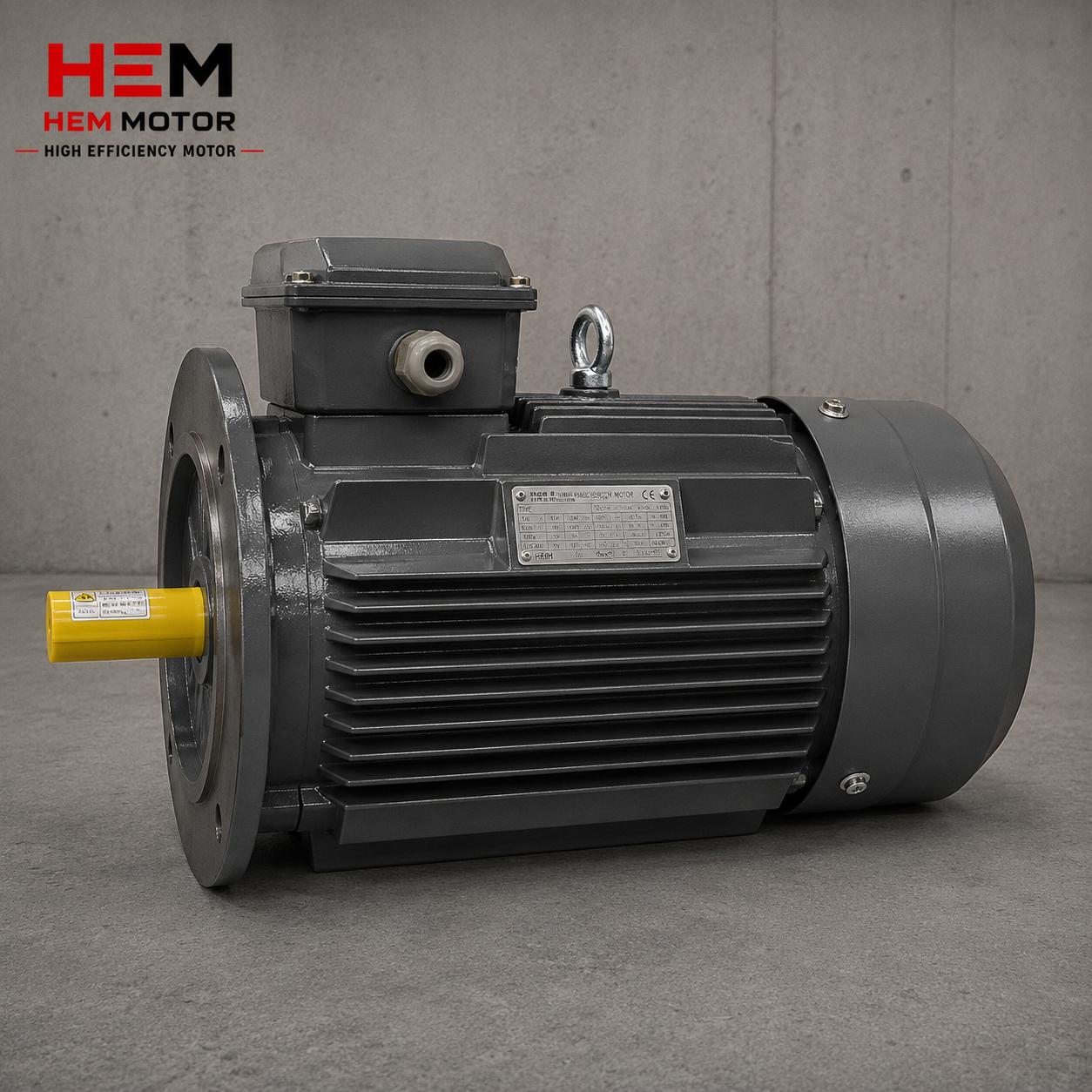

3 kW is one of the most sought-after single power ratings in Turkish industry. A 3 kW motor is widely used in pumps, fans, conveyors, compressors and countless machine drives. However, you can order the same 3 kW power as 2, 4 or 6 poles, that is at 3000, 1500 or 1000 rpm, and this choice directly determines your machine's performance. In this guide we explain step by step how to correctly select a 3 kW electric motor by pole, speed, frame and stock availability, which speed suits which application, and what to watch when ordering.
The Pole-Speed Relationship in a 3 kW Motor
An asynchronous motor's speed is set by the pole count and the supply frequency. On a 50 Hz supply, a 2-pole motor runs at about 3000 rpm (actually ~2900 due to slip), a 4-pole motor at ~1500 rpm (~1440) and a 6-pole motor at ~1000 rpm (~960). So you can get the same 3 kW power at different speeds; the power stays constant but torque rises as speed falls. A motor's torque is proportional to power divided by speed: at the same power, a 6-pole (low-speed) motor produces roughly three times the torque of a 2-pole motor.
We explained why slip makes the actual speed 1440 instead of 1500 in our slip and actual speed article. To see the effect of pole count on torque and efficiency, our pole count and efficiency content is a good resource. We gathered the core differences between 2, 4 and 6 poles in our 2/4/6 pole selection guide.
Calculating Torque from Pole and Speed
Torque (Nm) is found by dividing power (W) by angular speed. In practice, the approximate rated torque for 3 kW is: 2-pole (~2900 rpm) about 10 Nm, 4-pole (~1440 rpm) about 20 Nm, and 6-pole (~960 rpm) about 30 Nm. Matching the torque your load requires to the motor's rated torque is the basis of the correct pole choice. You can find the detailed method of finding torque from kW and speed in our rated torque calculation article.
Which Speed Suits Which Application?
The speed choice in a 3 kW motor is made according to the type of machine you drive. The wrong speed either runs the machine too fast or strains it with insufficient torque.
Pump Applications
Centrifugal pumps usually run efficiently at high speed, so 3 kW pump motors are most often selected as 2-pole (3000 rpm) or 4-pole (1500 rpm). 3000 rpm is preferred in high-pressure booster and pressurization applications, and 1500 rpm in more balanced, quieter water transfer. We address power matching by flow and head for pumps in our centrifugal pump motor selection article. If suction lift and cavitation risk are involved, we recommend also reviewing our NPSH and cavitation content.
Fan and Exhaust Applications
Fans present a variable-torque load and the power demand changes with the cube of speed. In general ventilation fans, 4-pole (1500 rpm) or 6-pole (1000 rpm) is common for quietness and efficiency; small-diameter high-pressure fans use 2-pole. When selecting a 3 kW fan motor, our centrifugal and axial fan motor selection article is complementary for power-speed matching by fan type.
Conveyor and Belt Applications
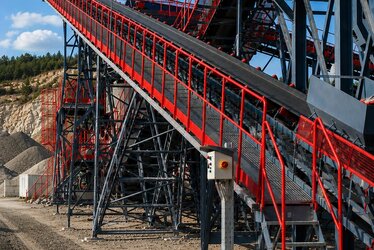
Conveyor belts usually need low speed and high torque, so 3 kW conveyor motors are most often selected as 4-pole (1500 rpm) or 6-pole (1000 rpm) and are typically used with a gearbox. For motor selection suited to a gearbox input, see our low-speed high-pole motors article. Because starting torque is critical in conveyors, the motor's rated and starting torque must be able to lift the load.
Compressor Applications
Piston and screw compressors present a constant-torque load and run continuously. 3 kW compressor motors are most often selected as 4-pole (1500 rpm) or 2-pole (3000 rpm); in screw compressors, efficiency under continuous load is paramount. We detailed power and speed selection under continuous load in our screw compressor motor selection content.

Frame Size in a 3 kW Motor (IEC 100L)
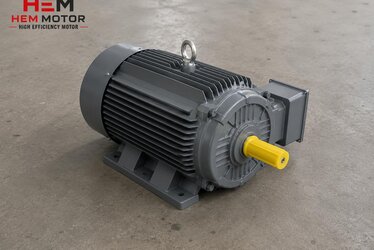
A standard three-phase 3 kW motor is usually produced in IEC 100L frame size. The frame size sets the foot hole spacing, the shaft height (100 mm axis height), the shaft diameter and the flange dimensions. When fitting a motor to a machine or replacing an existing motor, keeping the same frame size is critical for mechanical compatibility. In a 100L frame the shaft diameter is typically 28 mm, with B3 foot, B5/B14 flange or B35 combined mounting options available.
You can find the relationship between frame size and shaft diameter and the IEC 56-355 table in our shaft diameter and frame table article. The frame size of a 3 kW motor can change with pole count; for example, a 6-pole 3 kW motor may be in a larger frame (112M) because it produces higher torque. Therefore, the order must state not only the kW but also the pole and frame together.
Mounting Type Selection: B3, B5, B35
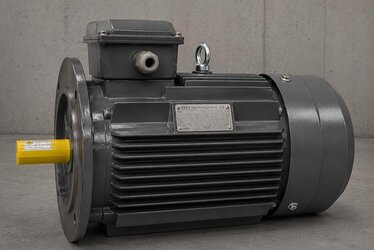
If you will fix the 3 kW motor to the floor or a base through its feet, choose B3 (foot-mounted); if you will flange it to a pump or gearbox housing, choose B5 (large flange) or B14 (small flange); if you will use both, choose B35 (foot + flange). Determining the mounting type correctly is essential for the motor to seat onto the machine without problems. We explained reading mounting codes in our IM mounting code reading article.
Starting (DOL) and Electrical Connection
A 3 kW motor can be started by direct-on-line (DOL) in most applications, meaning it connects directly to the supply. At this power level the starting current usually poses no problem for the grid and generators. However, on a weak grid or a generator-fed site, the starting current should be considered. If a 3 kW motor is designed for 230/400V, it connects in star on a 400V three-phase supply and in delta at 230V line-to-line voltage. We addressed correct bridging in our terminal connection and star-delta article.
For selecting a generator suited to the motor's starting current on a generator-fed site, our kVA-kW matching content is practical. To protect the motor against overload and phase loss, the correct thermal relay and breaker setting must be made; our protection: thermal relay and fuse selection article provides guidance.
Replacing an Existing 3 kW Motor: Equivalent Selection
When replacing a failed 3 kW motor, the most common mistake is to look only at the power rating and neglect the pole, frame and mounting type. If you fit a motor of the same 3 kW but a different pole count, your machine runs at the wrong speed; if you fit a motor of a different frame size, the foot holes or flange will not seat. Therefore, in a replacement motor you must read all the information on the old motor's nameplate and match it exactly: kW, pole/speed, frame size, mounting type, shaft diameter and voltage.
To read the old motor's nameplate correctly, our nameplate and label reading guide walks you through it step by step. To verify the nameplate efficiency value and IE code in the field, see our efficiency value and IE code reading content. If the old motor is IE2 or a lower class, buying the new motor as IE3/IE4 both complies with regulation and saves energy; we discuss the logic of this transition in our IE3 vs IE2 difference article.
Correct Sizing: Is 3 kW Enough or Too Much?
Choosing a motor larger than needed (oversizing) may look safe at first, but it makes the motor run at low load and therefore at lower efficiency and power factor. Conversely, choosing a motor smaller than needed means constant overloading, heating and early failure. Before selecting 3 kW, the right approach is to calculate your machine's real power demand and choose a motor that will stay in the 75-100% load band in continuous operation.
You can find at what load ratio a motor should be run in our load ratio and correct sizing article, and the method for calculating the required kW for pumps, fans and conveyors in our motor power calculation content. For motors operating at high altitude or in hot environments, power reduction (derating) must be taken into account; in that case the 3 kW nameplate power may differ from the usable power on site.
Stock Availability and Fast Supply
Because 3 kW is among the most sought-after powers, the 4-pole (1500 rpm) version is most often available quickly from stock. The 2-pole and especially the 6-pole versions see less demand depending on the application, so their stock status can vary. If fast supply matters during an urgent machine stoppage, clarifying the pole and mounting type before ordering and confirming stock speeds up the process. We shared which powers and speeds are generally in stock in our IE3 stock guide article.
We covered the selection logic for powers close to 3 kW, for example 4 kW, in our 4 kW motor selection article, and the smaller 1.5 and 2.2 kW powers in our 1.5 and 2.2 kW motor selection content. This lets you choose the best power for your machine by comparing neighboring ratings.
Rated Current, Cable and Fuse in a 3 kW Motor
After choosing a 3 kW motor, the electrical installation must be sized correctly. The motor's rated current depends on power, voltage, power factor (cosφ) and efficiency. A 400V three-phase 3 kW motor draws about 6-6.5 A rated current. The cable cross-section, fuse and contactor are selected according to this current. If the cable is too thin it heats up and causes voltage drop; if the fuse is wrong it either trips needlessly or fails to protect the motor. We address correct cable, fuse and contactor selection by rated current in our rated current, cable and fuse article.
The power factor (cosφ) determines the reactive power the motor draws from the grid, and a low cosφ can create extra cost in the plant. On the motor's cosφ value and reactive power compensation, our power factor (cosφ) correction content is useful. At medium powers like 3 kW, compensation for a single motor is often unnecessary, but central compensation is considered in plants with many motors.
Efficiency Class: IE3 Requirement in a 3 kW Motor
Under Turkish and EU regulation, a minimum IE3 efficiency class is mandatory for DOL three-phase motors of 0.75 kW and above, so 3 kW motors are supplied in IE3 or a higher class (IE4). In a continuously running application, choosing IE4 over IE3 lowers the energy cost over the years. We compiled which power requires which class from which date in our IE3 and IE4 efficiency mandate article. You can find how the efficiency class changes with load in our efficiency and load curve content.

Frequently Asked Questions
Should I buy a 2-pole or 4-pole in a 3 kW motor?
This depends on the machine you drive. For centrifugal pumps or high-pressure fans needing high speed, 2-pole (3000 rpm) is preferred; for conveyors, compressors and general drives needing more balance and higher torque, 4-pole (1500 rpm) is preferred. The 4-pole is the most widely used version in industry and usually the fastest to supply from stock.
In which frame size is a 3 kW motor produced?
A standard 4-pole 3 kW three-phase motor is usually produced in IEC 100L frame with a 28 mm shaft diameter. However, a 6-pole 3 kW motor may be in a larger frame (112M) because it produces higher torque. Therefore, the order must state the pole count and mounting type along with the kW.
Can I start a 3 kW motor with direct-on-line?
Yes, a 3 kW motor can be started by direct-on-line (DOL) in most applications; at this power level the starting current usually poses no problem for the grid. However, on a weak grid or a generator-fed site, the starting current should be considered and a soft starter weighed if needed.
Get a Quote
Contact us to supply a 3 kW electric motor from stock in the correct pole, speed, frame and mounting type. Tell us your machine type, required speed and mounting arrangement, and we will determine the most suitable motor for your application together. Phone: +90 (532) 345 49 86. For a detailed quote, you can use our contact page.
Pre-Purchase Checklist
- Has the required speed (2/4/6 poles) been determined per the driven machine?
- Has the torque required by the load been matched to the motor's rated torque?
- Have the frame size (IEC 100L or 112M) and shaft diameter been verified?
- Has the mounting type (B3, B5, B14, B35) been selected to suit the machine?
- Have the voltage and connection (230/400V, star/delta) been clarified?
- Has the starting method (DOL or soft starter) been determined?
- Has the efficiency class (IE3/IE4) been assessed per need?
- Has stock availability at the relevant pole and speed been confirmed?