English
 Türkçe

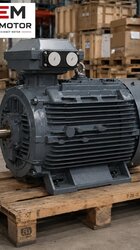
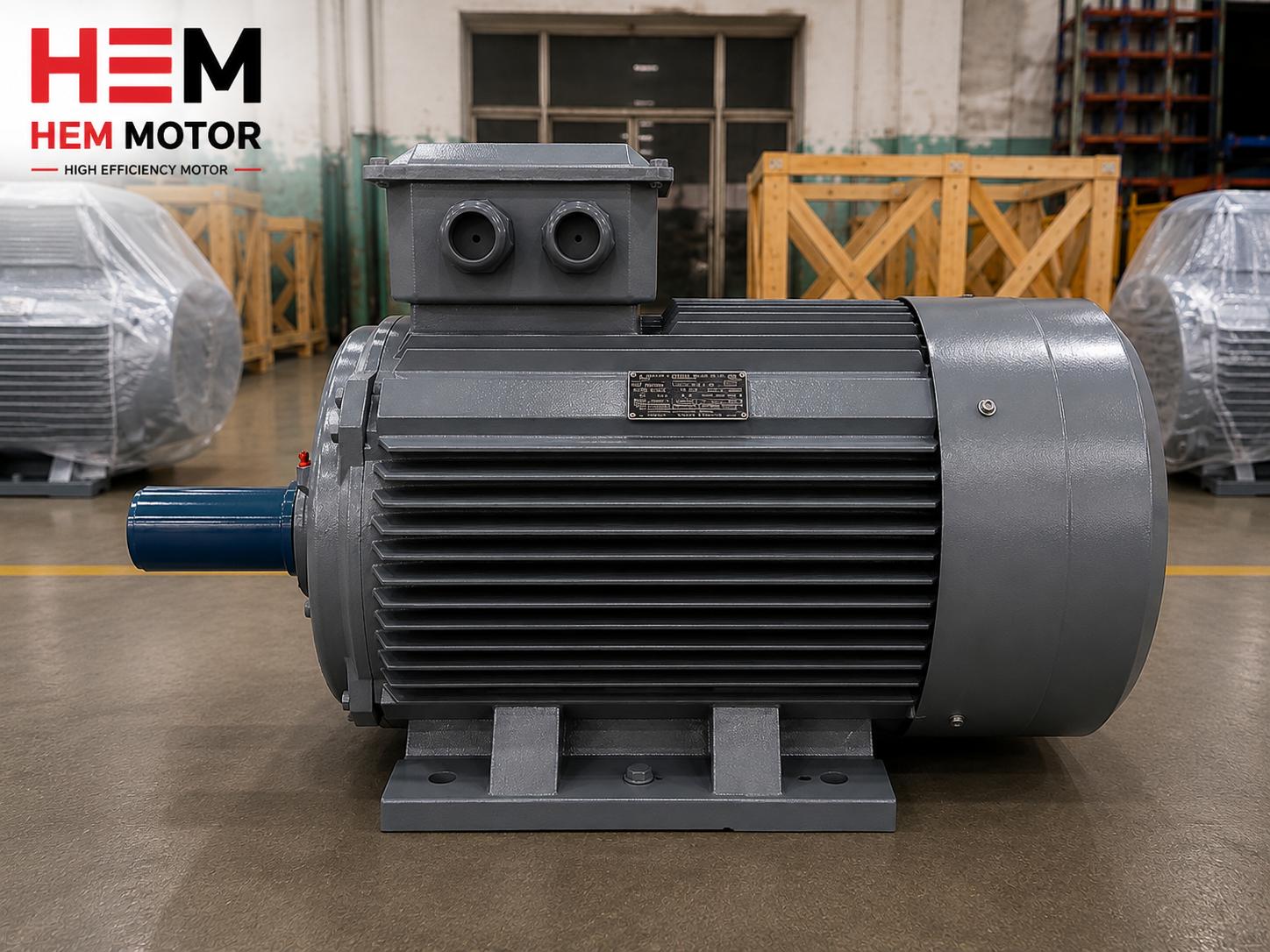

When buying an IE3 electric motor, contrary to what most buyers assume, the real question is not "which brand or which model is better?" The genuine question on the shop floor is far more practical: "Is the kW-speed combination I need in stock today, and when will I have it in hand?" This is because a significant share of industrial motor purchases are not planned investments but rather the replacement for a failure or the final missing link of a machine that is about to be commissioned. In that situation a single factor decides everything: stock availability. This guide shares the most frequently requested power-speed-frame combinations, which applications they come from, and a practical method that lets you complete a stock query in five minutes.
When a production line stops because of a motor failure, every hour is a direct loss. At a moment like that the buyer cannot afford a procurement process that drags on for weeks; the motor that is needed must come off the shelf, in the correct power and speed, immediately. This is exactly why experienced operations give priority in an IE3 purchase not to the "best" motor but to the "correct motor that will reach me fastest." And the way to find the correct motor fast runs through knowing which combinations are standard and common.
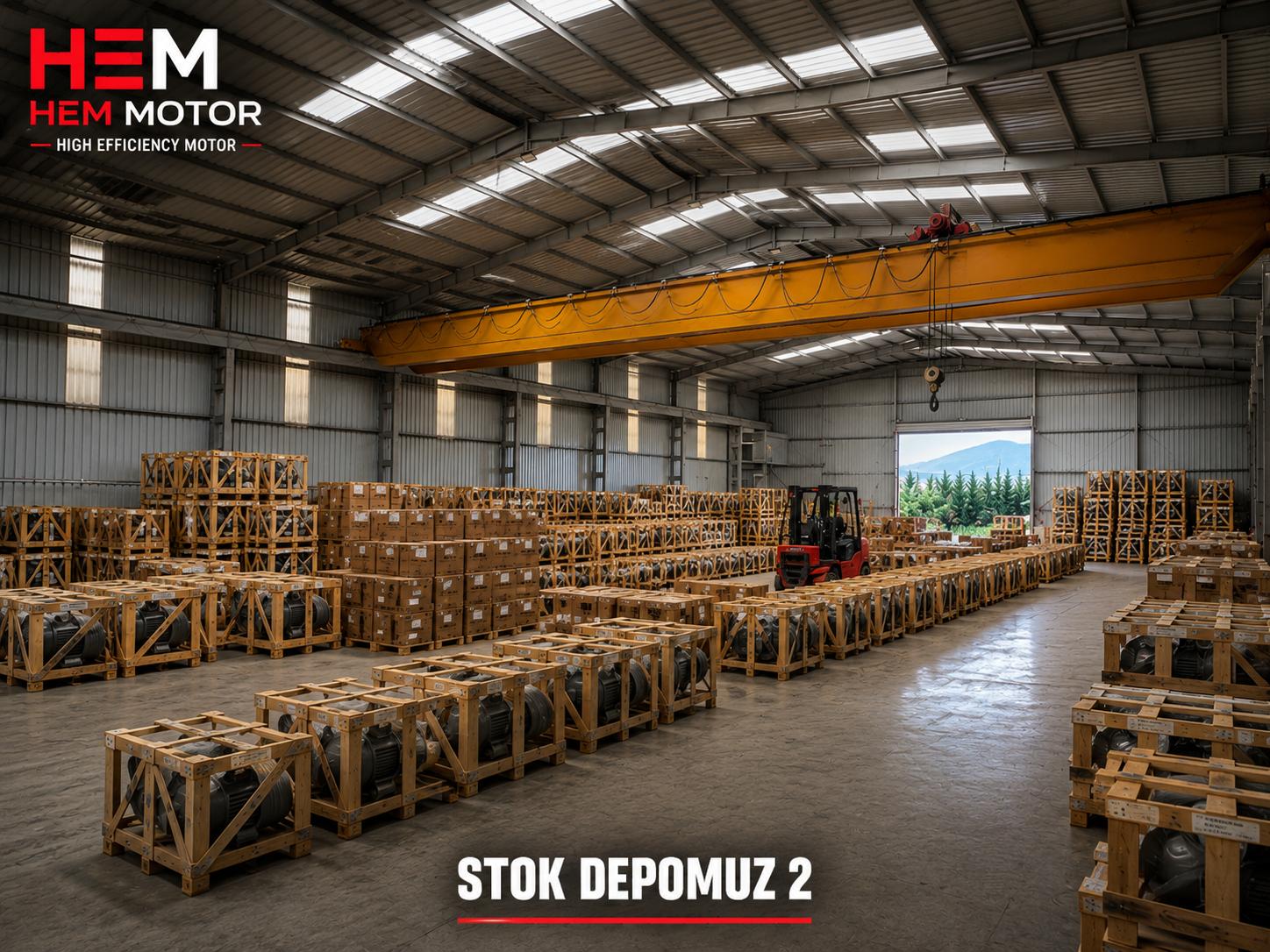
Why Is Stock the Deciding Factor? The Reality of Failure Replacement and Commissioning
Dividing motor purchases into two large categories makes the reality clear. The first is planned renewal or capacity increase; these are rare and can be spread over time. The second consists of two urgent scenarios that make up the majority of purchases:
- Failure replacement: A new motor with the same kW-speed-frame specification to take the place of a motor whose winding has burnt out or whose bearing has disintegrated. Here the waiting time is directly equal to lost production.
- The final link of commissioning: The drive motor that is the last missing piece of a newly installed machine or conveyor. The entire project waits for this single motor to arrive.
In both scenarios the deciding factor is not the theoretical superiority of the motor but when it will physically be in your hands. For this reason, in choosing the right supplier the first criterion is stock depth and the second is delivery speed. To see how a broad product range is positioned, you can review the electric motor types and purchasing map guide.
The Most Frequently Requested Power-Speed Combinations
The key to understanding stock logic is knowing that demand concentrates in particular combinations. The kW-speed pairings that turn most often in industry come from specific application families. Speed is directly related to the number of poles: 2 poles means roughly 3000 rpm, 4 poles roughly 1500 rpm, and 6 poles roughly 1000 rpm.
High Speed (2 Poles, ~3000 rpm)
- Centrifugal pumps and high-pressure pumps
- Compressors and compressed-air units
- Separators that require high speed and some fans
Medium Speed (4 Poles, ~1500 rpm)
- General-purpose drive; the most common speed class in industry
- Conveyor and belt drives (usually with a gearbox)
- Mixers, fans and many process machines
Low Speed (6 Poles, ~1000 rpm)
- Heavy-duty applications that demand high torque and low speed
- Large fans and some crusher/screen drives
- Machines that require slow and steady rotation
Speed selection is as critical as the power itself; to choose the correct number of poles, the asynchronous motor pole selection: 2, 4, 6 poles guide should certainly be read before ordering.
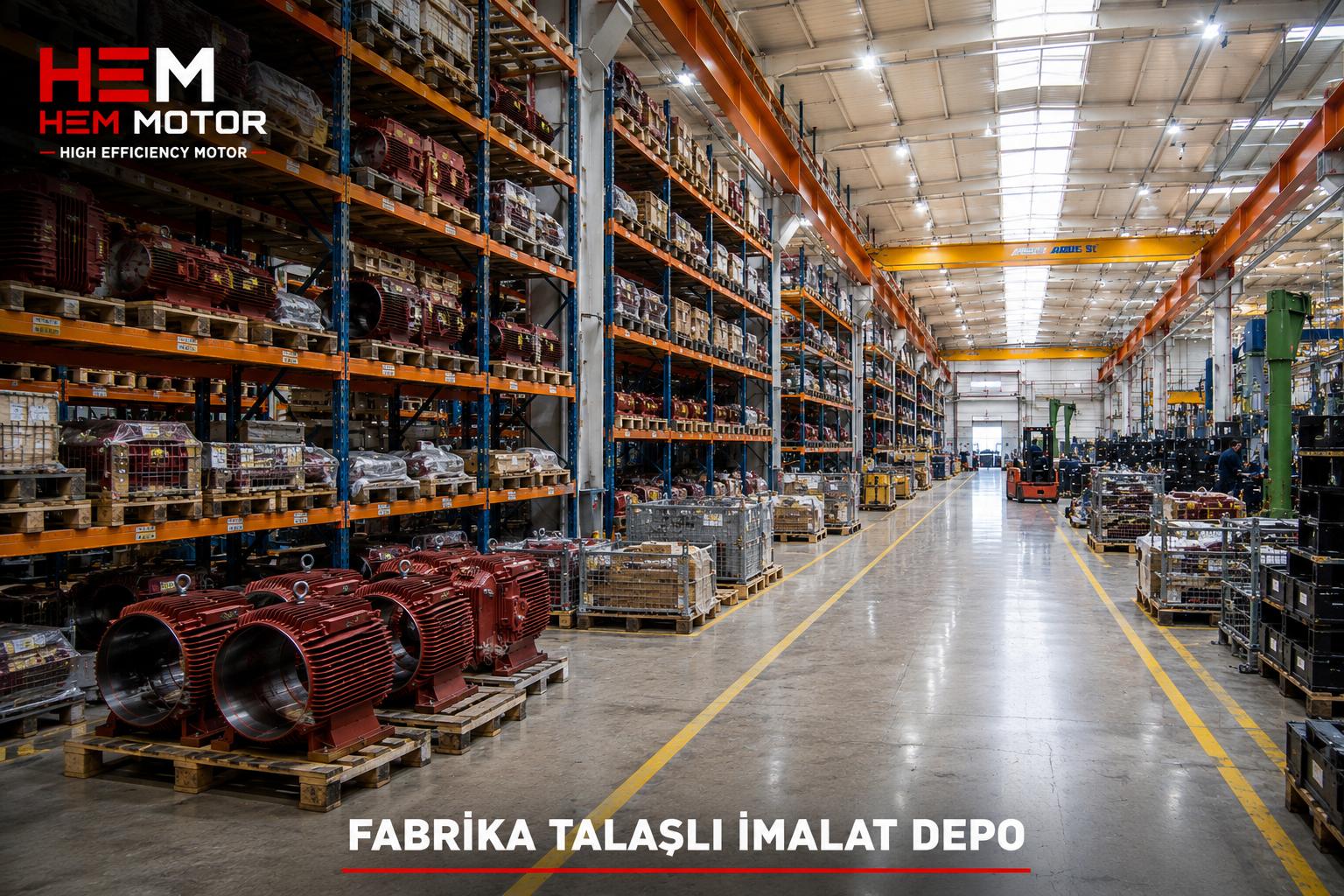
Frame Size: The Forgotten Third Dimension of a Stock Query
Many buyers run a stock query with power and speed alone, but the third and often skipped dimension is the frame size. Even if a motor is found at the same kW and speed, if the frame number and the mounting type (foot, flange, foot-and-flange) do not suit the machine, that motor is of no use to you. According to IEC, the frame number expresses the height from the foot surface to the shaft axis.
For this reason, when replacing a motor as the "same motor," you must verify not only the power and speed but also the frame number and the connection form. The frame size and power matching in cast-iron-bodied motors guide, which treats the relationship between frame size and power in detail from the perspective of correct selection from stock, clarifies this third dimension.
The Practice of Finishing a Stock Query in Five Minutes
In an urgent motor requirement, the most efficient conversation with a supplier is the one that begins with complete information. To speed up a stock query, you should have these five pieces of information at hand:
- Power (kW): The motor's rated power, read from the nameplate.
- Speed / poles: The rated speed or number of poles (2/4/6 poles).
- Frame number and mounting: Frame size and foot/flange/B5-B3 type.
- Efficiency class: Whether the IE3 baseline or IE4 is requested.
- Voltage/frequency: Whether 400 V / 50 Hz standard or a special requirement applies.
If these five pieces of information are complete, the supplier can run the stock query instantly and clarify the delivery time. Every query made with missing information leads either to the wrong motor arriving or to unnecessary back-and-forth. Photographing the nameplate of the existing motor is the fastest way to gather these five items.
Critical Data to Read From the Nameplate
- kW and HP value
- rpm (speed) and frequency
- Voltage and connection (star/delta)
- IE efficiency class and IP protection class
- Frame type and serial number
IE3 Is Still the Smart Baseline
The minimum threshold in most regulations, IE3 is today the most common and fastest-to-supply efficiency class in industry. For many general-purpose drives, IE3 is a balanced choice in terms of both adequate efficiency and stock availability. Although moving up to IE4 makes sense in critical applications with high operating hours, in situations that demand speed, such as failure replacement, the wide stock of IE3 is a major advantage. To assess where the IE4 threshold begins, you can look at the IE4 threshold in pumps, fans and compressors guide.
To find the right kW-speed-frame combination quickly and clarify the delivery time, you can review our broad motor stock through our home page and convey your requirement with complete information. A stock query made with the right information limits production loss to a matter of minutes.
Typical Stock Demands by Application Family
To grasp the stock logic more concretely, you need to know which application family gives rise to which kW-speed-frame demand. Demand in the field is not distributed at random; specific machines constantly call for specific combinations. A buyer who knows these pairings solves the question "is the motor I have in mind in stock?" far more quickly.
Water and Wastewater Plants
In these plants demand mostly comes from centrifugal pump drives; high-speed 2-pole motors and medium-speed 4-pole motors predominate. Because a pump failure creates not a production stop but a service interruption, fast supply from stock is critical. To review the efficiency-class decision in these applications too, the IE4 threshold in pumps, fans and compressors guide is a useful reference.
Conveyors and Material Handling
In belt and conveyor drives, 4-pole (1500 rpm) motors together with a gearbox are the most common demand. Here the frame size and flange type are especially important because of the connection to the gearbox; a power-speed query alone is often insufficient.
Fans and Ventilation
In ventilation and process-air fans, 2, 4 or 6 poles may be demanded depending on the application. In continuously running fans the efficiency class comes to the fore; in intermittent exhaust fans the IE3 baseline remains sufficient.
Agitators, Mixers and Process Machines
In these machines medium speed prevails and 4-pole motors are generally used with a gearbox. To select the correct speed, it is helpful to read the asynchronous motor pole selection: 2, 4, 6 poles guide before ordering.
Choosing the Right Supplier for an Urgent Motor Requirement
Since at the moment of failure it is not the theoretical superiority of the motor but when it will come off the shelf that decides the matter, the choice of supplier must also be made according to this priority. The qualities to look for in the right supplier are as follows:
- Stock depth: Having the most frequently requested kW-speed-frame combinations on the shelf.
- Fast delivery: A short delivery time when hours matter in an urgent scenario.
- Technical guidance: The expertise to identify the correct replacement motor from the nameplate information.
- Efficiency-class flexibility: Having both the IE3 baseline and, when needed, the IE4 option available.
For a motor to be "correct," it is not enough that its specifications match; it must also be in your hands at the moment of need. For this reason, in unplanned purchases the supplier's stock structure is at the center of the decision. To access a broad stock range and clarify your urgent requirement, the electric motor types and purchasing map guide also offers a starting point; once you have identified the right family, the stock query concludes far more quickly.
Common Mistakes in a Stock Query
The mistakes caused by haste lengthen the time it takes to find the right motor. The most common are:
- Skipping the frame size: Asking only about kW and speed; the motor that arrives may not seat on the machine.
- Not specifying the mounting type: A flange-mounted motor that arrives in place of a foot-mounted one cannot be used directly.
- Guessing without reading the nameplate: Saying "I think it was 7.5 kW" creates the risk of the wrong motor.
- Not asking about the efficiency class: Requesting IE2 when the regulation requires the IE3 baseline can cause problems.
All of these mistakes are prevented by gathering the five basic pieces of information completely. Photographing the nameplate is the most reliable way to bring the right motor on the first attempt.
Using the Stock Advantage in Planned Renewal
Stock logic provides an advantage not only in urgent failure situations but also in planned renewal and capacity-increase projects. In a planned investment, time is more flexible; nevertheless, choosing the most frequently requested standard combinations both shortens the delivery time and makes it easier to find spare parts and replacements later. Choosing a standard kW-speed-frame combination also guarantees the chance of finding a fast replacement at the moment of failure throughout the machine's life.
This is why experienced engineers, whenever possible, build the machine design around common motor classes. For example, choosing a 4-pole motor with a standard frame means that motor can later be found quickly off the shelf. Conversely, choosing a very special and rare combination may not cause a problem in the short term but makes finding a replacement difficult in the long term. For this reason stock availability is a criterion that must be considered not only at the moment of purchase but throughout the entire life of the machine.
A Stock-Focused Approach in Planned Renewal
- Whenever possible, prefer common and standard kW-speed-frame combinations.
- Keep in mind that very special combinations will make finding a replacement difficult later.
- In selecting the efficiency class, evaluate the regulatory baseline (IE3) and, when needed, IE4.
- Plan the spare-motor strategy from the outset for critical machines.
In this way you benefit from the stock advantage both in the initial investment and throughout the machine's entire service life. Choosing the right combination is one of the quietest yet most effective decisions for safeguarding production continuity.
Reading the Nameplate Correctly: A Practical Guide
The most powerful tool for speeding up a stock query is reading the nameplate of the existing motor correctly. The nameplate is like the motor's identity card and carries almost all the information needed for a stock query. A buyer who can read the nameplate correctly concludes the conversation with the supplier within minutes and eliminates the risk of the wrong motor.
On the nameplate the power value is written first in kilowatts (kW) and sometimes in horsepower (HP). Right beside it are the speed (rpm) and frequency (Hz); these two together reveal the motor's number of poles. The voltage and connection form (star/delta) determine the electrical compatibility. The efficiency class (IE3, IE4) is written in a visible part of the nameplate and is important for regulatory compliance. The protection class (IP) shows the motor's resistance to dust and water. Finally, the frame type and serial number are used for physical compatibility and traceability.
Instead of noting all this information item by item, recording the nameplate with a clear photograph is the most practical method. The photograph preserves both the power-speed-frame trio and details that might be overlooked, and it enables the supplier to find the correct replacement motor quickly. In this way the time lost at the moment of failure stays limited to minutes and production resumes rapidly.
Frequently Asked Questions
What information do I need to provide when buying an IE3 motor?
Five pieces of information are enough to speed up the stock query: power (kW), speed or number of poles (2/4/6 poles), frame number and mounting type (foot/flange), efficiency class (IE3/IE4), and voltage/frequency. These five data are found on the existing motor's nameplate; photographing the nameplate is the fastest method and prevents the wrong motor from arriving.
Why is stock more important than the motor's brand?
Because a significant share of industrial motor purchases are failure replacements or the final link of a machine to be commissioned. In these scenarios production has stopped or is waiting; every hour is a direct loss. For this reason, more than theoretical superiority, what decides the matter is when the required kW-speed-frame combination will come off the shelf.
I found a motor at the same kW and speed; can I install it directly?
Not necessarily. Even if the power and speed are the same, if the frame number (frame size) and mounting type do not suit the machine, the motor will not seat in place. According to IEC, the frame number determines the shaft height; in addition, the foot/flange connection and the shaft diameter must also be compatible. Before replacement, you must verify all three of these dimensions together.