English
 Türkçe


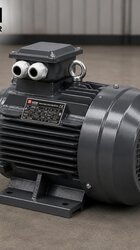
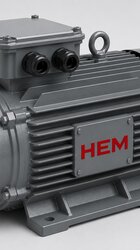


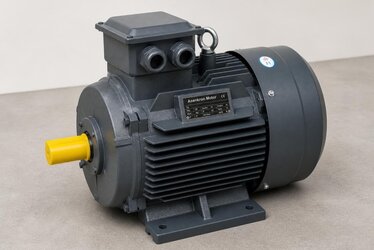
When ordering an IE4 super-premium efficient electric motor or replacing an existing motor, reading the nameplate (label) in full is the strongest barrier against an incorrect delivery. The plate of an IE4 motor contains dozens of fields such as power (kW), efficiency class (IE4) and percentage efficiency, protection class (IP), duty type (S1), insulation class (F), frame size, poles/speed, voltage, rated current, power factor (cosφ) and weight. Each of these fields is separately important for supplying the motor correctly, connecting it correctly to the panel and fitting it to the machine without problems. In this guide we read every field on the IE4 plate in order and show how each must be verified before ordering and replacing. Because an IE4 asynchronous motor can run directly from the grid, the plate-reading logic differs from IE5, where a drive is mandatory.
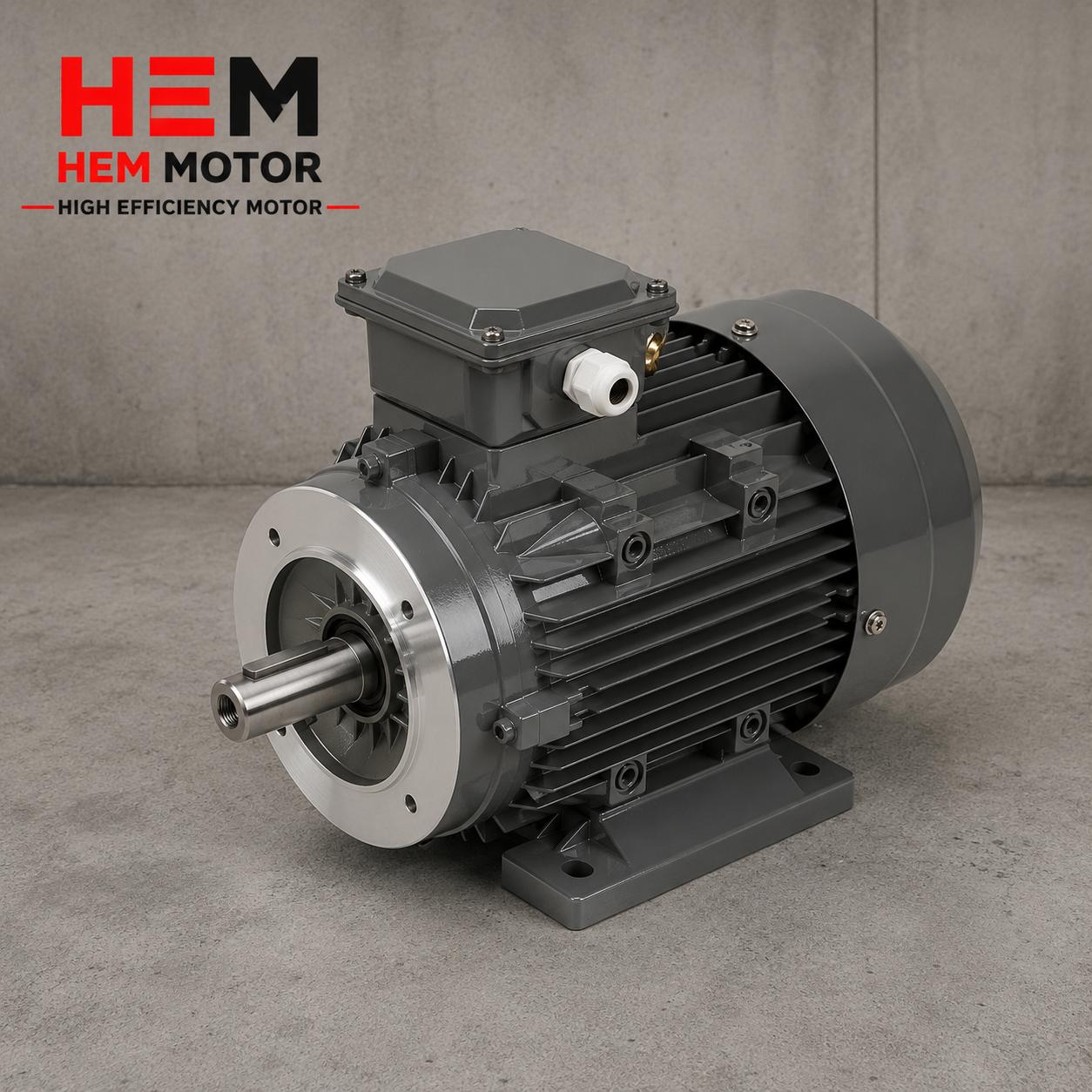
Rated Power (kW) and Poles/Speed
The rated power is written in kW at the top of the plate; in the IE4 range this value varies from 0.25 kW to 355 kW. Right next to it is the pole count and the corresponding speed (2 poles 3000, 4 poles 1500, 6 poles 1000 rpm synchronous). On an asynchronous motor the actual speed is slightly below this due to slip (e.g. 1450 rpm). Choosing the correct power and speed combination is the foundation of matching the motor to the load. We covered the pole-speed relationship in our asynchronous motor pole selection and slip in our slip and actual speed articles. To avoid oversizing in power selection, see our motor load ratio and correct sizing content.
IE4 Efficiency Code and Percentage Efficiency Value
The efficiency class is shown on the plate as IE4 together with a percentage efficiency value (e.g. 94.5%). IE4 super-premium means lower losses and less energy consumption than IE3 premium. In continuously running motors this difference creates significant savings over the years. We detailed what the transition to IE4 gains in our replacing the old motor with IE4 and the IE4 vs IE3 decision in our whether to move to IE4 or stay with IE3 articles. The efficiency value uses a dot as decimal separator in English (94.5).
Protection Class (IP)
The IP protection class (usually IP55) shows the motor protection against dust and water. The first digit denotes dust, the second water protection. In dusty, humid or washed environments IP55 may not be sufficient; IP65 or IP66 may be required. We explained correct IP selection in our IP protection class selection article and the IP69K requirement in high-pressure washing in our IP69K washdown protection content. The IP value on the plate must always be checked for suitability to your environment.
Duty Type (S1) and Insulation Class (F)
The duty type shows the operating regime of the motor; IE4 standard motors usually state S1 (continuous duty). In frequent start-stop or intermittent operation, different duty types such as S3, S6 may be required. The insulation class (F) determines the maximum temperature the winding can withstand and directly affects motor life. You can find duty type selection in our duty type S1-S6 selection, the effect of insulation class on life in our winding and insulation class F/H, and the temperature rise class in our temperature rise class articles.
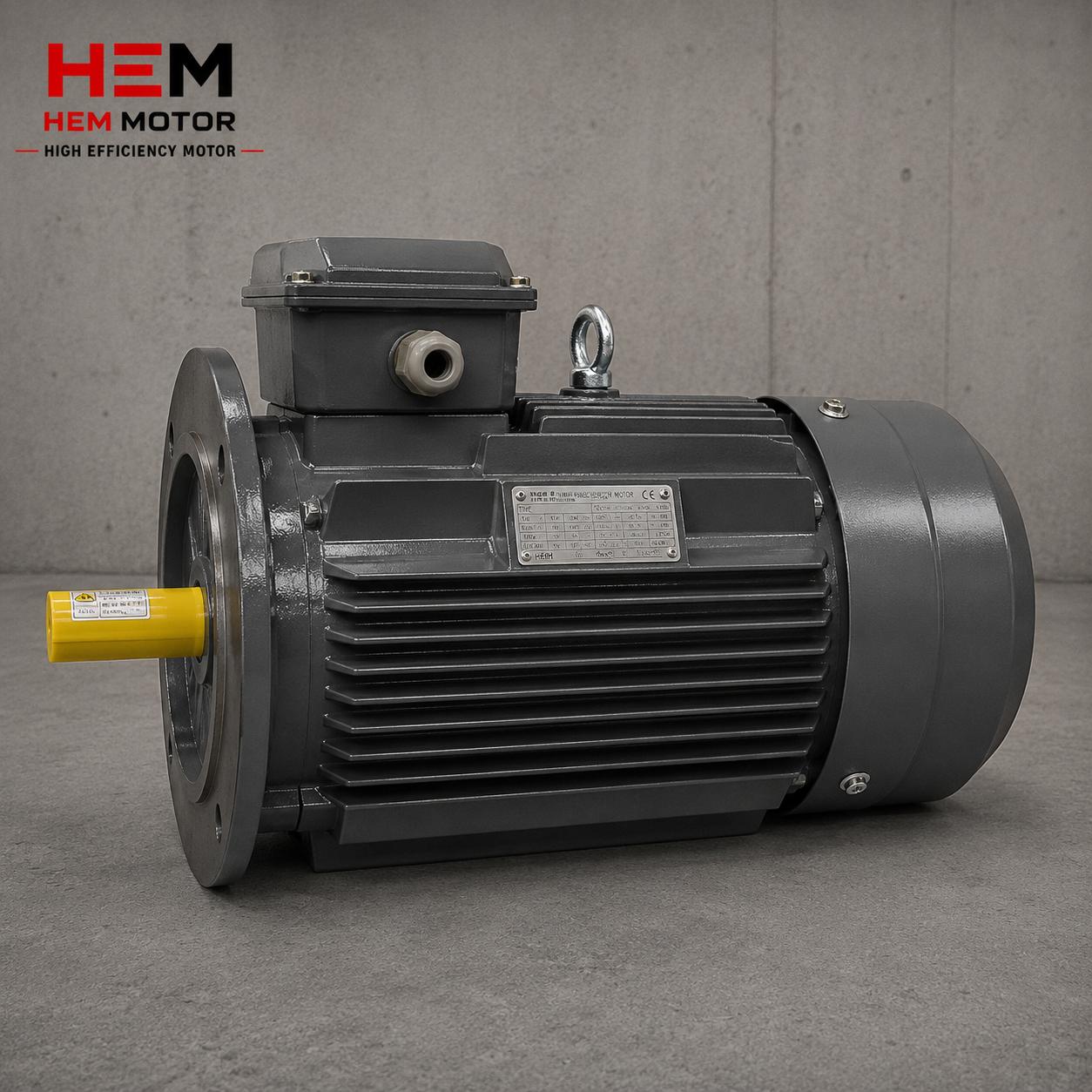
Voltage, Rated Current and Power Factor (cosφ)
The voltage is usually written as 230/400V or 400/690V, with two values corresponding to star and delta connection. This determines to which grid voltage and how the motor will be connected. We explained star-delta connection and bridging in our terminal 230/400V star-delta voltage selection article. The rated current (A) determines cable cross-section, fuse and contactor selection; you can find this calculation in our rated current cable, fuse, contactor selection and cable connection in our cable connection and lug selection articles. The power factor (cosφ) shows the reactive power the motor draws from the grid and is important in compensation planning; see our power factor cosφ and correction content.
Frame Size and Mounting Information
The frame size (between IEC 56-355, e.g. 160L) determines the mechanical dimensions and replaceability of the motor. In replacement, the frame size, shaft height (H), shaft diameter and flange dimensions must match. The mounting code (IM B3, B5, B35) shows whether the motor is foot-mounted or flange-mounted. We detailed reading the mounting code in our IM mounting code reading, mechanical compatibility in IE4 transition in our frame, foot and shaft compatibility, and equivalent selection in our IE4 equivalent replacement selection articles.
Weight, Terminal Box Orientation and Other Fields
The weight information on the plate is needed for crane lifting and handling planning; see our lifting eyebolt and safe handling article. Some plates also include the terminal box orientation, bearing numbers and serial number. The terminal box orientation determines the cable entry side relative to the panel; we explained this in our terminal box orientation and cable entry side article. The bearing number makes it easier to find the correct part when a future replacement is needed; see our bearing replacement and number selection content.
From IE3 Label to IE4 Label: The Key Difference
Although the structure of IE3 and IE4 plates is similar, the efficiency class and percentage efficiency field differ; IE4 carries a higher efficiency percentage. At the same kW and speed, an IE4 motor is usually slightly heavier and sometimes one frame larger. This mechanical difference must be considered in replacement. You can find IE3 label reading in our reading the IE3 motor nameplate article and the IE3-IE4 efficiency mandate in our IE3 and IE4 efficiency mandate content. IE4 has become legally mandatory for certain motors in the 75-200 kW range.
Verification Flow Before Ordering and Replacement
For a correct order, first photograph the plate of the existing motor, then list the kW, speed, voltage, frame size, IP, mounting code and weight. Conveying this information in full prevents the wrong motor from arriving. We collected exact matching by label in our match exactly by label and the information to give when requesting a quote in our 8 pieces of information when requesting a quote articles. You can find equivalent selection when replacing an old brand in our direct replacement of old brand motor content.
Service Factor (SF) and Overload Capacity
Some IE4 plates also include a service factor (SF) value (for example 1.15). The service factor shows how much load the motor can carry above its rated power, non-continuously, under certain conditions. A motor with SF 1.15 can go 15% above its rated power in short-term overloads. This value provides a safety margin in applications with a fluctuating load profile. We detailed the service factor and overload capacity in our service factor and overload capacity article and rated torque and starting torque in our rated torque and starting torque content. The SF value on the plate is an important safety indicator in matching the motor to the load.
Calculating Rated Torque from the Plate
Although the plate does not directly state torque (Nm), the rated torque can be calculated from the kW and speed information. This is needed to understand whether the motor will meet the torque required by the load. A low-speed (high-pole) motor produces higher torque at the same power. We explained the torque calculation in our rated torque calculation: torque from kW and speed article and the effect of pole count on efficiency and torque in our efficiency and pole count content. For efficiency and torque balance in IE4 low-speed 6/8 pole applications, see our low-speed IE4 motor article.
High Altitude and Ambient Temperature Derating Notes
The plate sometimes states a reference ambient temperature (usually 40°C) and maximum altitude (1000 m). If the motor will operate in an environment above these values, derating (power reduction) from the rated power may be required; otherwise the motor overheats. We covered derating at high altitude in IE4 motors in our derating at high altitude article and selection for high ambient temperature and hot-dusty environments in our high altitude and hot environment motor selection content. The reference conditions on the plate must be compared with the conditions of the site where the motor will be installed.
The Sectoral and Legal Priority of IE4
The fact that the IE4 motor has become legally mandatory in some power and pole ranges makes plate reading important not only technically but also from a regulatory standpoint. We covered which facility should move to IE4 first in our IE4 sectoral priority, the IE4 threshold in pump, fan and compressor in our IE4 threshold in pump, fan and compressor, and efficiency class and correct sizing in our efficiency class and correct sizing articles. You can find where IE4 efficiency losses are reduced in our IE4 efficiency losses content.
Frequently Asked Questions
The plate says 230/400V, my grid is 400V, how do I connect?
A motor marked 230/400V is connected in star on a 400V grid (230V drops on each winding), and in delta on a 230V grid. In star-delta starting, the motor must be suitable for 400V running in delta. We explained correct bridging step by step in our terminal star-delta voltage selection article.
The plate is worn off, how do I find the kW value?
If the plate is unreadable, the approximate power can be estimated from the frame size, pole count and physical dimensions, but the best is to contact us with the serial number or machine information. The power can also be roughly calculated from the rated current. In this case our electric motor types and purchase map article guides you to find the correct motor.
Can I fit an IE4 motor one-to-one in place of an IE3?
Usually yes, because an IE4 asynchronous motor also runs directly from the grid. However at the same kW and speed an IE4 may be slightly heavier or one frame larger; check the foot hole, shaft diameter and H dimension. We covered mechanical compatibility in detail in our mechanical compatibility in IE4 transition article.
Get a Quote
Consult our team to read your IE4 motor plate and order it in full with the correct power, speed, voltage and frame. When you send the plate photo, we verify all fields and quickly find the IE4 motor that fits you exactly. You can reach us at +90 (532) 345 49 86 or request a quote through our contact page. You can review the full range from our homepage and the IE4 threshold applications from our IE4 threshold in pump, fan and compressor article.
Purchasing and Ordering Checklist
- Were the rated power (kW) and poles/speed read?
- Were the efficiency class IE4 and percentage efficiency verified?
- Is the IP protection class suitable for the environment?
- Does the duty type (S1) match the operating regime?
- Is the insulation class (F) sufficient for the ambient temperature?
- Are the voltage (230/400 or 400/690V) and connection type clarified?
- Was the rated current matched with cable and protection selection?
- Do the frame size, mounting code and weight fit the replacement/installation?