English
 Türkçe

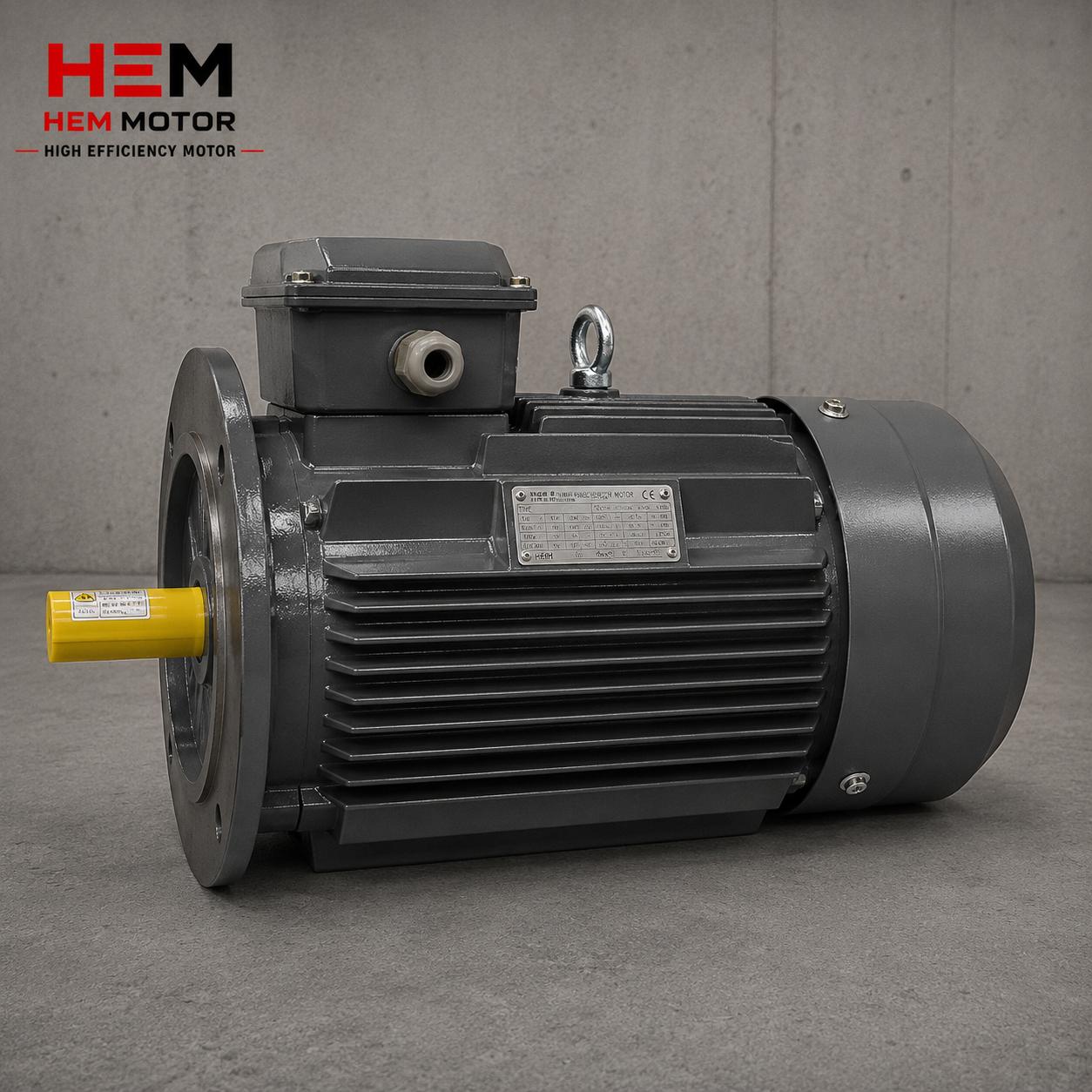

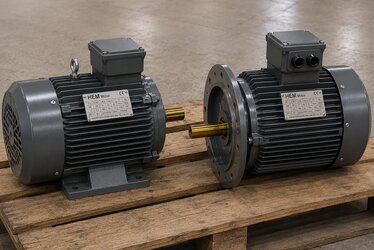
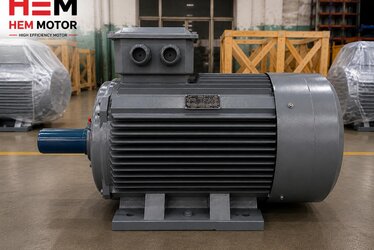
4 kW is one of the most common powers in industry and among the fastest to supply from stock. Many applications such as pumps, fans, conveyors and compressors land in exactly this power band. However, the same 4 kW is offered at different speeds (pole counts), and a correct choice means determining not only the power but also the speed correctly. A 2-pole 4 kW motor runs at about 3000 rpm, a 4-pole at 1500 rpm, and a 6-pole at around 1000 rpm. The same power at three different speeds means three different applications. In this article we cover how to select a 4 kW electric motor by pole count (2/4/6 pole) and speed, which frame size (100L/112M) it corresponds to, which speed suits which application, and stock and direct-on-line (DOL) starting. (This article makes no fixed-price or numeric promise.)
Pole Count and Speed Relationship in a 4 kW Motor
The speed of an induction motor is set by its pole count. At a 50 Hz grid frequency, as the pole count rises, the speed falls. The three most common options at 4 kW are: 2-pole at about 3000 rpm (actually ~2900 rpm due to slip), 4-pole at about 1500 rpm (actually ~1450 rpm), and 6-pole at about 1000 rpm (actually ~960 rpm). We explained why the actual speed is slightly below the synchronous speed in slip and actual speed in an induction motor.
What matters is that at the same 4 kW power, as the speed falls, the torque the motor produces rises. That is, a 6-pole 4 kW motor turns slower but with higher torque than a 2-pole 4 kW motor. Our induction motor purchasing guide: which of 2, 4, 6 poles for which job details how to choose poles by application; our efficiency and pole count in induction motors details the pole comparison in terms of efficiency.
Frame Size: 100L or 112M?
4 kW is generally produced in a 100L or 112M frame size; it varies with the speed and the manufacturer. The frame size determines not only the motor's physical dimensions but also the shaft diameter, foot holes and flange dimensions. Therefore, when replacing a motor, the frame size is critical for compatibility with the existing connection. For the frame-shaft dimension table, see our shaft diameter and frame table in IE3 motors (IEC 56-355); for correct power-stock matching, see our IE3 electric motor stock guide: power and speed combinations.
Which Speed for Which Application?
In a 4 kW selection, the correct approach is to keep the power fixed and determine the speed by application. Typical speed preferences by common application are summarized below.
2 Pole (3000 rpm): Pumps and High-Speed Fans
High speed is preferred in centrifugal pumps and high-pressure air-blowing applications. A 4 kW 2-pole motor is common in compact booster and high-pressure pump applications. For flow-head matching on the pump side, our centrifugal pump motor selection: flow, head; on the IE4 side, for 2-pole pump-fan selection, our IE4 2-pole 3000 rpm motor: correct power selection in pumps and fans is a guide.
4 Pole (1500 rpm): Conveyor, Fan and General Industry
1500 rpm is the most preferred speed in industry; belt conveyors, general ventilation fans and many general machines run at this speed. Thanks to its balanced torque-speed ratio, it has the widest range of applications. For replacement and correct selection in conveyor applications, see our when a conveyor belt motor fails: emergency replacement motor; for the pole-speed comparison in the 2.2/3/4 kW band, see our 2.2/3/4 kW induction motor selection.
6 Pole (1000 rpm): Applications Requiring High Torque
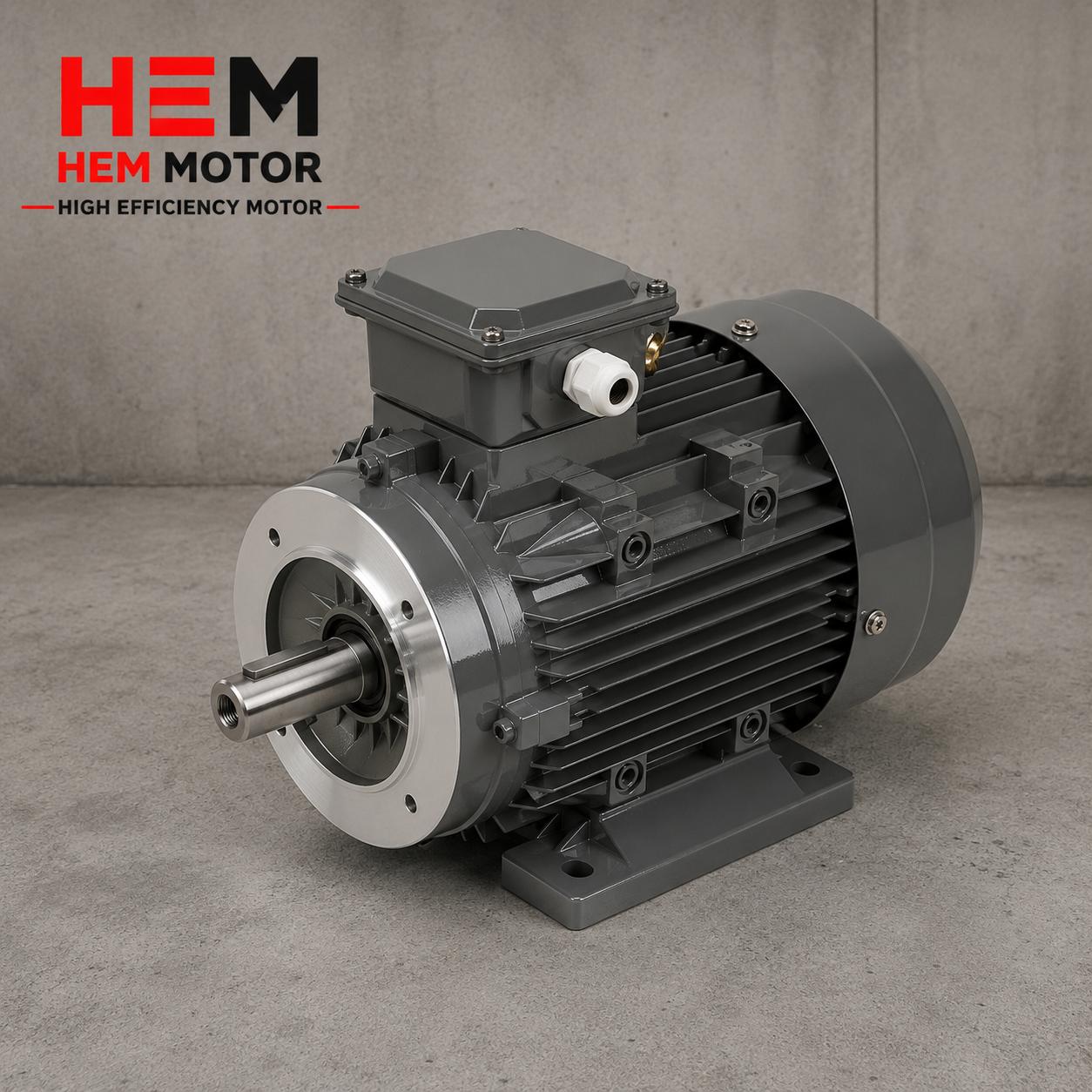
In applications that demand lower speed and higher torque, a 6-pole motor is preferred; for example some mixers, hard-starting conveyors and low-speed drives. You can find the details of low-speed motor selection in our 6 and 8-pole low-speed induction motor selection. When even lower speed is needed, using the motor together with a gearbox is also an option; in that case the correct output speed must be planned.
Direct-On-Line (DOL) Starting and Stock
At medium-small powers such as 4 kW, the motor is usually started direct-on-line (DOL); that is, when switched, the motor connects directly to full voltage. Because at this power the starting current stays at a level the system can handle, star-delta or a soft starter is unnecessary in most applications. To compare starting methods, see our starting in AC induction motors: star-delta or soft starter. If variable speed is needed, our VFD with an induction motor comes into play.
Because 4 kW is among the most commonly stocked powers, the supply lead time is usually short. Still, clarifying the correct speed, frame and mounting type (B3/B5/B35) from the start is important for replacement and fast delivery. You can find the stock logic in our stock range in IE4 motors: which kW and speeds are supplied from stock; and the stock-speed situation of neighboring powers such as 5.5 and 7.5 kW in our 5.5 and 7.5 kW IE3 motor stock guide.
Label and Connection Check
When ordering or replacing a 4 kW motor, the label data (power, speed, voltage, current, mounting type) must be verified. We addressed label reading in our nameplate and label reading in IE4 electric motors and rotation direction and phase sequence in our motor rotation direction and phase sequence. For power matching in a compressor application, our compressor motor replacement: matching guide helps.
You can review our product range under our IE3 electric motor and IE4 electric motor categories, and reach more content from our home page.
The Effect of Speed Selection on Torque and Current at the Same Power
Even if the 4 kW power stays fixed, changing the pole count fundamentally changes the motor's behavior. As speed falls (poles increase), higher torque is obtained from the same power, because power is proportional to torque times speed. So a 6-pole 4 kW motor is far more suitable than its 2-pole counterpart for loads that demand high torque but must turn slowly. Conversely, a 2-pole is chosen for pumps and fans that demand high speed. We examined the speed-torque relationship and breakdown torque in speed-torque curve and breakdown torque in induction motors, and starting-torque classes in induction motor torque classes (Design N/H).
The pole count also affects the rated current and therefore the cable, fuse and contactor selection. The current of motors at the same 4 kW power but different speeds varies somewhat; therefore panel components should be sized according to the motor's actual rated current. For cable and protection selection by rated current, our rated current: cable, fuse and contactor selection; for reading rated values from the label, our reading the IE3 motor nameplate: kW, speed, cosφ and efficiency is a guide.
Efficiency Class: 4 kW IE3 or IE4?
4 kW is a power within the scope of efficiency regulation; therefore the motor's efficiency class (IE3/IE4) is decisive in selection. On a 4 kW motor running many hours, switching to IE4 lowers the lifetime energy cost. We addressed the transition decision between IE3 and IE4 by runtime and payback in IE4 or stay with IE3?. To see the stock and speed situation at medium powers, our 0.75 and 1.1 kW IE3 motor stock guide gives an idea of the neighboring power band.
Mounting Type and Mechanical Compatibility
In 4 kW motor selection, the mounting type is as important as power and speed. The motor can be foot-mounted (B3), flange-mounted (B5/B14) or combined (B35), and this determines how the motor connects to the machine. A motor that will connect directly to a pump by flange and a foot-mounted motor that will drive a conveyor by belt-pulley require different mounting types. In a replacement, the existing motor's mounting type must be kept exactly. For reading the mounting code and ordering correctly, see our motor IM mounting code reading (IM B3, IM B5, IM V1); on the IE4 side, for the flange and mounting range, see our B5, B14 and B35 flange and mounting range in IE4 motors.
In the mechanical connection, shaft diameter, key and coupling compatibility should also be checked. A wrong coupling or misalignment shortens the life of the motor and the machine. For coupling selection and shaft alignment, our flexible or rigid coupling?; for foundation and base mounting, our bolt, nut and foundation/base mounting in electric motors is a resource.
4 kW in Conveyor and Compressor Applications
4 kW is a power frequently encountered in both conveyor and small-medium compressor applications. In conveyors, 1500 rpm (4-pole) is usually preferred and is often used together with a gearbox to reduce the output speed. In compressors, 2 or 4 poles can be chosen depending on the application. For the correct motor in conveyor drive, see our conveyor belt motor emergency replacement; for power selection in compressed air and screw compressors, see our compressed air and screw compressor motors. If single-phase versus three-phase selection is needed, our single-phase or three-phase? helps.
Frequently Asked Questions
How many rpm do the 2, 4 and 6-pole versions of a 4 kW motor run at?
On a 50 Hz grid, the 2-pole runs at about 3000 rpm (actually ~2900 rpm due to slip), the 4-pole at about 1500 rpm (~1450 rpm) and the 6-pole at about 1000 rpm (~960 rpm). At the same 4 kW power, as the speed falls, the torque the motor produces rises.
What frame size is a 4 kW motor?
4 kW is generally produced in a 100L or 112M frame size; this can vary with the speed and the manufacturer. When replacing a motor, the frame size, shaft diameter and foot/flange dimensions must be verified for compatibility with the existing connection.
Can a 4 kW motor be started direct-on-line (DOL)?
Yes. At medium-small powers such as 4 kW, the motor is usually started direct-on-line (DOL); at this power the starting current is generally at a level the system can handle. In special cases such as very frequent start-stop or high-inertia loads, a soft starter or drive can be considered.
Fast Delivery From Stock and the Replacement Advantage
One of the biggest practical advantages of 4 kW is that, because it is very common in industry, it can usually be supplied quickly from stock. When a motor fails, fast replacement is critical so that production does not stop; when the correct speed, frame and mounting type are determined at this power, the delivery time shortens. The most common mistake during replacement is looking only at the power and skipping the speed or mounting type; yet fitting a 3000 rpm motor in place of a 1500 rpm one makes the driven machine run at the wrong speed. To avoid receiving the wrong motor, all rated values must be verified before ordering.
Choosing the correct power and speed combination matters for both energy efficiency and equipment life. An oversized motor runs continuously at low load and lowers efficiency, while an underpowered motor is overloaded and overheats. To strike this balance you need to know the application's real power demand. For choosing the pole and speed by application, our induction motor purchasing guide: 2, 4, 6 poles; to understand starting current and DOL behavior, our starting current in induction motors: LRA is a guide. A correctly selected 4 kW motor serves smoothly and efficiently for years.
Get a Quote
For 4 kW electric motor supply, let us determine the correct pole, speed, frame and mounting type together. Our expert team is ready to offer a solution suited to your application, fast from stock. You can reach us at +90 (532) 345 49 86 or via our contact page.
Selection Checklist
- Has the application (pump/fan/conveyor/compressor) been determined?
- Have the required speed and the matching pole count (2/4/6) been selected?
- Are the frame size (100L/112M) and shaft diameter compatible with the existing connection?
- Has the mounting type (B3/B5/B35) been stated correctly?
- Is direct-on-line (DOL) starting suitable, or is there a special case?
- Have the label data (power, speed, voltage, current) been verified?
- Have the stock situation and delivery time been clarified?