English
 Türkçe

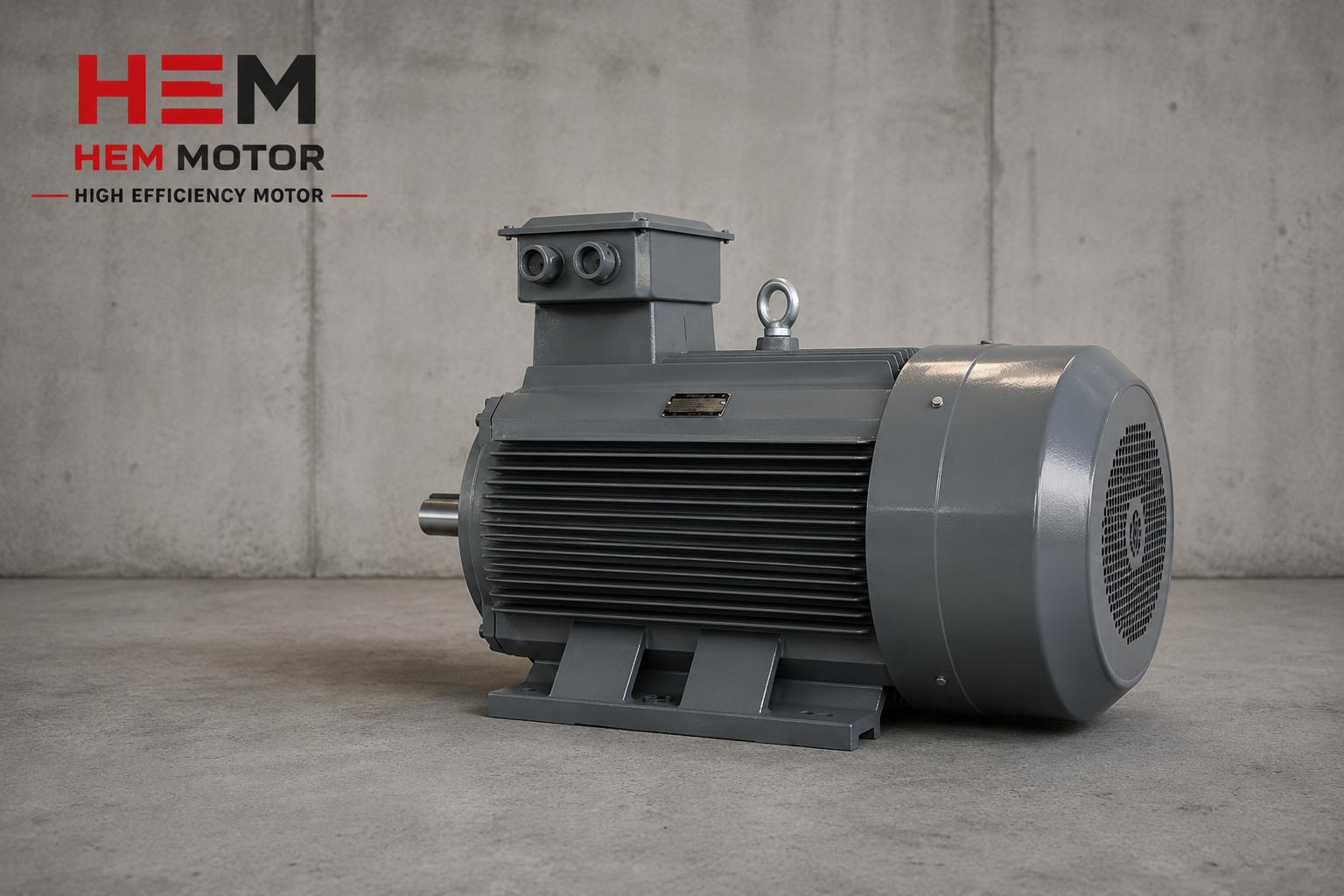

2.2 kW, 3 kW and 4 kW are perhaps the three most commonly used asynchronous motor powers in Turkish industry. Conveyors, small-to-medium pumps, fans, mixers, geared drives and countless machines work in this power range. Precisely because they are common, the most frequent mistake when purchasing at these powers is to request the motor by kW alone. Yet the pole count (speed), mounting type and the load character of the application determine both the right motor and fast delivery. This article is written for maintenance managers, machine builders and purchasing businesses. Our aim is to help you define a 2.2 / 3 / 4 kW asynchronous motor correctly along the pole-speed-application axis and obtain an accurate, fast quote.
Why Are 2.2 / 3 / 4 kW the Most Common Powers?
These three powers are the middleweight of industry: tailor-made for drives that exceed the limits of small powers but do not carry the cost and frame burden of large ones. Most conveyors, small pumps and general machines fall in this range; that is why they can be found from stock in almost every mounting type and speed. By regulation, three-phase DOL motors at these powers are in the IE3 efficiency class. You can find the basic selection logic of asynchronous motors and all power classes in our asynchronous/AC motors category, and examine the essence of pole selection in our article on asynchronous motor pole selection: 2, 4, 6 pole, which for which job.
Pole and Speed: Which Pole for Which Job?
2.2 / 3 / 4 kW motors are supplied at three basic speeds. 2 pole (~3000 rpm) needs high speed: small high-pressure pumps, some fans and high-speed drives. 4 pole (~1500 rpm) is the most common choice; most conveyor, general pump and machine drives use this speed. 6 pole (~1000 rpm) is for applications needing higher torque and lower speed, such as direct-drive and geared applications. We addressed the effect of pole count on efficiency in our article on efficiency and pole count in asynchronous motors, and low-speed direct drive in our article on low-speed (high-pole) motors.
Actual Speed and Slip
In an asynchronous motor the nameplate speed is slightly below the synchronous speed; a 4 pole motor runs at about 1440-1480 rpm instead of 1500. This slip affects pulley/reduction calculations in speed-sensitive applications. We examined the slip-actual speed relationship in our article on slip and actual speed in asynchronous motors, and speed adjustment with pulley-belt in our article on motor speed and pulley-belt speed adjustment.
Application-Based Selection and Load Character
The same kW power requires different torque and speed in different applications. To quote the right motor on the first attempt, the character of the load must be known.
Conveyor and Belt Drives
2.2 / 3 / 4 kW are the most common powers of small-to-medium conveyors and are mostly used as 4 pole, coupled to a gear unit. We addressed the emergency replacement and one-to-one swap of a conveyor motor in our article on when a conveyor belt motor fails; this is a checklist for a fast solution when the line stops.
Starting Torque and Torque Class
Mixers, crushers and loads starting under load need high starting torque, while loads such as fans and pumps start with low torque. Choosing the motor torque class (Design N/H) according to the load affects both the start-up and the motor life. We addressed torque classes and starting torque in our article on asynchronous motor torque classes (Design N/H) and starting torque.
Starting: Direct, Star-Delta, Soft Starter
At powers like 2.2 / 3 / 4 kW, direct-on-line starting is sufficient in most applications; however, if delicate mechanical transmission or a limited grid is involved, star-delta or a soft starter comes up. We examined the starting method in our article on starting AC asynchronous motors: star-delta or soft starter, and when a frequency drive is needed in our article on frequency drive (VFD) with an asynchronous motor.
Mounting, Stock and One-to-One Replacement
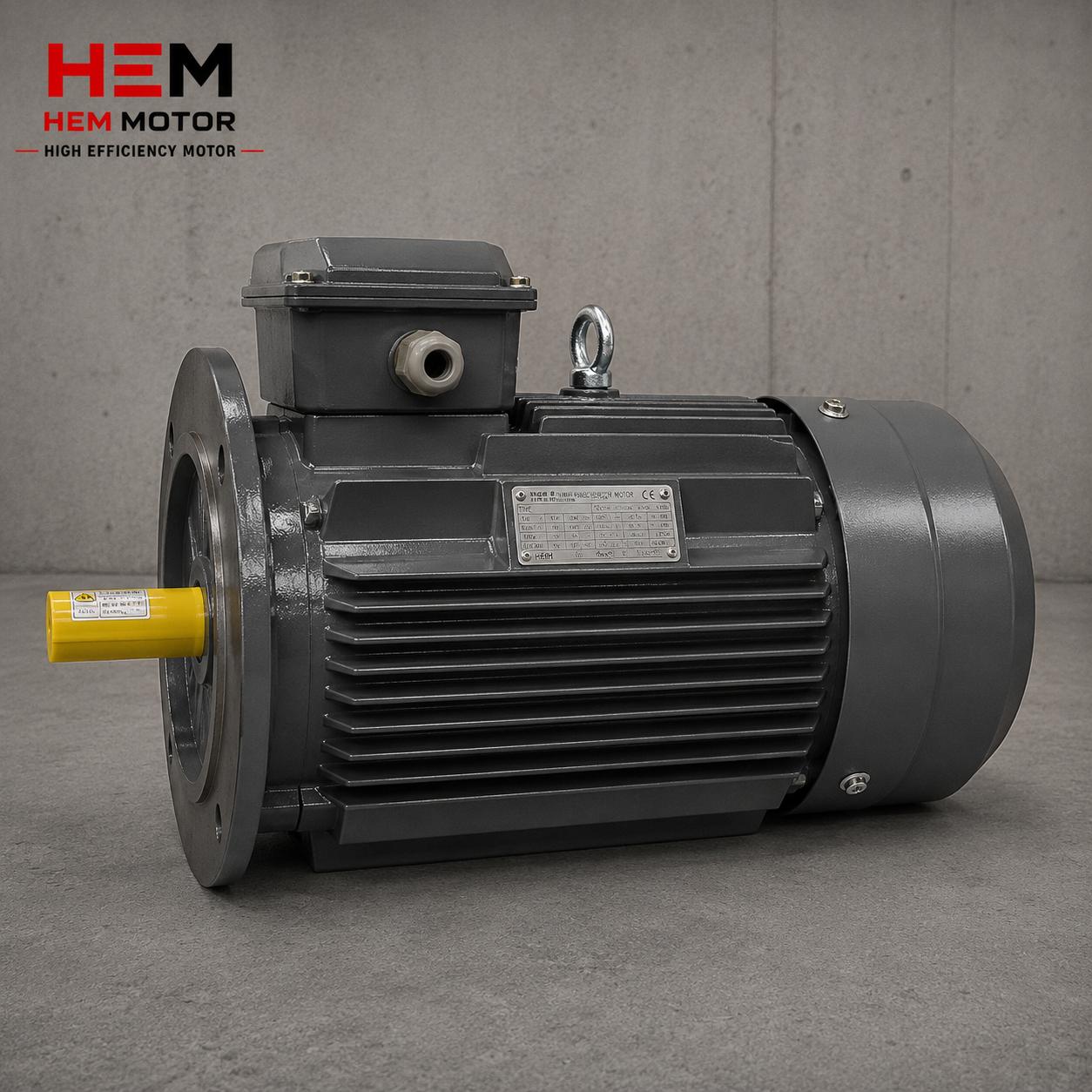
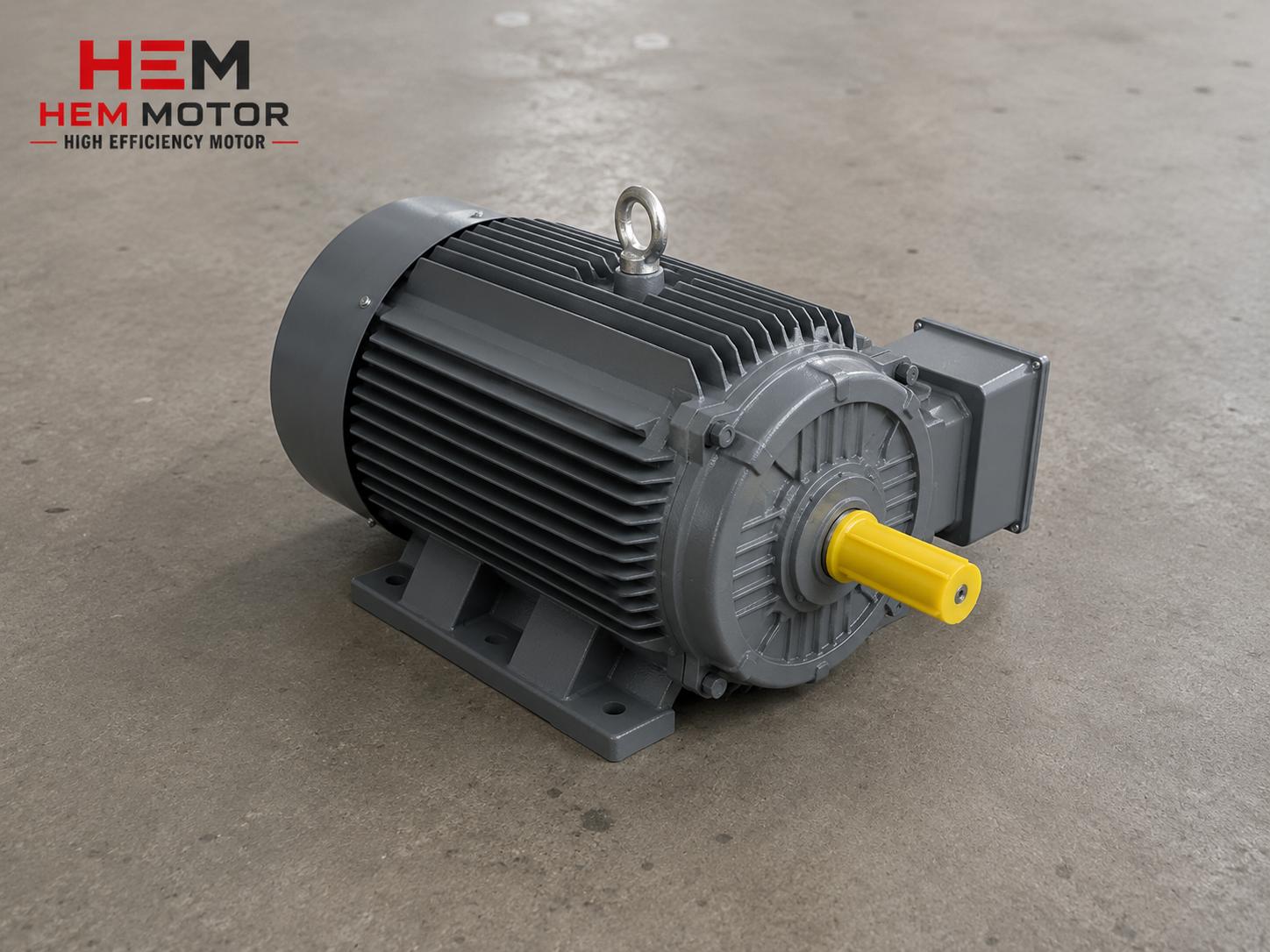
2.2 / 3 / 4 kW motors are commonly stocked in B3 foot-mounted, B5 and B35 flange mountings. In replacement, mechanical compatibility is critical: the frame size, shaft diameter, mounting type and speed must match the existing motor. To prevent the wrong motor from arriving, we addressed matching the nameplate data exactly before ordering in our article on avoid the wrong motor delivery: nameplate matching before ordering. These powers can usually be delivered from stock; we compared the lead-time difference between a production order and stock in our article on from-stock delivery vs production order. For the general product range you can reach IE3 electric motors, high-efficiency electric motors and electric motor mounting types pages via the HEM Motor home page.
Geared Drive and Dual-Speed Options
2.2 / 3 / 4 kW motors are among the powers where coupling to a gear unit is most common. In drives requiring a low output speed, such as conveyors, augers and mixers, the motor is connected to a worm or bevel-helical gear unit; the desired output speed and torque are obtained with the reduction ratio. These powers are compatible with various gear unit frames via IEC 90/100 flanges. We addressed which motor fits which gear unit with IEC frame and flange matching in our article on which electric motor fits a worm gear and NMRV reducer. For the gear unit product range you can review our worm gear reducers and helical worm gear reducers pages.
In some applications, two different speeds may be needed from a single motor; for example, a fan or conveyor may be required to run at two speeds. In this case dual-speed (Dahlander) asynchronous motors come up. We examined in which application dual-speed motors are preferred in our article on dual-speed (Dahlander) asynchronous motors. If speed control needs to be continuous and precise, using a fixed-speed motor with a frequency drive is often a more flexible solution; we addressed this in the VFD article mentioned above.
Pump, Fan and Mixer Applications
The 2.2 / 3 / 4 kW powers are also a common solution for small-to-medium pump and fan applications. These powers are frequently used in small centrifugal pumps and boosters; 2 or 4 pole is chosen according to flow and head. In fan applications, the air-flow and pressure need determines the speed. We addressed how the required power is calculated for pumps, fans and conveyors in our article on motor power calculation: required kW for pump, fan and conveyor; this calculation helps you choose the motor neither over- nor under-powered. In mixers, augers and loads starting under load, the starting torque comes to the fore; in such loads the torque class and correct pole selection ensure the motor starts without strain.
Running the motor at the right load is critical for both efficiency and life. A motor running at very low load lowers its efficiency and power factor, while a motor running under continuous overload wears out early. We examined the right load to run a motor at and correct sizing in our article on at what load should a motor run? Efficiency, power margin and correct sizing. At these powers, correct sizing directly affects energy cost, especially in continuously running drives.
Mounting, Insulation and Commissioning
2.2 / 3 / 4 kW motors are commonly stocked in B3 foot-mounted, B5 and B35 flange mountings; the mounting type is determined by the machine you will connect to. While pumps and gear units require a direct flange connection, B3 stands out in belt-pulley and base mountings. On the insulation side, F-class is standard and sufficient for most applications at these powers; if high temperature or continuous heavy load is involved, H-class provides extra safety. You can reach all mounting-type options on our electric motor mounting types page.
When commissioning a new motor, the rotation direction, voltage connection (star/delta) and mechanical alignment must be checked. A wrong phase sequence can cause the motor to rotate in reverse; in direction-sensitive applications such as pumps and fans, this means faulty operation. We addressed the motor rotation direction and phase sequence in our article on motor rotation direction and phase sequence, and the first-start check steps in our article on electric motor commissioning and first-start checklist.
Price and Quote
For a 2.2 / 3 / 4 kW asynchronous motor, the price varies according to speed, mounting type, body material and stock status. These powers are frequently chosen in single purchases as well as in serial purchasing for machine building; a unit-cost advantage forms as the quantity rises. Instead of a fixed list price, sharing the power, speed (pole), mounting type, application and quantity gives the most accurate result.
Frequently Asked Questions
Which speed is most common for a 2.2 / 3 / 4 kW motor?
In conveyor, general pump and machine drives, the most common choice is the 4 pole (~1500 rpm) motor. In small high-pressure pumps and some fans, 2 pole (~3000 rpm) is preferred, and 6 pole (~1000 rpm) in applications needing higher torque and lower speed. The right speed depends on the speed and torque need of the application as well as the power; that is why stating the application at the quotation stage matters.
Is direct-on-line starting enough at these powers?
At powers like 2.2 / 3 / 4 kW, direct-on-line starting works trouble-free in most applications. However, if protecting delicate mechanical transmission, limiting the starting current, or a limited/generator-fed grid is involved, star-delta or a soft starter can be preferred. If speed control is needed, a frequency drive (VFD) comes up. The choice is made according to the sensitivity of the application and the feed type.
Can I replace my existing motor one-to-one with a 3 kW asynchronous?
Yes, if the mechanical dimensions are the same, a one-to-one replacement is possible. For this the existing motor frame size (IEC frame), shaft diameter, mounting type (B3/B5/B35) and speed must match. Sharing the power, speed and mounting data on the nameplate ensures the correct replacement motor is allocated from stock and the wrong motor is avoided.
Get a Quote
We supply 2.2 / 3 / 4 kW asynchronous motors by pole, speed and mounting type, from stock and with fast delivery. Share your application, your need and, if any, the existing motor nameplate data, and let us offer the most suitable price according to stock. Reach us now via our contact page or request a quote on +90 (532) 345 49 86.