English
 Türkçe

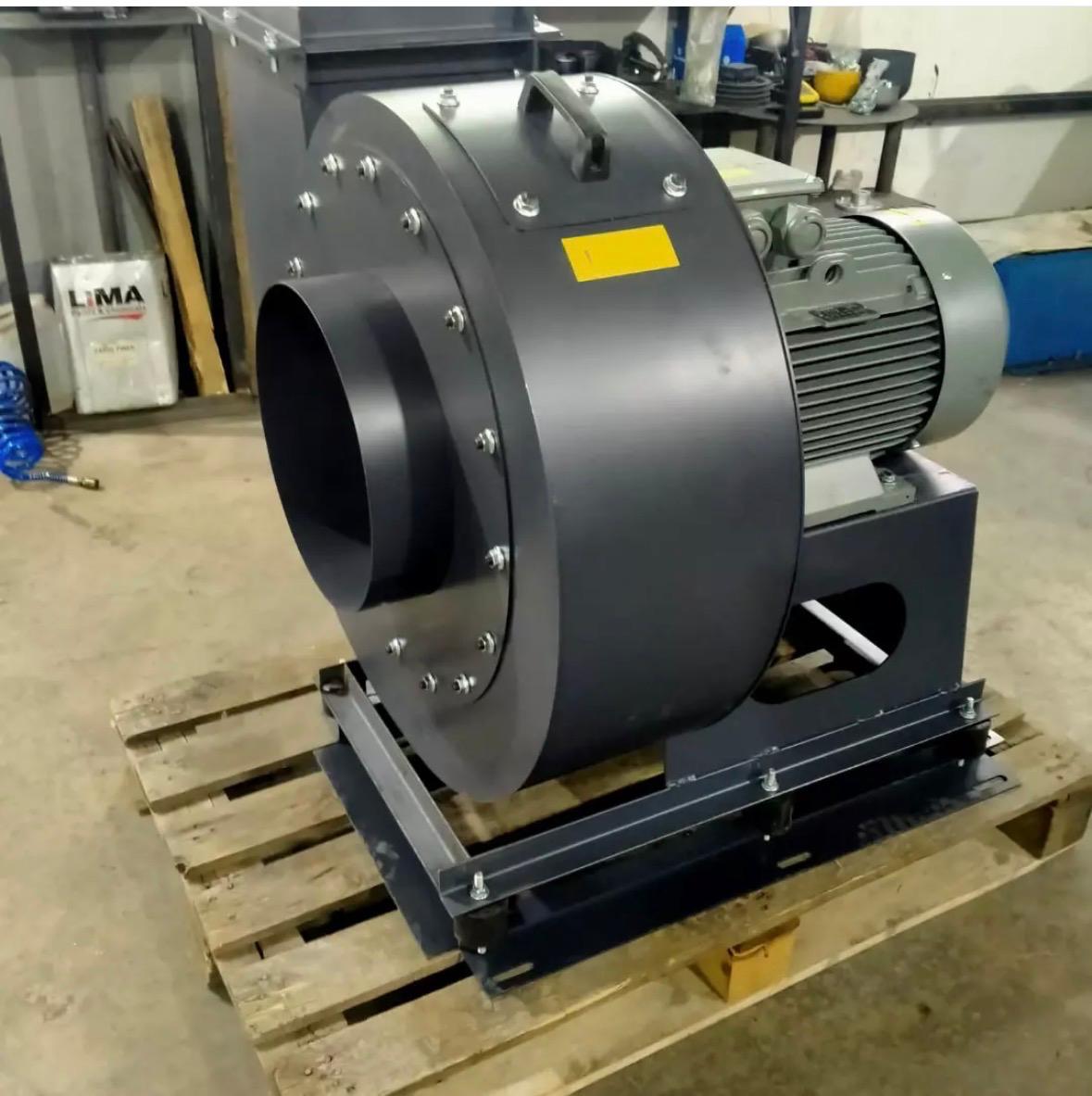

When selecting a centrifugal pump motor, most people look only at flow rate and head; yet cavitation on the pump's suction side is the most insidious problem that prematurely wears out both the pump and the electric motor driving it. When the relationship between NPSH (Net Positive Suction Head), suction lift and the chosen speed (2900 rpm or 1450 rpm) is not set up correctly, even a motor that matches the catalogue perfectly will run with vibration, noise and a short life in the field. In this article we address centrifugal pump motor selection through the lens of NPSH and cavitation; we explain how suction lift determines speed selection, how the difference between 2900 and 1450 rpm changes cavitation risk, and how correct power-speed matching protects the motor from the side effects of cavitation. As HEM Motor, we supply IE3 and IE4 pump motors from 0.25 kW to 355 kW with 1000/1500/3000 rpm speed options, IP55 protection and class F insulation, so we can concretely explain which speed and power suit which suction condition. The goal is not merely to find a motor that turns the pump, but to build a drive that, by respecting the physical limits on the suction side, gives both the pump and the motor a long life.
What Is Cavitation in a Centrifugal Pump?
Cavitation is the formation of vapour bubbles in the liquid when the pressure at the pump suction drops below the liquid's vapour pressure at that temperature, and the sudden collapse of these bubbles when they reach the high-pressure region inside the impeller. These micro-implosions pit the impeller surface, produce vibration and a characteristic gravel-like noise; the result is both reduced pump efficiency and a motor working under an unbalanced load.
How Does Cavitation Affect the Pump and Motor?
Cavitation first erodes the pump impeller and volute, but its effect does not stop there. The irregular collapse of bubbles creates a pulsating load fluctuation in the pump; this fluctuation is transmitted directly to the motor through the shaft. From the motor's point of view, the result is a constantly changing and occasionally spiking load. This fatigues the motor bearings, stresses the shaft oil seal and increases vibration. We covered the effect of vibration on motor life in detail in our article on IE3 motor bearing greasing and lubrication; cavitation is the most common pump-triggered form of these early failure causes.
Symptoms: Noise, Vibration and Efficiency Loss
The best-known symptom of cavitation is a sound from the pump "like it is pumping gravel." This is accompanied by increased vibration, a sudden drop in head and flow, and fluctuation in motor current. In the field these symptoms are often interpreted as a motor fault; yet the root cause is insufficient NPSH on the suction side. Therefore, evaluating suction conditions correctly from the start in motor selection prevents later vibration and bearing problems.
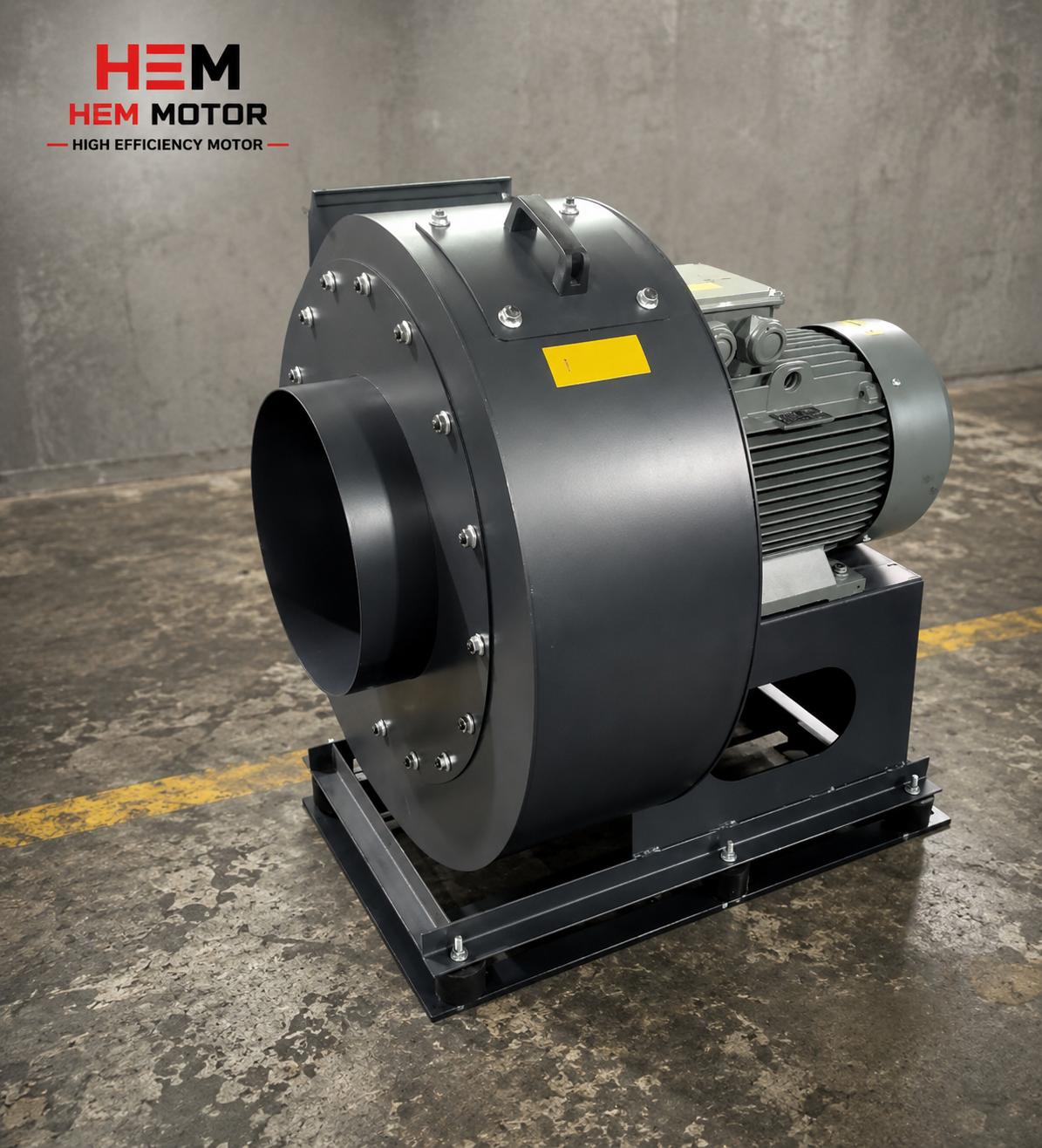
NPSH and Suction Lift
NPSH expresses the net positive suction head required at the pump inlet for cavitation-free operation. Two concepts matter: the NPSHr (required) demanded by the pump and the NPSHa (available) provided by the installation. The fundamental rule of safe operation is that the NPSHa value must be greater than the NPSHr value by a certain safety margin.
The Relationship Between NPSHa and NPSHr
NPSHa is a function of atmospheric pressure, liquid temperature, suction lift and friction losses in the suction line. If the pump draws water from below (negative suction, i.e. the water level is below the pump), NPSHa drops rapidly. NPSHr, on the other hand, depends on the pump's own design and especially its speed. As pump speed rises, NPSHr also rises; and it is exactly this point that directly affects motor speed selection.
How Does Suction Lift Determine Speed Selection?
If the water level is below the pump and the suction lift is large, NPSHa will be low, so a solution requiring low NPSHr is needed. A high-speed (2900 rpm) pump demands higher NPSHr, which increases cavitation risk under difficult suction conditions. In this case a 1450 rpm pump-motor combination runs far more safely with lower NPSHr. In other words, as suction lift grows, choosing a lower-speed motor is one of the most effective measures against cavitation. This logic should be considered together with the flow and head calculation that forms the basis of pump selection; our article on centrifugal pump motor selection: flow, head and power matching complements this side.
Speed Selection: 2900 or 1450?
In centrifugal pumps the two most common speeds are ~2900 rpm obtained with a 2-pole motor and ~1450 rpm obtained with a 4-pole motor (slightly below the theoretical 3000 and 1500 on a 50 Hz grid due to slip). The choice between these two options depends not only on the desired head, but also on suction conditions and cavitation risk.
2900 rpm (2-Pole) Pump Motors
High-speed pumps produce higher head with the same impeller diameter, so they are preferred in compact and high-pressure applications. However, high speed also raises the NPSHr value. If suction conditions are favourable (water level above the pump, short and wide suction line), 2900 rpm is an ideal choice. We covered the effect of pole count on speed and application in general in our article on asynchronous motor pole selection: 2, 4, 6 poles.
1450 rpm (4-Pole) Pump Motors
Low-speed pumps demand lower NPSHr, run more quietly and are more tolerant on the suction side. In difficult suction lifts, with hot fluids or in installations prone to cavitation, 1450 rpm is generally a safer and longer-lasting solution. We compared the effect of the speed-pole relationship on efficiency in our article on efficiency and pole count in asynchronous motors.
Power-Speed Matching and Motor Protection
Correct motor selection requires not only the right speed but also correctly covering the power the pump draws at its operating point at that speed. A centrifugal pump is a variable-torque load; its power varies with the cube of speed. Therefore the motor should be selected according to the highest power point on the pump's operating curve, but without unnecessary oversizing.
Pump Operating Point and Power Margin
A pump operates at a point on its curve according to the system resistance. The motor must cover the power at this point with a safe margin; otherwise, when flow increases (for example when a valve is opened fully), the motor can be overloaded. We detailed the effect of the right power margin on efficiency and cost in our article on at what load should a motor run: efficiency and correct sizing. You can find the logic for calculating the required kW for a pump in our article on motor power calculation: required kW for pump, fan and conveyor.
IP55, Insulation and Continuous Duty (S1)
Pump motors generally work in humid environments and in a continuous-duty (S1) regime. Therefore IP55 protection class and class F insulation are the standard expectation against water splash and continuous heating. The pump motors we supply come with IP55 protection and F insulation, with a cast iron frame; this provides a safe base both in a humid environment and under continuous load. We covered the effect of duty type on selection in our article on electric motor duty type (S1-S6) selection.
The Effect of Cavitation Reflected on the Motor
Cavitation wears the motor indirectly but truly: the pulsating load fatigues the bearings, vibration shortens shaft and bearing life, and current fluctuation increases heating. Therefore preventing cavitation on the suction side is also the most economical way to extend motor life. To consider efficiency across the whole pump system, our article on real efficiency in a pump system is a good complement; and to plan pump motor selection step by step, you can look at our pump motor selection guide.
Field Errors That Lower NPSHa
Cavitation often arises not from the pump or motor itself but from incorrect routing of the suction line. Even if you choose the right motor and speed, a design error on the suction side lowers NPSHa and makes cavitation inevitable. Therefore the suction line should be reviewed before motor selection.
Narrow and Long Suction Line
If the suction pipe diameter is chosen smaller than the pump inlet, or if the line is made longer and more elbowed than necessary, friction losses increase and NPSHa drops. The general rule is to choose the suction pipe at least one size larger than the discharge pipe and to keep the suction line as short, straight and elbow-free as possible. This simple measure can often solve cavitation without switching to a more expensive low-speed motor.
Hot Fluid and Rising Liquid Temperature
As the liquid temperature rises, the vapour pressure increases and NPSHa drops rapidly. In boiler feed water, hot process water or closed-loop heating applications this effect is decisive. With hot fluids it is generally necessary to choose a low-speed (1450 rpm) pump and to provide positive suction head by placing the pump below the liquid source. A hot environment also increases the motor's thermal load, so insulation class and duty type selection become important on the motor side.
Clogged Filter and High Altitude
Clogging of the strainer in the suction line can trigger cavitation by creating a sudden pressure drop, so periodic inspection is important. At high altitude, since atmospheric pressure decreases, NPSHa also drops; the same pump that runs trouble-free at sea level can cavitate at a high-altitude facility. In such cases, speed selection and suction arrangement should be re-evaluated according to altitude.
Correct Supply and Replacement Selection
If an existing pump is experiencing cavitation, the solution is often not to enlarge the motor but to lower the speed or improve the suction arrangement. When replacing a faulty or inadequate pump motor, the new motor's speed and connection dimensions must be chosen to suit the existing system, not just its power.
Direct Matching from the Nameplate
The power, speed, frame size and mounting type on the existing motor's nameplate are the basic source for correctly selecting the replacement motor. A replacement with the wrong speed can completely change the pump's operating point and cavitation behaviour. We covered the approach of selecting a motor from its nameplate in booster and similar pump systems in our article on booster motor replacement: selecting a motor suited to the existing pump from its nameplate.
Fast Supply from Stock
A pump motor failure causes downtime in most facilities, so it is critical that the most-sought powers and speeds can be supplied quickly from stock. We supply IE3 and IE4 pump motors from 0.25 kW to 355 kW with common speed options and, in urgent needs, quickly clarify the correct power-speed combination. We also examined motor selection in circulation and in-line pump applications in our article on in-line and circulation pump motor selection.
- Clarify suction conditions: is the water level above or below the pump, and how many metres is the suction lift?
- Calculate NPSHa and make sure it exceeds the pump's NPSHr by a safety margin.
- For difficult suction lifts, evaluate a low-speed (1450 rpm, 4-pole) solution.
- For favourable suction and high-pressure needs, consider the 2900 rpm (2-pole) option.
- Select the motor for the highest power at the pump operating point, without unnecessary oversizing.
- Request IP55 protection and F insulation for humid environments and continuous duty.
- Do not confuse cavitation symptoms (noise, vibration, current fluctuation) with a motor fault.
Frequently Asked Questions
What is NPSH and why does it affect pump motor selection?
NPSH (Net Positive Suction Head) is the net pressure margin required at the pump inlet for cavitation-free operation. The NPSHr demanded by the pump rises as speed increases. Therefore, if suction conditions are difficult, a lower-speed (and thus lower-NPSHr) pump-motor combination is needed. So NPSH directly determines motor speed (pole) selection and indirectly the power.
At high suction lift, should I choose a 2900 or 1450 rpm motor?
If the suction lift is large and the water level is below the pump, a 1450 rpm (4-pole) solution is generally safer because NPSHa will be low; lower speed demands lower NPSHr and reduces cavitation risk. 2900 rpm should be preferred only if suction conditions are favourable and high head is required.
Does cavitation damage the electric motor?
Yes, indirectly. While cavitation erodes the pump impeller, it also creates a pulsating, fluctuating load. This load is transmitted to the motor through the shaft; it fatigues the bearings, increases vibration and causes heating through current fluctuation. As a result, cavitation also leads to premature wear of the motor. Therefore preventing cavitation on the suction side is part of preserving motor life.
Get a Quote
If you want to select a motor suited to the suction conditions and cavitation risk for your centrifugal pump, share the pump's flow rate, head, suction lift and the position of the water level relative to the pump with us. Our expert team will clarify the correct speed (2900 or 1450 rpm) and power together according to NPSH conditions. You can call us at +90 (532) 345 49 86 or send your request via our contact page. You can review our pump motor range in our pump, fan and blower motors category, and explore our products on the products page and our home page (HEM Motor).