English
 Türkçe

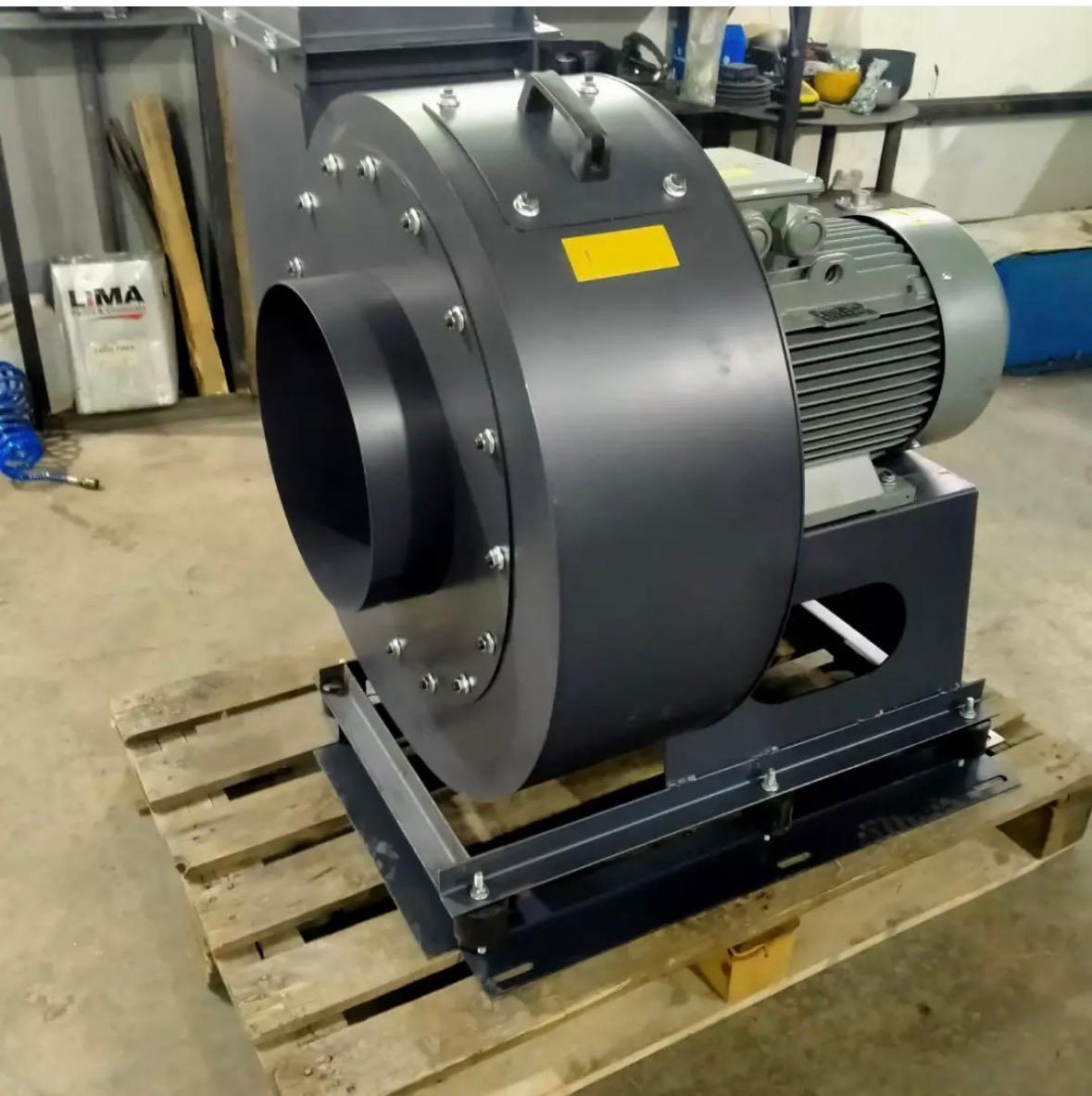

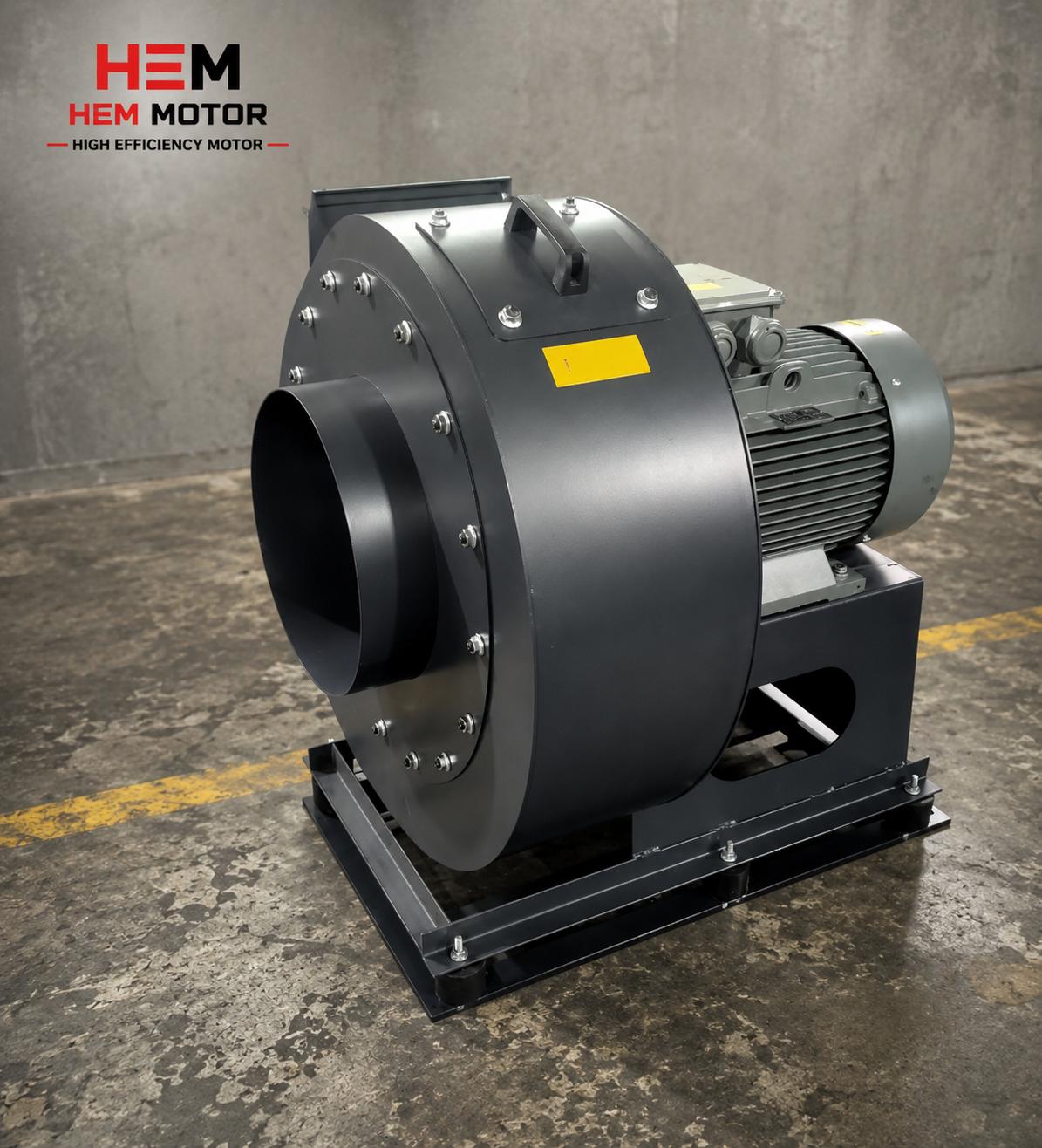
Selecting the motor for a boiler feed water pump is a far more critical engineering decision than choosing a motor for an ordinary centrifugal pump. A boiler feed water pump draws water at 90–105°C from a deaerator or feed tank and, as a multistage high-pressure pump, must push it above the boiler operating pressure. The load the motor faces is a combination of high head, continuous S1 duty, elevated ambient temperature and critical process reliability. A wrongly sized motor can mean overheating, shortened insulation life, cavitation-induced vibration and, in the worst case, a boiler running dry. In this guide, with a buyer-oriented and selection-focused approach, we walk through how to specify your boiler feed water pump motor with the correct power, the right pole count and the right protection class.
This article is a commercial decision guide: which power, which speed, which insulation class and which redundancy architecture suit your plant. Our recommended IE4 electric motors and sector-specific pump series, offered in the 0.55–355 kW range with cast iron bodies and IP55 protection, directly address this application. We covered general pump motor selection logic in our centrifugal pump motor selection: flow and head article; here our focus is specifically the high-pressure, hot feed water application.
Why Does a Boiler Feed Water Pump Need a Special Motor?
A steam boiler demands as much water back as the steam it produces. To push that water above the boiler operating pressure, the feed pump must reach a much higher head (typically 100–250 m and above) than a single-stage centrifugal pump. A single impeller cannot produce this pressure, so feed pumps are multistage and raise the pressure stage by stage with impellers in series. We detailed the motor drive logic for multistage vertical pumps in our multistage vertical pump motor: high pressure article.
The second critical difference is temperature. Feed water is around 90–105°C at the deaerator (feed tank) outlet. This hot water heats the pump casing, the seal area and, indirectly, the boiler room environment in which the motor operates. High ambient temperature reduces the motor cooling capacity and stresses the winding insulation. Therefore insulation class and ambient-related derating come directly into play. We covered how cast iron motors are derated at high ambient temperature in our cast iron high ambient temperature derating selection article.
The third difference is the duty type. A steam boiler usually runs 24/7, and the feed pump is in practice a continuously or very frequently operating device. This means the motor must be sized for S1 continuous duty. A motor designed for intermittent duty (S2, S3) or selected at the limit will not give long life in this application.
Difference From a Boiler Room Circulation Pump
Let us clear up a common confusion. Two types of pump motor come up in a boiler room and they are very different. The first is the hot water circulation pump in the heating circuit: low head, high flow, often in-line type. We covered these in our boiler room circulation pump motors and in-line circulation pump motor selection articles.
The second, the subject of this article, is the steam boiler feed water pump: high pressure, relatively low/medium flow, multistage pump, hot feed water. A circulation pump transports heat; a feed pump pushes pressurized water into the boiler. From the motor standpoint, this difference shows up in the fact that circulation often uses a 4-pole medium-speed motor, while feed water usually prefers a 2-pole high-speed motor for high pressure. Not confusing the two is the first step toward the right pump-motor match.
The Right Pole Count and Speed: Why 2 Poles?
In a centrifugal pump, the head produced by one stage increases with the square of impeller diameter and rotational speed. When high pressure is required, raising the speed is a more efficient and compact solution than enlarging the impeller. That is why boiler feed water pumps typically run with 2-pole motors, i.e. 3000 rpm synchronous speed (2900–2960 rpm under load). Higher speed produces the same pressure with fewer stages.
We detailed power selection for 2-pole 3000 rpm pump and fan applications in our IE4 2-pole 3000 rpm pump fan power article. On the catalog side, a 2-pole motor runs at about 2960 rpm under load, a 4-pole at 1460 rpm and a 6-pole at 960 rpm. The 2-pole choice is almost standard for feed water pumps; however, in a very high-flow or NPSH-constrained application, the manufacturer may recommend a 4-pole low-speed pump-motor combination. The speed choice must be evaluated together with the pump curve.
Motor Power Calculation: Step by Step
The power of a boiler feed water pump motor is calculated from the hydraulic power of the pump and the efficiencies. The practical engineering formula is:
P (kW) = (Q × H × ρ) / (367 × ηpump)
Here Q is the flow (m³/h), H is the total head (m), ρ is the water density (about 1.0 kg/L; slightly lower for hot water) and ηpump is the pump efficiency. The constant 367 carries the unit conversion. In its more fundamental form, the hydraulic power comes from Phyd = (ρ × g × Q × H) / (3600 × 1000). We showed this calculation adapted to general pump-fan-conveyor applications with examples in our motor power calculation: pump, fan, conveyor (kW) article.
Example: assume 20 m³/h feed flow, 180 m total head and 70% pump efficiency. P = (20 × 180 × 1.0) / (367 × 0.70) = 3600 / 256.9 ≈ 14.0 kW shaft power including pump losses. Adding a safety margin and accounting for motor efficiency, the next standard catalog step, a 15 kW IE4 motor, is selected. Leaving a typical 10–20% safety margin over the shaft power protects against the operating point shifting to the right of the pump curve and against changes in specific gravity.
Pump efficiency alone is not enough; the real system efficiency is the product of pump, motor and pipe losses. We explained this holistic view in our pump system efficiency: motor, pump, pipe losses article. Correct power selection requires accurately identifying the operating point (flow-head) on the pump curve.
NPSH, Hot Water and Cavitation: The Suction Side Matters
The most often overlooked yet most critical issue in a boiler feed water pump is the NPSH (net positive suction head) balance. Because the water is at 90–105°C, it is very close to its vapor pressure; any drop in suction pressure causes the water to boil at the pump inlet, that is, cavitation. Cavitation means noise, vibration, impeller erosion and efficiency loss, and over time it stresses both the pump and the motor.
For this reason the feed tank (deaerator) is placed sufficiently above the pump; the available NPSH (NPSHa) is always kept a safe margin above the required NPSH (NPSHr). This directly concerns motor selection: cavitating operation creates unbalanced load and vibration on the motor and shortens bearing life. With correct NPSH, the motor also runs at its ideal point under steady load. In high-pressure multistage pump applications we recommend evaluating the suction side together with our multistage vertical pump motor content.
Ambient Temperature and Derating: Protecting the Motor
Standard electric motors are usually rated for 40°C ambient temperature and 1000 m altitude. A boiler room, however, is a hot environment; 45–55°C ambient is common in summer. As ambient rises above 40°C, the power the motor can deliver decreases (derating). For example, at 50°C ambient about 5–6% and at 55°C about 8–10% derating is needed; these figures must be confirmed against the manufacturer curve.
There are two solutions. The first is to select the motor one frame larger to leave the derating margin upfront. The second is to choose insulation with higher temperature capability and a limited temperature-rise class. Our catalog motors come with F class insulation; used to a B class temperature rise, this provides a valuable thermal margin. We covered insulation class, temperature rise and the 80K selection logic in detail in our asynchronous motor temperature rise class (80K) selection article. At high ambient temperature, the thermal mass and robustness of the cast iron body are also an advantage.
Protection Class, Body and Mechanical Construction
A boiler room is humid, hot and at times dusty. Therefore IP55 protection is recommended as standard for a boiler feed water pump motor; IP65/IP66 can be provided on request for harsher conditions. On the body side, cast iron is preferred: a cast iron body is superior to aluminum in mechanical strength, vibration damping and dimensional stability at high temperature. Against hydraulic shocks and continuous load in a high-pressure pump, a cast iron bodied motor is safer.
The mounting type is determined by the pump construction. Horizontal multistage pumps usually use foot (B3) or foot+flange (B35) mounting; vertical pumps use large-flange (B5) mounting. The frame range is IEC 56–355L, and a Ø100 mm shaft is common on the 355 frame; these large frames come into play in high-power feed pumps. On the efficiency side, under Ecodesign 2019/1781 at least IE3 is required for 0.75–1000 kW DOL three-phase motors, and at least IE4 since July 2023 in the 75–200 kW band; so for new plants the IE4 threshold in pumps, fans and compressors is a directly relevant topic.
Flow Control and Energy Savings With a VFD
In most plants, boiler feed water is managed with modulating feed: the feed flow is continuously adjusted to the boiler water level. Doing this with a throttle valve is a waste of energy, because the pump runs at full flow and the excess is throttled. Instead, adjusting the flow by changing the motor speed with a variable frequency drive (VFD) yields large energy savings thanks to the affinity laws: flow varies directly with speed, head with the square of speed and power with the cube of speed. So reducing speed by 20% can theoretically nearly halve the power.
We showed this affinity logic and the real savings calculation with examples in our VFD pump-fan energy savings: affinity law article. In a VFD application it is important to select a drive-compatible, high-efficiency motor (preferably an IE4 2-pole motor). One caution: although NPSHr decreases at low speed under VFD, the head must not drop below the minimum required to overcome boiler pressure; otherwise the boiler cannot be fed. The modulation range must be set together with the pump curve.
Redundancy and Critical Spares: Keeping the Plant Running
The boiler feed pump is one of the most critical pieces of equipment that can shut a plant down. If the pump or motor fails and there is no standby, the boiler runs dry and the safety systems trip the boiler. That is why a redundancy architecture is standard in feed pump applications: 2x100% (one running, one standby) or, in large plants, a 3x50% configuration. The standby pump starts automatically when the running one fails.
On the motor side, critical spares management is essential: keeping a spare motor of the same power and frame, or at least critical spare parts (bearings, mechanical seal), enables commissioning within minutes rather than hours in case of failure. Choosing pump, fan and blower motors with standard IEC frame and mounting dimensions greatly eases spare supply and replacement. Supply continuity is the second most important purchasing criterion after high-pressure performance.
Planning Together With Other Boiler Room Motors
A steam boiler plant is not just the feed pump. On the flue gas side, ID fan (induced draft) motors are exposed to high temperature; we covered their selection in our flue gas ID fan aspirator motor selection: high temperature article. On the fuel and chemical dosing side there may be positive displacement pumps; we covered their constant-torque characteristic in our positive displacement screw/lobe pump motor selection content. If a separate fire pump is needed for fire safety, our fire pump motor when buying: 10 questions article will make your job easier.
Planning all these motors with the same efficiency and body philosophy, from a single supplier, with a standard spares logic, lowers both initial investment and operating cost. You can evaluate all your plant pump and fan needs together with the HEM Motor product range and choose the suitable series from our electric motors catalog.
Frequently Asked Questions
Should I choose a 2-pole or 4-pole motor for a boiler feed water pump?
Most steam boiler feed pumps require high pressure, and a 2-pole motor (3000 rpm, 2900–2960 rpm under load) provides this most compactly. The higher speed produces the same pressure with fewer pump stages. However, in very high-flow or NPSH-constrained applications the manufacturer may recommend a 4-pole low-speed combination. The decision must always be made together with the pump curve and the NPSH balance.
Does hot feed water affect the motor power?
Even though the water is at 90–105°C, the motor is not in direct contact with the water; what really affects the motor is the ambient temperature of the boiler room. As the ambient exceeds 40°C the motor is derated; for example, about 5–6% derating is needed at 50°C. To cover this, selecting the motor one frame larger or using F class insulation to a B class temperature rise is the right approach.
Is a single pump enough, or is a spare motor essential?
The boiler feed pump is critical equipment; its failure can leave the boiler dry and shut it down. That is why 2x100% (one standby) or, in large plants, 3x50% redundancy is standard. In addition, keeping a critical spare motor of the same power and frame, or critical spare parts, is strongly recommended for fast recommissioning after a failure.
Get a Quote
Let us define together the right power, speed and insulation class for your boiler feed water pump with a cast iron, IP55 protected IE4 motor. Reach us with your pump curve, your flow-head values and your boiler room ambient temperature, and we will propose the right power and redundancy architecture. Phone: +90 (532) 345 49 86. For a detailed quote you can write to us via our contact page.
Purchasing and Selection Checklist
- Has the operating point (flow Q [m³/h] and total head H [m]) been determined from the pump curve?
- Has the power been calculated with P = (Q × H × ρ) / (367 × η) and a 10–20% safety margin added?
- Have the pole count and speed (usually 2-pole, 2900–2960 rpm) been confirmed against the pump pressure?
- Has the boiler room ambient temperature been measured and the derating margin reflected in the motor?
- Are insulation class F and protection class IP55 (IP65/IP66 if needed) provided?
- Is the body material cast iron and is the mounting type (B3/B5/B35) suitable for the pump construction?
- Is NPSHa > NPSHr ensured with a safety margin; has the cavitation risk been eliminated?
- Has it been sized for S1 continuous duty?
- Has VFD flow control and affinity-law energy saving been evaluated?
- Have the redundancy architecture (2x100% or 3x50%) and critical spare motor/part stock been planned?
- Does the Ecodesign efficiency class (IE3/IE4) meet the requirement for the relevant power band?