English
 Türkçe

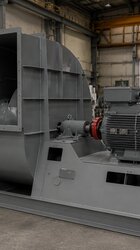
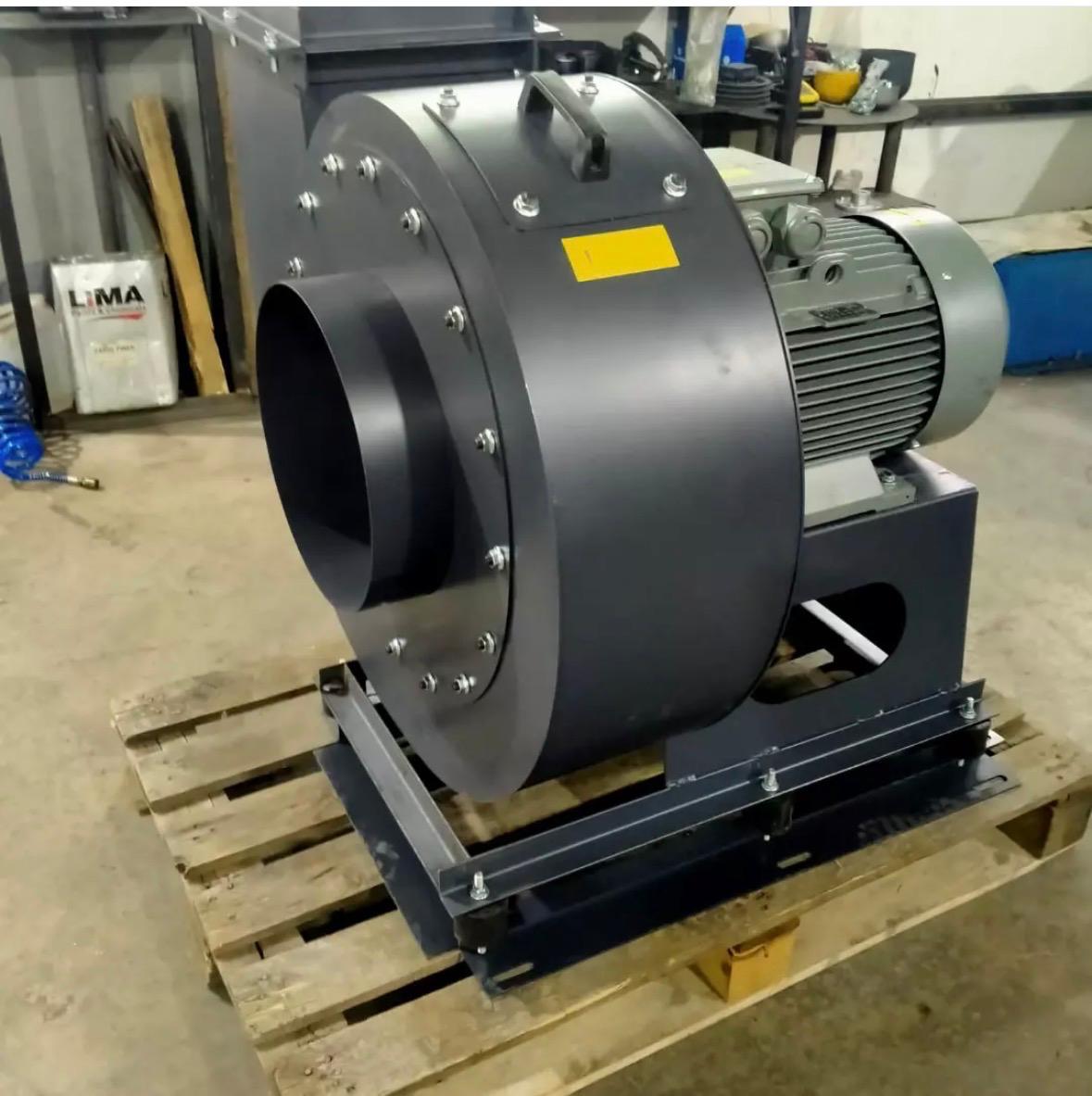

In ventilation projects, duct-type (in-line) axial fans are practical and efficient solutions that provide flow directly inside the duct by being placed in the middle of the air channel. However, the most common mistake in selecting the motor for these fans is looking only at flow (m³/h) and ignoring the pressure loss created by the duct run. In reality a fan must provide flow and pressure together, because ducts, filters, bends and grilles resist the air. In this article we cover in detail how to assess flow and pressure together in duct-type axial fan motor selection, how to find the real operating point, and how to determine the F300/F400 variants and a suitable IP protection class for hot or smoky environments.
A wrongly selected duct fan, even if it looks sufficient on paper, cannot deliver the expected airflow on site. This is because the maximum flow value in the fan catalogue is measured at zero pressure (free blowing); whereas in a real duct the fan always works against a pressure. Understanding this difference is the key to selecting a motor of the right power and speed.
How Does a Duct-Type Axial Fan Work?
An axial fan pushes air in a direction parallel to the shaft axis; that is, air passes through the fan along a straight path. This feature makes it very suitable for serial mounting in a duct run. A duct-type (in-line) axial fan houses the impeller and the motor inside a cylindrical body and is connected directly between two duct sections. This structure, with its small footprint and ease of installation, is widely used in car park, kitchen exhaust, workshop and general ventilation applications.
Axial fans excel at providing high flow at relatively low pressure. That is, in long and resistive duct runs the flow of an axial fan drops quickly as pressure rises. Therefore, when selecting the fan, the question "how many m³/h do I want?" alone is not enough; the question "against what pressure must I provide this flow?" must also be answered.
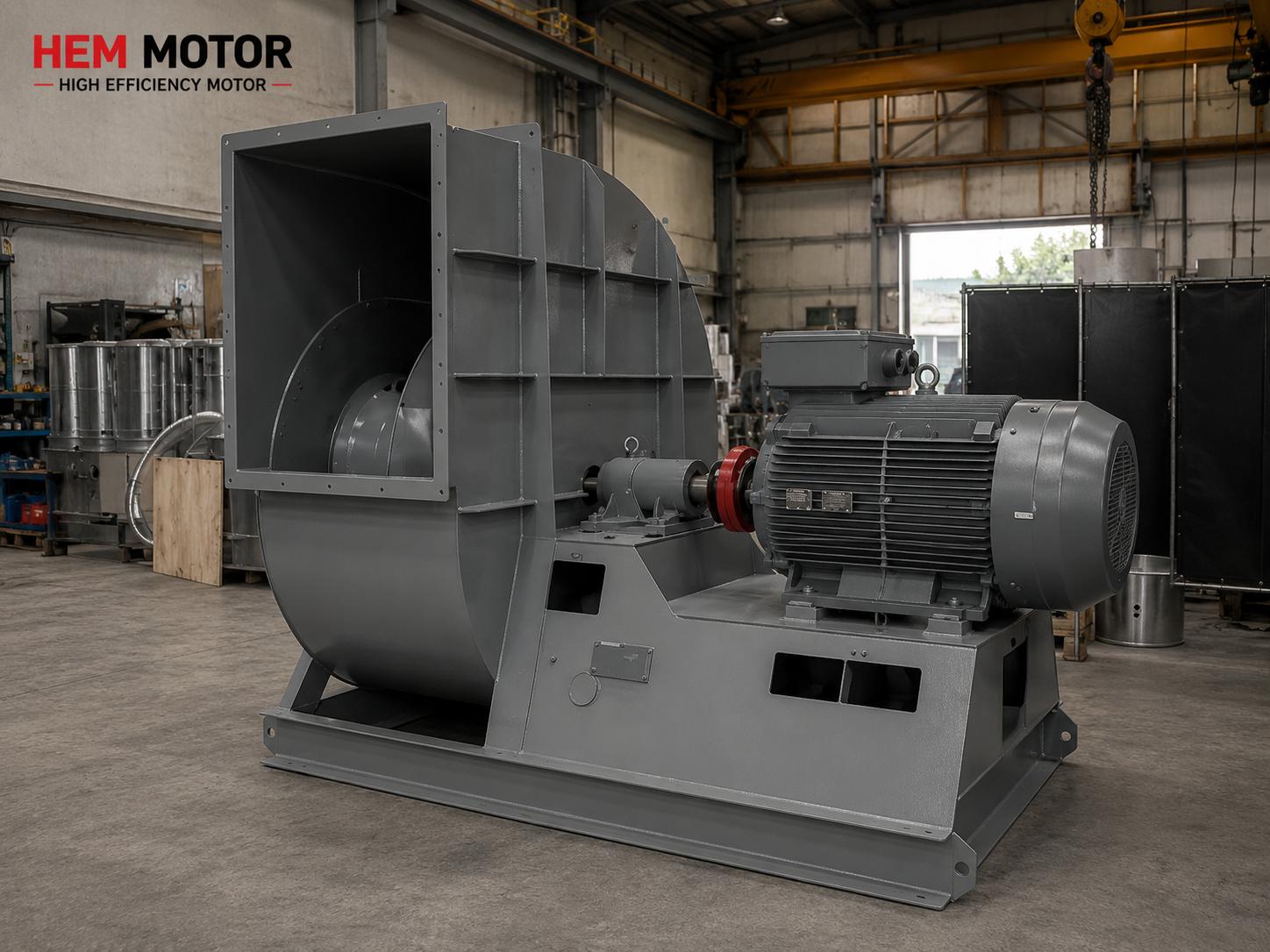
The Most Common Mistake: Ignoring Pressure Loss
As air flows in a ventilation duct, the pressure drops due to friction. This drop is called the system pressure loss (static pressure) and arises from the following elements:
- Duct length and internal surface friction
- Bends, contractions and expansions
- Filters and silencers
- Grilles, dampers and louvres
- Air inlet and outlet losses
If the fan is selected based only on flow and this pressure loss is not taken into account, on site the fan delivers much lower flow at its real operating point. The result is insufficient ventilation, failure to reach the targeted air change rate, and energy waste. That is why correct selection requires handling flow and pressure together. Especially in long duct runs this pressure loss is too high to be underestimated and is the main factor determining the fan's real performance.
Finding the Real Operating Point
The correct motor power and speed are determined by the fan's real operating point. This point is the intersection of two curves:
- Fan curve: The characteristic from the manufacturer showing what flow the fan provides at what pressure.
- System curve: The curve calculated from the project showing the pressure loss the duct run creates against flow.
The point where these two curves intersect is the flow and pressure value at which the fan will actually operate in that system. The motor must be selected according to the power demand at this operating point. If the operating point is in the fan's efficient region, both the target flow is achieved and operation is energy-efficient. This approach forms the basis of the fan motor supply in HVAC projects process and guarantees correct sizing.
Speed (Pole Number) Selection
It is possible to provide the same flow with fans at different speeds, but the results differ. High-speed (for example 2-pole) fans produce higher pressure but are noisier; low-speed (4- or 6-pole) fans run quieter but provide lower pressure. If acoustic comfort is important, low speed is preferred; if high pressure is required, high speed is chosen. The correct pole number is determined together with the operating point and the noise target. For energy efficiency it is also important that the operating point falls in the most efficient region of the fan curve.
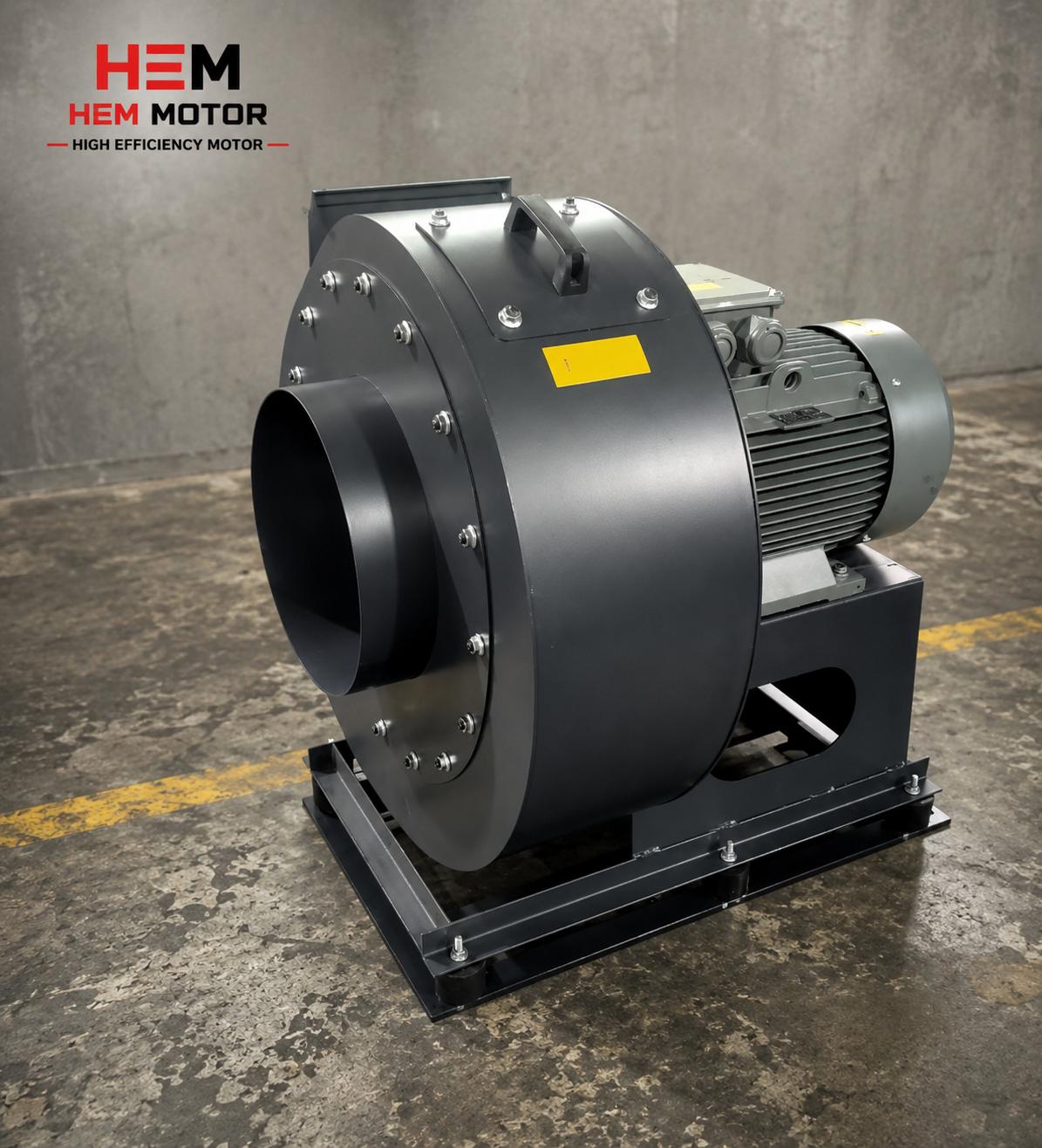
Hot and Smoky Environments: F300 / F400 Variants
Duct-type axial fans are used not only in normal ventilation but also in smoke exhaust during a fire. For this duty the fan motor must be specially certified to withstand operation at high temperature for a defined time. These variants are named as follows:
- F200: Endurance at 200°C for a defined time.
- F300: Typically a 2-hour operating guarantee at 300°C.
- F400: Typically a 2-hour operating guarantee at 400°C.
In a fire scenario, evacuating smoke before it suffocates people is vital; therefore smoke exhaust fans have different material, winding insulation and connection standards from normal fans. If smoke exhaust is required in a car park, tunnel or enclosed-space project, the fan must definitely be selected in the F300 or F400 class. For the details of this subject, we recommend reviewing the smoke exhaust fan motor supply guide.
IP Protection Class and Environmental Conditions
The environment in which the fan motor will operate determines the required IP protection class. Dusty workshops, humid areas, outdoor installations or locations exposed to water splash require higher IP protection. The wrong IP class leads to dust or moisture ingress into the motor and therefore to early failure. To determine the right class, the dust, moisture and water exposure of the environment must be evaluated; the topic of electric motor IP protection class selection is critical in this respect.
Points to Watch in Selection, in Summary
- Calculate the target flow and the real system pressure together.
- Find the operating point from the intersection of the fan and system curves.
- Choose the speed/pole number according to the noise and pressure target.
- If there is smoke exhaust, choose an F300/F400 certified variant.
- Determine the IP protection class suitable for the environment.
Supplying the Right Fan Motor with Stock and Engineering
Duct-type axial fan motor selection requires an engineering approach that evaluates flow and pressure together and establishes the operating point correctly. With our broad stock and technical know-how in normal ventilation fans, high-pressure in-line fans and F300/F400 certified smoke exhaust fan motors, we can determine the most suitable solution for your project together. Share your duct run's flow and pressure values, environmental conditions and smoke exhaust requirement; we will recommend a fan motor of the right power, speed and protection class for you. You can explore our product range and more technical content on our homepage.
Calculating System Pressure Correctly
The basis of correct fan selection is to realistically calculate the total pressure loss the duct run will create. This calculation is made by adding up the resistance of every component along the duct route. Straight duct sections create a friction loss proportional to length and air velocity; bends, T-connections and diameter changes add local losses. The increase in filter resistance as filters become dirty must also be considered; a calculation based on a clean filter may become insufficient over time.
For this reason, experienced engineers add a certain safety margin to the calculated pressure loss. Adding an excessive margin makes the fan oversized and noisy; an insufficient margin leads to a drop in flow over time. The right balance is established through detailed analysis of the duct run. Keeping the air velocity within reasonable limits is also important; very high air velocity increases both noise and pressure loss.
It is possible to carry the same flow with different duct diameters in a duct system, but a small-diameter duct means higher air velocity and higher pressure loss. Duct diameter design and fan selection must therefore be handled together. A well-designed duct run can provide the same ventilation performance with a smaller and more efficient fan, which lowers both the initial investment and the operating cost.
Noise and Vibration Management
The most frequently ignored dimension of comfort in ventilation systems is noise. Duct-type axial fans, when not selected correctly, can create an annoying hum. The main sources of noise are the impeller blade-passing frequency, the motor speed and the air turbulence within the duct. Selecting the fan at its efficient operating point also reduces noise, because when the fan moves outside its efficiency curve, turbulence and therefore sound increase.
To bring noise under control, silencers can be added to the fan inlet and outlet, and the fan can be connected to the duct with flexible connections to prevent vibration from being transmitted to the structure. Choosing a low-speed fan is also an effective method for acoustic comfort. Especially in environments where quietness matters, such as offices, hotels and hospitals, the noise criterion should be at least as decisive in fan selection as flow and pressure. That is why correct fan motor selection is not merely a technical calculation but a holistic design decision that also considers user comfort.
Frequently Asked Questions
Why is selecting a fan based only on flow wrong?
Because the maximum flow value in the catalogue is measured at zero pressure (free blowing), whereas in a real duct the fan always works against a pressure. If the pressure loss created by ducts, filters and grilles is not taken into account, on site the fan delivers much lower flow than expected. Correct selection requires evaluating flow and system pressure together and finding the fan's real operating point.
What is the difference between F300 and F400, and which should I choose?
An F300 fan motor typically guarantees operation at 300°C, and F400 at 400°C, for a defined time (usually 2 hours). Which one is needed depends on the project's fire scenario and the requirements of the relevant regulation/standard. In car parks, tunnels and high-risk enclosed spaces, F400 is usually demanded. To determine the right class, it is enough to share your project's fire evacuation requirement.
Is providing the same flow with a low-speed fan advantageous?
It is usually advantageous acoustically. Low-speed (4- or 6-pole) fans run quieter and can provide the same flow with less noise; however, the pressure they produce is lower. In resistive duct runs requiring high pressure, high speed may be needed. The selection should be made by evaluating the operating point and the noise target together.