English
 Türkçe

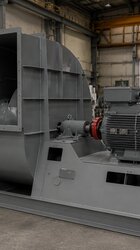
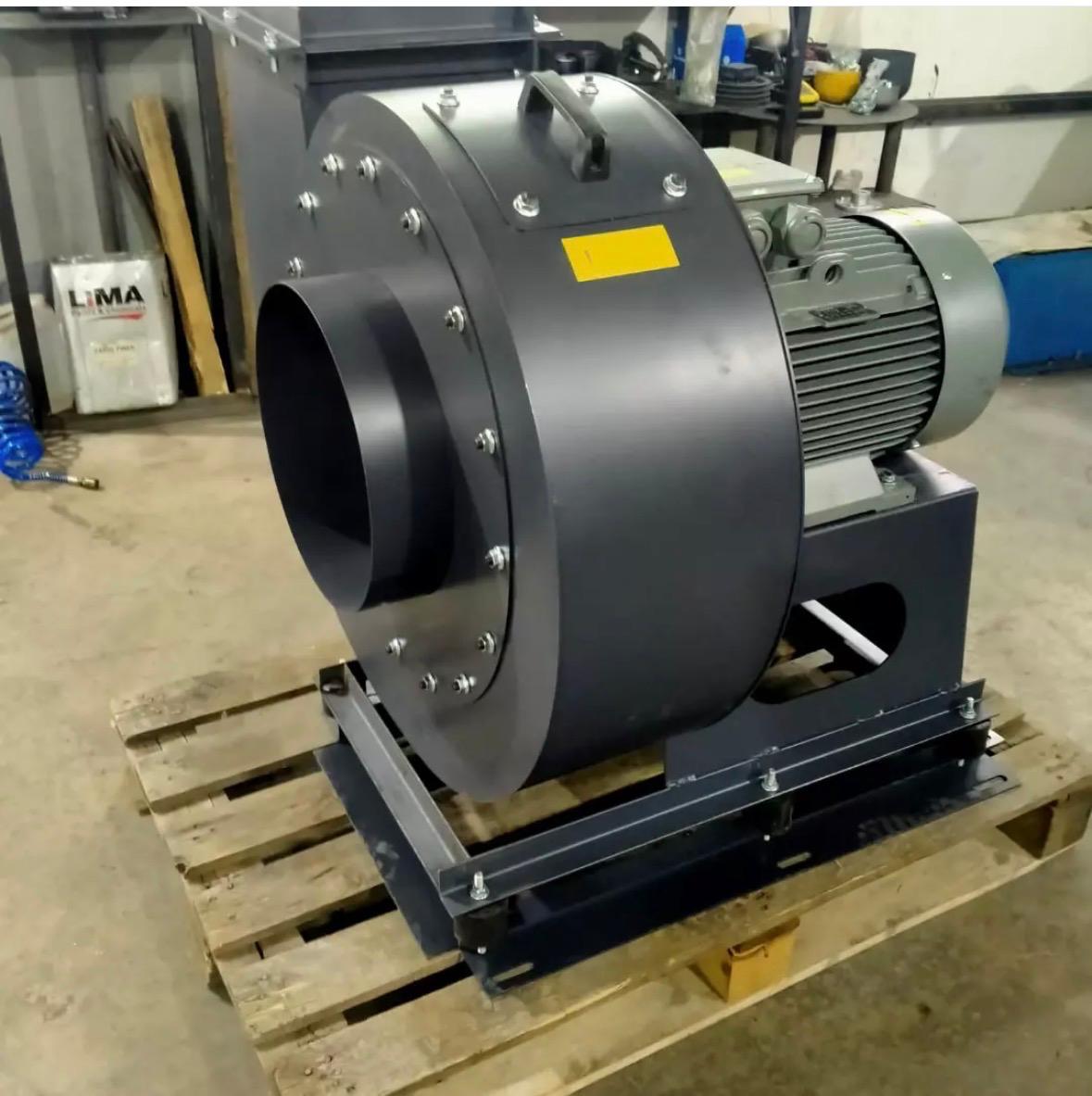

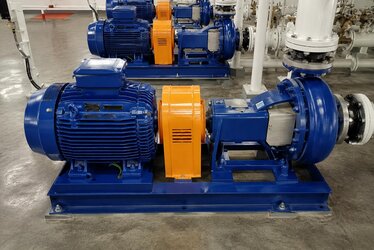
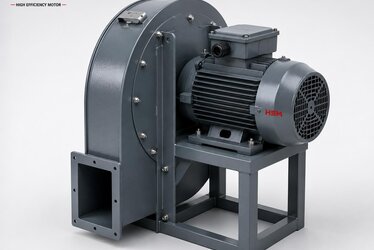
In boiler, furnace, dryer and industrial combustion plants, the ID fan (induced draft fan) that draws the flue gas from the environment is the backbone of the plant's continuous and safe operation. This fan expels the hot, dusty flue gas formed by combustion out through the chimney, providing the necessary negative pressure (draft) inside the boiler. The drive motor of the ID fan works in one of the harshest thermal conditions in the industry: high ambient and gas temperature, flue dust, continuous (S1) and often high-power operation all occur together. High temperature reduces the motor's power capacity (derating), dust weakens cooling, and continuous operation increases thermal fatigue. A poorly chosen ID fan motor will either overheat and burn out prematurely or run constantly at the limit because derating was not calculated. In this guide we cover ID fan motor selection in detail: high-temperature derating, F/H insulation class, dust protection (IP55/IP65), continuous duty (S1), large kW selection, starting and cooling.
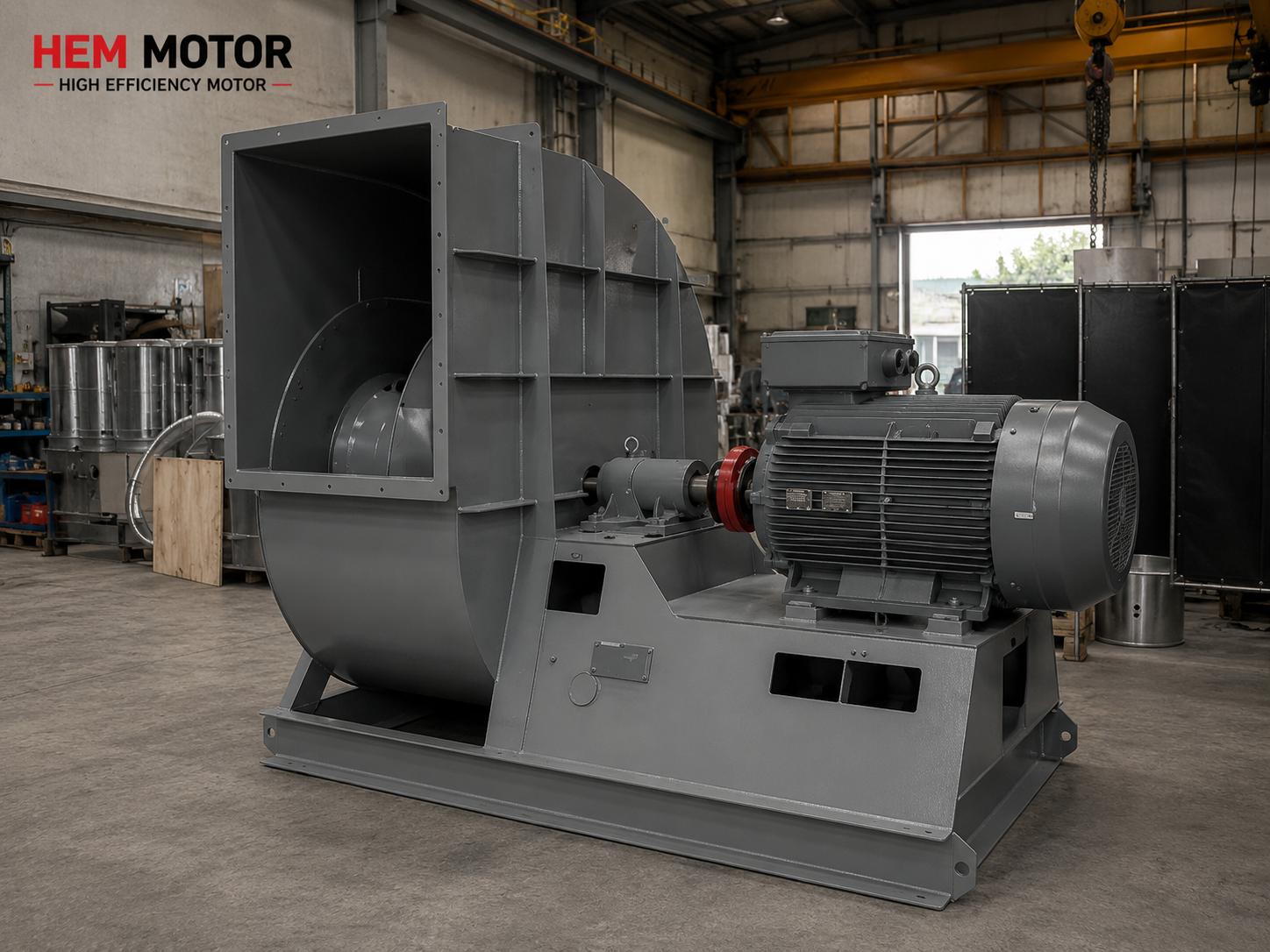
What Is an ID Fan and Why Is Its Motor Strained?
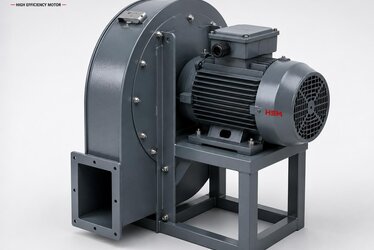
An ID fan (induced draft fan) is a large centrifugal fan placed on the chimney side of the boiler that draws in the flue gas and expels it. In this position the fan is under the direct effect of the hot gas flow, and the motor driving the fan is also close to this hot environment. The main challenges the motor faces are: difficulty cooling due to high ambient temperature, flue dust coating the cooling fins, continuous full-load operation and strain when starting the high-inertia fan impeller. We covered motor selection in aspirator and dust collection fans in our aspirator and dust collection fan motor selection article, and power selection by fan type in our centrifugal and axial fan motor selection article.
High Temperature and Power Derating
Electric motors are standardly designed to deliver their rated power at 40°C ambient temperature. The ID fan motor often runs at an ambient temperature above this, because the boiler room and the chimney surroundings are hot. As the ambient temperature exceeds 40°C, the power the motor can safely deliver decreases; this is called derating. For example, at 50°C the power a motor can deliver falls below its rated value; this requires either selecting a motor at a higher power or running the motor at a lower load. Performing this calculation correctly directly determines the life of the ID fan motor. We explained the derating calculation step by step in our high altitude and hot environment derating and high ambient temperature derating articles.
F and H Insulation Class
In an ID fan motor running at high temperature, the insulation class is critically important. Class F (155°C) insulation is standard; however, in very hot environments Class H (180°C) insulation should be preferred, because Class H offers a higher temperature reserve. The ideal approach is to leave a wide safety margin below the insulation by selecting a low temperature rise class together with F/H insulation. You can find the insulation class in our insulation class in hot and dusty environments article and the effect of temperature rise on life in our temperature rise class (80K) article.
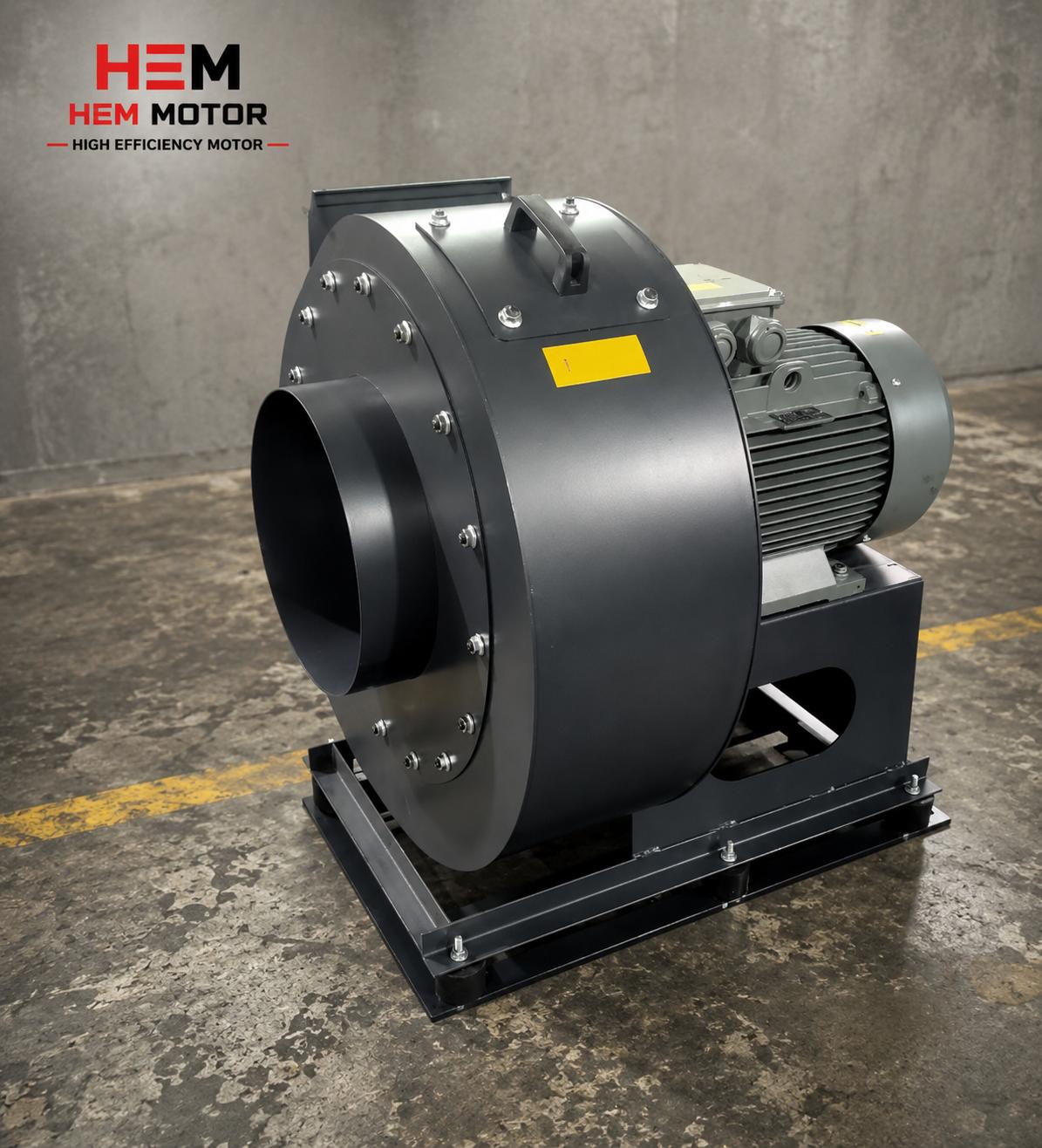
Dust and IP Protection: IP55, IP65
In a flue gas environment, ash, soot and dust particles suspended in the air stick to the motor surface and coat the cooling fins, making heat dissipation difficult. For this reason at least IP55 protection is standard in an ID fan motor; in applications with very fine and aggressive dust, IP65 is recommended. Regular cleaning of the fins is the most important maintenance step for extending motor life, regardless of the chosen IP class. We covered IP class selection in our IP protection class selection article and dirt build-up on cooling fins in our cooling fins and dirt build-up article. We addressed IP for cooling tower and outdoor fans in our cooling tower and chiller fan motors article.
Continuous Duty (S1) and Cooling Method
The ID fan rotates uninterrupted as long as the plant runs; that is, the duty type is S1 (continuous) and often close to full load. In continuous operation it is essential that the heat produced by the motor is dissipated effectively. Standard motors use IC411 cooling, where the fan on the motor's own shaft end blows air; however, in very high-temperature or low-speed applications an external fan independent of the motor speed (IC416, forced cooling with a separate motor) may be required. We explained cooling methods in detail in our cooling methods (IC411 and IC416) article and duty type in our duty type (S1-S6) selection article. To monitor winding temperature, our temperature monitoring with PT100 and PTC article is important.
Large Power and Speed Selection
ID fans generally require large power; as boiler capacity grows, the flue gas flow rate and therefore the fan power increase. In the HEM Motor range, IE3 and IE4 cast iron motors from 0.55 kW up to 355 kW are used for these applications. In fan motors the speed selection is made according to the fan's operating point; most ID fans run at 1500 rpm (4-pole) or 1000 rpm (6-pole). You can find large-power supply planning in our high-power motor supply above 90 kW and 160 and 200 kW high-power motor selection articles, and the fan motor power calculation in our motor power calculation article. We covered the savings an efficient motor provides in a fan in our high-efficiency motor + frequency drive article.
Fan Inertia Load and Starting
Large ID fan impellers have high inertia, which lengthens the start-up time and heats the motor winding. For this reason star-delta or a soft starter is preferred at large powers, reducing starting current and mechanical shock. We covered starting methods in our star-delta vs soft starter and starting current in our starting current (LRA) articles. Speed control with a frequency drive both softens starting and provides large energy savings in the fan; our VFD savings with the affinity law article explains this.
Related Sector and Product Pages
ID fans are found in all plants operating at high temperature, such as cement, lime, foundry, asphalt and glass. Our cement factory electric motors, lime kiln and calcination motors, asphalt plant motors, glass and ceramics factory motors and rolling mill and foundry motors articles are directly relevant. For the waste incineration side, see our waste incineration and compost plant motors article, and for our full product range visit the HEM Motor home page.
Frequently Asked Questions
Why is derating so important in an ID fan motor?
Electric motors are designed to deliver their rated power at 40°C ambient temperature. An ID fan motor often runs at a temperature above this around the boiler room and chimney. As the ambient temperature rises, the power the motor can safely deliver decreases; if this derating is not calculated, the motor runs constantly at the limit, overheats and burns out prematurely. The correct choice is to select a motor at a higher power or a higher insulation class according to the ambient temperature.
Should I choose Class F or Class H insulation?
Class F (155°C) insulation is sufficient and standard for many ID fan applications. However, in applications with very high ambient and gas temperatures, Class H (180°C) insulation should be preferred, because Class H offers a wider temperature reserve and protects the motor against overheating. The most robust approach is to increase the safety margin by selecting a low temperature rise class together with F/H insulation.
Which cooling is required in a continuously running ID fan motor?
For most ID fan motors, the standard IC411 cooling, where the fan at the shaft end blows air, is sufficient. However, in very high-temperature or low-speed applications, forced cooling with an external fan independent of the motor speed (IC416) may be required, because at low speed the motor's own fan cannot blow enough air. Which cooling is required is determined according to ambient temperature, speed and duty type.
Get a Quote
Let us select together the right derating calculation, F/H insulation, IP protection and high-power IE3/IE4 cast iron motor for your flue gas ID fan. Share your ambient temperature, fan flow rate, required power and current motor nameplate; we will determine a suitable motor and delivery time. Reach us now through our contact page or call us at +90 (532) 345 49 86. For an accurate quote you can review our information needed when requesting a quote article.
Purchasing and Selection Checklist
- Have the ambient and gas temperature been determined and the derating calculation made?
- Has the required power (kW) been calculated according to fan flow rate and pressure?
- Has Class F or H insulation been selected according to ambient temperature?
- Has IP55/IP65 protection been selected for the dusty environment?
- Has duty type S1 (continuous) been verified?
- Has the cooling method (IC411/IC416) been determined according to temperature and speed?
- Has a starting method suited to fan inertia (star-delta, soft starter) been selected?
- Has the speed/pole (4 or 6 pole) been selected according to the fan's operating point?
- Has periodic cleaning of the cooling fins been planned?
- Have PT100/PTC temperature monitoring and thermal protection been added?