English
 Türkçe

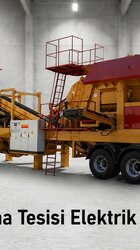
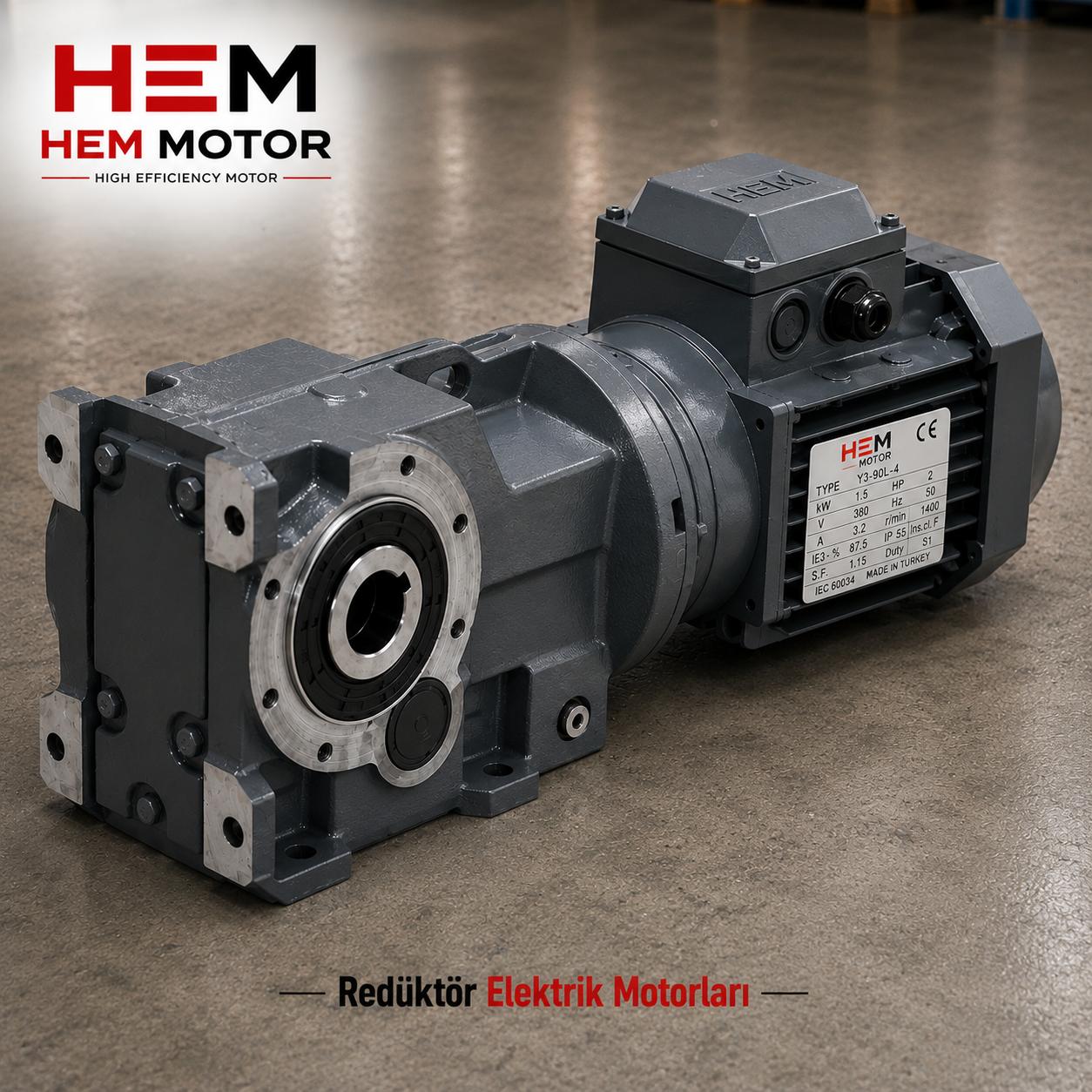

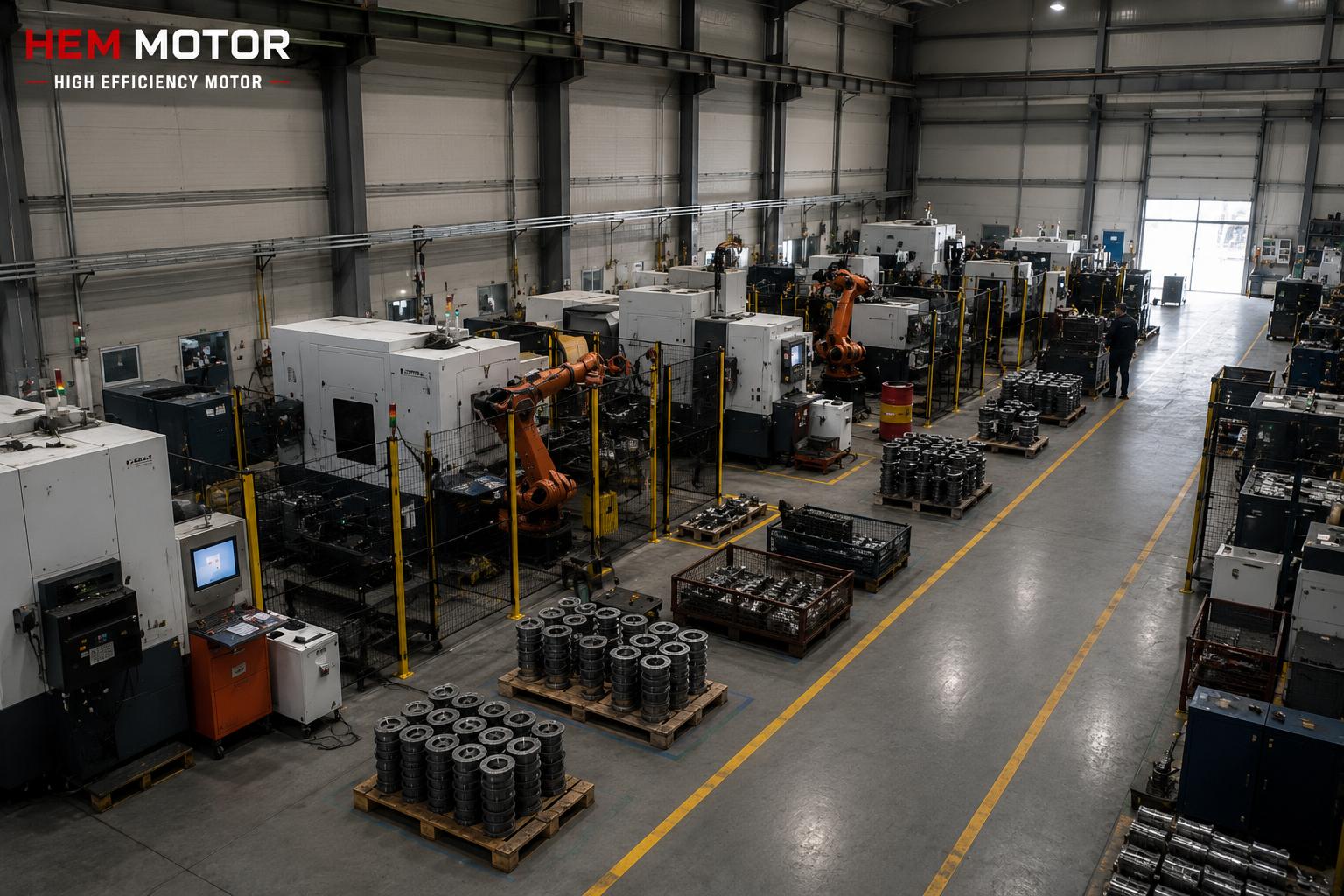
An electric motor failure in an asphalt plant is never limited to the machine that stops; it means the hot mix line cools down, the burner runs in vain, and the asphalt delivery promised to the site slips. When the drying drum slows down or the aspiration fan stops, both production quality and stack emission values are compromised. For this reason, asphalt plant motor selection must be done far more carefully than standard industrial applications: hot, dusty and heavy-duty conditions, high starting torque and continuous full load all occur together. This guide gathers every commercial and technical question that plant operators ask about drying drum, screen, burner fan and aspiration fan motors into a single article. HEM Motor, a company that has been manufacturing electric motors since 1979, knows the demanding conditions of the plant sector closely; it delivers cast-iron-body motors in IE3 and IE4 efficiency classes from 0.55 kW to 355 kW quickly from strong stocks.
Why Are Motor Operating Conditions Harder in an Asphalt Plant?
The asphalt plant is one of the harshest application groups in the field for electric motors. The main reason is ambient temperature: around the drying drum and burner the air temperature rises, and motors run continuously at full load in high ambient temperatures. The second reason is dust; aggregate dust, filler and mineral dust try to enter the motor cooling fins and terminal box. The third reason is vibration and shock load: screen and feeder motors operate under constant vibration, while the drying drum motor drives a load with high inertia. When these three factors combine, if the correct insulation class, IP protection and body material are not chosen, the motor reveals itself with winding burnout, bearing damage and thermal tripping in the very first season.
These conditions make a cast-iron body almost mandatory for plant motors. Cast iron is more resistant than aluminium to both mechanical shock and continuous heat. To evaluate the subject in depth, our article on insulation class and cast-iron body selection in hot and dusty environments explains criteria that match plant conditions exactly.
Drying Drum Drive: High Torque and Geared Solution
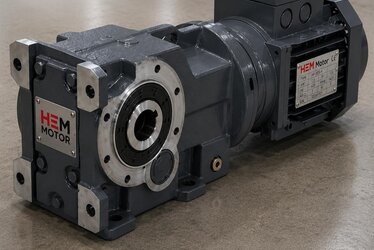
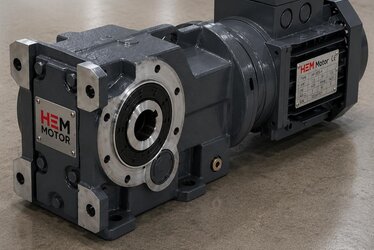
The heart of the asphalt plant is the drying drum that removes moisture from the aggregate. This large-diameter, heavy drum rotates at low speed; therefore it is driven not directly but through a gearbox or a geared motor. Because the motor must overcome the high inertia of the drum during starting, the starting torque and thermal endurance of the chosen motor are critical. Generally, 4-pole (1500 rpm) motors are combined with a gearbox to reach the low output speed and high torque the drum requires.
Gearbox Selection and Speed Calculation
The drying drum demands high torque at the output shaft. Therefore, in the motor + gearbox combination, the reduction ratio is determined according to the rotation speed of the drum. To calculate the output speed correctly, our articles on geared motor vs separate motor + reducer and savings in an efficient motor + gearbox combination clarify the purchasing decision. Where low-speed drive is required, the gearless alternative of direct drive with high-pole motors may also be considered.
Since the drying drum motor runs continuously at full load and in a hot environment, efficiency is reflected directly in fuel and electricity cost. When an IE4 motor is preferred over IE3, the energy savings achieved over the years can justify the investment; you can review the subject on our high-efficiency electric motors product page.
Screen and Feeder Motors: Groups Working Under Vibration
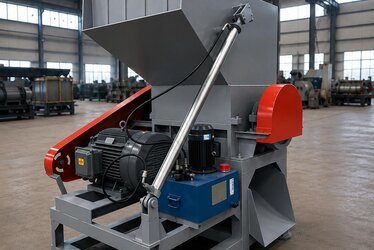
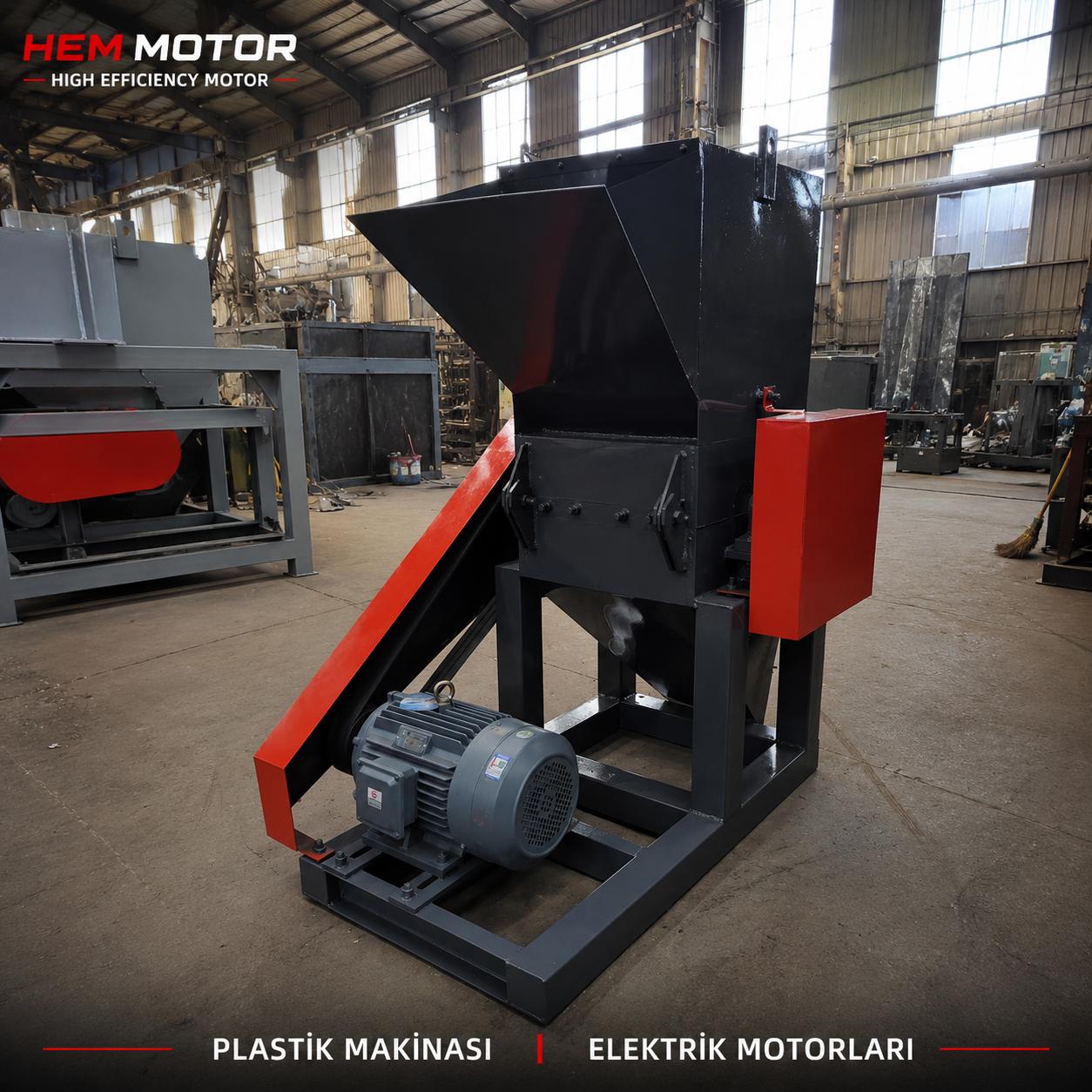
In the plant's cold aggregate feeding unit and hot screen, vibration is a constant reality. Screen motors and vibrating feeder motors must have a reinforced bearing structure resistant to magnetic and mechanical vibration. When selecting motors for these applications, it is necessary to understand the vibration sources that directly affect bearing life; our article on bearing life in crusher and mill motors: shock, dust and lubrication offers criteria applicable to similar conditions on the plant screen. If a vibration motor is needed in feeder drives, our feeder and bunker vibration motor selection guide helps determine the right product.
In screen and belt drives, correctly sizing the motors other than the main crusher protects production capacity. On this subject our article on screen, feeder and belt drive in a crushing-screening plant overlaps directly with the plant aggregate preparation line.
Burner Fan and Aspiration Fan Motors
There are two critical fan groups in an asphalt plant. The first is the burner fan; it supplies combustion air to the burner and is generally driven by a 2- or 4-pole motor. The second is the aspiration (filter/stack) fan; it draws the dusty air coming from the drying drum and screening line into the bag filter and controls stack emissions. Because the aspiration fan motor runs at high speed and continuously, it is critical in terms of efficiency and balanced operation.
Power and Speed Selection in Fan Motors
The power of fan motors is determined by the flow rate and pressure drop of the fan; a wrong choice means either insufficient suction or unnecessary energy consumption. For correct kW calculation in fan motors, our articles on required kW for pump, fan and conveyor and fan motor selection in aspirator and dust collection systems provide guidance. Since the aspiration fan works with dusty air, the motor's IP protection class must be high; IP55, IP65 and IP66 protection class selection clarifies this decision.
Starting: Soft Starter and Star-Delta
Because the drying drum and large fan motors drive loads with high inertia, direct-on-line starting can strain the grid and create mechanical shock. For this reason, soft starter or star-delta starting is preferred in plants. Choosing the starting method correctly both extends motor life and prevents sudden drops in grid voltage. You can review the subject in detail in our star-delta vs soft starter article. Since the plant is often also fed by a generator, our motor selection on generator-powered sites guide is important so that the starting current does not strain the generator.
Supply Difference in Mobile and Fixed Plants
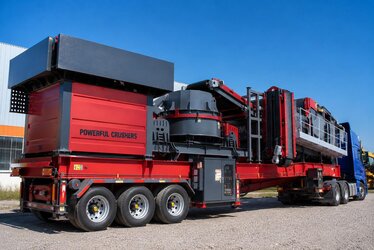
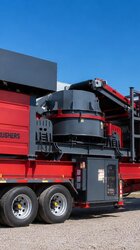
Mobile asphalt plants and portable facilities change the motor IP protection and vibration endurance requirements according to the site where they are installed. As in portable crushing-screening plants, plant motors must also be packed to avoid impact during transport; our article on motor supply in mobile crusher and portable crushing plants contains practical information also valid for plant field installation. Having all motors around the plant in cast-iron bodies should be a standard preference in product selection; our IE3 electric motors and IE4 electric motors ranges meet this need.
Efficiency, Regulation and Operating Cost in Plant Motors
An asphalt plant, with its drying drum, fans and screening group, is a facility with high total installed power. Because these motors run close to full load for long hours a day, the efficiency class is reflected directly in the electricity bill. The Ecodesign regulations in force in Turkey and Europe have made the IE3 efficiency class mandatory in certain power ranges; for 75 kW and above with certain pole counts, the IE4 requirement is on the agenda. In continuously operating facilities such as a plant, moving up to one higher efficiency class instead of meeting the minimum legal limit usually pays for itself within a few years. You can find which power requires which class from which date in detail in our article on the IE3 and IE4 efficiency mandate regulation.
It is correct to make the efficiency decision based not only on the purchase price but on the total cost of ownership. The electricity a motor consumes over its lifetime is often tens of times the purchase price; therefore in high-operating-hour facilities such as a plant, the total cost of ownership (TCO) calculation should guide the purchasing decision. When renewing your existing old motors, to see the gain of switching to an efficient motor concretely, you can review our article on the payback period of replacing an old motor with IE4.
What Information Is Needed for a Correct Order?
The safest way to prevent a wrong delivery in asphalt plant motors is to share the nameplate data of the existing motor and the connection dimensions of the machine completely. Power (kW), speed (rpm or pole count), voltage, frequency, mounting type (B3 foot-mounted, B5/B14 flanged or B35 combined), shaft diameter and frame size are critical information for the order. If you are replacing an existing motor one-to-one, our article on one-to-one matching with nameplate data before ordering guides you step by step. If you are replacing an old or foreign-origin motor with an equivalent, our old brand motor direct replacement guide makes equivalent selection easier.
Mounting type selection is also important in fan and drum drives. In drives requiring a flanged connection, the compatibility of B5 or B14 flange dimensions with the machine must be checked; you can review the subject in our B5 flanged or B14 flanged article and on our electric motor mounting types product page. To reduce the risk of damage in the transport of high-power drying drum and fan motors, our shipping damage check list article also makes your job easier.
Commissioning and First Start-Up
After the plant motors arrive at the site, the commissioning stage directly affects motor life. Especially in motors that have waited in storage for a while, the moisture and bearing condition must be checked and the insulation resistance measured. For motors that have waited a long time in the dusty plant environment, our article on storage and long-term waiting: moisture, bearings and commissioning lists important checkpoints. To ensure the rotation direction, phase sequence and thermal settings are done correctly at first start-up, we recommend applying our commissioning and first start-up check list. These steps ensure the plant operates safely and efficiently from its first season.
Frequently Asked Questions
How many poles should the drying drum motor have?
Because the drying drum runs at low speed and high torque, a 4-pole (1500 rpm) motor is generally used combined with a gearbox or geared motor. The reduction ratio is determined according to the desired rotation speed of the drum. We finalize the correct combination together with the drum diameter, weight and speed data at the quotation stage.
Which IP protection class is required for the aspiration fan motor?
Because the aspiration fan motor works in a dusty environment, at least IP55 protection is recommended; in very dusty or open-field conditions IP65 may be preferred. The motor terminal box and cable gland selection should also be made to prevent dust ingress. We recommend the appropriate protection class according to the conditions of the site.
Can I supply plant motors quickly from stock?
Cast-iron-body IE3 and IE4 motors in commonly used power and speed combinations are held in our strong stocks; fast delivery is possible in standard frames. For drives requiring a special gearbox ratio or high power, we share the delivery time clearly at the quotation stage.
Get a Quote
Let us determine together the correct power, speed, IP protection and body selection for the drying drum, screen, burner fan and aspiration fan motors of your asphalt plant. Contact us with the machine nameplate data and application details; let us quickly present the stock status, lead time and the right solution. Phone: +90 (532) 345 49 86 · You can also create a quotation request via our contact page.