English
 Türkçe


In chemical, pharmaceutical, water treatment and surface-finishing plants, transfer pumps that carry acids, bases, solvents and corrosive chemicals work in one of the harshest environments for a motor. The motor that drives these pumps is under constant attack from corrosive vapour, acid splash and a humid chemical atmosphere. A standard motor in such an environment soon meets body corrosion, loss of sealing and bearing failure. In this guide we cover chemical and acid transfer pump motor selection in terms of IP protection class, special paint and material, stainless options, gaskets/seals and, where needed, explosion-proof motors. Unlike a seawater pump, this article focuses specifically on the chemical process environment.
The Environment the Motor Faces on a Chemical Transfer Pump
In chemical processes, transfer pumps move corrosive liquid from one tank to another or to a reactor. The pump type may be centrifugal; especially with aggressive or hazardous chemicals, magnetic-drive (mag-drive) pumps that provide a sealless structure are preferred. Whatever the pump type, the motor is located right next to the pump body, in an area where chemical vapours concentrate.
The effect of this environment on the motor is twofold. The first is chemical corrosion: acid and base vapours erode the motor's cast iron body, fan cover and bolts over time. The second is moisture and splash: process liquid splash and wash water try to enter the motor. Against these two threats both the outer surface and the inner sealing of the motor must be protected. For similar applications on the water treatment and wastewater side, the water treatment and wastewater plant motors and for the general chemical plant the electric motor selection in chemical, pharma and detergent factories articles are complementary references.
Centrifugal or Magnetic-Drive Pump?
Centrifugal transfer pumps are common and economical, but they require shaft sealing (packing/mechanical seal), and this point carries a leakage risk over time. In magnetic-drive pumps the shaft is fully enclosed; the motor turns the impeller through a magnetic field, so the leakage risk is largely eliminated. This is why mag-drive is preferred for hazardous chemicals. For centrifugal pump motor sizing, the centrifugal pump motor selection: flow, head and power matching article gives the basic calculation. Where precise dosing is needed, the metering and diaphragm dosing pump motor selection article guides you.
IP65/IP66 Protection: Against Corrosive Vapour and Splash
In a chemical process environment, standard IP55 protection is often insufficient. Against corrosive vapour and process liquid splash, at least IP65 and in washed, heavy-splash environments IP66 protection class is recommended. A high protection class limits water and dust ingress and protects the inner windings and bearings from chemical moisture. To clarify the difference between protection classes, our electric motor IP protection class selection: IP55, IP65, IP66 article is the basic guide. On hygienic chemical/pharma lines where high-pressure washing is done, protection up to IP69K may be required; we cover this in the electric motor IP69K protection: high-pressure washing article.
Condensation and Drain Hole
In humid chemical environments with temperature swings, condensation water can build up inside the motor. This water degrades the winding insulation and the bearing over time. The condensation drain hole at the lowest point of the motor lets this water out. You can find its correct use in the cast iron motor condensation drain hole article.
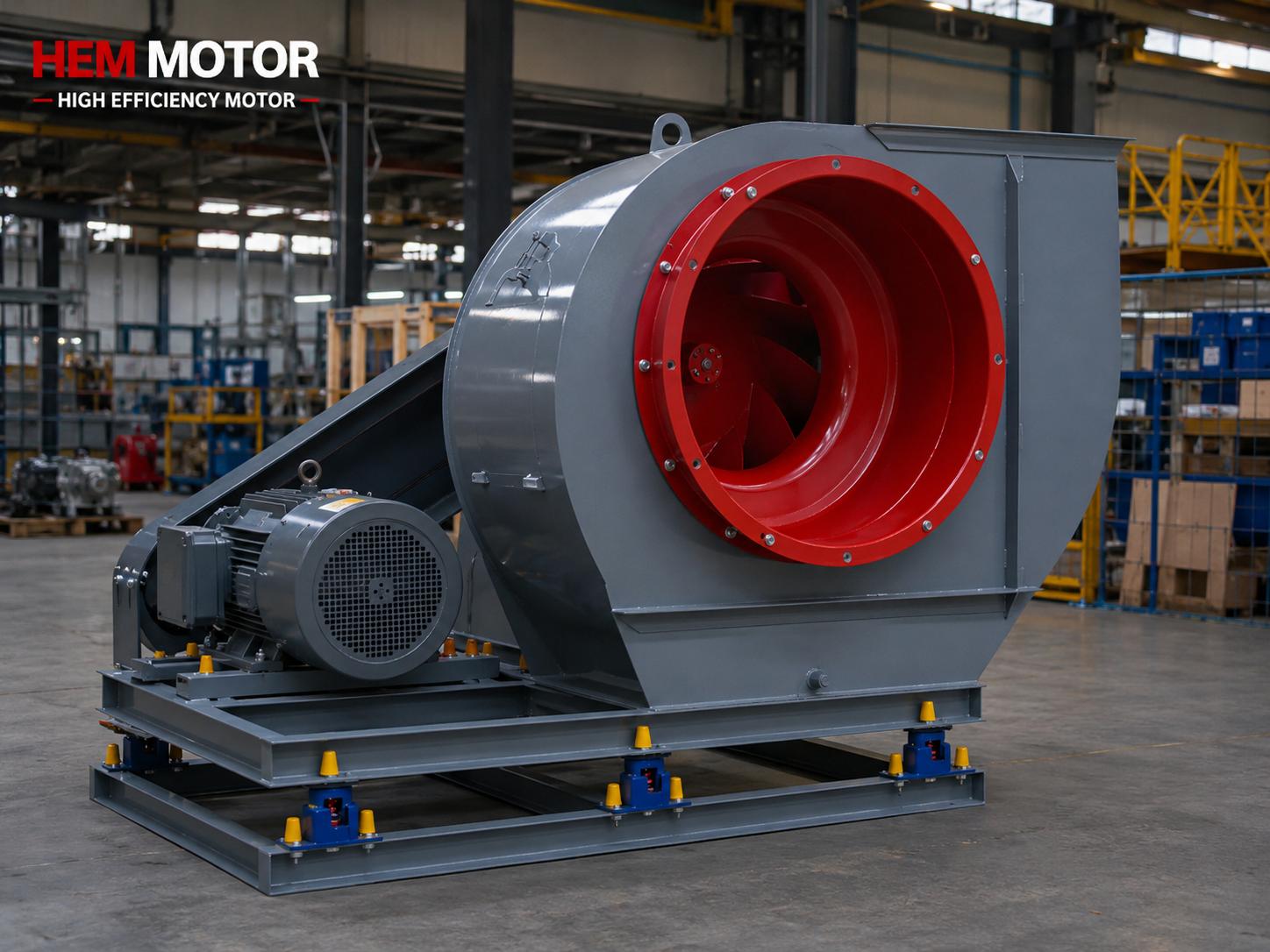
Special Paint, Cataphoresis and Stainless Material Selection
In a chemical environment the outer surface protection of the motor is decisive. Instead of standard paint, a special epoxy-based paint with high chemical resistance and a cataphoresis (KTL) coating beneath it protect the body against acid and base vapours. This multilayer protection markedly extends motor life. The cast iron motor paint and cataphoresis coating and corrosion protection of cast iron body motors articles explain which coating suits which chemical environment.
With very aggressive chemicals, the motor's critical outer components (bolts, eyebolt, fan cover, sometimes the shaft) can be chosen in stainless steel. To integrate protection in a salty and aggressive environment, the cast iron motor in marine and coastal plants: protection in a salty environment article is useful; however, since the chemical process environment, unlike seawater, contains acid/base vapour, the chemical resistance of the paint comes to the fore. For body material choice, review the cast iron or aluminium body article; in a chemical environment aluminium can be weak against some acids, so protected cast iron is frequently preferred.
Gaskets, Seals and Sealing
On a chemical pump motor, the sealing equipment that prevents liquid and vapour entering the motor is vital. The shaft-side oil seal, the terminal box gasket and the gland sealing are the first line of defense against corrosive moisture. You can find the terminal box IP protection and correct gland selection in the motor terminal box and cable connection: IP protection and correct gland selection article. For shaft seal and sealing details, the cast iron motor oil seal and sealing article is critical. If the pump motor will be mounted vertically, the vertical mounted electric motor selection (V1/V5) article guides seal orientation.
Explosion-Proof (ATEX) Motor in Solvent and Explosive Environments
In chemical processes there can be not only corrosion but also an explosion risk. Vapours of solvents, alcohol, thinner and some reagents can form an explosive mixture with air. Using a standard motor in such zones is unacceptable for safety; an explosion-proof (ATEX) motor suited to the area classification is essential. You can find in detail when an explosion-proof motor is needed in when is an explosion-proof (ATEX) motor essential and its difference from a standard motor in explosion-proof or standard asynchronous motor. For chemical plants containing paint, varnish and solvent, the paint and varnish chemical factory electric motors: dissolver, ball mill and explosion-proof supply article gives application-based guidance. For battery and acid environments, the battery and cell production plant electric motors: acid environment IP protection article is also useful.
Duty Type, Continuous Running and Protection Equipment
Transfer pumps mostly run continuously or for long periods; therefore selecting the motor in S1 continuous duty is recommended. For duty type selection, the electric motor duty type (S1-S6) selection article is the basic guide. Protecting the continuously running chemical pump motor against overload, phase loss and heating is vital; the electric motor protection: thermal relay and fuse selection and motor winding temperature monitoring: PT100 and PTC thermistor articles complete the protection chain. Since the risk of dry running in a corrosive environment can also stress the pump, pump protection should be planned alongside motor protection. For vacuum and blower applications, the vacuum pump and industrial blower motors article is complementary.
Power and Speed Selection: Flow, Head and Continuous Load
The power of a chemical transfer pump motor is set by the pump's flow and head. In centrifugal pumps the power need is directly proportional to the density of the liquid; since acids and some chemicals can be denser than water, a higher power than a water pump may be needed at the same flow. Therefore the specific gravity of the liquid carried must always be taken into account in power selection. You can find the basis of pump power calculation in the motor power calculation: required kW in pump, fan and conveyor and matching by flow in the centrifugal pump motor selection: flow, head article. For high-pressure transfer, the multistage vertical pump motor selection and for positive displacement pumps requiring constant torque, the positive displacement (screw/lobe) pump motor selection articles are guides.
In continuously running chemical transfer pumps, correct sizing of the motor matters for both efficiency and reliability. An oversized motor loses efficiency and power factor at low load, while a motor chosen too small is constantly stressed and heats. For the right load ratio, the at what load a motor should run article provides a practical starting point. To assess the real efficiency of the pump system together with motor, pump and pipe losses, the real efficiency in a pump system article offers a holistic view.
Maintenance, Bearings and Life Management in a Corrosive Environment
The life of a pump motor working in a corrosive environment depends largely on sealing and bearing maintenance. When chemical moisture enters the motor it degrades the bearing grease and fatigues the winding insulation. Therefore the right grease type and regular lubrication are critical in a corrosive environment. You can find the bearing greasing interval in the electric motor bearing greasing and the general maintenance schedule in the electric motor maintenance and periodic check schedule article. To reduce the risk of early failure in a corrosive environment, recognizing the motor's fault symptoms early is important; the electric motor failures: symptoms and causes article explains the warning signs.
If the motor will wait long in corrosive storage, the insulation resistance (megger) should be measured and moisture checked before commissioning. For acceptance inspection the electric motor incoming and acceptance inspection and for storage the electric motor storage and long-term keeping articles are guides. On hygienic food/pharma chemical lines, the food factory electric motors: hygiene, IP protection article additionally complements the washdown environment requirements.
Frequently Asked Questions
Which IP protection is needed on a chemical transfer pump motor?
Because of corrosive vapour and process liquid splash, at least IP65 and in washed, heavy-splash environments IP66 is recommended. On hygienic lines where high-pressure cleaning is done, protection up to IP69K may be required.
How is the motor body protected against corrosion?
A special epoxy-based paint with high chemical resistance and a cataphoresis (KTL) coating beneath it protect the body against acid and base vapours. In a very aggressive environment, outer components such as bolts, eyebolt and fan cover can be chosen in stainless steel.
Is an explosion-proof motor always needed on a chemical pump motor?
No, it is needed only in zones with an explosive vapour risk. If solvent, alcohol or thinner vapour can form an explosive mixture with air, an explosion-proof (ATEX) motor suited to the area classification is essential. In an environment with corrosion risk but no explosion risk, a protected standard motor may suffice.
Get a Quote
For your chemical and acid transfer pumps we offer IE3 and IE4 motor solutions with IP65/IP66 protection suited to corrosive environments, chemically resistant special paint/cataphoresis, stainless components where needed, or explosion-proof construction. Share the pump nameplate data, the chemical carried, the area classification and the duty profile; let us determine the right protection, material and power package together. For a fast quote reach us through our contact page or call +90 (532) 345 49 86. Browse our whole product range from our home page and pump motor selection from our centrifugal pump motor selection article.
Purchasing and Selection Checklist
1) Determine the required power, flow and head from the pump nameplate. 2) Assess the chemical carried and the corrosive vapour/splash risk. 3) Request at least IP65, and IP66 in splash environments. 4) Ask for chemically resistant special paint and cataphoresis coating. 5) Consider stainless outer components in a very aggressive environment. 6) Confirm the shaft seal, terminal gasket and gland sealing. 7) Check that the condensation drain hole is in the correct position. 8) If there is an explosive vapour risk, choose an explosion-proof (ATEX) motor suited to the area classification. 9) Verify S1 duty and a suitable power margin for continuous running. 10) Add thermal, phase protection and temperature monitoring with PT100/thermistor.