English
 Türkçe


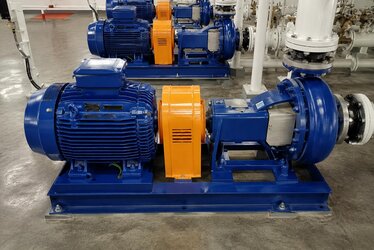
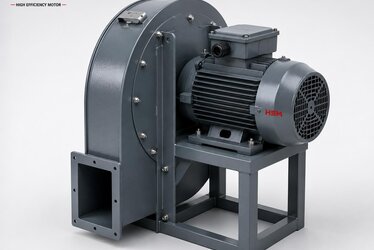
Metering and diaphragm (dosing) pumps are the invisible yet indispensable heroes of industrial processes. From chlorine dosing in water treatment plants to additive injection in the food sector, from acid and base feeding in the chemical industry to milligram-precise reagent addition in pharmaceutical manufacturing, these pumps perform countless critical duties. What matters here is not raw power but the correct configuration of a drive system that can repeatedly deliver the same volume per stroke, operate in intermittent duty without overheating, and withstand corrosive environments. In this article we explain why selecting a motor for a diaphragm pump is far more than a simple "how many kilowatts" calculation, which parameters determine system accuracy, and what you should consider when choosing the right motor.
At HEM Motor, we know that selecting the right motor for low-power yet high-precision dosing applications can determine the process quality of an entire plant. The motor at the heart of a dosing pump is often a small machine of just a few hundred watts; however, the characteristics of this small motor, if chosen incorrectly, can lead to product loss, process drift, and even safety risks. For this reason, dosing pump motor selection must be approached as an engineering problem that goes beyond power alone.
How the Diaphragm Pump Works and How Flow Is Determined
A diaphragm pump is a positive-displacement pump that draws and discharges liquid through the back-and-forth motion of a flexible membrane. The rotary motion of the motor is converted into the linear stroke motion of the diaphragm via a crank-connecting rod mechanism or an eccentric cam. When the diaphragm is retracted, the suction valve opens and the pump chamber fills with liquid; when the diaphragm is pushed forward, the suction valve closes, the discharge valve opens, and a fixed volume is transferred into the system line. This is where the most critical feature of dosing pumps emerges: each stroke carries a fixed and repeatable volume.
This mechanical reality makes the flow rate highly predictable in mathematical terms. In a diaphragm pump, flow is directly proportional to stroke count and stroke length. In other words, the total flow per unit time equals the volume carried per stroke multiplied by the number of strokes per minute. The stroke volume is itself a function of the diaphragm diameter and stroke length. This relationship can be summarized as follows:
- Stroke volume: The product of the effective diaphragm area and the stroke length; the fixed amount of liquid the pump carries on each stroke.
- Stroke count (frequency): The number of strokes per minute, determined by the motor speed and the intermediate mechanism ratio.
- Total flow: The product of stroke volume and stroke count; the fundamental relationship that allows flow to be adjusted linearly.
This linear relationship explains why dosing pumps allow such precise flow adjustment. By mechanically limiting the stroke length or by changing the motor speed with a frequency drive, it is possible to adjust the flow in extremely fine increments. Understanding this point is vital in motor selection: the speed stability of the motor is directly reflected in flow stability. A motor whose speed fluctuates means a fluctuating dose.
Why Is Low Power Sufficient? Power Calculation in Dosing Applications
Most dosing pumps are driven by motors whose power is measured in watts rather than kilowatts. The reason is that the liquid flow carried by the pump is typically low. Flow rates ranging from a few liters to a few hundred liters per hour require relatively low hydraulic power, no matter how high the pressure. Hydraulic power depends on the product of flow and discharge head; when the flow is small, the power required remains limited even at high pressures.
However, the term "low power" should not be misleading. Low power does not mean a negligible motor selection; on the contrary, it makes the correct choice of the motor's characteristics essential. Even in a low-power motor, the starting torque, speed stability, heating behavior, and protection class determine the accuracy and life of the system. The pump starts under load against the pressure accumulated at the discharge valve on every stroke; therefore it is critical that the motor produces sufficient starting torque. Asynchronous motor technology is frequently preferred in these applications due to its durability and ease of maintenance.
When making the correct power selection, it is necessary to consider not only the nominal operating point but also the worst-case scenario. With viscous liquids, cold starts, or sudden pressure surges in the discharge line, the power drawn by the pump can rise momentarily. For this reason, it is sound practice to select the motor with a safety margin above the calculated hydraulic power. The motors in HEM Motor's stock, available in various power ratings, offer a wide range tailored to these specific needs of dosing applications.
Intermittent Duty (S3, S4) and the Motor's Heating Behavior
One of the most distinctive features of dosing applications is that they mostly operate in intermittent duty. In a water treatment plant, the dosing pump may switch on and off according to a measured value; in a chemical process, feeding may need to be done at certain intervals. This operating regime requires the motor to be evaluated not in continuous duty (S1) but in intermittent periodic duty (S3) or intermittent duty including starting (S4) classes.
Why does the duty type matter? Because the heating of the motor is directly dependent on the ratio of running and stopping times. A continuously running motor reaches a stable thermal equilibrium and operates at its nominal temperature. By contrast, a motor that frequently stops and starts draws high current at each start, and this current generates heat. If the stop times do not allow the motor to cool sufficiently, successive starts heat the winding cumulatively. This is where the duty factor and switching frequency become critical calculation parameters.
- S3 - Intermittent periodic duty: A regime in which running and stopping times repeat within a given duty cycle, and the thermal effect of starting current can be neglected.
- S4 - Intermittent duty including starting: A regime in which starting is frequent and its thermal effect is significant, so the motor's starting-current heating must be taken into account.
- Switching frequency: A parameter that determines the effect of the number of starts per hour on motor life and heating, and can be softened by using a drive.
In dosing systems that switch on frequently, having the motor soft-start through a frequency drive reduces both mechanical load and thermal stress. This approach extends the motor's life while also providing additional flexibility in flow adjustment. Changing the speed through the drive to adjust the stroke frequency steplessly offers far more precise dose control than mechanical stroke adjustment.
Corrosive Environment Protection: IP Class, Insulation, and Material Selection
Dosing pumps, by their very nature, operate in the same environment as aggressive chemicals. Chlorine, acids, bases, hypochlorite, and various process chemicals are corrosive agents that can reach the motor through both vapor and splashing. For this reason, the protection class is far more important in dosing motor selection than in an ordinary application. Moisture or chemical vapor entering the motor housing quickly degrades the winding insulation and renders the motor unusable.
This is where the IP protection class comes into play. While at least IP55 is recommended for dusty and humid environments, IP56 or higher classes should be preferred at dosing stations exposed to direct splashing or washdown. In addition to the protection class, the material of the motor housing is also a critical decision. In corrosive environments, cast iron housings, which offer more durable protection and can receive special coatings when needed, may be preferred over aluminum housings.
The insulation class should not be overlooked either. Standard class F insulation offers sufficient thermal reserve for most dosing applications; however, in high ambient temperatures or frequent-start regimes, motors with class H insulation are a safer choice. The quality of the winding insulation is one of the most important factors determining the real life of the motor in a corrosive environment. The motors offered by HEM Motor in various protection and insulation classes are designed to meet these specific requirements of dosing applications.
Additional Measures Against Corrosion
- Coating the motor housing with chemical-resistant epoxy or special paint.
- Choosing stainless steel for the shaft end and ensuring sealing with a suitable oil seal.
- Fully insulating the terminal box against the aggressive atmosphere with additional gaskets and cable glands.
- Positioning the motor, where possible, outside the chemical splash line and inside a protective enclosure.
Precise Flow Control: The Motor's Contribution to Accuracy
In dosing applications, accuracy is everything. Overdosing chlorine into a water supply creates a health risk, while underdosing leads to inadequate disinfection. In food or pharmaceutical production, incorrect dosing directly affects product quality and safety. For this reason, the dosing pump is expected to carry exactly the predicted volume on each stroke. The motor's contribution to this accuracy is realized through speed stability.
A motor that maintains a constant speed under load also keeps the stroke frequency constant, thereby making the flow predictable. If the motor cannot maintain its speed against changes in discharge pressure, the flow will fluctuate as well. In systems driven by a VFD frequency drive, the closed-loop control capability of the drive allows the speed, and therefore the flow, to be kept extremely stable. This provides a great advantage especially in applications requiring proportional dosing; it becomes possible to instantly adjust the dose according to a measured parameter (such as flow or concentration).
Another advantage of using a drive is that the motor can produce sufficient torque even at low speeds. In dosing systems that must operate over a wide flow range, the motor must be able to move the diaphragm effortlessly even at the lowest speed. For this reason, selecting the motor and drive as a compatible pair is the key to system performance.
The Path to Follow When Selecting the Right Motor
Approaching dosing and diaphragm pump motor selection with a systematic method yields the best result both in terms of initial investment and operation. The following steps provide a framework that will lead you to the right drive system:
- Determine the flow and pressure range: Clarify the minimum and maximum flow and counter-pressure values to calculate the hydraulic power requirement.
- Define the duty type: Determine whether the pump will operate continuously or intermittently, and the number of starts per hour.
- Evaluate the environmental conditions: Select the IP and insulation class according to the chemical type, splash risk, ambient temperature, and humidity level.
- Decide on the control method: Determine whether constant flow or proportional/variable flow is required, and decide whether to use a drive.
- Leave a safety margin: Provide assurance against worst-case scenarios by leaving an appropriate reserve above the calculated power.
By following these steps, the motor you select will preserve the accuracy and reliability of your dosing system for many years. If you have any hesitation in determining the right product, you can review our wide range of pump electric motors portfolio and contact us for the solution best suited to your needs. Our detailed guide on IP protection class selection for corrosive environments will help you make the right decision for your dosing station. If you plan to manage the drive with a variable speed controller, our content on VFD frequency drive with asynchronous motor applications will also guide you.
Remember that even a low-power motor, when correctly selected, determines the accuracy of the entire system. At HEM Motor, we are pleased to help you find the motor with the right characteristics for your dosing and metering applications. To discover our wide product range and engineering support, you can visit our homepage.
Frequently Asked Questions
Why is a high-power motor not required for a dosing pump?
The liquid flow carried by dosing pumps is typically low, and hydraulic power is directly proportional to flow. When the flow is small, the power required remains limited even if the counter-pressure is high; for this reason, most dosing applications are driven by low-power motors in the watt range. However, even though the power is small, the motor's starting torque, speed stability, and protection class must be chosen correctly, because these characteristics determine the accuracy of the system.
How can I adjust the flow in a diaphragm pump?
In a diaphragm pump, flow is directly proportional to stroke count and stroke length. You can adjust the flow in two ways: mechanically by limiting the stroke length, or by changing the motor speed with a frequency drive to adjust the stroke frequency. Using a drive is especially preferred in applications requiring proportional dosing because it offers stepless and far more precise flow control.
Which protection class should I choose for a dosing motor working in a corrosive environment?
At least IP55 is recommended for dusty and humid environments; for dosing stations exposed to direct chemical splashing or washdown, IP56 and above should be preferred. In addition to the protection class, the housing material, insulation class (preferably F or H), and the sealing of the terminal box are decisive in corrosion protection. You can contact us to determine the protection class suited to your needs.