English
 Türkçe


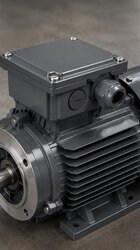
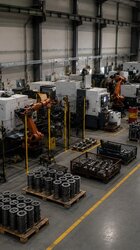
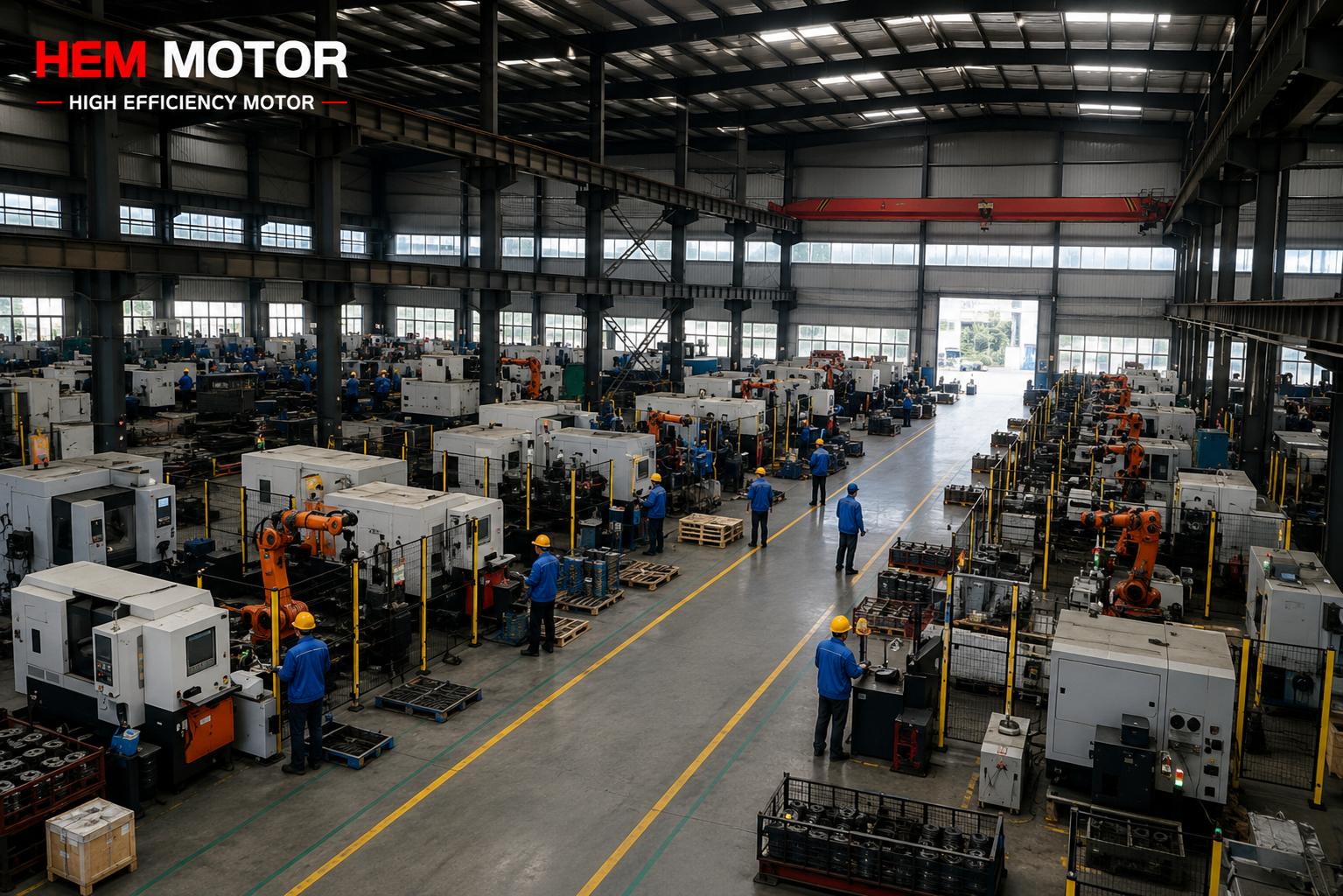

Chemical, pharmaceutical and detergent factories have unique requirements that set them apart from other industrial branches in electric motor selection. Corrosive chemicals, explosive vapor and dust environments, and hygienic zones requiring constant cleaning and washdown make it essential to scrutinize not only the motor's power but also its protection class, body material and explosion protection. From reactor mixers to dosing pumps, from detergent drying tower fans to liquid transfer pumps, each piece of equipment carries a different risk profile. As a procurement or project officer, you know that a wrongly selected explosion-proof motor can jeopardize both production safety and legal compliance. This page is prepared to address the main motor needs in chemical-pharma-detergent plants one by one and to help you reach the right supply decision. For a fast and accurate quote, share your requirement list with us.
The Three Axes of Motor Selection in Chemical, Pharma and Detergent Plants
In this sector, motor selection takes shape along three fundamental axes: explosion protection (ATEX/explosion-proof), corrosion and chemical resistance, and hygiene/cleanability. Using a standard motor in zones containing solvents, alcohol, powdered active ingredients or flammable vapor is both non-compliant with regulations and a serious safety risk. Explosion-proof motors are mandatory in these zones. In corrosive environments, the chemical resistance of the body, shaft and terminal box material directly determines the motor's service life. On pharmaceutical and hygienic production lines, the motor is expected to be washable, with a smooth surface and high IP protection.
While IP55 protection is sufficient in standard production zones, IP65 and above is preferred in continuously washed and humid areas. F class insulation is the basic standard; H class insulation is evaluated for reactors with high-temperature processes. To see the requirement for motors in explosive environments in detail, review our when is an explosion-proof (ATEX) motor required article. To clarify the decision between explosion-proof and standard motors, our explosion-proof vs standard asynchronous motor article is directly helpful.
Mixer and Reactor Motors: Torque, Speed and Continuity
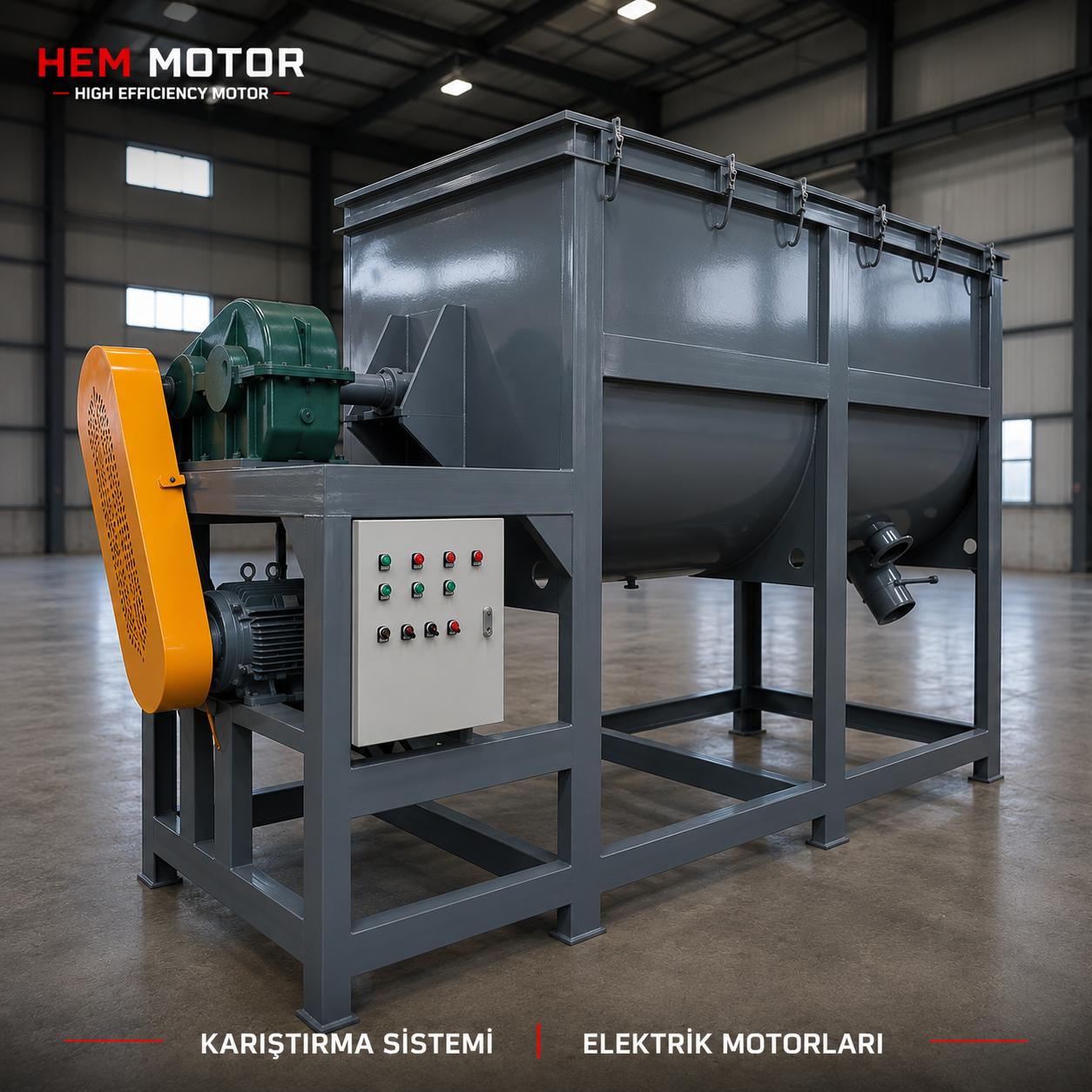
Mixers (agitators) and reactors sit at the heart of chemical and pharmaceutical production. In this equipment, the motor needs high torque and low speed to mix viscous liquids or dense slurry. Most mixers operate by stepping down a standard 1500 rpm motor to a low output speed through a gearbox; in some high-viscosity processes a direct low-speed motor is preferred. Reactor mixers are generally selected for S1 continuous duty, designed to run uninterrupted for long periods.
Reducer and Torque Matching
In mixer drives, the motor and gearbox must be evaluated together. In mixers requiring low output speed and high torque, worm gear reducers stand out with their compact and self-locking design; when higher power and efficiency are needed, bevel helical reducers are preferred. To clarify output speed and torque calculation in motor-gearbox selection, our monoblock geared motor purchasing article is useful. To match the correct motor frame and flange to the gearbox, refer to our reducer-to-motor matching guide.
Dosing and Transfer Pump Motors
Chemical dosing is the precision-demanding part of production. Dosing pumps are driven by low-power but continuous, precise motors. In pump motors used for transferring corrosive liquids such as acids, bases and solvents, protection class and, where necessary, explosion-proof requirements come to the fore against leakage and vapor risk. In transfer pumps, flanged (B5/B14) motors at 2900 or 1450 rpm typically run directly coupled to the pump.
In these pump motors, the exact match of flange type and shaft diameter to the pump body is vital; the wrong flange selection delays the entire supply. For mounting type selection, our electric motor mounting types page and our B5 vs B14 mounting type selection guide ensure the correct decision. To evaluate body protection in corrosive and humid environments, our corrosion protection in cast iron motors article provides important tips.
Drying Tower, Fan and Mixer Motors in Detergent Production
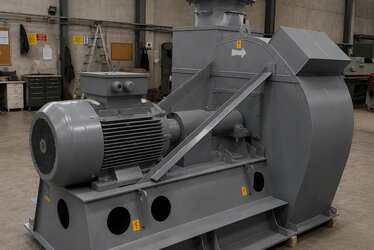
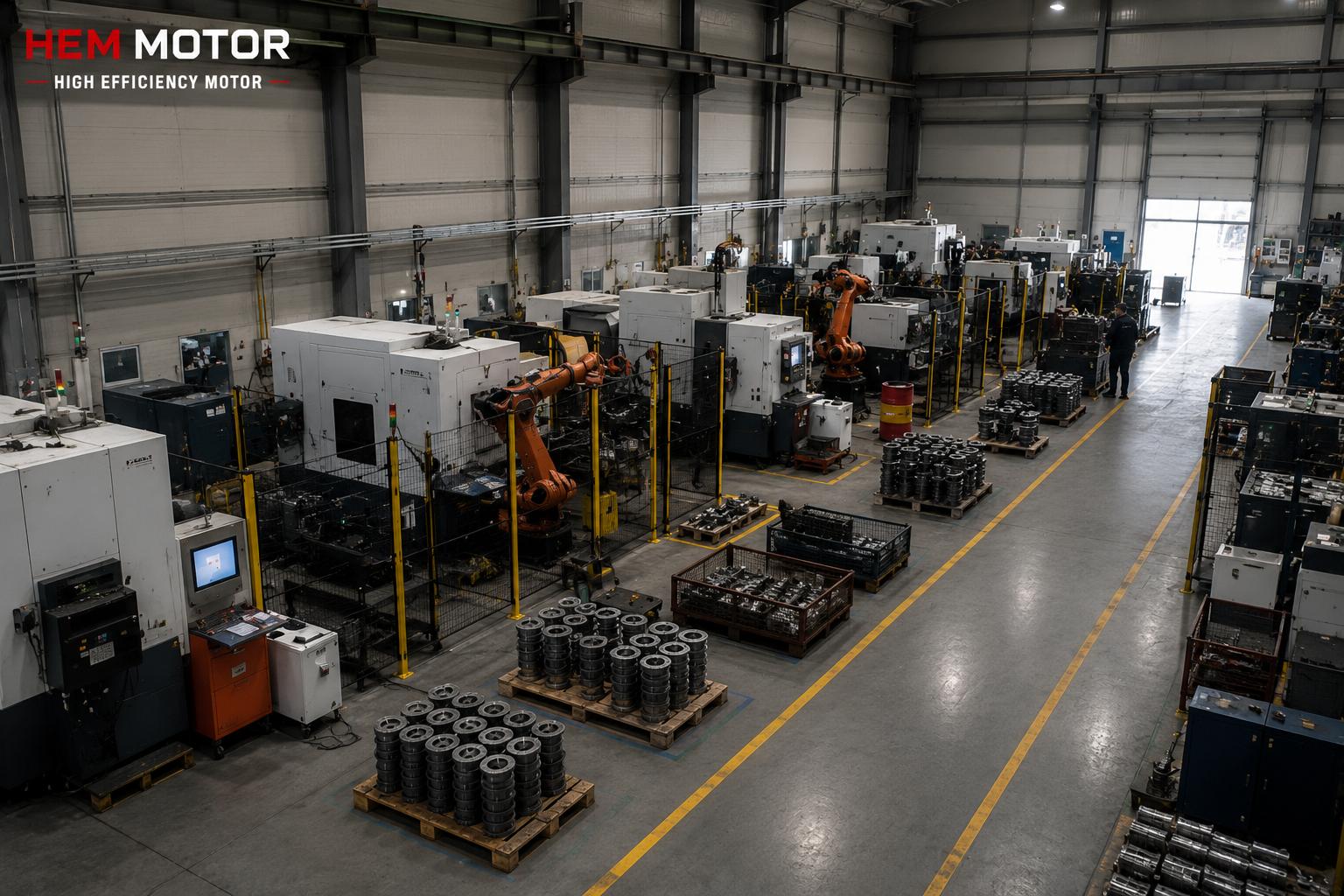
In detergent production, spray drying towers host large fan and exhaust motors. Because these fans move hot air at high flow rates, they must be selected as heat-resistant and high-efficiency. In addition, since detergent powder can form a flammable and explosive dust cloud, ATEX compliance must be evaluated in dust zones. Mixers in raw material blending tanks and on sulfonation and neutralization lines are driven by high-torque motors.
Fan Efficiency and Energy Cost
Drying tower fans are among the most energy-consuming equipment in the plant; therefore high-efficiency motor selection directly affects operating cost. On these fans running continuously at high load, IE4 super premium electric motors provide a fast payback. For fan motor selection in aspiration and dust collection applications, our aspirator and dust collection fan motor article is a useful guide.
Hygiene, Cleanability and Pharmaceutical Production Requirements
In pharmaceutical and hygienic chemical production, motors are expected to have smooth surfaces, easy cleanability and high IP protection. In continuously washed areas, IP65 and above protection with corrosion-resistant surface coating is preferred. Terminal box sealing and correct cable gland selection are critical to prevent moisture and chemicals from entering the motor; our motor terminal box and cable connection article gives detailed information on this. The IP protection and selection principles in food and hygiene-focused plants are similar; to deepen the subject, our food factory electric motors hygiene article can also be reviewed.
Efficiency regulations apply to all these applications; IE3 is mandatory for three-phase motors of 0.75 kW and above. While IE3 efficient electric motors are preferred for regulatory-compliant standard selection, IE4 is more advantageous for continuously running fans and pumps. For more products and categories, visit the HEM Motor homepage and for sector applications our industrial motors blog category.
Supply Process: Right Information, Fast Quote
Motor supply in chemical, pharma and detergent plants accelerates when the correct technical information is shared from the start. The zone classification for explosion-proof requirements, the chemical type for corrosive environments, the IP protection expectation for hygienic zones, and the kW-speed-mounting type data for each piece of equipment determine the speed and accuracy of the quote. While standard motors in the most commonly used powers can be delivered from stock, explosion-proof and specially protected motors may require lead time planning. To see which information is needed before a quote, our information to provide when requesting a quote article is a useful checklist.
Frequently Asked Questions
In which zones of my chemical plant are explosion-proof motors mandatory?
Explosion-proof (ATEX) motors are mandatory in zone-classified areas containing flammable gas, vapor or explosive dust. Solvent storage, sulfonation, detergent powder drying and dosing areas are typically within this scope. If you share your plant's zone classification and equipment list with us, we can determine together which points require explosion-proof and which standard motors are sufficient.
Which protection class should I choose in corrosive and continuously washed zones?
In continuously washed and humid environments, IP65 and above protection class, corrosion-resistant surface coating and a sealed terminal box are recommended. If there is a risk of direct contact with corrosive chemicals, the chemical resistance of the body, shaft and connection elements must also be evaluated. Contact us to clarify the correct protection class for your needs.
Should I buy the motor for a reactor mixer with a gearbox?
Since mixers generally require high torque and low output speed, the motor and gearbox are selected together. A worm gear reducer is preferred for low-power, compact solutions, and a bevel helical reducer for applications requiring higher power and efficiency. If you provide the mixing viscosity, speed and power data, we will recommend the correct motor-gearbox combination.
Get a Quote
Get the right supply support for the mixer, reactor, dosing pump, drying fan and transfer pump motors of your chemical, pharma and detergent factory, suited to explosion-proof, corrosion and hygiene requirements. Send your requirement list and zone information via our contact page or call us at +90 (532) 345 49 86. Our expert team is with you for the correct protection class and fast delivery.