English
 Türkçe

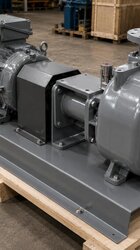

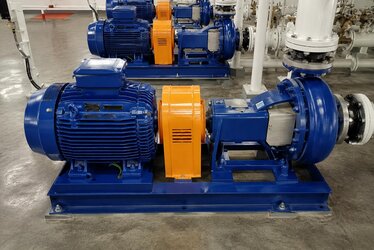
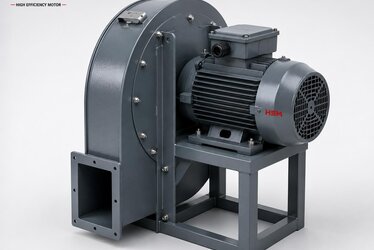
When people think of pumps, centrifugal pumps usually come to mind; however, positive displacement pumps are used in applications requiring high-viscosity fluids, precise flow and high pressure. Screw, lobe and gear pumps are the most common examples of this class, and they require a completely different motor selection logic than centrifugal pumps. While in a centrifugal pump the power increases cubically with speed (variable torque characteristic), in a positive displacement pump the flow is directly proportional to speed and the pump exhibits a constant torque characteristic. This fundamental difference affects many choices, from motor power calculation to starting method, from gearbox use to the relief valve. A wrongly selected motor is either inadequate or unnecessarily large; both cases lead to efficiency loss and failure. This article covers all the parameters of correct motor selection for positive displacement pumps.
What Is a Positive Displacement Pump? Difference from Centrifugal
A positive displacement (PD) pump transfers fluid by mechanically pushing a fixed volume with each rotation. In a screw pump, one or more helices (screws) push the fluid axially; in a lobe pump, two synchronized rotating lobes carry the fluid; in a gear pump, the fluid moves between two intermeshing gears. The common feature of these pumps is that the flow depends directly on speed and is largely independent of pressure. That is, if the pump speed is constant, the flow remains nearly the same even if the discharge pressure rises.
In a centrifugal pump, on the other hand, the fluid is thrown by a rotating impeller; flow and pressure are linked, and as system resistance increases the flow drops. We covered centrifugal pump motor selection by flow and head in our centrifugal pump motor selection article. This fundamental difference between PD and centrifugal pumps radically changes the motor selection logic and is the starting point of this article. We detailed the distinction between variable torque and constant torque loads in our constant torque or variable torque article.
Constant Torque Characteristic and Motor Power
The most decisive feature in motor selection for a positive displacement pump is the constant torque characteristic. This means the torque drawn by the pump remains largely constant regardless of speed, while the required torque is determined by the discharge pressure. As pressure increases, the required torque increases linearly. Since power is torque times speed, at constant pressure the power increases proportionally with speed. This is completely different from the cubic power-speed relationship of a centrifugal pump.
The practical result is this: in a PD pump, the motor power must be selected according to the highest pressure and highest speed combination at which the pump will operate. Because in a constant torque load, the motor must be able to deliver the same torque at every point of the speed range. We examined the differences in motor power calculation for pumps, fans and conveyors in our motor power calculation article. How much load the motor will run at is also important for correct sizing; we covered this in our how much load should the motor run at article. Oversizing is especially inefficient in constant torque loads, because the motor runs at a low power factor under low load.
High Viscosity and High Pressure
PD pumps are generally chosen for jobs that centrifugal pumps cannot handle: high-viscosity fluids (oil, molasses, resin, slurry, food paste) and transfers requiring high pressure. As viscosity increases, the torque drawn by the pump and therefore the required motor power increase. For this reason, when selecting a PD pump motor, the actual viscosity at the operating temperature of the fluid must be used; at a cold start the viscosity can be much higher, and this increases the starting torque. In high-viscosity and high-pressure applications, the motor must be selected to also cover the cold start torque.
The Need for Geared Low Speed
Positive displacement pumps mostly run at much lower speeds than centrifugal pumps. Screw and lobe pumps typically rotate between a few hundred and a thousand rpm; with high-viscosity fluids the speed is reduced further, because at high speed the fluid cannot fill the pump and cavitation-like problems occur. This need for low speed means the motor is mostly used together with a gearbox.
The gearbox reduces the standard 1500 rpm motor speed to the low speed the pump requires while also increasing the torque. Worm gear and bevel-helical reducers are most often used in PD pumps. For gearbox ratio selection, our monoblock geared motor selection and geared motor or separate motor and reducer articles are guides. We covered the gains in the efficient motor plus gearbox combination in our using an IE4 motor with a gearbox article. For selecting the right motor flange and frame for the gearbox, our motor matching for worm gear reducers article is a basic reference.
High Torque at Start
Because of the constant torque characteristic, a PD pump also demands high torque at start; especially when starting against a full line, under pressure, or with a cold viscous fluid, the motor must cover a high starting torque. This is an important difference from a centrifugal pump: while a centrifugal pump starts easily unloaded (at low pressure), a PD pump starts with high torque in a full system. For this reason, the starting torque must be carefully evaluated in a PD pump motor.
This difference is also decisive in the starting method. Since high torque is required at start, star-delta starting is often unsuitable for PD pumps; because the star connection reduces the starting torque to one third and the motor may not overcome the load. In this case, direct-on-line (DOL) starting, or a soft starter or variable frequency drive that preserves high starting torque, is preferred. We detailed starting torque and torque classes in our rated torque and starting torque and torque classes (Design N/H) articles. We address the role of the frequency drive in flow control shortly.
Why Is a Relief Valve Essential?
A critical safety element in positive displacement pumps is the relief (pressure relief) valve. As long as a PD pump keeps rotating even with the outlet closed, it tries to push the fluid; if the outlet is closed, the pressure rises rapidly and the pump, pipe or motor is damaged. A centrifugal pump merely circulates the fluid at a closed outlet and the pressure is limited; but a PD pump produces dangerously high pressure at a closed outlet. For this reason, a relief valve must always be present in PD pump systems and must redirect the fluid back or to a tank when the pressure exceeds a safe limit.
This safety element also affects motor selection: when the relief valve activates, the motor is momentarily exposed to high torque. The motor and drive must be equipped to detect this situation with protection circuits and stop the pump. We covered motor protection methods in our protection: thermal, relay and fuse selection and MPCB selection and setting articles.
Flow Control with VFD
Since flow is directly proportional to speed in a positive displacement pump, the flow can be precisely controlled by changing the speed with a variable frequency drive (VFD). This is an important advantage of PD pumps: while a centrifugal pump requires a throttling valve or bypass for flow control (energy waste), in a PD pump reducing the speed with a VFD directly reduces the flow and provides energy savings. This feature is very valuable in dosing, mixing and precise transfer applications.
We discussed the operation of an asynchronous motor together with a VFD in detail in our VFD with asynchronous motor article. However, in a constant torque load, the motor cooling decreases when running at low speed with a VFD; in this case external (forced) cooling or derating may be needed. We examined VFD-related additional heating and bearing current risks in our VFD and harmonic-related heating article. We covered motor selection in small-power, intermittent-duty applications such as dosing pumps in our dosing and diaphragm pump motor selection article. You can review our product range in the pump, fan and blower motors category.
Frequently Asked Questions
Can a centrifugal pump motor be fitted to a positive displacement pump?
The motor itself (asynchronous motor) is the same; the difference is in how the motor is sized and at what speed it is run. A motor selected for a centrifugal pump is generally inadequate for a PD pump, because the PD pump requires constant torque and demands high torque especially at start and at low speed. A PD pump motor must be selected to cover the torque at the highest pressure and the cold viscous starting torque, mostly together with a gearbox. Therefore the motor cannot be transferred directly and must be resized for the application.
Why is star-delta starting not recommended for PD pumps?
Star-delta starting reduces the starting torque to about one third. Since a PD pump demands high torque at start (especially against a full line and with a viscous fluid), the motor in the star connection may not overcome the load and cannot accelerate. For this reason, PD pumps generally prefer direct-on-line starting or a soft starter/VFD that preserves high starting torque. If the load is light and starting can be done unloaded, star-delta can be considered, but this is the exception in PD pumps.
Can a PD pump be operated without a relief valve?
It should not be. A PD pump raises the pressure to a dangerous level at a closed outlet and can damage the pump, pipe or motor. The relief (pressure relief) valve protects the system by redirecting the fluid back or to a tank when the pressure exceeds a safe limit. This is an indispensable safety element of PD pump systems and must be considered together with the motor protection circuits.
Get a Quote
If you would like support in selecting the correct motor, with or without a gearbox, suitable for the constant torque characteristic of your screw, lobe or gear pump, our expert team will guide you according to your pressure, viscosity, speed and starting torque requirements. Reach us through our contact page or by phone at +90 (532) 345 49 86. For more content, visit our home page and our pump, fan and blower motors category.
Purchasing and Selection Checklist
- Determine the pump type (screw/lobe/gear) and the operating speed required by the manufacturer.
- Find out the highest operating pressure and the torque requirement at that pressure.
- Account for the fluid viscosity at operating temperature and at cold start.
- Select the motor power according to the highest pressure and speed combination, with constant torque logic.
- If low speed is needed, plan a gearbox (worm gear/bevel-helical) of suitable ratio.
- Evaluate the starting torque; prefer DOL or soft starter/VFD instead of star-delta.
- Always add a relief (pressure relief) valve to the system.
- If flow control is needed, plan a VFD; consider derating or forced cooling for low-speed cooling.
- Set up motor protection (thermal/MPCB) to stop the pump when the relief valve activates.
- Verify the motor flange (B5/B14) and frame size suitable for the gearbox.