English
 Türkçe

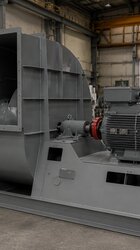
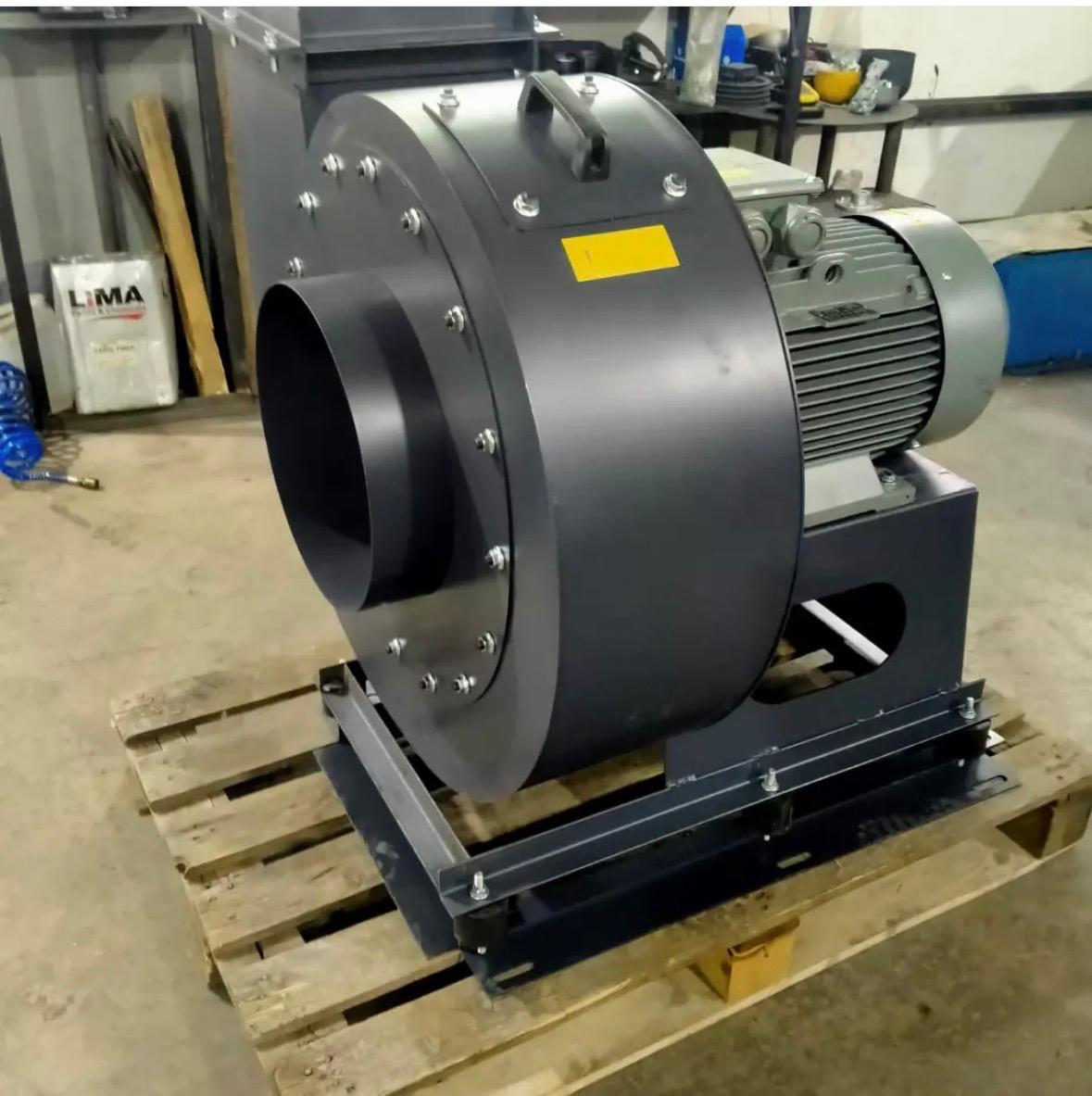

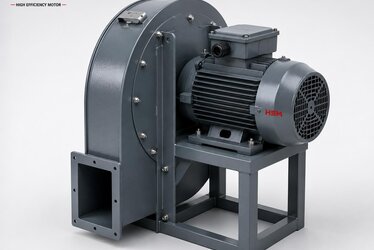
Centrifugal and turbo blowers are dynamic-type air machines that deliver a large volume of air at low or medium pressure. They are at the heart of high-airflow applications such as aeration in wastewater treatment, pneumatic material conveying, process air and combustion air. Selecting the motor that drives these machines is different from selecting one for a vacuum pump or positive-displacement blower, because here high airflow, continuous operation and high speed come to the fore. In this article we cover power, speed, duty type, protection class and airflow control with a frequency drive in centrifugal and turbo blower motor selection.
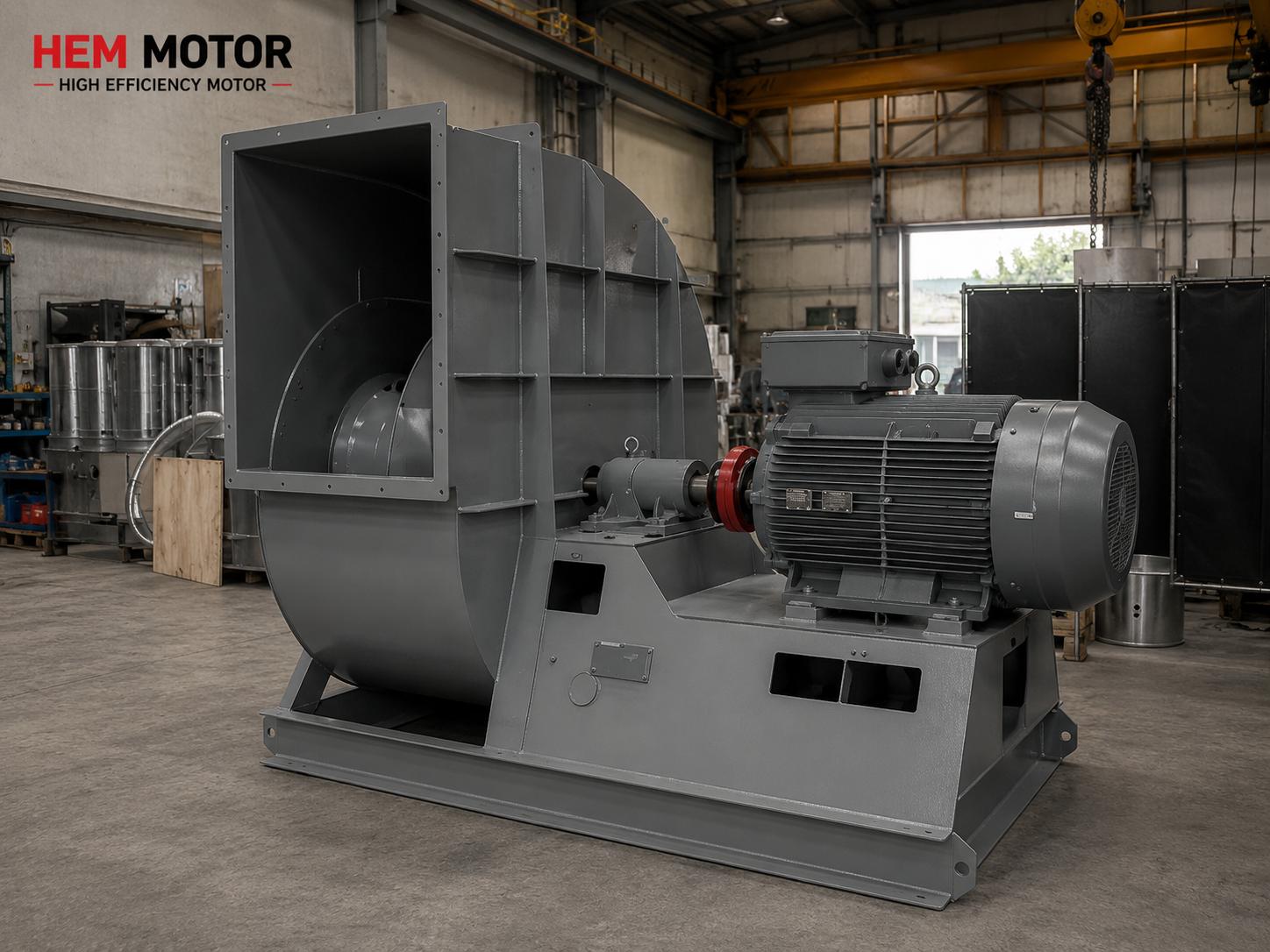
How Do Centrifugal and Turbo Blowers Work?
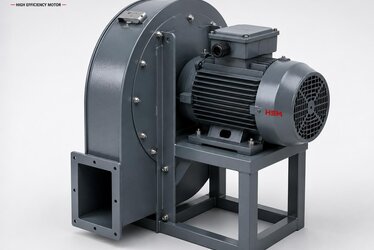
A centrifugal blower accelerates air by throwing it from the centre to the periphery with a rotating impeller and converts this velocity into pressure. A turbo blower applies the same principle more compactly and efficiently with an impeller spinning at very high speed. Both are dynamic (centrifugal-principle) machines defined by these characteristics:
- High airflow, low-medium pressure: moves a large air volume at relatively low pressure.
- Variable torque (quadratic) load: power demand rises with the cube of speed; this is a fan-like load characteristic.
- Continuous operation: in most applications it runs around the clock, i.e. in S1 duty.
- High speed: usually driven by 2-pole (3000 rpm) or higher-speed motors.
In this respect the centrifugal/turbo blower differs from positive-displacement machines that demand constant torque and high pressure. You can review fan and aspirator motor selection in our centrifugal and axial fan motor selection article, and dust collection applications in our aspirator and dust collection fan motor article.
Difference from Positive-Displacement Blower and Vacuum Pump
There are two basic machine families in high-airflow air delivery, and motor selection changes with this distinction:
- Dynamic (centrifugal/turbo) blower: High airflow, low-medium pressure. The load is variable torque (power rises rapidly with speed). As speed drops, airflow and power fall quickly; efficient airflow control with a VFD is possible.
- Positive-displacement (screw/lobe) blower: Pushes a fixed air volume each revolution; the load is constant torque, and torque stays relatively constant even as pressure rises.
- Vacuum pump: Reduces pressure on the suction side; again close to a constant-torque character.
To see this difference clearly, we recommend our positive-displacement (screw/lobe) pump motor and vacuum pump and industrial blower motors articles. We detail the effect of constant and variable torque loads on motor selection in our constant torque or variable torque article.
Power and Speed Selection: 2-Pole High Speed
Centrifugal and turbo blowers operate most efficiently at high speed. That is why they are mostly driven by 2-pole (3000 rpm) motors; turbo blowers can reach much higher speeds with a gearbox or high-speed drive. Points to watch in power selection:
- The shaft power the blower will draw is calculated from its airflow-pressure curve, with a safety margin added.
- Because it is a variable torque load, the power required at full airflow is taken as the basis; this point determines the motor's rated power.
- In 2-pole high-speed motors, bearing, balance and vibration sensitivity increase; quality manufacturing matters more.
You can find 2-pole high-speed applications in our IE4 2-pole 3000 rpm pump and fan article, the power calculation in our power calculation for pump, fan and conveyor article, and the pole-speed relationship in our 2, 4, 6 pole selection article.
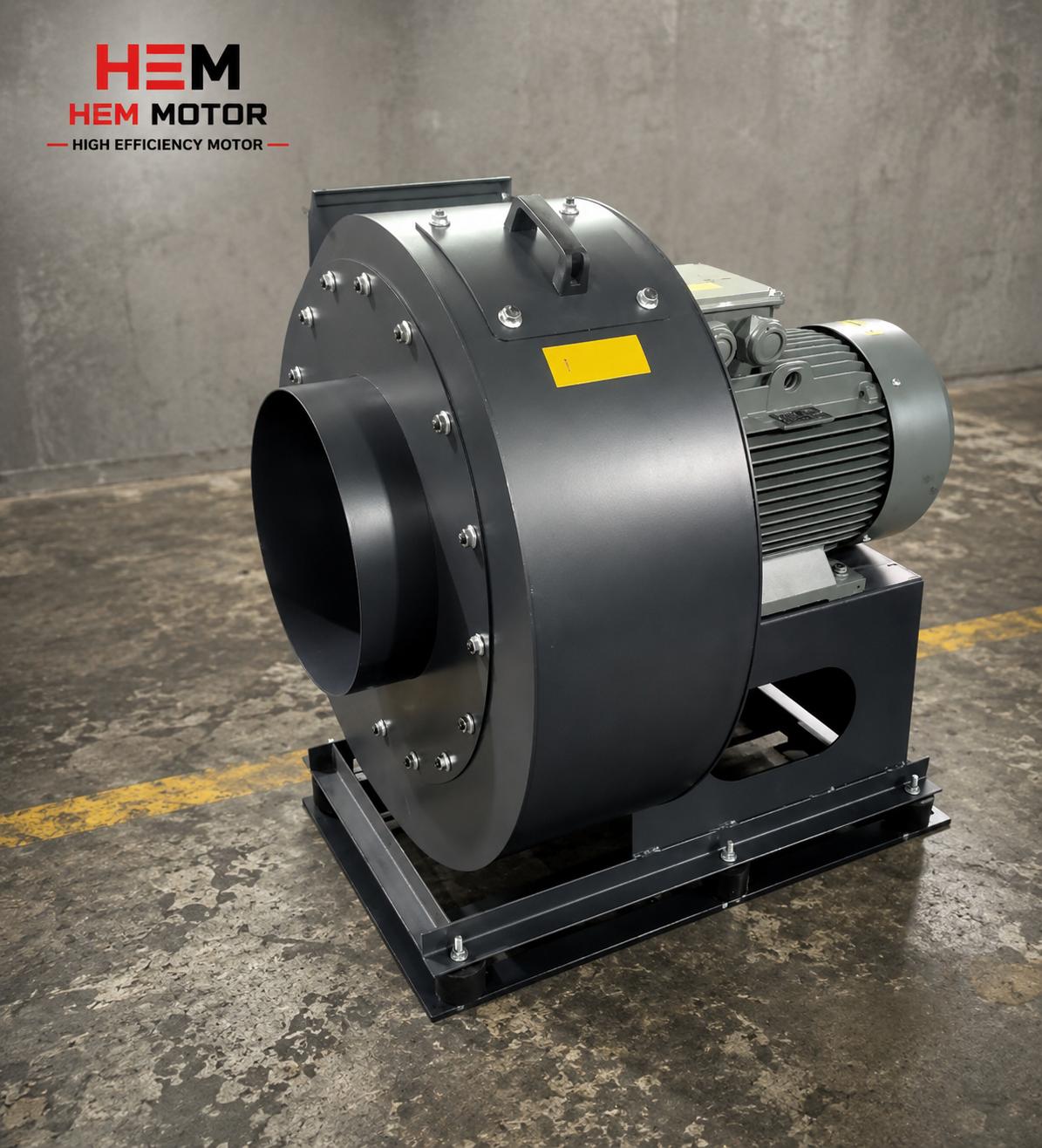
Application Areas: Aeration, Pneumatic Conveying, Process Air
Centrifugal and turbo blowers are used in many sectors requiring high air flow:
- Wastewater treatment (aeration): Large-flow air is blown to supply oxygen to aeration tanks. This is the blower's most common application.
- Pneumatic material conveying: Transporting dust, granules or light material through pipes with an air stream.
- Process and combustion air: Air supply to furnaces, dryers and combustion processes.
- Cooling and drying: Surface cooling or dehumidification with high-flow air.
We address wastewater and treatment plant motors in our water treatment and wastewater plant motors article, blower supply in biogas and treatment in our biogas and treatment plant mixer-blower article, and the air blower in fermentation in our fermentation and bioreactor plant article.
Duty Type, Protection and Cooling
A centrifugal/turbo blower runs around the clock in most applications, i.e. it is in S1 (continuous duty) class. In continuous operation the motor's thermal balance and cooling become critical. In selection:
- IP55 protection: standard protection against dust and external factors; a higher IP class should be considered in dusty environments.
- Class F insulation: provides high temperature endurance under continuous load.
- Cooling method: in continuous operation, IC411 (self-fan-cooled) or, if needed, IC416 (forced cooling) is evaluated.
You can find duty type selection in our duty type (S1-S6) selection article, cooling methods in our IC411 and IC416 cooling article, and IP protection selection in our IP protection class selection article. For efficiency in continuous process, our IE4 continuous process article is also helpful.
Airflow Control and Energy Savings with a VFD
Because centrifugal and turbo blowers are variable torque (quadratic) loads, reducing speed with a frequency drive (VFD) to lower airflow makes power consumption fall with the cube of speed. By the affinity law this provides large energy savings; the VFD is indispensable especially in applications where airflow demand varies, such as aeration. Speed control with a VFD instead of throttling (with a valve) offers both energy savings and more precise process control. We cover savings via the affinity law in our VFD savings with the affinity law article, motor-VFD compatibility in our VFD with asynchronous motor article, and harmonic and extra heating effects in our VFD harmonics and bearing current article. You can find savings in pumps and fans with a high-efficiency motor in our high-efficiency motor + frequency drive article.
Balance, Bearings and Vibration at High Speed
Because the motor spins at very high speed in centrifugal and especially turbo blowers, mechanical quality matters far more than in an ordinary industrial motor. At high speed, even a small balance error turns into large vibration forces; this shortens bearing life, increases noise and upsets impeller balance. Therefore in selection:
- Rotor balance: Precise balancing (with the half-key method if needed) is essential in 2-pole high-speed motors.
- Bearing selection and lubrication: High speed stresses the bearing more; the correct bearing type and grease interval determine life.
- Vibration limit: The acceptable vibration level per ISO standards is critical for both motor and blower life.
We address vibration and balance acceptance values in our vibration and balance (ISO 10816/20816) article, noise and vibration sources in our noise sources article, and bearing type and life in our bearing type and life article. For low-noise motor selection, see our low-noise motor selection article.
Efficiency and Operating Cost in Continuous Operation
A centrifugal blower often runs all day, even all year; this means the motor's energy consumption accounts for a large share of operating cost. In continuously running applications such as aeration, the motor's efficiency class (IE3/IE4) directly affects the electricity bill. A high-efficiency motor, although a little more expensive in the initial investment, pays for itself quickly in continuous operation. Moreover, when airflow control with a VFD is added, savings multiply. You can review savings with a high-efficiency motor under continuous load in our energy savings under continuous load article, the IE4 threshold in pump-fan-compressor in our IE4 threshold in pump, fan and compressor article, and total cost of ownership in our how TCO is calculated article.
Blowers in HVAC and Ventilation Applications
Centrifugal blowers are widely used not only for treatment and process air, but also in HVAC and general ventilation systems. Air handling units, duct-type ventilation and large building ventilation systems require high-airflow air movement. In these applications too, continuous operation, quietness and efficiency come to the fore; airflow control with a VFD provides both comfort and savings. We address HVAC fan motor supply in our fan motor supply in HVAC projects article, air handling unit and AHU fan supply in our IE4 HVAC air handling unit and AHU fan article, and ventilation motors in our duct-type axial fan motor article. You can find cold storage fan-compressor motors in our cold storage fan and compressor motors article.
Frequently Asked Questions
How many poles should I choose for a centrifugal blower motor?
Because centrifugal and turbo blowers operate most efficiently at high speed, they are usually driven by 2-pole (3000 rpm) motors. Turbo blowers can reach even higher speeds with a gearbox or high-speed drive. Power is determined by adding a safety margin to the blower's shaft power at full airflow.
Do I drive a centrifugal blower and a positive-displacement blower with the same motor?
No, their load characteristics differ. A centrifugal blower is a variable torque load (power rises rapidly with speed), while a positive-displacement blower is a constant torque load. This difference directly affects motor power selection and especially the energy gain from using a VFD; with a centrifugal, reducing speed with a VFD saves much more.
Is a VFD essential for an aeration application?
Not essential but strongly recommended. In aeration, the air flow demand varies with load and oxygen level. When speed is reduced with a VFD, power consumption falls with the cube of speed; this provides much higher energy savings and more precise process control than throttling with a valve.
Airflow-Pressure Curve and Correct Power Selection
What determines the motor power in a centrifugal blower is the blower's airflow-pressure (characteristic) curve. The blower produces a certain flow at a certain pressure at a given speed; the operating point is where the system resistance curve intersects the blower curve. The motor power is selected based on the shaft power at this operating point, with a safety margin added. A wrong choice creates two problems: if the motor is undersized it overloads and overheats at full airflow; if oversized it runs at a low load ratio, and efficiency and power factor drop. Also, if the system resistance changes in a centrifugal blower (for example, a filter clogs), the operating point shifts and the power demand changes; therefore real operating conditions must be considered. We address power calculation in our power calculation for pump, fan and conveyor article, load ratio and correct sizing in our load ratio and correct sizing article, and torque character in variable speed applications in our constant torque or variable torque article.
Get a Quote
We supply high-speed, continuous-duty (S1), IP55-protected and VFD-compatible motors for your centrifugal and turbo blower systems. For support with airflow-pressure-power calculation, pole selection and energy-efficient airflow control, contact us at +90 (532) 345 49 86 or via our contact page. For pump, fan and aspirator motors, see our centrifugal pump motor selection article and our electric motors blog.
Purchasing and Selection Checklist
- Have you clarified the blower type (centrifugal/turbo dynamic or positive-displacement)?
- Have you determined the required air flow and pressure?
- Have you calculated the blower's shaft power at full airflow and added a safety margin?
- Have you chosen 2-pole (3000 rpm) or a suitable speed for high speed?
- Have you defined the operating profile (S1 continuous duty)?
- Have you specified IP55 protection and Class F insulation?
- Have you evaluated the cooling method (IC411/IC416) for continuous operation?
- If air flow demand varies, have you planned speed control with a VFD?
- Have you questioned the balance and vibration quality at high speed?