English
 Türkçe


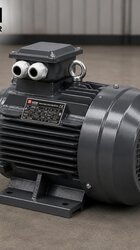
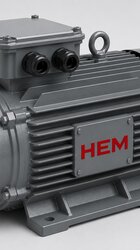
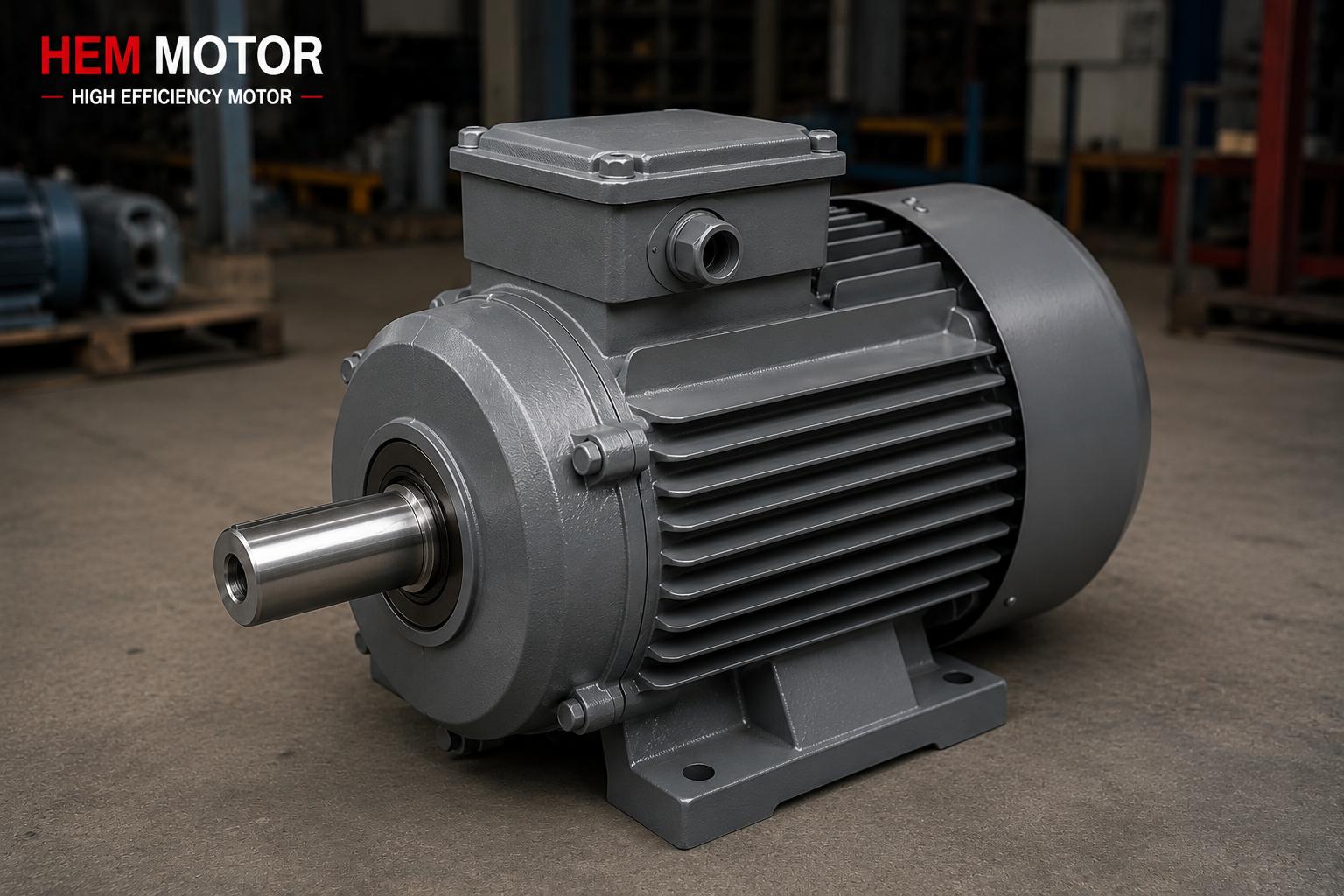

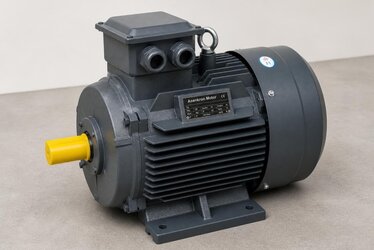
Air handling units (AHUs) and ventilation fans account for a significant share of a building's energy consumption and often run for most of the day, even 24/7. This continuous operation puts efficiency and quietness front and centre in motor selection. IE4 super premium efficiency motors are a strong choice for AHU and fan applications thanks to both low energy consumption and a low noise level. In this article we cover IE4 motor supply for air handling units and ventilation fans under the headings of efficiency, quiet operation, plug fan vs belt-driven fan, flow control with a VFD, continuous operation, IP55 protection and correct speed selection.
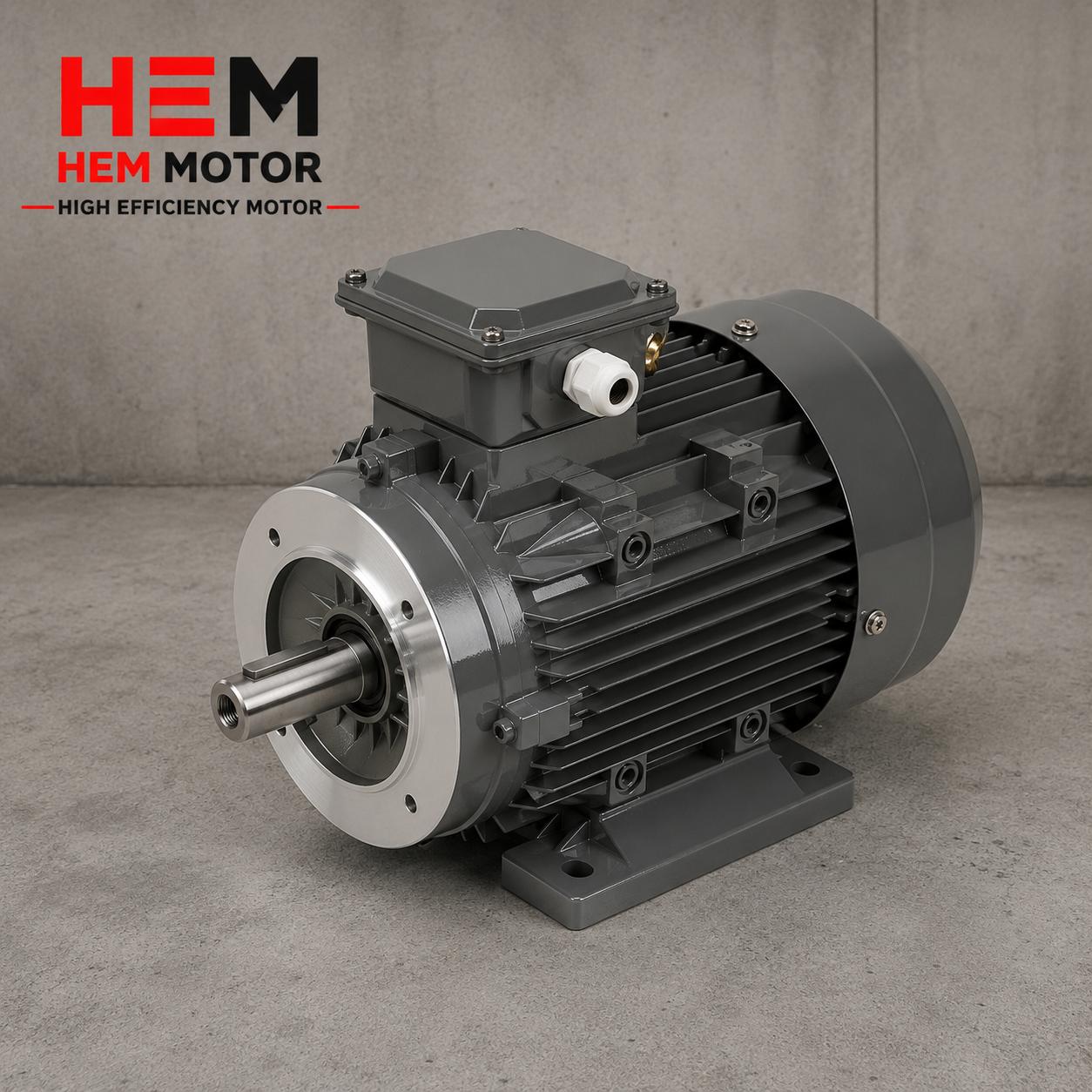
Why IE4 in HVAC and AHU Applications?
Most of a motor's total cost is not the purchase price but the electricity it consumes over its working life. Because HVAC fans run for very long hours, even a small difference in efficiency class turns into noticeable savings on the annual bill. IE4 motors do the same job with less electricity by reducing iron, copper and friction losses. We explained where losses are reduced in our efficiency losses in IE4 motors article. You can find which application requires IE4 in our IE4 threshold in pumps, fans and compressors content.
In the HVAC sector, efficiency is no longer just a cost issue but also a regulatory one. We compiled which power and dates the efficiency mandate applies to in our IE3 and IE4 efficiency mandate article. For the HVAC-specific motor range and fan applications, the fan motor supply in HVAC projects content addresses project-based bulk purchasing.
Where Are Motors Used in an Air Handling Unit?
An air handling unit is not a single motor; it contains several drive points. The largest power consumers are the supply and exhaust fan motors. Alongside these, there is the drive motor of the heat recovery wheel, the damper actuators and, in some systems, the humidification pump motor. The focus of this article is the supply and exhaust fan motors that make up most of the unit's energy consumption, because the real savings potential is here.
Correct sizing of the fan motors determines both the efficiency and the quietness of the system. An oversized motor runs inefficiently at partial load and means unnecessary investment; an undersized motor is constantly strained and leads to early failure. For correct power calculation, we recommend our motor power calculation in pumps, fans and conveyors article and, for correct sizing by load ratio, our load ratio and correct sizing content.
Quiet Operation: Critical for HVAC
Air handling units are often located close to occupied spaces; in buildings such as offices, hospitals, shopping malls and hotels, noise comfort directly affects user satisfaction. IE4 motors run quietly thanks to their optimized magnetic design and low vibration level. We covered the quietness and low-vibration advantage of IE4 motors in our IE4 quiet and low vibration article.
Noise sources are divided into magnetic, mechanical and aerodynamic; on the motor side magnetic and mechanical noise dominate, on the fan side aerodynamic noise dominates. You can find noise sources in our noise sources article and low-noise motor selection in our low-noise motor selection content. For vibration acceptance values, the vibration and balance ISO 10816 article is a guide.
Plug Fan or Belt-Driven Fan?
AHU fans have two basic drive approaches. In the plug fan (beltless, direct-driven) arrangement, the motor is coupled directly to the fan impeller; belt-pulley losses are eliminated and efficiency rises. In the belt-driven fan arrangement, the motor drives the fan through a belt-pulley; this gives flexibility in adjusting the speed ratio but requires belt losses and maintenance. The high efficiency of IE4 motors maximizes system efficiency especially in the direct-driven plug fan arrangement. While part of the power the motor produces is lost to belt-pulley friction in a belt-driven arrangement, this loss is completely eliminated in a plug fan arrangement; so the efficiency advantage of the IE4 motor is reflected directly into the system. In addition, the plug fan arrangement has no maintenance items such as belt breakage, tension adjustment and pulley alignment, which reduces the operating burden.
In a belt-driven arrangement, the speed can be set with the pulley diameter; review our speed adjustment with pulley-belt article on this. For power and speed selection by fan type, the centrifugal and axial fan motor selection content offers a comprehensive guide. If a coupling is used between motor and fan, the coupling selection and shaft alignment article is important.
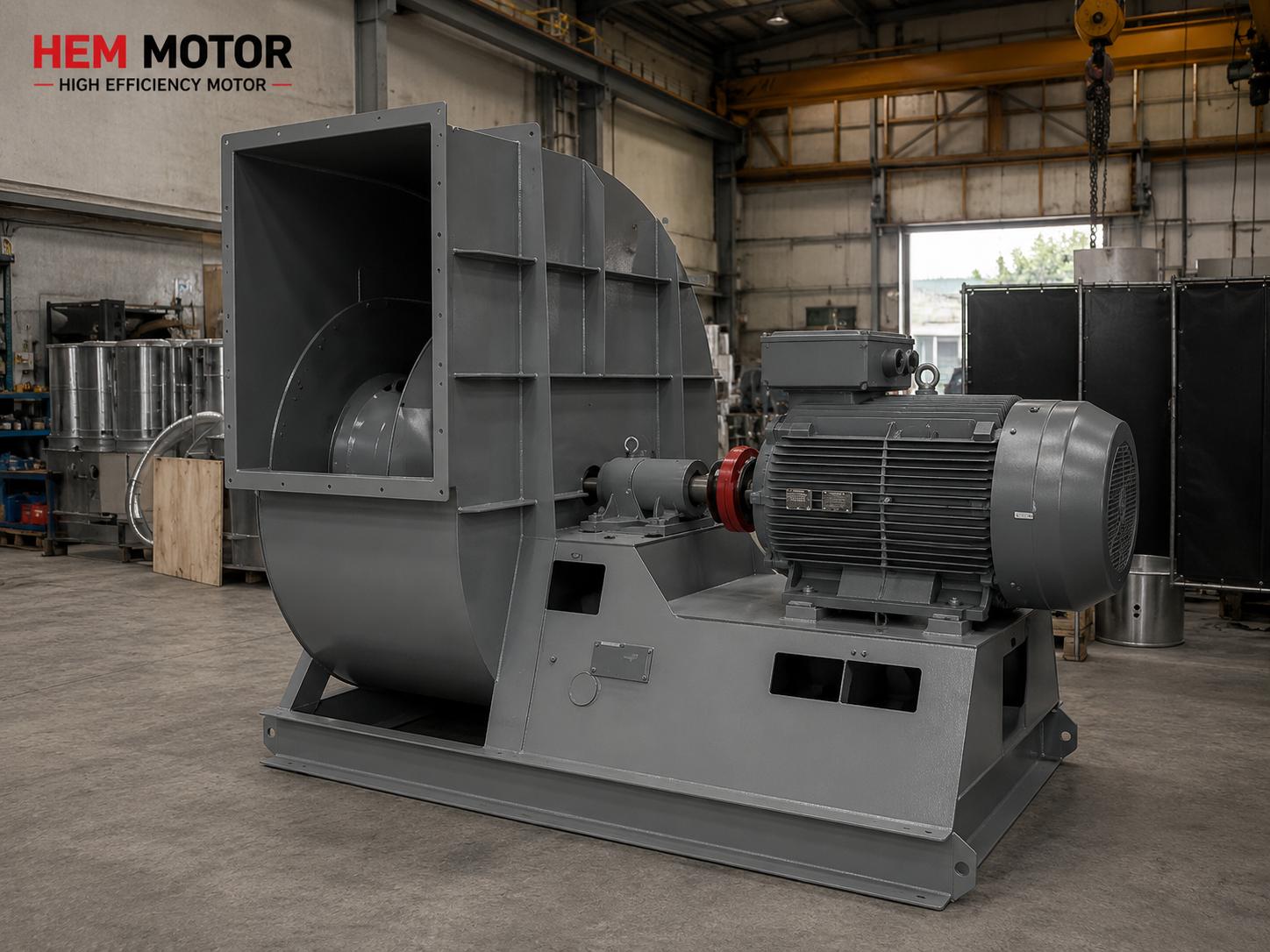
Flow Control with a VFD
The greatest savings potential of HVAC systems comes from adjusting flow to demand instead of running at fixed speed. When fan speed is reduced with a variable frequency drive (VFD), power consumption falls by the cube of the ratio per the affinity law; that is, halving the speed theoretically reduces power to one eighth. For this reason, using a VFD in variable air volume (VAV) systems provides very strong savings. We covered this gain in detail in our VFD savings with the affinity law article.
You can find the logic of an asynchronous motor working with a VFD in our VFD with asynchronous motor article. Review whether constant or variable torque is needed in a variable-speed application in our motor selection in variable-speed applications content; fans are a typical variable-torque load. For the efficiency gain of combining an IE4 motor with a gearbox or drive, the IE4 motor gearbox combination article is useful.
Continuous Operation and Duty Type
HVAC fans typically run continuously (S1 duty type). This operating regime requires the motor to withstand heating at continuous full or partial load. Because IE4 motors generate fewer losses, they heat less; this extends insulation life. Read our duty type S1-S6 selection article for correct duty type selection.
In continuously running motors, monitoring winding temperature prevents early failure. We covered temperature monitoring with PT100 and PTC thermistors in our motor temperature monitoring article. For the effect of insulation class (F/H) on life, review our winding and insulation class content, and for efficiency at partial load, our part and low load efficiency article.
IP55 Protection and Environmental Conditions
Motors inside an AHU can encounter humidity, condensation and dust. Standard IP55 protection guards against dust and water jets from any direction; this is sufficient for most HVAC applications. In tougher environments (outdoor air units, high humidity) a higher protection class may be required. We covered IP protection class selection in our IP protection class selection article.
For cooling tower and chiller fans facing the outdoor environment, the protection requirement is higher; the cooling tower and chiller fan motors content is a guide here. For smoke exhaust and jet fan applications that require high-temperature endurance, we recommend our jet fan motor supply article. For smoke exhaust in shopping mall and car park projects, the smoke exhaust fan motor content is valuable.
Total Cost and Payback
To make the right decision on an HVAC fan motor, you should look not at the purchase price but at the total cost of ownership (TCO). Over long operating hours, electricity consumption makes up most of the motor's lifetime cost; therefore the IE4 investment, slightly higher at the start, pays for itself in a short time. We covered the TCO logic in our how to calculate TCO article and how to measure real savings in our measuring and documenting annual savings content.
In the savings calculation, you should also consider the difference between nameplate efficiency and the real efficiency obtained in the field; we explained this in our nameplate vs field efficiency article. You can find the investment decision between IE3 and IE4 in our IE3 vs IE4 investment content.
Correct Speed Selection
In fan motors, speed selection determines the balance of air flow and noise. Higher-speed (2-pole, 3000 rpm) motors are compact but can be noisier; lower-speed (4-pole 1500 rpm or 6-pole 1000 rpm) motors run quieter and more balanced on large-diameter fans. While 1500 rpm is the most common choice in general ventilation, 1000 rpm stands out on large-diameter fans where quiet operation is desired. The basic principle in speed selection is this: providing the same air flow with a larger-diameter, lower-speed fan is generally a quieter and more efficient solution. Therefore, in noise-sensitive spaces, a combination of a slightly larger fan and a lower-speed IE4 motor is preferred. Choosing a higher speed gives compactness but increases aerodynamic noise. You can find the pole-speed relationship in our 2, 4, 6 pole selection and efficiency and pole count articles.
For correct power selection of IE4 2-pole 3000 rpm motors in pumps and fans, the IE4 2-pole 3000 rpm motor article is useful. We explained why the actual speed is lower than the rated speed due to slip in our slip and actual speed content. You can review our product range on the IE4 electric motors and high efficiency electric motors pages, and reach other categories via our HEM Motor home page.
Frequently Asked Questions
Why should IE4 be preferred in HVAC fans?
Because HVAC fans run for very long hours, often 24/7. As operating hours increase, even a small difference in efficiency class turns into noticeable savings on the annual electricity bill. IE4 motors also heat less and run quieter; this extends insulation life and improves user comfort.
Is there an efficiency difference between plug fans and belt-driven fans?
Yes. In a plug fan (direct drive) arrangement, system efficiency is higher because there is no belt-pulley loss. A belt-driven arrangement gives flexibility in speed adjustment but requires belt losses and periodic maintenance. The high efficiency of an IE4 motor gives the best result especially in a plug fan arrangement.
Is using a VFD mandatory?
It is not mandatory, but it provides very large savings in systems that need variable air volume. Per the affinity law, reducing fan speed cuts power by the cube of the ratio. In fixed-flow systems, you can still run efficiently with an IE4 motor without a VFD; in variable-flow systems, a VFD is strongly recommended.
Get a Quote
If you would like support in IE4 motor selection, the plug/belt-driven fan decision, flow control with a VFD and bulk supply for your air handling unit and ventilation fan project, get in touch with us. If you share the fan type, flow, pressure and operating regime, we will determine the most suitable motor together. You can reach us at +90 (532) 345 49 86 or send your request via our contact page.
Purchasing and Selection Checklist
- Determine the fan type (plug fan / belt-driven, centrifugal / axial) and drive arrangement.
- Calculate the motor power based on the required air flow and pressure.
- Define the operating regime (continuous S1) and daily operating hours.
- Select the IE4 class for efficiency priority; savings become pronounced over long operating hours.
- Make the speed/pole selection according to the noise-flow balance (1500 common, 1000 quiet).
- If variable flow is required, plan speed control with a VFD.
- Determine IP55 or a higher protection class according to environmental conditions.
- Add winding temperature monitoring (PT100/PTC) for continuous operation.