English
 Türkçe

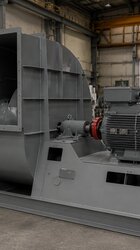
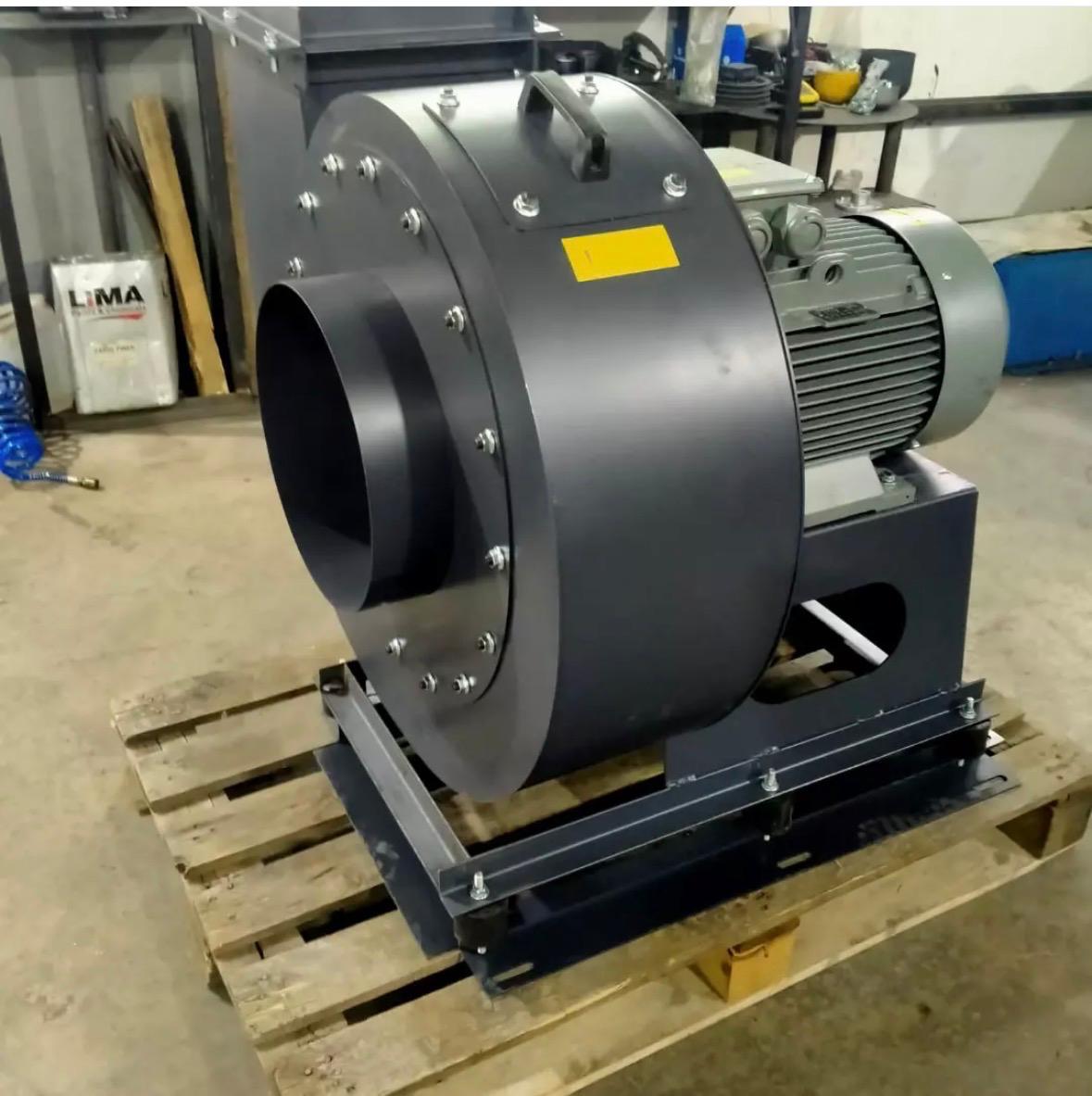

Roof exhaust fans are indispensable ventilation equipment that expel dirty air, heat, moisture and smoke from buildings by the shortest route. They are used across a wide range, from kitchen hood lines to car park exhaust, from production facilities to warehouses. However, choosing a roof exhaust fan motor, unlike a fan operating indoors, means the motor is exposed directly to the open air, rain, snow, sun and wind. That is why outdoor protection lies at the heart of the selection.
A poorly chosen motor, even if it runs well for the first few months, fails early due to water ingress, condensation or overheating. A correctly chosen motor, on the other hand, serves quietly and efficiently for years. In this article we address roof exhaust fan motor selection along three fundamental axes: outdoor use and IP protection, power and pole selection based on the fan's operating point, and finally efficiency and condensation measures in continuous operation.
The Most Critical Decision: Outdoor Use and IP Protection Class
For a motor operating on a roof, the most critical decision is the IP protection class. The first digit of the IP code defines protection against solid objects and dust ingress, while the second digit defines protection against water ingress. In a roof exhaust fan, water protection comes before everything else, because the motor is permanently in the open air and is in contact with rain, melting snow and condensation water.
IP55 or IP65?
In general ventilation applications, if the motor sits inside a suitable exhaust housing and is partly sheltered from rain, IP55 protection is often sufficient. IP55 is significantly protected against dust and withstands low-pressure water jets from any direction.
However, when conditions get harsher, IP65 should be preferred. IP65 is fully sealed against dust (dust-tight) and withstands stronger water jets. IP65 is recommended in the following situations:
- Heavy rain and open roofs exposed to prolonged rainfall.
- Snow load and cold climates where melting snow reaches the motor area.
- Coastal sites and regions with salty, humid atmosphere.
- Industrial roofs subject to wash-down water or pressure cleaning.
The basic principle in choosing a protection class is this: a lack of protection is a costly mistake to reverse, whereas excess protection is only a small cost difference. When in doubt, choosing the higher class is usually the right decision. To determine the correct class, the IP protection class guide can be reviewed.
Sizing the Motor to the Fan's Operating Point
Once the correct protection class is chosen, the second step is to determine the motor's power correctly. The most common mistake here is selecting the motor "by guesswork." In reality, the motor is sized first to the fan's operating point. The operating point is defined by two quantities: airflow (the volume of air to be moved in m³/h) and pressure (the static pressure in Pa needed to overcome the system's resistance).
A fan's power requirement depends on the product of airflow and pressure and inversely on the fan's efficiency. Duct length, elbows, filters and grilles increase system resistance; this means higher pressure and therefore a more powerful motor. For this reason, the system's pressure loss must be calculated correctly before the motor is selected.
Pole Count and Speed: Quietness or Pressure?
The motor's pole count determines the speed, and this directly affects the fan's character. At the same power, higher speed means more air movement and noise, while lower speed means quieter and more efficient operation.
- 2-pole (about 3000 rpm): Preferred for long, resistant duct runs requiring high pressure and for high-static-pressure exhausts. It is the noisiest option.
- 4-pole (about 1500 rpm): The most common choice for general ventilation in terms of the balance between efficiency and quietness.
- 6-pole (about 1000 rpm): Ideal in applications near offices, hospitals and living spaces where low noise and quietness are the priority.
For general ventilation, 4 or 6 poles are chosen for quietness and efficiency, while a 2-pole motor is chosen for demanding lines requiring high pressure. The right pole choice is decisive for both comfort and energy.
Continuous Operation (S1), Efficiency and Energy Cost
The majority of roof exhaust fans operate non-stop, that is in the S1 continuous duty cycle. If a motor runs for most of the day, or even seven days twenty-four hours, even a small difference in its efficiency turns into a large amount on the annual energy bill. This is exactly where the efficiency class directly affects operating cost.
For this reason, an IE3 or IE4 efficiency-class motor should be preferred in continuously running exhausts. A high-efficiency motor pays back the initial price difference in a short time through energy saving and continues to benefit the operation throughout its life. In a continuously running fan, efficiency is a decision at least as important as the protection class.
Condensation Risk and Measures
A motor on a roof can experience condensation on its inner surfaces due to day-night temperature differences, cold weather and humidity. When the motor stops, water droplets form on the cooling winding and housing; over time this moisture weakens the insulation and corrodes the bearings. Two basic measures stand out against condensation:
- Anti-condensation heater: It switches on when the motor stops and keeps the winding slightly above ambient temperature, preventing condensation. It is a strong solution in cold and humid climates.
- Tropicalization: Coating the windings with special varnishes for an additional protective layer. It extends insulation life in high humidity, salty air and tropical environments.
In coastal sites, cold climates or high-humidity industrial environments, evaluating these two measures together significantly extends motor life. For the right fan-motor match, the exhaust fan motor selection guide is a useful resource.
Motor Type: Direct Drive or Belt Drive?
In roof exhaust fans, the motor is connected to the fan impeller by two basic methods: direct drive or belt drive. This choice matters in terms of noise, maintenance and speed flexibility.
In direct drive, the fan impeller is connected directly to the motor shaft. Its advantage is the absence of maintenance burdens such as belt wear, belt replacement and alignment; the system is quieter and more efficient because there is no room for belt losses. Its disadvantage is that the speed is tied directly to the motor's pole count, meaning flexibility is limited. Today this limit is largely overcome with a variable frequency drive (VFD); thanks to the drive, the fan speed can be adjusted to demand.
In belt drive, the motor and fan are on separate axes, and by changing pulley diameters the fan speed can be brought to the desired value. This is advantageous especially in hot exhaust applications where the motor must be positioned away from the high-temperature airflow. However, the belt requires regular maintenance, tension checks and periodic replacement.
Hot Exhaust and Smoke Extraction Applications
Some roof exhaust fans take on demanding duties such as not only clean air but kitchen exhaust, hot process air or smoke extraction in a fire. In these applications, protecting the motor from the hot airflow is critically important. High-temperature air disrupts the motor's cooling and rapidly ages the insulation.
For this reason, designs where the motor is positioned outside the airflow are generally preferred in hot exhaust applications; belt drive is advantageous here because the motor can stay away from the hot stream. In fire-safety applications requiring smoke extraction, special motors that can withstand high temperature for a defined period are used. In such critical applications, the motor's duty must be shared clearly and the selection made accordingly.
- General ventilation: A standard IE3 motor, IP55, 4 poles is sufficient.
- Hot exhaust: Motor away from the airflow; belt drive or special temperature rating.
- Smoke extraction: Specially certified motors withstanding high temperature for a defined period.
- Coastal / humid: IP65, tropicalization and anti-condensation heater together.
The Right Supply: Stock, Power and Protection Class Together
Finding the right motor in a roof exhaust fan project often requires three variables to be satisfied at the same time: sufficient power, the correct pole count and a suitable IP protection class. The ability to supply this trio quickly from stock is critical for completing the project on time.
While IP55 4-pole motors for general ventilation are widely available from stock, IP65 and anti-condensation-heater versions for demanding conditions such as coastal sites or cold climates are supplied to order. Sharing your application's airflow, pressure and ambient conditions and obtaining stock status and a quote for the right motor is the start of a sound selection.
For a supply approach that evaluates the right power, pole and protection class together, requesting an application-specific quote against current electric motor prices is the soundest route.
Frequently Asked Questions
Is IP55 enough for a roof exhaust fan?
In general ventilation applications, if the motor is inside a suitable housing and not directly exposed to a water jet, IP55 is often sufficient. However, in demanding conditions such as heavy rain, snow load, coastal sites or pressure washing, IP65 should be preferred. When in doubt, choosing the higher protection class prevents failures that are costly to reverse.
How many poles should an exhaust motor have?
This depends on the fan's operating point. A 2-pole motor suits long, resistant duct runs requiring high pressure, a 4-pole motor suits general ventilation for efficiency and quietness, and a 6-pole motor suits applications near living spaces requiring very low noise. The airflow (m³/h) and pressure (Pa) should be determined first, then the pole count chosen.
What should be done against condensation?
In cold and humid climates, an anti-condensation heater that switches on when the motor stops keeps the winding above ambient temperature and prevents condensation. In high-humidity and salty-air environments, applying tropicalization to the windings provides extra protection. When these two measures are evaluated together, the motor's insulation and bearing life is markedly extended.