English
 Türkçe


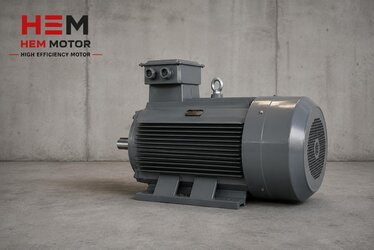
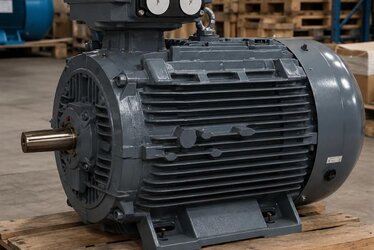
Selecting the right electric motor for a pump is not just about answering "how many kW?" The right selection is a chain that starts from the flow rate (Q) the pump must carry, moves to the head (H), then to hydraulic power and, via efficiency, to the required shaft power, and continues through speed, pump type, mounting, protection class and items like NPSH. Skipping one link in this chain leads either to an oversized, expensive motor or to an inadequate solution that overheats and fails early. In this comprehensive guide we address pump motor selection step by step: starting from flow and head to find hydraulic power, accounting for pump efficiency to find shaft power, the right speed (2900/1450 rpm), the pump type (centrifugal, submersible, multistage), IP protection and mounting type, NPSH and cavitation risk, and the role of the variable frequency drive (VFD). As HEM Motor, we supply pump motors in IE3 and IE4 efficiency classes, with flanged (B5/B14) and foot (B3) mounting options, from 0.25 kW to 355 kW, so we can explain every step in this guide with a concrete product equivalent.
Step 1: Flow Rate (Q) and Head (H)
Every pump motor selection starts with two fundamental values: the amount of liquid the pump must move per second or hour (flow rate, Q) and how high or against what pressure it must push the liquid (head, H). Together, these define the work the pump must do.
What Do Flow and Head Tell Us?
Flow is usually expressed in cubic meters per hour (m3/h) or liters per second (L/s) and shows how much liquid the system needs. Head is expressed in meters (meters of water column) and is the sum of the height the pump must overcome, friction losses and system pressure. A booster pumping water to the upper floors of a building and a pump irrigating a large field operate at very different points in terms of flow and head. These two values determine the operating point read from the pump curve and form the basis of motor selection.
System Curve and Operating Point
A pump settles at an operating point together with the system. As system resistance (pipe diameter, length, elbows, height) increases, the pump must produce higher pressure to deliver the same flow. Therefore, before determining motor power, it is essential to know the Q and H values at the pump's real operating point. A wrongly assumed operating point leads either to overloading the motor or to selecting it unnecessarily large.
Step 2: From Hydraulic Power to Shaft Power
Once flow and head are known, the next step is to find the power the pump transfers to the water (hydraulic power) and the power the motor must deliver to the shaft to provide it (shaft power).
The Concept of Hydraulic Power
Hydraulic power is the useful power the pump imparts to the liquid and depends on the product of flow and head, the liquid density and gravity. So at the same flow, as head increases, or at the same head, as flow increases, hydraulic power grows. This shows why motor selection cannot be made by flow alone or by pressure alone; the two together determine the power.
Pump Efficiency and Shaft Power
No pump receives all the power it gives the water through the shaft; pump efficiency lies in between. Shaft power is found by dividing hydraulic power by pump efficiency; as pump efficiency drops, the shaft power the motor must deliver rises. That is why an inefficient pump or one operating off its operating point requires a larger motor. After shaft power is calculated, the motor rated power is selected slightly above this value with a suitable power margin. To calculate the required power step by step for pumps, fans and conveyors, our motor power calculation: required kW for pump, fan and conveyor article is a practical resource.
Correct Power Margin and Avoiding Oversizing
Leaving a reasonable power margin on a pump motor is correct; however, choosing a much larger motor "just in case" needlessly increases both purchase cost and energy consumption. A motor running at partial load loses both efficiency and power factor. We covered the effect of correct sizing on energy and efficiency in our at what load to run a motor: efficiency, power margin and correct sizing article. For correct power matching in centrifugal pumps, the centrifugal pump motor selection: flow, head and power matching article also makes this step concrete.
Step 3: Speed Selection (2900 / 1450 rpm)
In a pump motor, speed is a critical choice that determines both the pump's character and the motor's frame size. The two most common options are 2-pole (about 2900 rpm) and 4-pole (about 1450 rpm) motors.
2900 rpm (2 Pole): High Pressure and Compact
2-pole high-speed motors are preferred in applications requiring high pressure and a compact build (booster, high-pressure fire pump, some multistage pumps). High speed means a smaller frame at the same power; however, the tendency toward noise and vibration is relatively higher. We covered motor selection for booster applications in our booster motor replacement: selecting the right motor for the existing pump from the nameplate article.
1450 rpm (4 Pole): Balanced and Quiet
4-pole motors suit more balanced, quieter and generally longer-life pump applications. In circulation pumps, many centrifugal pumps and continuously running systems, 1450 rpm is often preferred. If you wonder why the speed is around 1450 rather than exactly 1500 due to slip, our slip and actual speed in asynchronous motors article explains this difference. Speed selection is not just a speed preference but a decision that directly determines pump performance and motor cost.
Step 4: Pump Type (Centrifugal, Submersible, Multistage)
The pump type changes the motor's mounting, protection and sometimes its structure. For the same flow-pressure, different pump types require different motor solutions.
Centrifugal Pump Motors
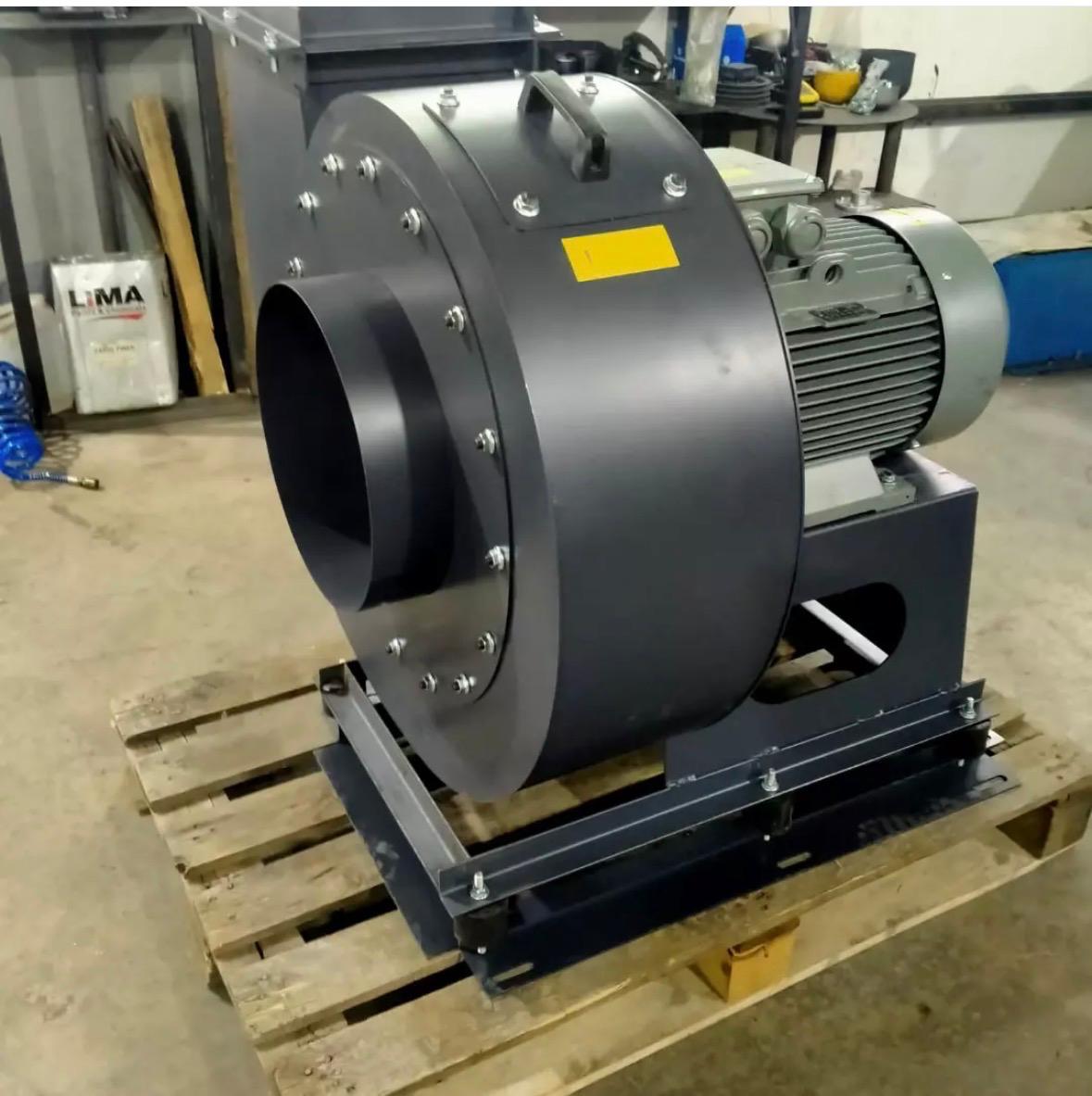
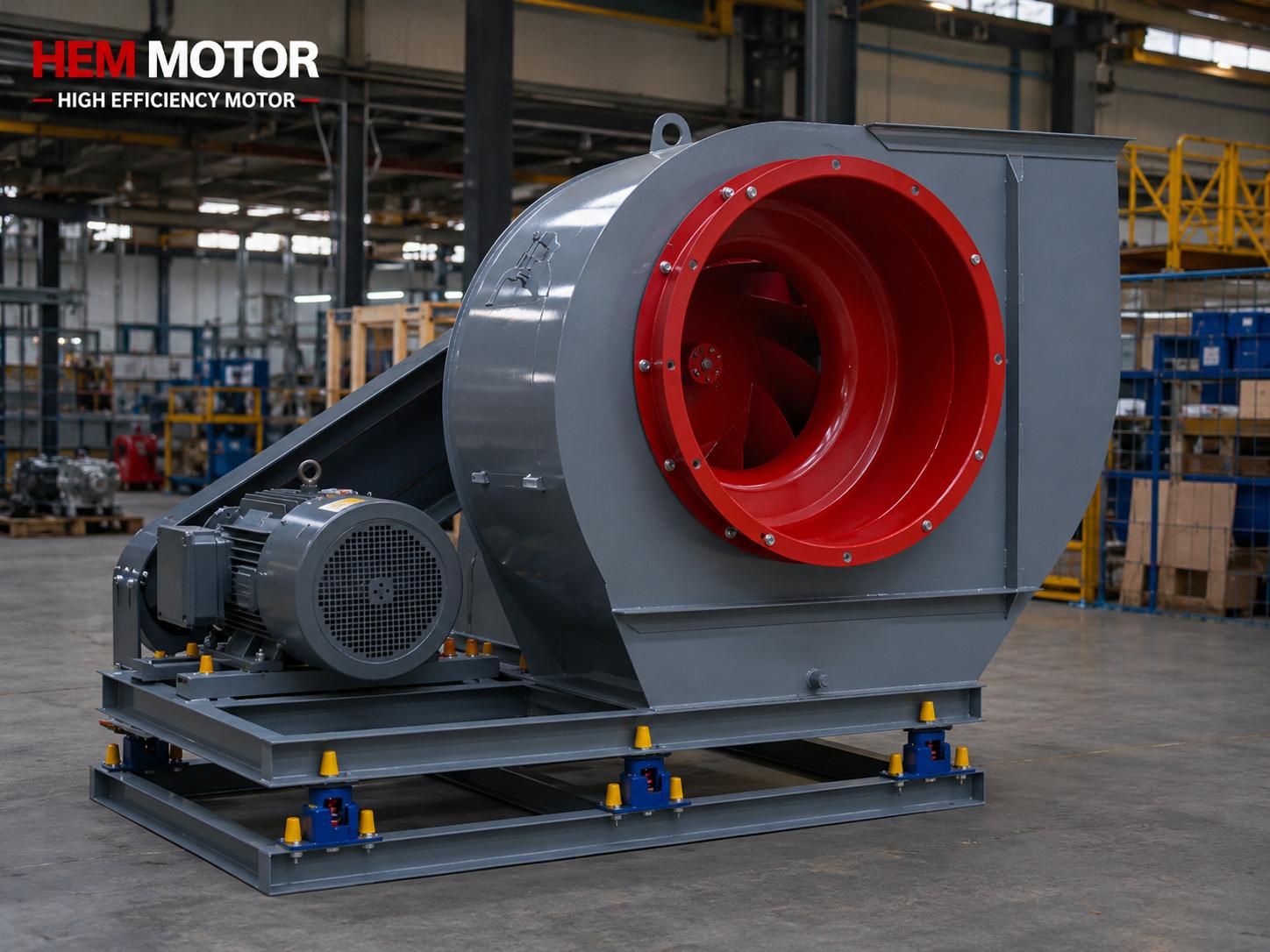
The most common type is centrifugal pumps; they can be single-stage or multistage. These pumps usually run directly coupled with flanged (B5) motors. Centrifugal pumps have a variable-torque character: flow varies with speed, pressure with the square of speed and power with the cube of speed. This feature explains why reducing speed with a VFD provides large energy savings and is the basis of the affinity law we will address later.
Submersible (Deep Well) Pump Motors
In deep well applications the motor operates inside the water within a narrow well bore; therefore long, slim-built special submersible motors are used. In selecting these motors, the well diameter and sealing are as decisive as flow, pressure and speed. Deep well pump motor selection: a purchase guide by flow, pressure and speed calculation details this special class.
Multistage and High-Pressure Pumps
In booster and vertical-shaft systems requiring high pressure, multistage pumps are used; each stage increases the pressure. These pumps usually run with high-speed motors. Our multistage vertical-shaft pump motor selection: high-pressure water and booster applications article focuses on this type. Positive displacement (screw/lobe) pumps, unlike centrifugal, require constant torque; we explained this difference in our positive displacement pump motor selection: constant torque article.
Step 5: Mounting, IP Protection and NPSH
After power and speed are determined, it is time for the motor's physical and environmental compatibility: mounting type, protection class and cavitation risk on the suction side.
Mounting Type: Flanged or Foot?
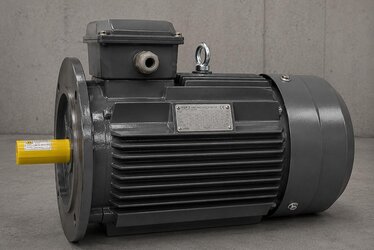
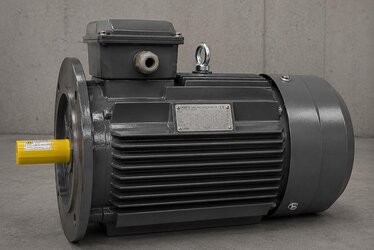
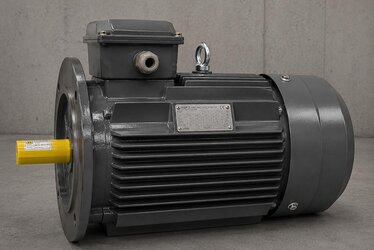
Pump motors are mostly bolted directly to the pump body with flanged (B5/B14) mounting; foot (B3) mounting is used in coupled systems. The wrong mounting type means the motor cannot be attached to the pump. We covered flange selection in our B5 flanged or B14 flanged: motor mounting type selection guide article; shaft diameter and key compatibility are also critical for the coupling.
IP Protection Class
Pump motors usually operate in humid environments; therefore the protection class matters. While IP55 is sufficient for most applications, higher protection may be needed in environments with water splash or washdown. Our electric motor IP protection class selection (IP55, IP65, IP66) article explains which class is needed in which environment.
NPSH and Cavitation Risk
In pump selection, the NPSH (net positive suction head) on the suction side is critical; if the NPSH the pump requires exceeds what the system provides, cavitation occurs and both pump and motor are damaged. Although NPSH does not directly change the motor's electrical selection, cavitation-induced vibration and load fluctuation affect the motor's life and bearings. That is why the pump-motor group must be evaluated as a whole, considering pump, pipe and motor losses together. For a holistic view of system efficiency, our real efficiency in a pump system: motor, pump and pipe losses article is a guide.
Step 6: Efficient Pump Drive With a VFD
Many pump systems operate not at constant but at variable flow. In this case a variable frequency drive (VFD) provides great benefit for both energy saving and process control.
Affinity Law and Energy Saving
In centrifugal pumps power varies with the cube of speed; that is, reducing speed somewhat decreases power consumption by a much larger proportion. Reducing speed with a VFD instead of throttling a valve therefore provides serious energy savings. We explained this logic in detail in our energy saving in pumps and fans with a VFD: the affinity law article. When a VFD is needed and how to select it is explained in our VFD with an asynchronous motor article.
Protecting the Motor in a VFD System
In pump motors running with a VFD, attention must be paid to issues such as cooling at low speed and bearing currents. If there is full load at continuous low speed, an external forced cooling fan matters; for grounding and bearing currents, correct EMC connection becomes important. For an efficient motor to provide real savings with a VFD, these details must be set up correctly.
Pump Motor Selection Checklist
To select the right pump motor, apply the following steps in order:
- Determine the flow (Q) and head (H) at the real operating point.
- Calculate hydraulic power and find shaft power by accounting for pump efficiency.
- Select the motor rated power with a suitable margin above shaft power; avoid oversizing.
- Choose the speed by application: 2900 rpm for high pressure, 1450 rpm for balanced/quiet operation.
- Clarify the pump type: centrifugal, submersible (deep well) or multistage.
- Verify the mounting type (B5/B14/B3) and shaft-key-flange compatibility.
- Choose the IP protection class by environment (IP55 and higher if needed).
- Assess NPSH and cavitation risk; consider the pump-motor group as a whole.
- Plan a VFD if there is variable flow and plan low-speed cooling.
Frequently Asked Questions
How do I find how many kW the pump motor should be?
First determine the flow (Q) and head (H) at the real operating point; from these, calculate hydraulic power. Divide hydraulic power by pump efficiency to find shaft power and select the motor rated power slightly above this value with a reasonable margin. Looking only at flow or only at pressure is misleading; the two together determine the power.
Should I choose 2900 rpm or 1450 rpm for a pump motor?
For applications requiring high pressure and a compact build (booster, high-pressure pump), 2-pole 2900 rpm is suitable. For circulation and general centrifugal pumps requiring more balanced, quiet and long-life operation, 4-pole 1450 rpm is preferred. The decision is made according to the pressure-flow character the pump requires.
Is a variable frequency drive (VFD) essential for a pump motor?
It is not essential in systems operating at constant flow, but if the flow is variable a VFD provides large energy savings and better process control. Because power in centrifugal pumps varies with the cube of speed, reducing speed somewhat decreases consumption much more. In a VFD system, details such as low-speed cooling and correct grounding must be planned.
Get a Quote
If you want to select the right electric motor for your pump, share the flow, head, pump type, speed and mounting information with us. Our expert team will clarify all the steps with you, from hydraulic power to shaft power and the right efficiency class. You can call us at +90 (532) 345 49 86 or send your request via our contact page. You can review our pump motor range on our products page and explore our guides and technical info category and our home page (HEM Motor) for more technical content.