English
 Türkçe

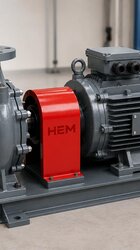
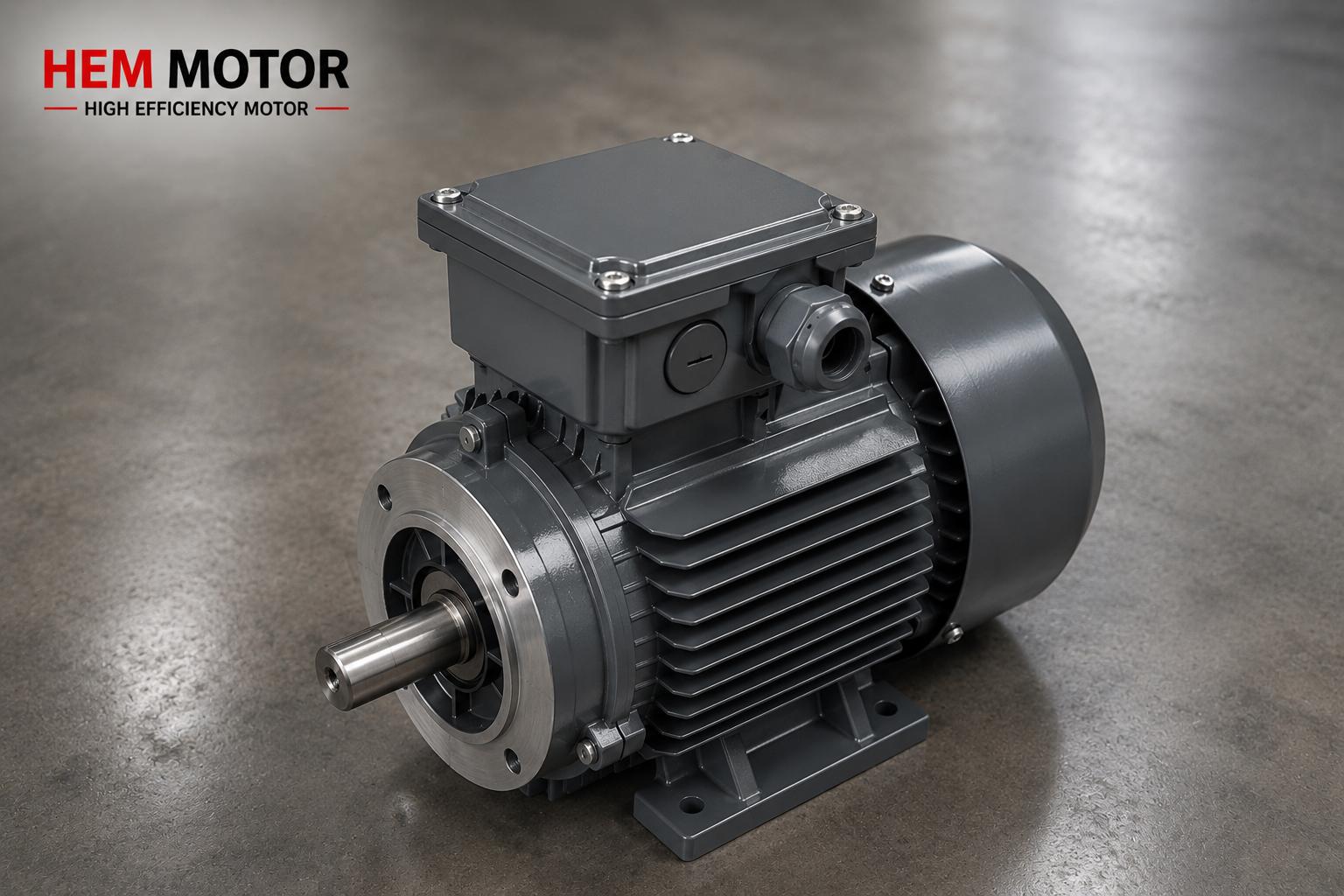

When buying an electric motor, most businesses look only at the power rating (kW) and speed (rpm); however, the duty type (operating class) that defines how long, in what rhythm and under which load the motor will run is just as decisive as the power. A motor selected with the wrong duty type will either continuously overheat and shorten its life, or be oversized and inflate your budget. This guide explains the IEC 60034-1 duty types from S1 to S6, which application requires which class, and what information you should provide to order the right motor for procurement, maintenance and project managers. The goal is not to give a theoretical lecture; it is to help you source the right motor the first time.
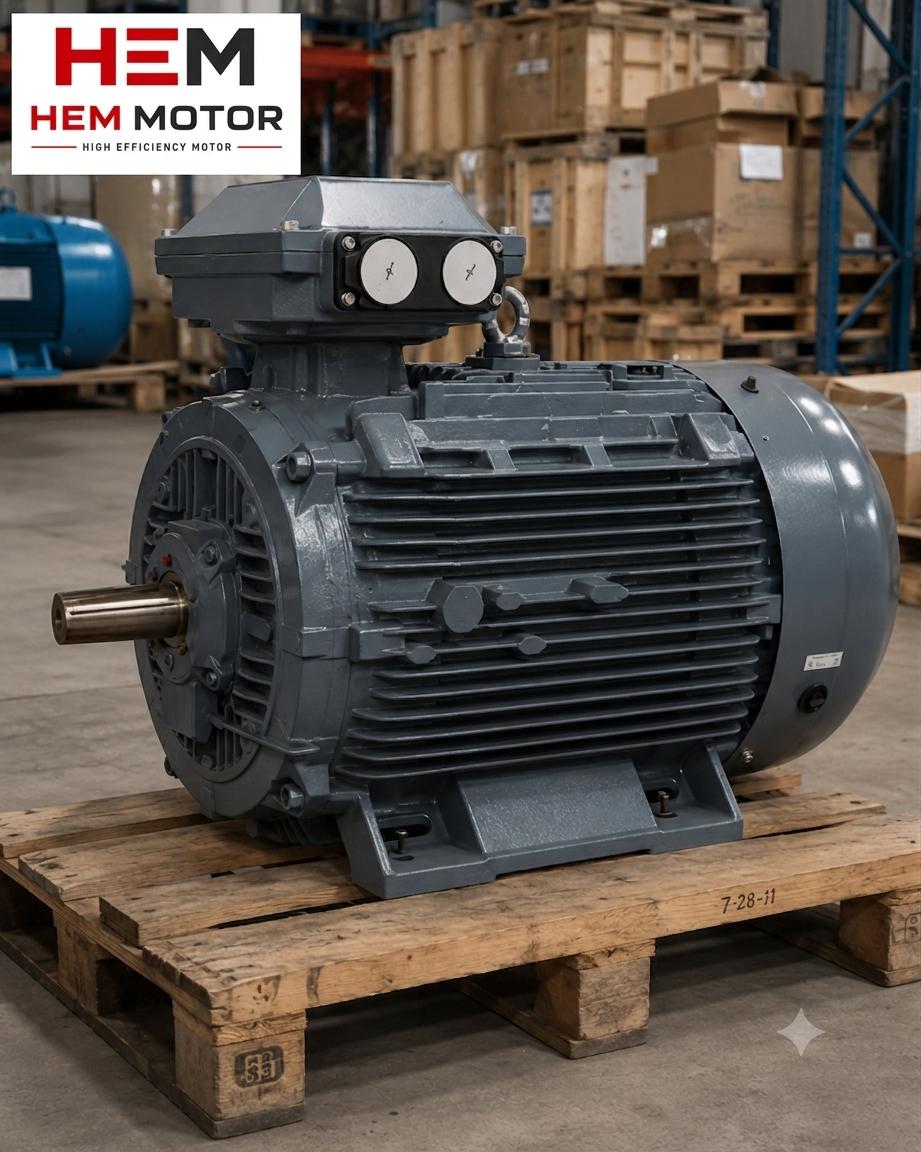
What Is Duty Type and Why Is It Critical When Buying?
Duty type is a standard classification that defines the combination of running time, idle time and load profile of a motor. It is marked on the motor nameplate with a code such as S1, S2 or S3. A motor heats up as it runs and cools down when it stops; the duty type describes exactly this heating-cooling balance. If no duty type is stated on the nameplate, the motor is assumed by default to be S1 (continuous duty).
The critical point for procurement is this: the same 5.5 kW power value behaves very differently between a motor that can deliver it continuously in S1 and a smaller-frame motor that can deliver it only in an S3 intermittent regime. Choosing the wrong class leads either to early field failure or to unnecessary cost. We also cover the basic steps of choosing the right motor in our electric motor types and purchase map article.
S1 – Continuous Duty
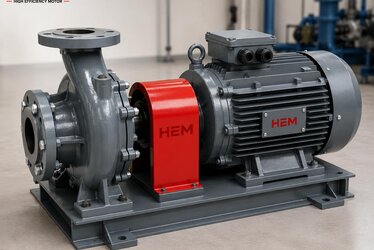
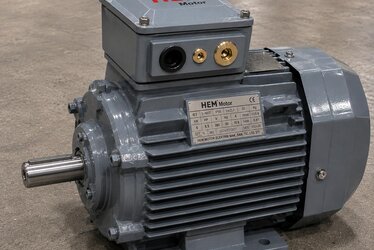
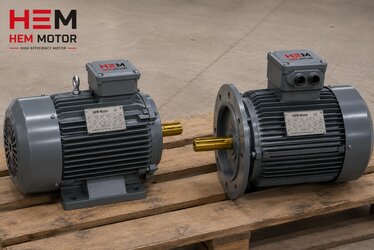
S1 is the regime in which the motor runs at a constant load long enough (for hours, throughout a shift, or continuously) to reach thermal equilibrium. This is the most common duty type and the one catalogues are based on. The vast majority of pump, fan, compressor, conveyor and general industrial drive applications are S1. Our high-efficiency electric motors and general-purpose motors are designed for S1 continuous duty and can deliver the nameplate power without interruption.
If your machine runs 8 hours a day or more, continuously or in long periods, your duty type is most likely S1. In this case the motor rated power is selected equal to or slightly above the load power. We detail the right power and speed combination for continuously running plants in our motor load ratio and correct sizing article.
Typical Applications for S1
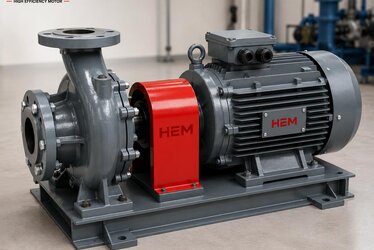
Booster and water pumps, ventilation fans, screw compressors, conveyors running on a continuous line, mill and blower drives are typical examples of S1 duty. In these applications the motor reaches thermal equilibrium under continuous full load and safely keeps running at that equilibrium temperature. You can find additional selection criteria for pump applications in our centrifugal pump motor selection article.
S2 – Short-Time Duty
S2 is the regime in which the motor runs for a defined period (for example 10, 30 or 60 minutes) and then stops until it cools down completely (returns to ambient temperature). It is usually written on the nameplate together with the time, such as "S2 30 min". Because the motor runs only for a short time in this duty type, higher power can be drawn from the same frame compared to S1, since the motor stops before reaching thermal equilibrium.
Valve actuators, dam gate drives, and some lifting and positioning systems are examples of the S2 class. Running an S2 motor continuously like an S1 motor means certain overheating and winding burnout; therefore the rated time on the nameplate must always be stated when ordering.
S3 – Intermittent Periodic Duty (%CDF)
S3 is the regime in which the motor runs and stops at regular intervals, with the running and idle times repeating periodically. The key concept here is the cyclic duration factor (%CDF – percentage of running time). For example, "S3 40% CDF" indicates that the motor is under load during 40% of each cycle and stopped during 60%. The starting current does not bring enough load to affect the heating of the cycle (it is neglected in S3).
Crane and hoist movements, elevator drives, press and stamping machines, and some mixers are typical examples of S3 duty. Because the motor starts and stops frequently in these applications, choosing the wrong %CDF value makes the motor either unnecessarily large or insufficient. For applications with frequent starts and stops, the asynchronous motor torque classes and starting torque are also decisive for selection.
The Effect of %CDF on the Order
The lower the %CDF (meaning the motor cools while stopped more often), the higher the power that can be drawn from the same frame. Standard %CDF steps are usually 15%, 25%, 40% and 60%. When ordering, simply saying "I want an S3 motor" is not enough; you also need to state the duty factor (%CDF) and the number of operating cycles per hour. If this information is missing, we recommend our information required when requesting a quote list to provide an accurate offer.
S4, S5 and S6 – High-Cycle and Mixed Regimes
S4 is intermittent duty with frequent starts, where the effect of the starting current on heating is taken into account; it is seen in conveyor and feeding systems that start and stop hundreds of times per hour. S5 is the regime where, in addition to S4, the contribution of electrical braking to heating is also accounted for; it is important in brake motor applications. S6 is continuous operation with intermittent load, where the motor never stops completely; loaded running periods alternate with no-load (idling) periods. Machine tools, some saws and machines with fluctuating loads are examples of S6.
In these regimes the number of starts, braking and load fluctuation directly affect the motor's heating, so the frame is selected not only by power but by the cycle profile. Our IE4 brake motor supply article complements conveyor and crane applications requiring brake motors.
The Two-Way Risk of Choosing the Wrong Duty Type
A duty type error creates a two-way cost. First (under-selection): using a motor designed for S3 or S6 in S1 continuous duty keeps the motor permanently above its thermal limit, degrades the insulation and leads to early winding failure. This means unplanned downtime and the cost of re-procurement. We cover the causes of overheating in our electric motor failures article.
Second (over-selection): buying a large motor for S1 continuous duty when S3 25% would actually be sufficient increases both the investment cost and unnecessary energy consumption. When a motor runs at low load, its efficiency and power factor drop. Choosing the right class pays off both in reliability and in total cost. For efficient motor options, you can review our IE3 electric motor and IE4 electric motor ranges.
The Power Difference Between Duty Types
A motor with the same frame and winding can deliver different power values in different duty types. The reason is that the limiting factor for a motor is heating. In S1 the motor runs continuously, so the power it can produce until it reaches thermal equilibrium is limited. The same motor, when run briefly in S2 or intermittently with a low %CDF in S3, can safely deliver a higher power value because it cools during the stops. In practice this translates into a flexibility such as "a frame that delivers 4 kW in S1 can deliver 5.5 kW in S3 25%".
This point is critical for procurement: in a continuously running application the motor must be selected according to its S1 power; otherwise using a high power value rated for a short-time regime in continuous duty will burn out the motor. Therefore, which duty type is taken as the basis must always be clarified at the quotation stage. Our frame size and power matching in cast iron motors article complements the correct frame-power match.
Duty Type Is Evaluated Together With Cooling and Insulation Class
Duty type alone is not a sufficient parameter; it must be evaluated together with the cooling method and the insulation class that determine the motor's thermal behaviour. In applications with frequent starts and stops (S3, S4, S5) standard fan cooling may in some cases be insufficient; in such cases forced cooling or a higher insulation class (H instead of F) is preferred. The motors in our catalogue range are produced with F class insulation and offer high temperature resistance.
Especially in hot environments or high-cycle applications, the insulation class allows the motor to run more safely in the same duty type. We detail this relationship in our insulation class selection in hot and dusty environments article. For the relationship of the cooling method with the duty type, we recommend that you always discuss it with your supplier before purchasing.
Duty Type in Geared Applications
In drives running with a gearbox, the duty type affects not only the motor but also the gearbox selection. In a system with frequent starts and stops (S3, S4) the impact and thermal load on the gearbox increase; therefore the gearbox must also be selected according to the application service factor. In intermittently running systems such as elevators, cranes and conveyors, the motor-gearbox combination is sized together. Our worm gear reducers and helical worm gear reducers ranges can be matched with motors suitable for different duty types.
Whether you should buy the motor and gearbox separately or as a monoblock is also related to the duty type. We discuss this decision in detail in our geared motor vs separate motor + reducer article.
4 Questions to Determine the Right Duty Type
Answering these four questions before ordering clarifies the right duty type: (1) How many hours a day and in which periods does the motor run? (2) How many times per hour does it start and stop? (3) Is there electrical braking? (4) Is the load constant or fluctuating? These answers allow us to correctly define the nameplate duty type and size the frame accordingly. Our electric motor mounting types page also helps to specify the connection type correctly. You can also reach all our electric motors guide articles and our product range from our homepage.
Frequently Asked Questions
What does it mean if no duty type is written on the motor nameplate?
Motors with no stated duty type are assumed by default to be S1 (continuous duty) according to IEC 60034-1. This means the motor is suitable for uninterrupted operation at a constant load. However, if your machine involves frequent starts and stops, it is safer to contact us for the right frame selection even if the nameplate says S1.
Can an S3 motor be run continuously like an S1 motor?
No. S3 is a regime based on the motor periodically stopping and cooling down. Running an S3 class motor continuously (S1) causes the motor to exceed thermal equilibrium and burn out the winding through overheating. For continuous operation, an S1 class motor must be supplied.
How do I order if I do not know the correct duty type?
It is enough to tell us your machine's daily operating hours, the number of starts per hour and the load profile. With this information we determine the correct duty type and frame size on your behalf. A photo of the existing motor nameplate also speeds up the process. You can reach us through our contact page for a detailed quote.
Get a Quote
We supply electric motors in the right duty type (from S1 to S6) with the correct frame size, from stock or with fast delivery. To get the right motor the first time, request a quote from our expert team: call +90 (532) 345 49 86 or send your request through our contact page.