English
 Türkçe

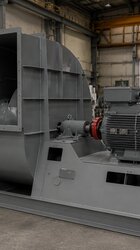
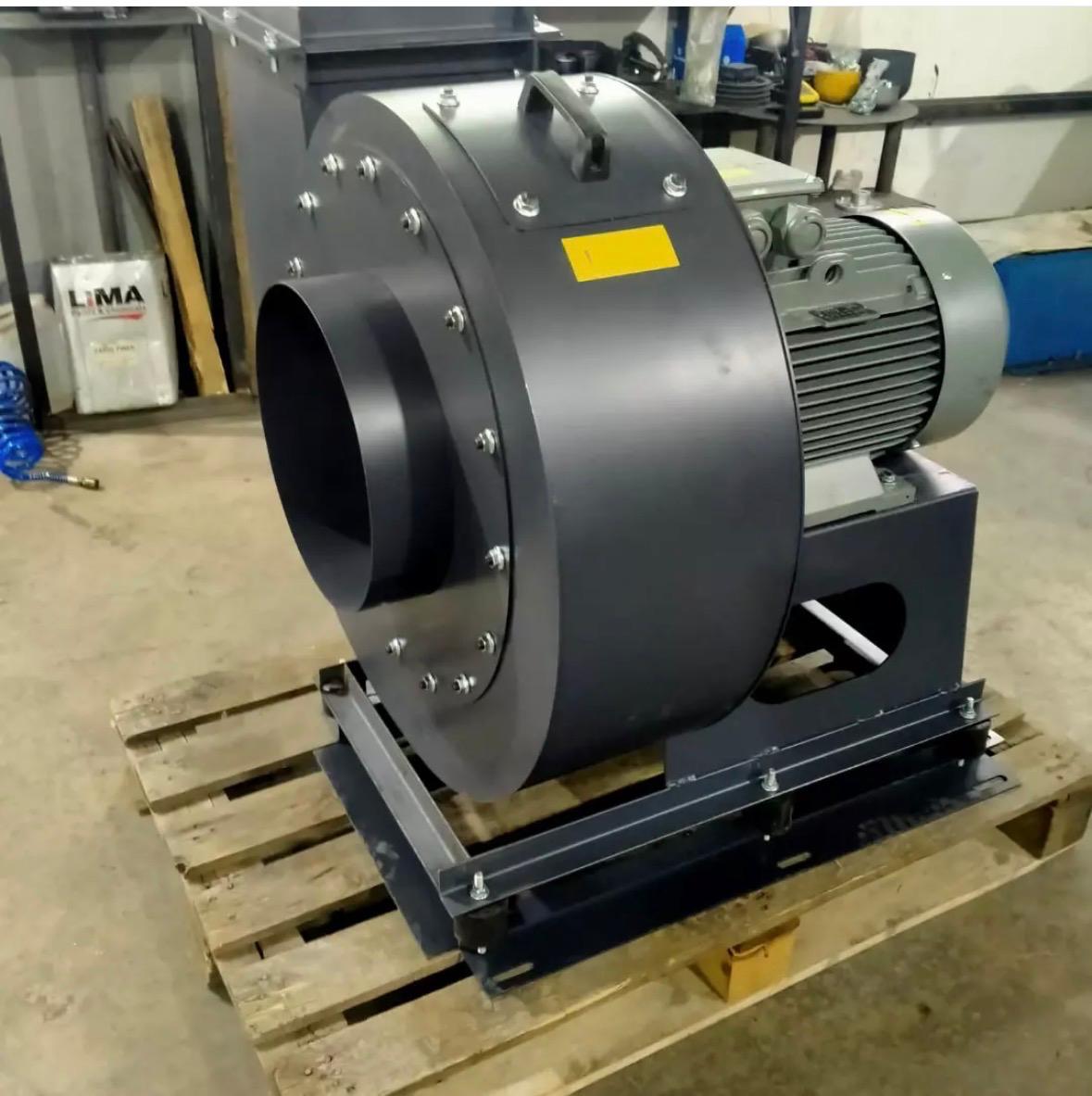

In a fire, what kills people most often is not the flame but the smoke. Statistics show that the majority of fire-related deaths result from smoke inhalation and loss of visibility making escape impossible. This is exactly where smoke control systems and the fan motors at their heart come into play. A fire fan motor may never run under normal conditions; but when it activates during a fire, it directly saves lives by keeping the escape route clean and expelling smoke. For this reason these motors cannot be selected like ordinary ventilation motors; once they start running, they must not stop even at the highest temperatures and under the harshest conditions.
In this guide we cover, step by step, the logic of fire exhaust and stairwell pressurization systems, the high-temperature fan motor classes (F200/F300/F400), protection classes, redundancy and correct motor selection. The goal is to help you select the right motor that ensures life safety in your project and to submit a clear technical specification to your supplier.
The Logic of Smoke Control: Two Core Strategies
In a modern building, smoke control is built on two complementary strategies: keeping the escape route clean and removing smoke away from the fire space. These two mean different systems and different motor requirements.
Stairwell Pressurization: Protecting the Escape Route
The fire stairwell is the key to survival in a multi-storey building; people reach the outside through it. However, every time a door opens, smoke can leak into the stairwell and turn this safe path into a deadly trap. The pressurization fan prevents exactly this by keeping the stairwell at a slightly higher pressure than the surrounding floors.
Thanks to the positive pressure, when a door opens, air flows from the stairwell toward the floor; smoke is prevented from entering the stairwell. In this system the fan takes clean outside air and pushes it into the stairwell. The typical design target is to maintain a certain pressure difference (for example around 50 Pa) when the doors are closed, while also providing enough air velocity to push smoke back at the doorway when an escape door is open. Balancing these two conflicting requirements is the most critical design problem of a pressurization system, and is usually solved with pressure relief dampers or variable-speed fan control.
Smoke Exhaust: Expelling the Smoke
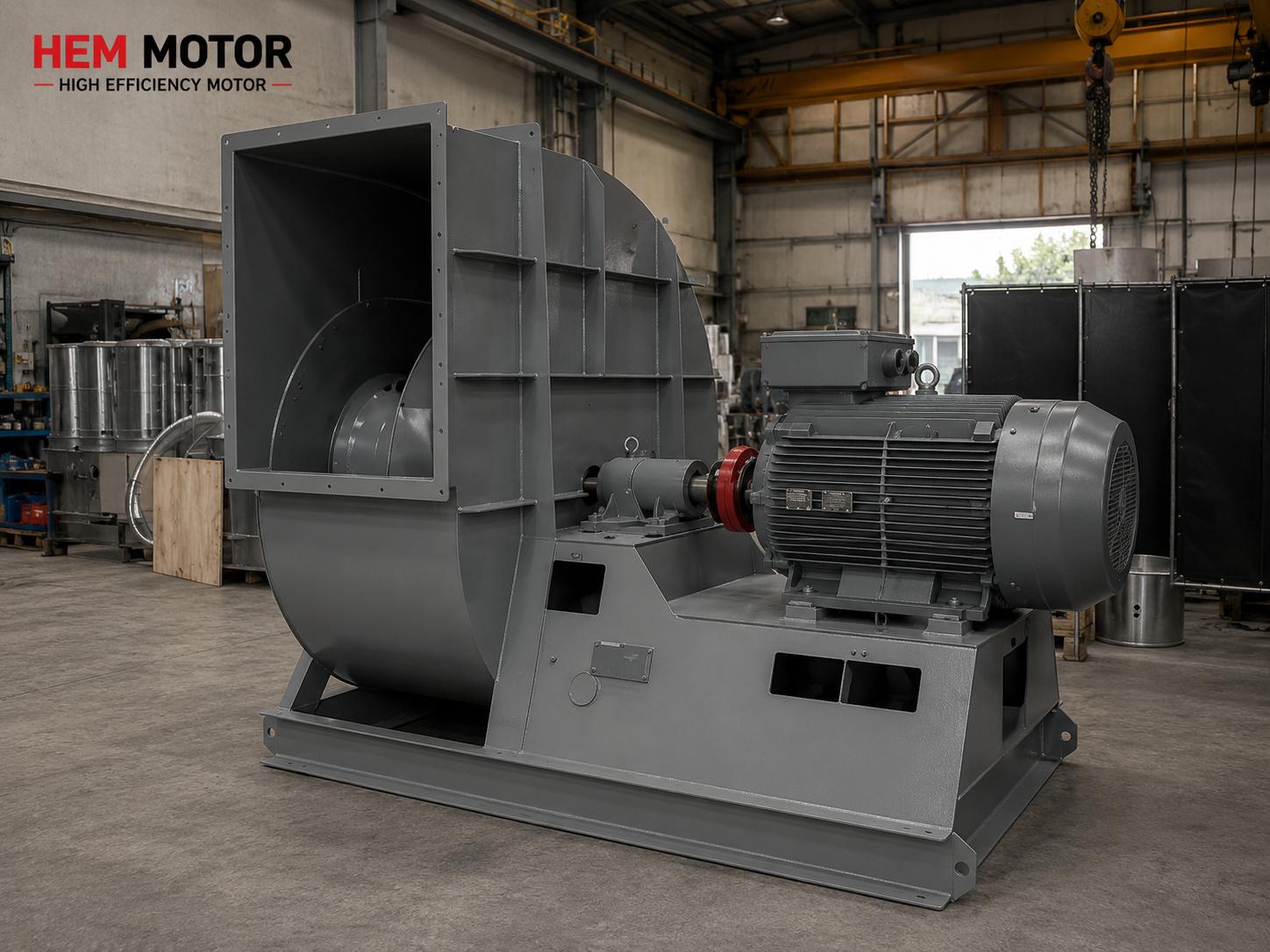
The second strategy is to actively expel smoke from the space where the fire is occurring. The smoke exhaust fan collects and discharges the hot smoke accumulating in a car park, atrium, shopping centre corridor or large industrial space. This way a clean air layer is preserved beneath the ceiling (an escape height below the smoke layer); people can be evacuated without being affected by smoke, and firefighters can intervene while seeing into the space.
Smoke exhaust fans differ from pressurization fans on a fundamental point: they operate directly inside the hot, aggressive smoke produced by the fire. For this reason their motors must be produced in special classes that withstand very high temperatures.
High-Temperature Fan Motor Classes: F200, F300, F400
An ordinary ventilation fan motor loses its winding within seconds at the temperature of fire smoke. For this reason, smoke control fans are produced in certified classes that guarantee operation at a certain temperature for a certain duration. The classification is made according to the EN 12101-3 standard and is read as follows:
- F200 motor: Guarantees operation at 200 °C for 120 minutes (2 hours). It is generally used in lower-risk applications or in end-of-duct exhausts where the smoke has partially cooled.
- F300 motor: Operates at 300 °C for 120 minutes. It is a frequently preferred class in common applications such as car park smoke exhaust.
- F400 motor: Guarantees operation at 400 °C for 120 minutes. It is the most common high-temperature class preferred in high-risk systems that expel smoke directly from the fire space.
For more demanding applications, higher classes such as F600 (600 °C / 60 min) also exist. The class selection is made according to the building type, fire load and the relevant fire regulation. An F400 motor comes not only with special winding insulation and bearings that withstand high temperature, but also with test reports proving it is certified under these conditions. Assuming an uncertified motor is "high-temperature resistant" means putting life safety at risk.
Protection Class (IP) and Operating Environment
Fire fan motors sit idle throughout their normal operating life and activate in an instant; for this reason it is critical that they withstand environmental conditions. In car parks, on rooftops and in technical spaces, they are exposed to dust, moisture and temperature variations for long periods. Therefore, selecting an appropriate IP protection class (for example IP55 and above for rooftop applications) guarantees that the motor will run on the first attempt during a fire years later.
The motor's mounting arrangement also matters. In some smoke exhaust fans the motor sits within the air stream (in the axial fan hub) and is directly exposed to hot smoke; in others the motor is positioned outside the flow and protected. The design must be consistent with the chosen temperature class.
Redundancy and Reliability: Never Stopping
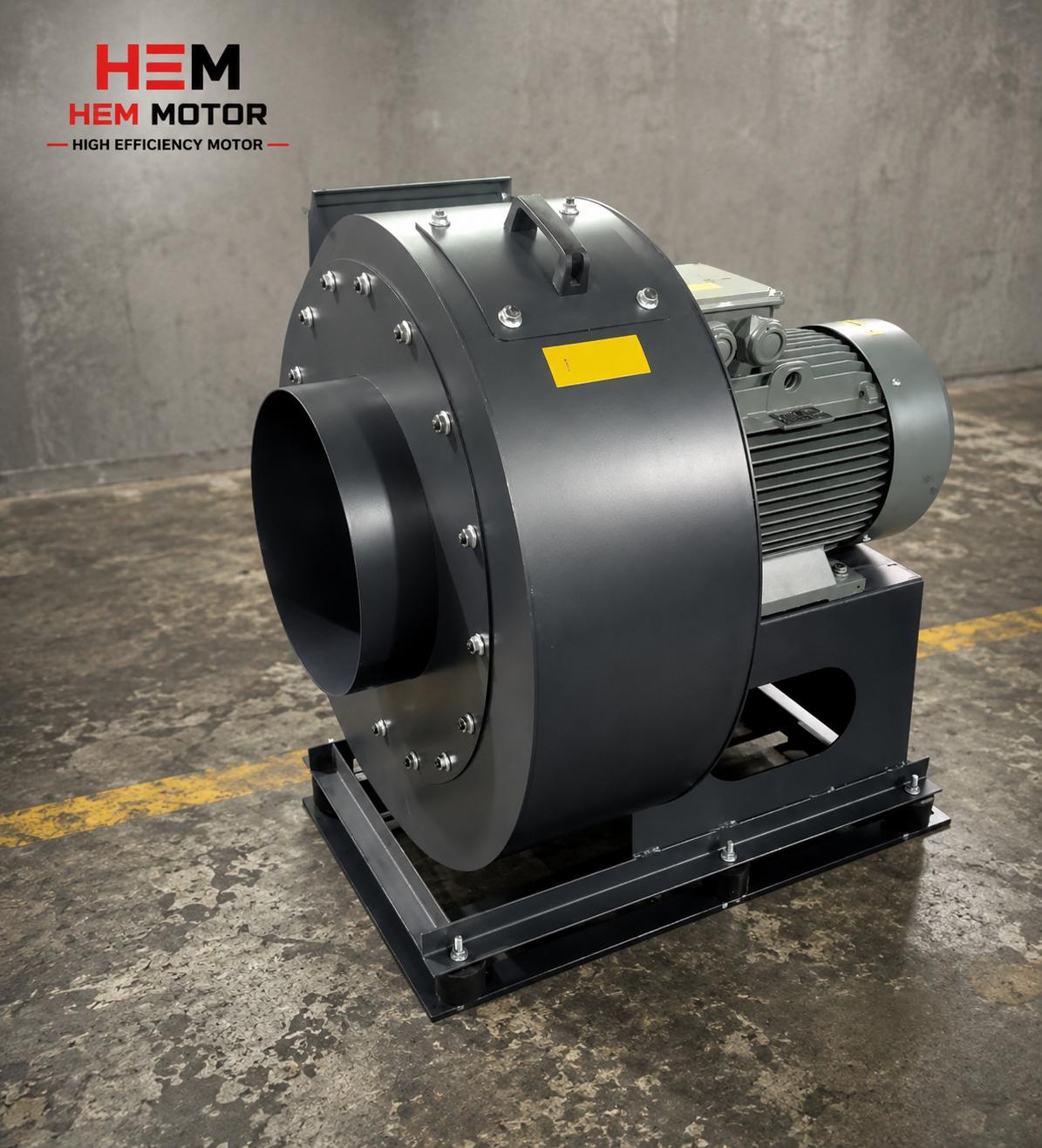
The most fundamental rule of a fire fan is this: once it is running, it must not stop. When an irrigation pump stops, the crop is damaged; when a fire fan stops, people die. For this reason, smoke control systems are designed on the principle of redundancy:
- Dual fan / standby fan: In critical spaces there are two fans; if one fails, the other takes over. In some designs the two fans share the load, so the system maintains minimum performance even if one is lost.
- Backup power source: Even if the grid is cut, the fan motors must continue to be fed from a generator or uninterruptible power supply. A fire often cuts the electricity; therefore an independent supply is essential.
- Fire-resistant wiring: The cables feeding the fan are of a fire-resistant type that maintains conductivity for a certain duration under flame; otherwise the supply is cut even if the motor is intact.
- Dual speed / emergency mode: Some fans normally ventilate at low speed and switch to high speed during a fire, reaching full smoke exhaust capacity.
All these measures serve a single goal: ensuring the system does not collapse from a single point of failure during a fire. A well-designed smoke control system includes layered safety so that it keeps running even in the worst-case scenario.
Motor Selection: Sizing by Airflow and Pressure
Selecting the right fan motor is based on the air flow and static pressure the system requires. The process proceeds as follows:
- Determining the required flow: In smoke exhaust, how many cubic metres of smoke per hour will be expelled is calculated according to the size of the space and the fire scenario. In pressurization, the air velocity needed when an escape door is open and door leakages are taken as the basis.
- Calculating the system resistance (static pressure): Duct length, dampers, grilles and elbows offer resistance to the air flow. The fan must produce the static pressure to overcome this resistance.
- Determining the operating point on the fan curve: The flow and pressure values must meet at a suitable point on the fan's efficiency curve. Incorrect sizing leads either to insufficient smoke removal or to unnecessary energy consumption.
- Selecting the temperature class: An appropriate high-temperature class such as F300 or F400 is determined according to the application type.
- Motor power and drive: The motor power is selected according to the calculated flow and pressure; if required, a dual-speed arrangement or frequency converter is provided.
This sizing is performed together with the relevant fire regulation and the project calculation. A correctly selected fan motor fully delivers the designed smoke control performance during a fire.
Certification and Compliance
For smoke control motors, certification is not a formality; it is a precondition for the system to be legally and physically functional. The EN 12101-3 certificate is independent test proof that the motor operates in the declared temperature class for the declared duration. During the supply process, you should look not only at the motor's nameplate value but also at its valid certificate and test report. An uncertified product may be rejected in inspection and may also fail to deliver the expected performance in a real fire.
Supply and Stock Planning
Since fire fan motors are critical life-safety equipment, supply and spare-part continuity are of great importance. Motors produced in standard temperature classes and power values are supplied faster; models requiring special dimensions or a very high temperature class may demand a longer lead time. For this reason, determining the correct class from the outset during the project phase is a wise investment to avoid risking the commissioning schedule.
A clear technical specification should include the required flow (m³/h), static pressure (Pa), temperature class (F300/F400), IP protection class, phase/voltage/frequency, mounting type and certification requirement. A request with this clarity enables your supplier to give you a fast and accurate quotation. For up-to-date electric motor prices and stock availability, the healthiest approach is to clarify your technical specifications and request a quote. Depending on your application, you may also evaluate the high-temperature exhaust fan and industrial ventilation motor options.
Frequently Asked Questions
What is the difference between an F300 and an F400 motor, and which should I choose?
An F300 motor guarantees operation at 300 °C and an F400 motor at 400 °C for 120 minutes. In high-risk systems that expel hot smoke directly from the fire space, F400 is usually preferred; in applications where the smoke has partially cooled or which are in a lower risk class, F300 may be sufficient. The exact choice is determined by the relevant fire regulation and the project calculation.
Why must a fire fan motor never stop?
Because these motors keep the escape route clean during a fire and ensure life safety directly by expelling smoke. Stopping during operation means the stairwell filling with smoke or the loss of visibility and breathable air in the escape space. For this reason they are designed with layered measures such as a standby fan, backup power and fire-resistant wiring.
Can I use an ordinary ventilation fan motor for smoke exhaust?
No. An ordinary ventilation motor loses its winding and stops within a short time at the high temperature of fire smoke. For smoke exhaust, using a motor certified to EN 12101-3 in an appropriate high-temperature class such as F300 or F400 is a legal and technical requirement.