English
 Türkçe

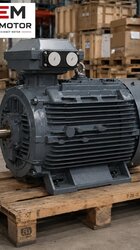
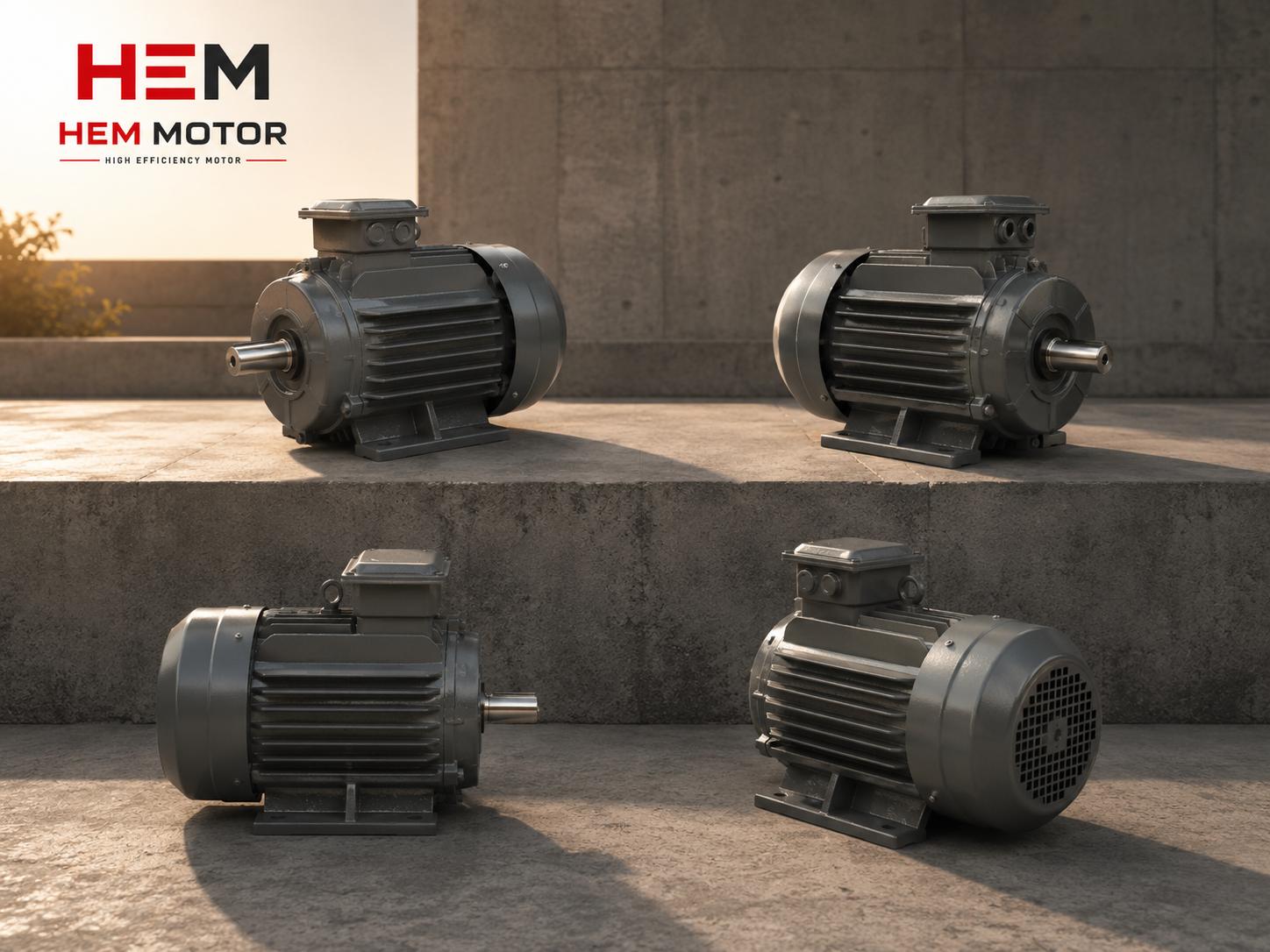

One of the most confusing decisions when buying an electric motor is choosing between a cheaper-looking old-stock IE2 motor and a compliant IE3 motor. Old IE2 stock still found on the market may offer an attractive price at first glance; but both legally and operationally this choice usually proves expensive. As HEM Motor, with our identity as both manufacturer and supplier, this article clarifies from a buying angle the real difference between IE3 and IE2 motors, the legal and commercial risks of buying old-stock IE2 and why moving to IE3 is the right decision. The goal is to secure your facility long-term efficiency and compliance without being misled by short-term price advantage. Contact our team for compliant IE3 electric motor options and a quote.
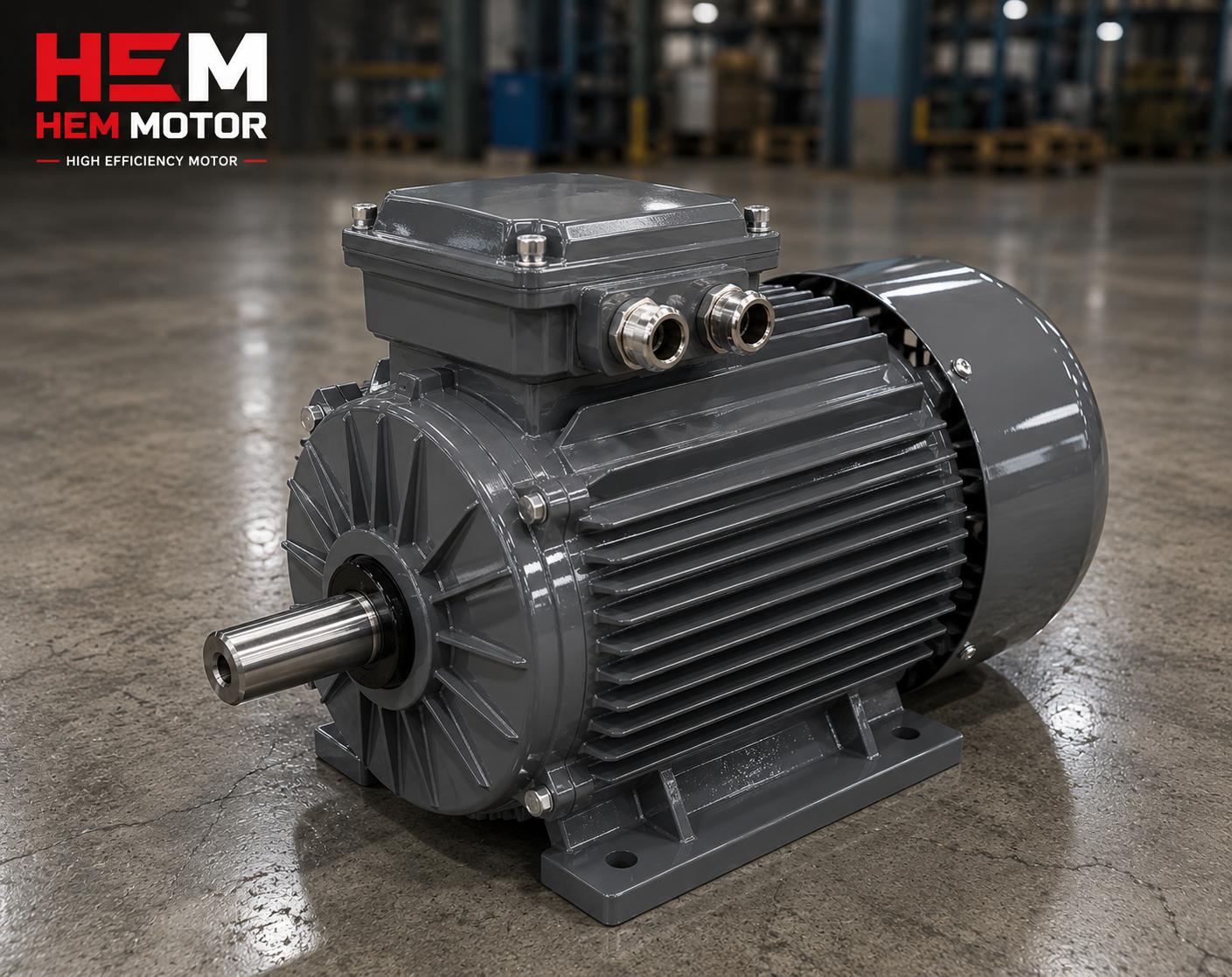
What Are IE2 and IE3? The Basic Difference Between Efficiency Classes
IE (International Efficiency) classes show on a standard scale how efficient an electric motor is. IE2 means the "high efficiency" class and IE3 the "premium efficiency" class. The difference appears in the electrical energy the motor draws to produce the same mechanical power: an IE3 motor does the same work with fewer losses, that is, it consumes less electricity for the same shaft power. Although this loss difference looks like a small percentage, it turns into a meaningful amount on the annual energy bill of a continuously running motor.
The practical meaning of the efficiency difference is this: the more hours a motor runs, the more the lower loss of IE3 means saving. On a single-shift motor the difference is smaller, while on a three-shift continuously running motor the consumption gap between IE2 and IE3 quickly outweighs the motor price difference. To see the effect of efficiency classes on operating cost in detail, our article on IE3 vs IE4 electric motor investment offers a good comparison with a payback calculation.
Regulation: Why Is Old-Stock IE2 Motor Sale Restricted?
The most critical dimension of the old-stock IE2 decision is not price but regulation. In Turkiye and the European Union, the minimum efficiency mandate has made IE2 non-placeable on the market for certain power ranges. The general framework is this: from a certain date, IE3 efficiency class became mandatory for direct-on-line (DOL) three-phase motors in the 0.75 kW to 1,000 kW range. A motor in this power range can no longer be newly placed on the market as IE2.
The practical buying consequences of this mandate are:
- Restricted new IE2 supply: In the mandated power range IE2 motors cannot be sold new; the "cheap IE2" seen on the market is mostly old stock.
- Conformity marking problem: An IE2 motor within the mandate cannot be newly placed on the market with the required conformity marking, which makes it unacceptable in many commercial and corporate purchases.
- Export and project barrier: In production for export or for large public/private projects, shipment of a motor that fails the efficiency-class requirement can be rejected.
To see the mandate timeline and which power needs which class in detail, we recommend our articles on the IE3 and IE4 efficiency mandate: which motor from which date and, for the power-class match, the IE3 efficiency class mandate: which class for which power.
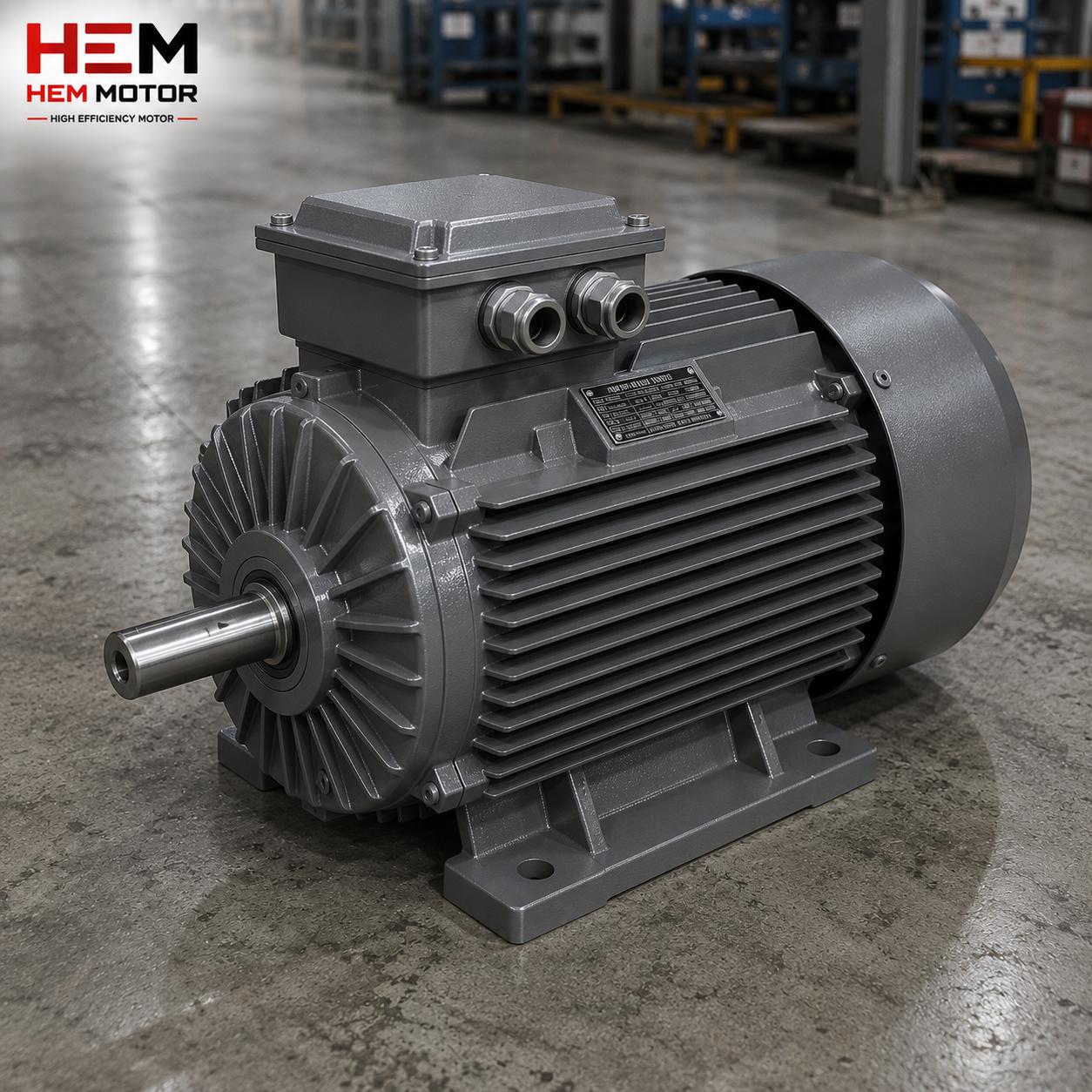
The Hidden Risks of Buying Old-Stock IE2
The attractive price of an old-stock IE2 motor masks many hidden risks. Seeing these before the purchase decision helps you avoid much larger costs later:
- Legal non-compliance: An IE2 motor within the mandate does not meet many corporate purchases, tenders and project specifications. The motor you buy cheaply today may cause problems tomorrow during an audit or project delivery.
- Higher operating cost: An IE2 motor consumes more electricity over its life than IE3. The small saving on motor price is more than repaid within a few years through the energy bill.
- Stock age and storage risk: Motors that sit long in storage risk moisture, bearing brinelling and insulation ageing. An old-stock motor, even if it looks "new", may be worn depending on storage conditions.
- Resale and value loss: A non-compliant motor loses much of its value when you later want to dispose of it.
To evaluate moisture and bearing risks in long-stored motors, our article on electric motor storage and long-term keeping: moisture, bearings and commissioning offers important checkpoints. For a real cost-risk comparison of second-hand and old motor purchases, our article on second-hand vs new-stock motor also supports this decision.
Is Buying IE2 Still Reasonable? A Decision Framework
Whether old-stock IE2 is reasonable depends on the motor power, usage intensity and legal context. A practical decision framework:
- In mandated powers (0.75 kW and above, DOL): Buying old-stock IE2 is in most cases not reasonable; it carries both legal non-compliance and high operating-cost risk. Moving directly to IE3 is the right decision.
- Very low power and rarely running applications: Different rules may apply in some small power ranges; but even here energy efficiency and future compliance should be considered.
- Intensively running motors: On motors running many hours a day, the energy cost of IE2 quickly erases the price advantage; IE3 is always more economical.
In short, although the initial price of an old-stock IE2 motor looks low, in terms of total cost of ownership and legal compliance IE3 is a wiser investment in almost every scenario. To calculate the return of moving to IE3 when renewing an existing IE2 motor, the approach in our article on replacing an old standard motor with IE4: payback period offers logic adaptable to IE3 too.
Mechanical Compatibility When Moving to IE3: Does the Motor Fit Directly?
The good news is that when moving from IE2 to IE3, mechanical compatibility is preserved in most cases: the same IEC frame size, the same foot and flange dimensions and the same shaft diameter can be used. So an IE3 motor usually fits your existing machine directly. This means the move to IE3 can be done by simply replacing the motor, without machine or connection changes. To select the right equivalent motor from nameplate data, our article on reading the IE3 motor nameplate and our electric motor mounting types page provide guidance.
IE3 or IE4? Thinking One Step Ahead
If you have decided to move from old-stock IE2 to IE3, it is reasonable to evaluate one step further: in some power ranges and intensively running applications, moving directly to IE4 can provide faster payback with higher efficiency. To make this decision according to your facility, our article on staying with IE3 vs moving to IE4 offers a clear framework. In some powers and applications IE4 has already become mandatory from 1 July 2023; so when making the purchase decision it is wise to consider not only today efficiency requirements but also the near future. For the sectors where IE3 electric motors are most used, see our article on the sectors where IE3 motors are most used.
What Does the Energy Cost Difference Mean in Practice?
Thinking about the efficiency difference between IE2 and IE3 from a concrete buyer angle clarifies the decision. Most of the total money a motor spends over its life is not the purchase price but the energy it consumes. On a continuously running industrial motor, energy makes up a very large part of the total cost of ownership; the motor price is only a small part of this picture. So even a few points of efficiency difference correspond, over the years, to an amount far greater than the motor price.
Three variables should be considered together in the decision:
- Running hours: The more the motor runs, the bigger the IE3 advantage. In a three-shift facility the difference pays back many times faster than in single-shift.
- Motor power: As power grows, the absolute value (in kWh) of the efficiency difference rises; the IE3 choice becomes even clearer on large motors.
- Load ratio: How much load the motor carries also affects efficiency; a correctly sized IE3 motor delivers the highest saving.
When choosing the efficiency class, sizing the motor correctly is as important as the class itself; an oversized motor loses efficiency at low load ratio even in a high efficiency class. On this, our article on at what load should a motor run? efficiency and correct sizing helps you get the highest saving from your IE3 choice. To understand the gap between nameplate efficiency and the real efficiency achieved in the field, see our article on the difference between nameplate and field efficiency.
Questions to Ask When You Get an Old-Stock IE2 Offer
When a seller offers you "cheap IE2", you should ask a few critical questions to base your decision on solid ground. These questions reveal whether the price advantage is real:
- Is this motor in the mandated power range? On 0.75 kW and above DOL motors, IE2 is problematic in terms of regulation.
- How long has the motor been in stock? On long-stored motors, insulation, bearing and moisture condition should be questioned.
- Are the conformity documents complete? Missing documents can make the motor unacceptable in corporate purchasing, tenders and export.
- What is the IE3 equivalent price? Often the IE3 price difference is closed by the energy saving within the first year.
If you want to learn what information to give the seller for an accurate, fast quote, our article on information to provide when requesting an electric motor quote offers a useful checklist. Asking these questions prevents a short-term price advantage from turning into a long-term cost and lets you make the right motor investment.
Frequently Asked Questions
Can I still buy an old-stock IE2 motor?
In the mandated power range (generally 0.75 kW and above direct-on-line three-phase motors), new IE2 motors cannot be placed on the market. Cheap IE2 motors seen on the market are usually old stock and do not meet many corporate purchases, tenders and project specifications. So in most applications moving directly to an IE3 motor is the right decision both legally and economically.
How long does the price difference between IE2 and IE3 take to pay off?
This depends on the motor power and daily running hours. On motors running many hours, the lower energy consumption of IE3 often repays the price difference within a few years, sometimes faster. On rarely running motors it takes longer; but the legal compliance advantage favors IE3 in every case.
Does an IE3 motor fit directly in place of my old IE2 motor?
In most cases, yes. Since IE3 motors can be made with the same IEC frame size, foot/flange dimensions and shaft diameter, they usually fit your existing machine without mechanical change. To choose the right equivalent, just share your existing motor nameplate data with us.
Get a Quote
To avoid the hidden costs of old-stock IE2 motors and move to a compliant, efficient IE3 motor, consult HEM Motor experts. Based on your existing motor power, speed and mounting information, let us recommend a directly compatible IE3 motor. Call us now at +90 (532) 345 49 86 or send your quote request via our contact page. Browse our IE3 electric motor and efficient electric motors range, and the other guides in our IE3 Electric Motors category.