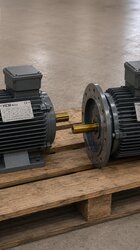
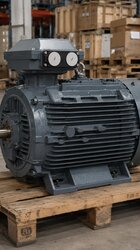
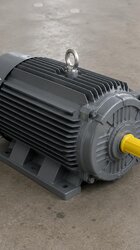
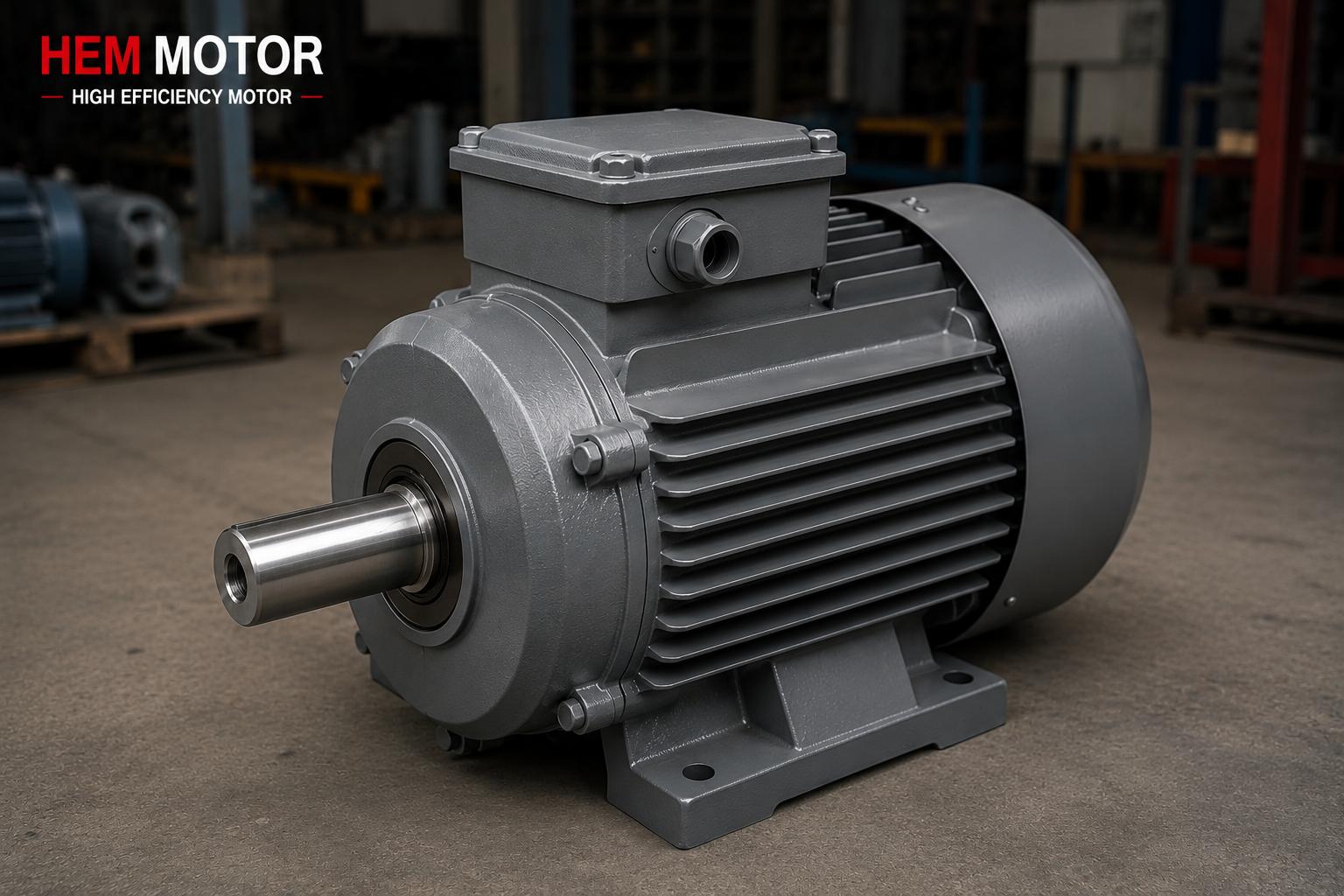
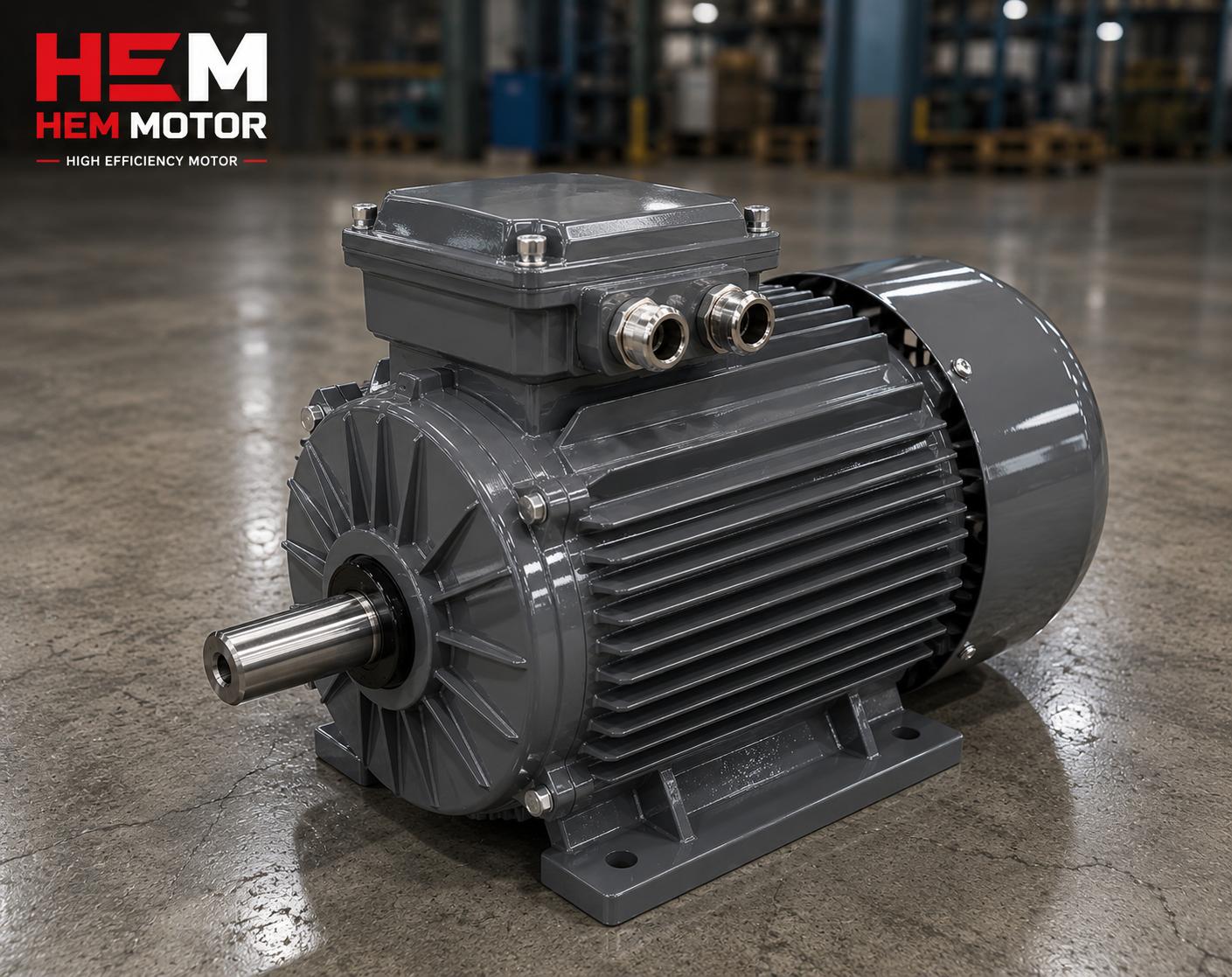
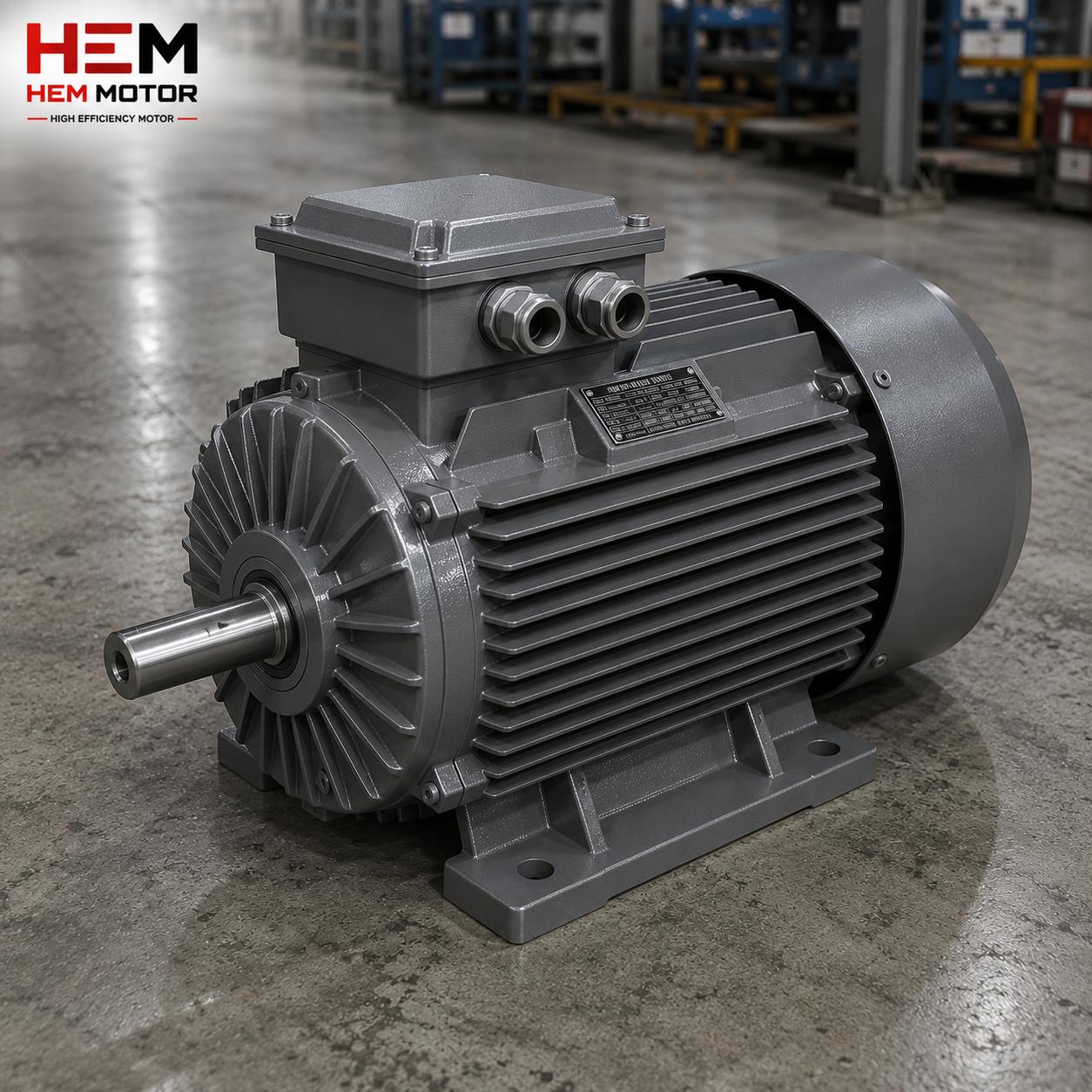
1.5 kW and 2.2 kW are two of the busiest mid-range power classes in Turkish industry. From a small water pump to a short conveyor, from a workshop fan to a compact gearbox input, a large share of everyday manufacturing runs on these two power steps. That very popularity makes the choice deceptively easy: "I need a 1.5 kW motor" is not enough to place an order. The same 1.5 kW comes in 2-pole (about 2840 rpm), 4-pole (about 1410 rpm) and 6-pole (about 930 rpm) versions, each in a different frame size, with different torque and often different stock availability. In this guide we walk through 1.5 and 2.2 kW electric motor selection step by step: pole-speed matching, 90L/100L frame size, pump-fan-conveyor applications and fast stock delivery.
Why Are 1.5 and 2.2 kW the Most Preferred Mid-Range Powers?
In the standard IEC power steps 0.75 - 1.1 - 1.5 - 2.2 - 3 - 4 kW, the 1.5 and 2.2 kW ratings sit in the transition zone between small and medium power. They have the highest stock turnover because they are light enough for one operator to handle, can be started direct-on-line on a 380-400 V three-phase grid, and almost every machine builder has standardised their connection dimensions. For smaller powers see our 0.18 and 0.25 kW micro motor selection and 0.75 and 1.1 kW IE3 stock guide; for the next step up, our 2.2 / 3 / 4 kW asynchronous motor selection is a useful companion.
Typical 1.5 kW Applications
A 1.5 kW (about 2 HP) motor is common in small centrifugal pumps, booster units, workshop aspirators, short conveyors, small mixers and gearbox-input drives. The 4-pole 1410 rpm version is the best-selling configuration; 2-pole 2840 rpm is chosen for pumps and fans, and 6-pole 930 rpm for high-torque slow drives.
Typical 2.2 kW Applications
A 2.2 kW (about 3 HP) motor is used in medium pumps, compressed-air pre-stages, feed and mill feeders, packaging machines and more heavily loaded conveyors. This power is also a frequent input rating for worm gear reducers bodies, for example at the HEM110 input.
Pole and Speed Matching: Same kW, Different Speed
In an asynchronous motor, actual speed is set by pole count and grid frequency. On a 50 Hz grid the synchronous speeds are 3000 rpm at 2 poles, 1500 at 4 poles and 1000 at 6 poles; under load the real speed drops slightly due to slip. We explain this in our slip and actual speed article. Which pole count you pick depends on the load character; our 2, 4, 6 pole selection guide is a good starting point.
2-Pole (≈2840 rpm): Pumps and Fans
High speed, low torque. Ideal for centrifugal pumps and high-pressure small fans, because on these loads power demand rises sharply with speed. 1.5 and 2.2 kW 2-pole motors typically start from frame 90. For the efficiency threshold on the pump-fan side see IE4 2-pole 3000 rpm pump-fan selection.
4-Pole (≈1410 rpm): General Purpose
The best torque-speed balance and the most stocked configuration. It is the default for conveyors, mixers, general machine drives and gearbox inputs. When a motor is specified without a pole count, the industry usually means 4-pole.
6-Pole (≈930 rpm): High Torque, Slow Drive
At the same power, lower speed means higher torque, but the frame grows a size or two and efficiency drops slightly. Preferred for slow mixers, some feeders and direct-drive slow applications. For even lower speed see our low speed high pole motors.
90L and 100L Frame Size: Power-Frame Matching
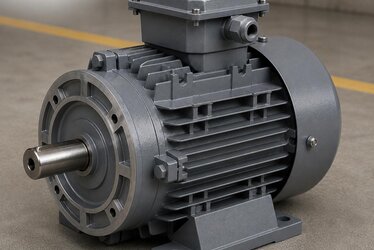
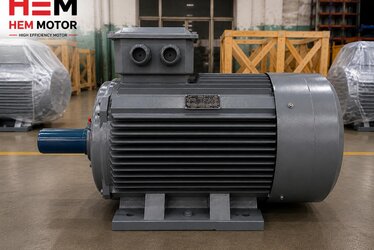
IEC frame size standardises the mechanical dimensions: foot hole spacing, shaft diameter, shaft height and flange dimensions are fixed by the frame number. 1.5 kW 4-pole is typically a 90L frame (shaft height 90 mm, shaft Ø24 mm), while 2.2 kW 4-pole is a 100L frame (shaft height 100 mm, shaft Ø28 mm). In 2-pole versions the same power can fit a frame one size smaller. For correct frame-power matching from stock see our frame size and power matching and IEC 56-355 shaft and frame table.
Mounting Type: B3, B5, B14, B35
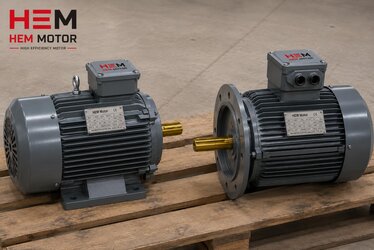
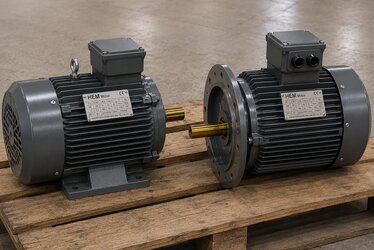
The same 90L or 100L frame can be ordered as foot-mounted (B3), large-flange (B5), small-flange (B14) or foot+flange (B35). Pump and gearbox inputs usually need a flange, while conveyor and base mounting need feet. For the right flange decision our B5 vs B14 mounting type selection offers a practical checklist.
Shaft Diameter, Key and Coupling Fit
Ø24 mm is standard on 1.5 kW 90L and Ø28 mm on 2.2 kW 100L. When ordering a pulley or coupling, this diameter and the key dimension must be stated, otherwise you face a mismatch in the field. See our shaft diameter and key dimensions article.
Selecting 1.5 / 2.2 kW by Application
Pump
In centrifugal pumps, power varies with speed and head; most small booster and circulation pumps need 2-pole. For pump sizing logic see centrifugal pump motor selection and in-line circulation pump motor.
Fan and Aspirator
On fan loads, power rises with the cube of speed, so speed choice is critical. For power-speed matching by fan type see centrifugal and axial fan motor selection and aspirator and dust collection fan motor.
Conveyor and Gearbox Input
On conveyors, 4-pole plus a gearbox is the most common combination. 1.5 and 2.2 kW are frequent input powers for HEM series worm gear reducers; for the right frame and flange see reducer motor matching (IEC), and for a monoblock choice our monoblock geared motor selection.
Starting and Efficiency Class
1.5 and 2.2 kW are suitable for direct-on-line (DOL) starting on a 380-400 V grid; star-delta is usually not needed here. Still, we compare starting methods in star-delta vs softstarter. On efficiency, IE3 is the minimum class for DOL motors in the 0.75-1000 kW range; IE4 is superior in many applications. For the regulation see IE3 and IE4 efficiency mandate and for the decision IE3 vs IE4 investment.
Torque, Rated Current and Practical Sizing
The torque a motor produces is related to power and speed: at the same power, as speed falls torque rises. So a 1.5 kW 4-pole motor produces higher torque than a 1.5 kW 2-pole motor; on torque-demanding loads like conveyors and mixers this difference is decisive. On the rated-current side, at 400 V a 1.5 kW motor draws about 3.5 A and a 2.2 kW motor about 5 A; these values are the starting point for cable cross-section, thermal setting and contactor selection. For the exact value, always rely on the nameplate. Inrush (starting) current is several times the rated current; at these powers DOL starting is no problem, but care is needed if the supply is weak. For practical power calculation see our motor power calculation for pump, fan and conveyor and for the right load margin load ratio and correct sizing.
Speed Adjustment with Pulley-Belt
In some applications, the speed of a 1410 rpm 4-pole motor is adjusted to the load's need with a pulley-belt ratio; this provides a simple speed adaptation without a gearbox. The pulley diameter ratio directly sets the output speed. For the right power-speed combination and pulley calculation see our motor speed and pulley-belt speed adjustment. When greater reduction is needed, a worm or bevel-helical gearbox comes in; our bevel-helical or worm gear helps you choose.
Protection Class, Insulation and Duty Type
1.5 and 2.2 kW motors are produced as standard with IP55 protection and class F insulation; this provides adequate protection against dust and splashing water and high temperature endurance. In dusty or wash-down environments IP65/IP66 can be requested; for the right protection choice see our IP protection class selection (IP55, IP65, IP66). We explain the effect of insulation class on life in our winding and insulation class (F/H). Whether the duty is continuous or intermittent (S1-S6) also affects power selection; our duty type (S1-S6) selection covers this. Whether the winding is copper or aluminum directly affects efficiency and life; for details see copper vs aluminum winding difference.
Nameplate Reading and Correct Ordering
When replacing an existing 1.5 or 2.2 kW motor, the most reliable route is to read the power, speed, voltage, frame size and mounting type directly from the old motor's nameplate. If you do not match by nameplate data, you may receive the wrong frame or wrong flange; our exact matching by nameplate data shows how to avoid this risk. You can find how to interpret the rated values on the nameplate (kW, rpm, cosφ, efficiency) in our reading the IE3 motor nameplate. To replace an old brand's motor with an equivalent, our old brand motor direct replacement is a practical guide.
Common Mistakes
The most common mistake in this power class is ordering without specifying the pole count (and therefore speed); saying "a 1.5 kW motor" is not enough, 2/4/6 pole must always be clarified. The second common mistake is matching a pulley/coupling or gearbox without checking the shaft diameter and flange dimension. The third is overestimating the load and stepping up to a higher power unnecessarily, which hurts both the investment and part-load efficiency. For the full list of common purchase mistakes see our mistakes made when buying an electric motor. Knowing the warranty scope in advance is also important; our what the warranty covers lists the questions to ask before buying.
Stock Status and Fast Delivery
1.5 and 2.2 kW 4-pole motors have the highest stock turnover and can often ship same or next day. 2- and 6-pole, B14-flange or special-shaft versions are stocked less. For a spare strategy on critical machines see critical spare motor list; for regional fast delivery see Izmir and Aegean same-day delivery and Anatolia shipping guide. For Bursa and Marmara industry see Bursa and Marmara supply, and before requesting a quote review information to provide when requesting a quote. On the stock-vs-production question, our from stock or production order clarifies your lead-time expectation. For smaller power and gearbox input see 0.12 kW micro power motor and for a wider purchase map our electric motor types purchase map. For more resources visit our HEM Motor homepage, efficient electric motors and worm gear reducers pages.
Frequently Asked Questions
How many HP is 1.5 kW and 2.2 kW?
1.5 kW is about 2 HP and 2.2 kW about 3 HP (1 HP ≈ 0.746 kW). To use the HP-kW conversion correctly when ordering, see HP or kW.
Should I buy 2-pole or 4-pole at the same power?
It depends on the load: 2-pole (high speed) for centrifugal pumps and high-pressure fans, 4-pole for conveyors and gearbox inputs, 6-pole for slow high-torque drives. Read our pole selection guide.
Can I replace a 1.5 kW motor with a 2.2 kW one?
Increasing power means a different frame (100L instead of 90L), a different shaft (Ø28 instead of Ø24) and higher current; also make sure the load truly needs more power. Oversizing reduces efficiency; our correct sizing article explains the balance.
Get a Quote
To quickly confirm the right power rating, pole/speed combination and lead time for your application, talk to our engineering team. Call us on +90 (532) 345 49 86 or open a request through our contact page. When you share the nameplate data, frame type and mounting arrangement, we return a clear quote and delivery schedule the same day.
1.5 / 2.2 kW Motor Purchase Checklist
- Power: 1.5 kW or 2.2 kW (based on the real load demand)?
- Pole/speed: 2-pole (≈2840), 4-pole (≈1410) or 6-pole (≈930)?
- Frame size: 90L or 100L; shaft Ø24 or Ø28?
- Mounting type: B3 foot, B5/B14 flange or B35?
- Efficiency class: IE3 or IE4?
- Application: pump, fan, conveyor or gearbox input?
- Are shaft/key dimensions compatible with the coupling/pulley?
- Stock status and lead time (same/next day)?