English
 Türkçe

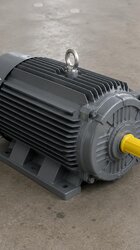
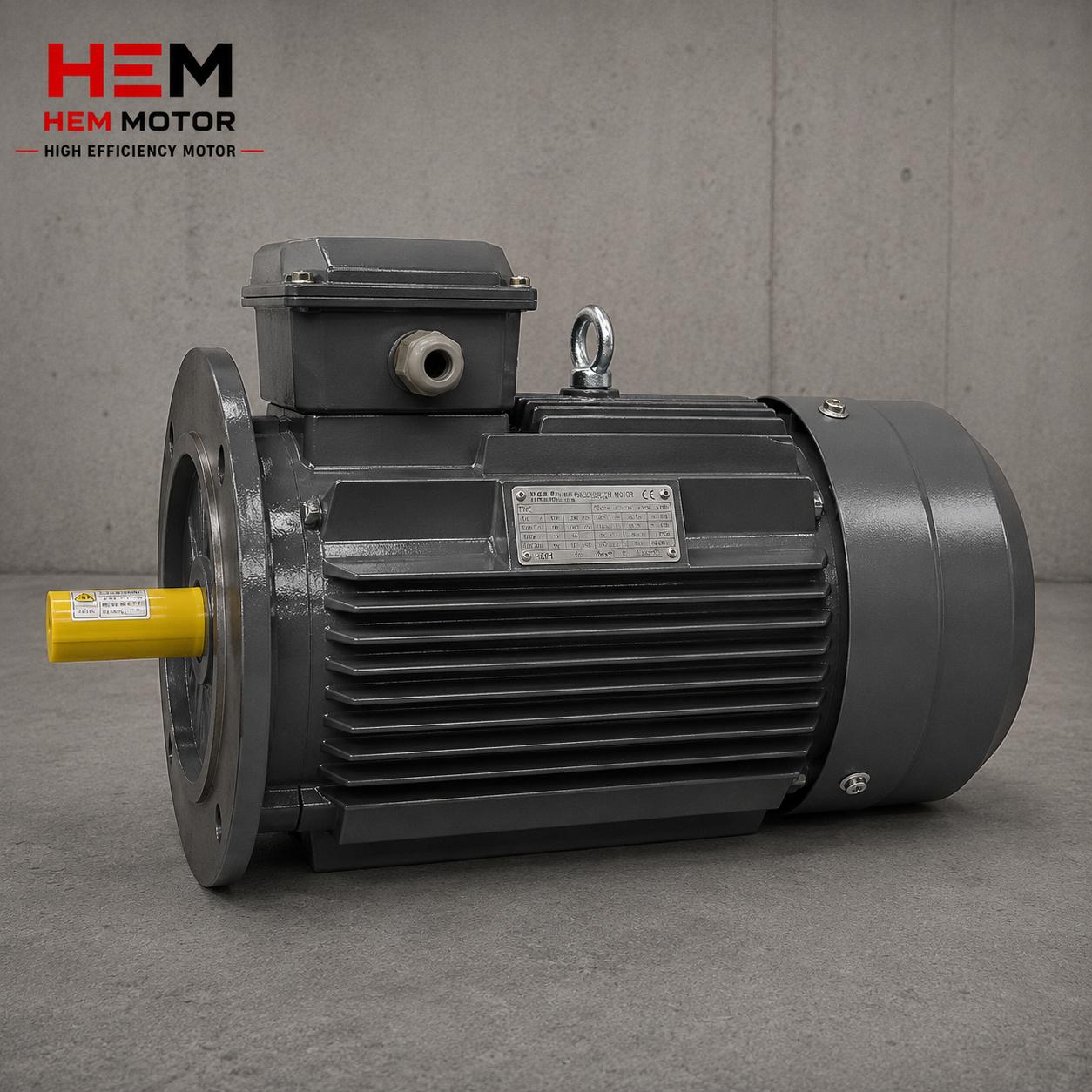

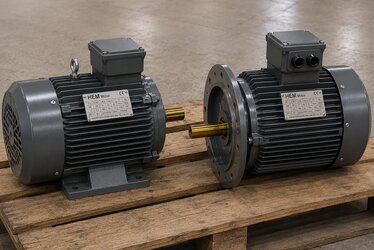
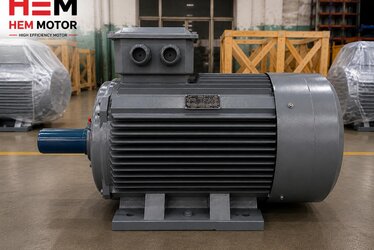
18.5 and 25 kW are in the medium-power range most frequently encountered in industry. These ratings are preferred in many applications such as pumps, fans, compressors and conveyors; therefore fast supply from stock, the correct pole-speed selection and a suitable starting method are very important. In this article we cover the difference between 2 pole (3000 rpm) and 4 pole (1500 rpm) at 18.5 and 25 kW, the typical frame sizes at these ratings (approximately 160/180), pump-fan-compressor-conveyor applications, stock availability and starting options — clarifying the correct power-speed combination.
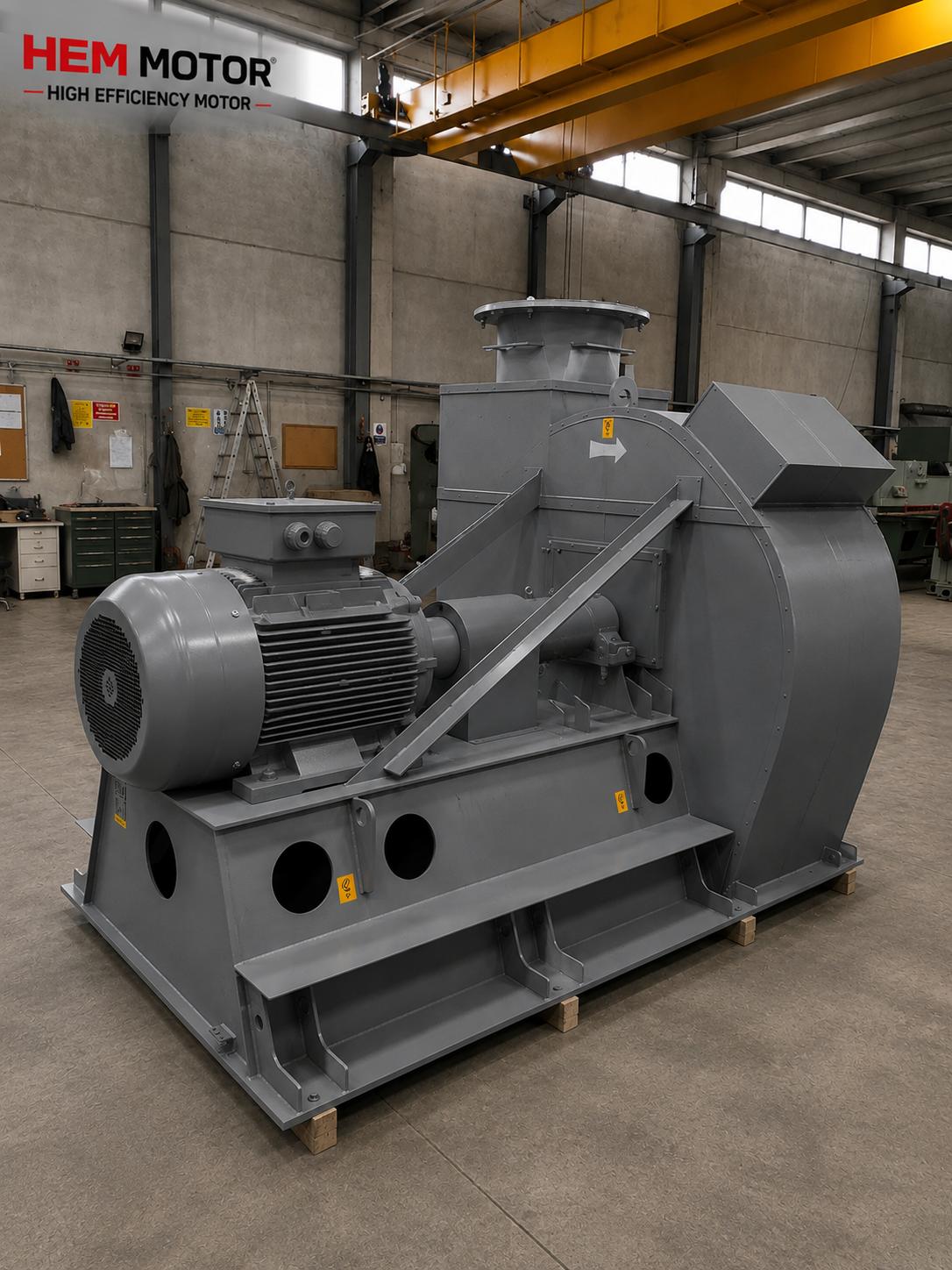
18.5 and 25 kW: Why Do These Ratings Stand Out?
18.5 kW and 25 kW (and the nearby 22 kW) are typical choices for medium-scale machines. Since they fall within the standard power steps, they are often in stock, with widely available spare parts and service. The correct choice at these ratings depends on three questions: how many poles (speed), which mounting type, and the application-appropriate starting method. To understand power correctly in HP-kW, see HP or kW? Understanding Motor Power Correctly, and to calculate motor power by application, see Motor Power Calculation: Required kW for Pump, Fan and Conveyor.
The same logic applies to neighbouring ratings; we covered the 11 and 15 kW selection in 11 and 15 kW Motor Selection, and the 30 and 37 kW selection in 30 and 37 kW Electric Motor Selection.
The Difference Between 2 Pole (3000 rpm) and 4 Pole (1500 rpm)
The number of poles determines the motor speed. On a 50 Hz grid, a 2-pole motor runs at about 3000 rpm (with slip ~2900) and a 4-pole motor at about 1500 rpm (with slip ~1450). We explained the slip and actual-speed relationship in Slip and Actual Speed in an Induction Motor. This difference shapes the choice:
- 2 pole (3000 rpm): High speed, lower torque. Preferred in speed-focused applications such as high-pressure pumps, compressors and high-speed fans.
- 4 pole (1500 rpm): Medium speed, higher torque. The most common choice in conveyors, general fans, mixers and most industrial applications.
Whether to buy 2 pole or 4 pole at the same power is determined by the speed and torque the machine needs. We covered the general logic of pole selection in Induction Motor Buying Guide: 2, 4, 6 Pole, and the pole-efficiency relationship in Efficiency and Pole Count in an Induction Motor.
Typical Frame Sizes: Approximately 160 and 180
18.5 and 25 kW ratings typically correspond to IEC frame sizes 160 to 180 depending on speed and manufacturer (mostly 180 at 4 pole, around 160 at 2 pole). The frame size determines the motor’s foot dimensions, shaft diameter and mounting holes; therefore it is critical in replacement and mounting. We covered frame-power matching in Frame Size and Power Matching in Cast Iron Body Motors, and the IEC frame table in Shaft Diameter and Frame Table (IEC 56-355) on an IE3 Motor.
The mounting type (B3 foot, B5 flange, B35 combined) is chosen according to the machine; we explained reading the mounting code in Reading the Motor IM Mounting Code, and the B5/B14 difference in B5 Flange or B14 Flange?.
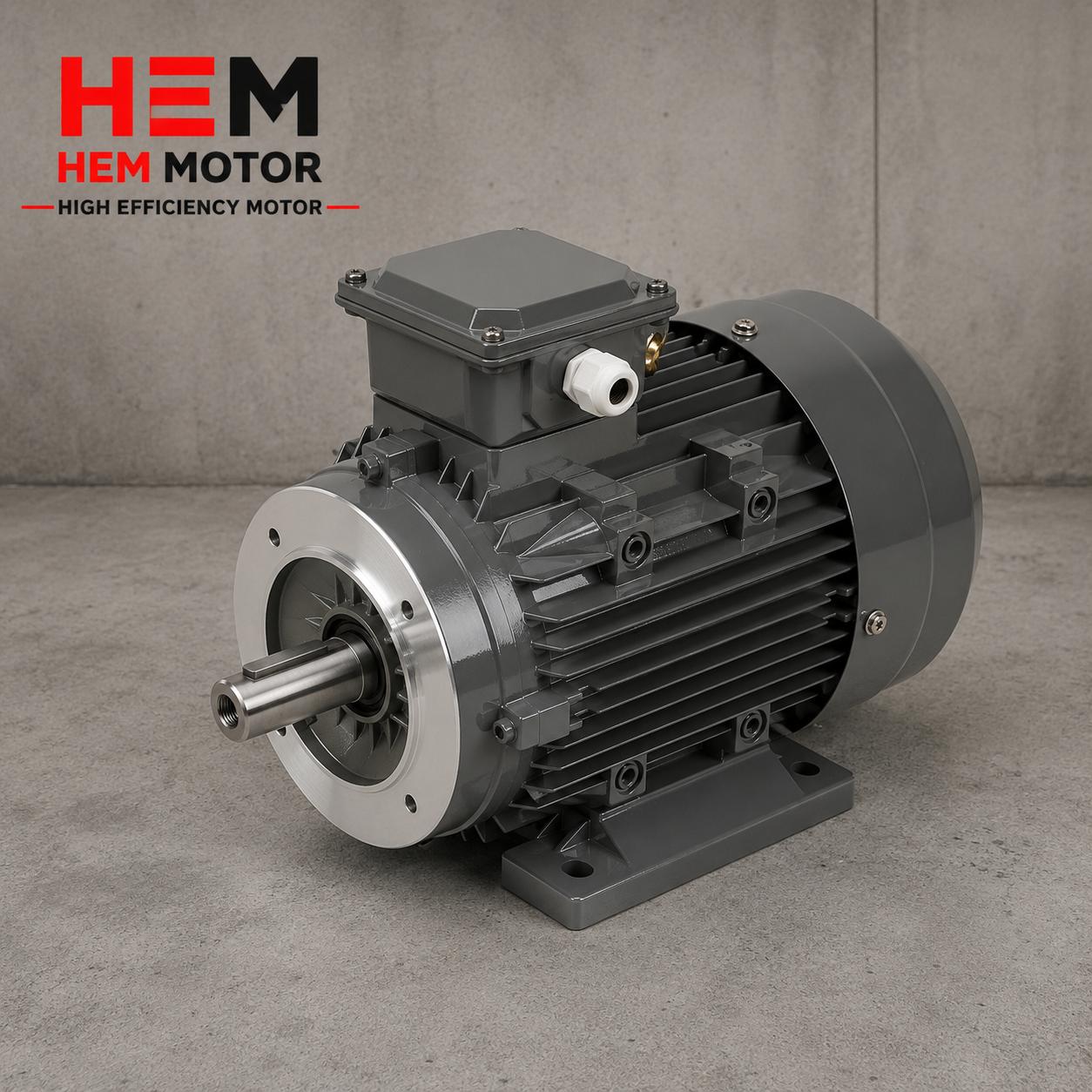
Selection by Application
Pump
In centrifugal pumps, 2 pole (3000 rpm) is mostly preferred; high speed provides high head. We covered flow-head-power matching in pump motor selection in Centrifugal Pump Motor Selection, and the booster application in Booster Motor Replacement.
Fan
In fan motors, the speed varies by fan type and desired flow; 4 pole is common for general ventilation and 2 pole for high-speed compact fans. We covered fan motor selection in Centrifugal and Axial Fan Motor Selection.
Compressor
Screw and piston compressors have a continuous load; the correct speed and duty type are important at these ratings. We covered screw compressor motor selection in Compressed Air and Screw Compressor Motors.
Conveyor
In conveyors, 4 pole (1500 rpm) and geared drive are mostly preferred; high torque and a suitable output speed are needed. We covered the conveyor drive motor in Cast Iron Heavy-Duty Conveyor Drive Motor.
Stock Availability and Fast Supply
Since 18.5 and 25 kW are standard power steps, they are in the range that can be supplied quickly from stock. In the event of an urgent failure or replacement, finding these ratings from stock is usually possible. We covered critical spare-motor planning in Critical Spare Motor List, and stock dispatch and fast delivery in Stock Dispatch and Fast Delivery in Electric Motors. We explained whether stock delivery or a production order is needed in Stock Delivery or Production Order?.
Starting Options
At 18.5 and 25 kW, the inrush current in direct-on-line (DOL) starting can stress the grid and the machine; therefore the starting method becomes important:
- Direct-on-line (DOL): The simplest method if the grid and machine can handle it.
- Star-delta: The classic solution to reduce inrush current. We covered the star-delta versus softstarter comparison in Starting AC Induction Motors.
- Soft starter: Softens the start, reducing mechanical stress.
- Variable frequency drive (VFD): Both soft start and speed control; also provides energy savings on pumps/fans. We covered VFD selection in VFD with an Induction Motor.
We covered why inrush current is high and how it is reduced in Starting (Inrush) Current in an Induction Motor, and the starting problem on generator-fed sites in Motor Selection on Generator-Powered Sites.
Efficiency Class: Which Class at 18.5 and 25 kW?
18.5 and 25 kW are in the medium-power range where the efficiency class becomes important from a regulatory standpoint. At these ratings, a minimum efficiency class may be defined for motors running directly on the grid; moreover, in continuously running applications, switching to IE4 or IE5 can provide serious energy savings. When choosing:
- Continuous and high-runtime operation: If there is high-runtime operation on a pump, fan or compressor, a higher efficiency class can pay back quickly.
- Low-runtime or spare use: Where not mandatory, IE3 can be sufficient.
- Regulatory threshold: If a minimum class is mandatory, that is the starting point of the decision.
We covered the IE3-to-IE4 transition decision in Switch to IE4 or Stay on IE3?, and the efficiency-class requirement in IE3 and IE4 Efficiency Mandate.
Rated Current, Cable and Protection Selection
For 18.5 and 25 kW motors, the electrical installation must be sized correctly as much as the correct power and speed. The cable cross-section, fuse and contactor are selected according to the rated current; otherwise overheating and protection problems occur:
- Cable cross-section: Must be selected according to rated current and distance, keeping the voltage drop within limits.
- Fuse and thermal: Must be set to withstand the inrush current but protect under overload.
- Contactor: Must be selected to suit the motor power and starting type.
We covered cable, fuse and contactor selection by rated current in Rated Current on an IE3 Motor: Cable, Fuse and Contactor, and motor protection circuit breaker (MPCB) setting in Motor Protection Circuit Breaker (MPCB) Selection and Setting. Protection against faults such as single-phasing must also not be neglected.
Duty Type (S1) and Frequent Start-Stop
At these ratings, the application’s duty type affects the choice. Most pump, fan and compressor applications require continuous operation (S1); in this case the motor is selected to run for a long time at a constant load. However, if there is frequent start-stop in a conveyor or machine drive:
- The number of starts per hour must not exceed the motor’s thermal limit.
- With high-inertia loads the start time lengthens, which increases heating.
- If needed, a higher duty class or forced cooling is considered.
We covered duty-type selection in Electric Motor Duty Type (S1-S6) Selection, and the starts-per-hour limit in Starts Per Hour Limit in an Induction Motor.
Replacement: Swapping an Old 18.5 / 25 kW Motor
When replacing a failed 18.5 or 25 kW motor, the fastest and safest route is to match the old motor’s nameplate and dimensions exactly. Items to check: power, speed (poles), mounting type, frame size, shaft diameter and voltage. With this information it is usually possible to find a suitable replacement motor from stock. To avoid receiving the wrong motor, we explained nameplate matching in Avoid Receiving the Wrong Motor, and replacing an old-brand motor with an equivalent in Direct Replacement of an Old-Brand Motor. We covered the importance of stock availability in an urgent replacement in Critical Spare Motor List.
Frequently Asked Questions
Should I buy 2 pole or 4 pole for 18.5 and 25 kW?
Decide according to the speed your machine needs. 2 pole (3000 rpm) is common for high-pressure pumps, compressors and high-speed fans; 4 pole (1500 rpm) is common for conveyors, general fans, mixers and most industrial applications. The wrong speed leads to either insufficient performance or unnecessary energy consumption.
What frame size do these ratings correspond to?
Although it varies by speed and manufacturer, 18.5 and 25 kW are typically in the IEC 160 to 180 frame range; mostly 180 at 4 pole and around 160 at 2 pole. When replacing, always check the old motor’s frame size, foot dimensions and shaft diameter.
Are these ratings quickly available from stock?
Yes. Since 18.5 and 25 kW are standard power steps, they can be supplied quickly from stock, especially in common speeds and mounting types. For an urgent replacement, it is best to confirm stock availability before ordering.
Get a Quote for the Right 18.5 / 25 kW Motor
Contact us to choose your 18.5 or 25 kW motor correctly by pole, speed, mounting type and starting method. Share your application, your old motor’s nameplate and frame size, and we will recommend the most suitable motor from stock and a starting solution. HEM Motor is at your side with stock and fast delivery in the medium-power range.
Phone: +90 (532) 345 49 86 — reach us via our Get a Quote page; review power-speed options in our Power and Speed Options category and all products on our home page.
Checklist: Buying an 18.5 / 25 kW Motor
- What rpm does your machine require (2 pole 3000 or 4 pole 1500)?
- Is the application a pump, fan, compressor or conveyor?
- Are the frame size (160/180), foot dimensions and shaft diameter compatible with the old motor?
- Has the mounting type (B3/B5/B35) been chosen correctly?
- Is the starting DOL, star-delta, soft starter or VFD?
- Can the grid/generator handle the inrush current?
- Has stock availability been confirmed before ordering?
- Is the duty type (continuous S1) suitable for the application?