English
 Türkçe


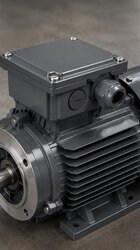
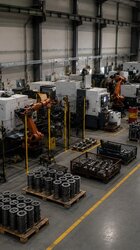

Ceramic, porcelain and glaze-tile production relies on dozens of electric motors operating under high torque, heavy load and a dusty-abrasive environment, from raw material grinding to forming, from glazing to firing. From the high starting torque of a ball mill to the continuous operation of a glaze circulation pump, from the impact load of a hydraulic press pump to the hot environment of a furnace fan, every machine demands a different motor profile. This article maps the motor requirements of a ceramic and porcelain line, correct power-speed-protection class selection, IP65 protection logic in dusty environments and why a cast iron frame is preferred.
Motor Map in a Ceramic Line: From Raw Material to Furnace
In a ceramic factory motors concentrate in four stages: raw material grinding and preparation (ball/jet mill, agitator), forming (hydraulic press, extruder), glazing (glaze pump, circulation, cabin fan) and firing-drying (furnace fan, dryer fan, conveyor). Each stage has a very different load profile; for correct supply each machine must be assessed separately.
Ball and Jet Mill: High Starting Torque
Raw materials (clay, quartz, feldspar) are ground in a ball mill. Because the ball mill must rotate the mass of balls and raw material from a standstill, it demands very high starting torque. The correct starting method (star-delta or soft starter) and sufficient starting torque are critical. The power range varies from 15 kW to 200 kW by plant. The principles in our article on mine and ore mill high torque supply apply directly. For the starting method see our star-delta and soft starter guide.
Glaze Circulation and Feed Pumps
Because glaze is a suspension, it must be circulated continuously to prevent settling. Glaze circulation and feed pumps run continuously (S1) and carry abrasive fluid, so sealing is important. Power ratings of 0.55 kW to 15 kW are common, and flange (B5/B14) mounting is preferred. Our article on centrifugal pump motor selection: flow and head explains correct power matching. The principles of circulation pump motor selection also apply in abrasive and humid environments.
Hydraulic Press Pump: Impact Load
Ceramic tiles and roof tiles are formed in hydraulic presses. Because the press creates high pressure on each cycle, the pump motor operates under intermittent load. Sufficient power margin and balanced heat management are required. The logic of motor selection by load profile applies here. For motor selection under an impact load profile, our article on motor selection under impact load guides you.
Dusty and Abrasive Environment: Why IP65 and Cast Iron?
A ceramic factory is one of the dustiest environments in the industry. Fine raw material dust, glaze particles and an abrasive environment can enter the motor and shorten bearing and winding life. Therefore the protection class and frame material selection are critical.
IP55 or IP65?
While IP55 is sufficient for a standard industrial environment, IP65 should be preferred in grinding, glazing and pressing areas where fine and abrasive dust is dense. IP65 provides complete protection against dust and resists water jets, which is an advantage on washed lines. Our article on dust sealing and IP65/IP66 protection details the dusty environment strategy.
The Advantage of a Cast Iron Frame
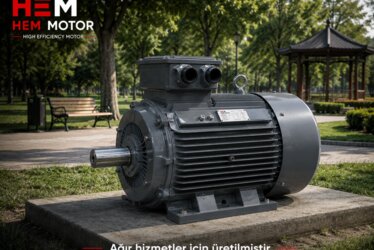
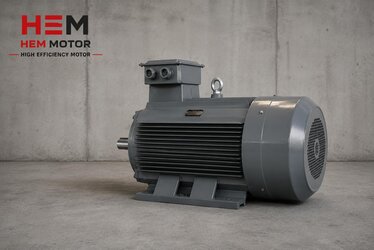
A cast iron frame provides high mechanical strength, good heat dissipation and long life in an abrasive and vibrating environment. An aluminum frame may be inadequate in heavy mill and press applications. In the cast iron vs aluminum frame decision, the ceramic environment clearly points to cast iron. Knowing the relationship between bearing life, shock and dust in dusty and abrasive environments is important for a correct maintenance plan.
Furnace and Drying Fans: Hot Environment
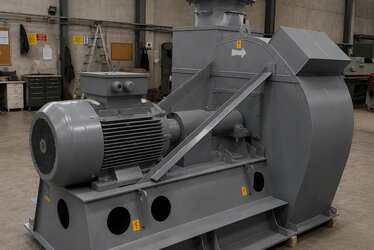
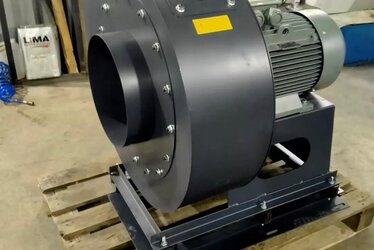
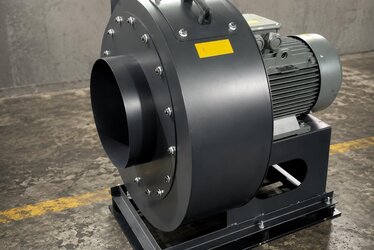
Ceramic kilns (roller hearth, tunnel kiln) and dryers operate at high temperature. The combustion air fan, stack fan and drying circulation fan work in a hot environment. In these motors Class F insulation is standard and Class H is preferred at hot points. Our articles on glass and ceramics factory furnace fan supply and insulation class F and H clarify this selection. For aspiration and dust collection see our aspirator and dust collection fan motor selection guide.
Power, Speed and Efficiency Class
In a ceramic line the power range extends from 0.55 kW small agitators to 200 kW large mill motors. Pumps commonly use 1500/3000 rpm, mills and conveyors 1000/1500 rpm. In continuously running plants the efficiency class directly affects energy cost.
IE3 and IE4 Efficiency
Per regulation, IE3 is mandatory for 0.75-1000 kW and IE4 for 75-200 kW. In mill and fan motors running under continuous load, high efficiency pays back quickly. Make the right decision with our articles on IE3 vs IE4 investment and TCO calculation. For regulatory detail see our IE3-IE4 efficiency mandate article.
Correct Sizing and Pole Selection
Correctly sizing mill and pump motors is essential for both efficiency and reliability. Our articles on motor load ratio and correct sizing and 2/4/6-pole selection guide you. For variable speed on forming and glazing lines, the VFD with asynchronous motor solution is used.
Mounting, Mechanical Fit and Reducer
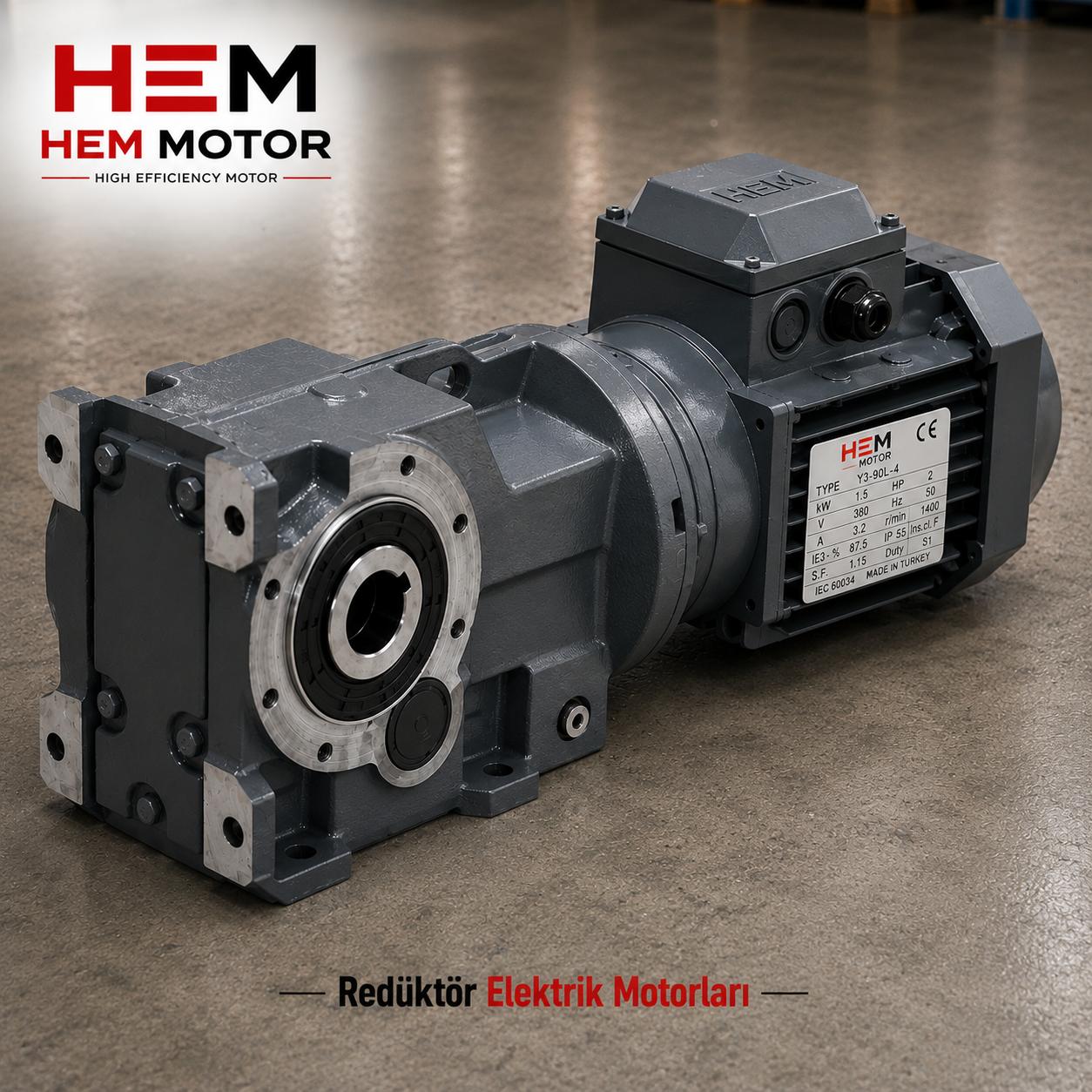
Mills and conveyors are usually driven by a reducer. For low speed and high torque, a bevel helical reducer or a worm gear reducer + motor matching is preferred. When replacing an old motor, the mounting type selection and shaft diameter-key dimensions must match exactly. For the product range see our high efficiency electric motors and worm gear reducers pages.
Stock and Emergency Replacement
A ball mill or press motor failure can halt production for days. Spares of critical motors must be kept in stock. Our articles on the critical spare motor list and emergency replacement help with planning. For three-shift plants see our motor fleet management guide.
Forming, Extruder and Glazing Cabin Fans
Besides the ceramic tile press, extruder and casting lines in porcelain and technical ceramics are also motor-driven. The extruder pushes plastic-consistency dough with high torque, so reducer-driven low speed-high torque and sufficient power margin are required. In glazing cabins, aspirator fans that draw off excess glaze dust run continuously (S1) and are exposed to abrasive particles; IP65 protection and a balanced, low-vibration motor are important on these fans. Our article on variable speed motor selection: constant/variable torque helps you distinguish extruder and fan load types. For precise speed on glazing and printing lines, the VFD with asynchronous motor solution is used.
Starting Method and Inrush Current
Because the ball mill rotates the entire load with high inertia, inrush current management is critical. Direct-on-line starting is only suitable at small powers; on large mill motors, star-delta or a soft starter protects both the grid and the mechanical drivetrain. In applications with high flywheel and inertia effects, our article on flywheel, inertia and drive guides you. In generator-fed plants, generator kVA - motor kW matching must account for the inrush current.
Energy Efficiency and TCO
A ceramic factory is a high energy-consuming plant with its mill, press and fan motors. In these continuously loaded motors, high efficiency significantly lowers the annual energy bill. On pumps and fans, flow adjustment with a variable frequency drive eliminates throttling losses. Our articles on high efficiency motor + VFD savings and nameplate vs field efficiency explain how to calculate real savings. You can set improvement priorities across the plant with an energy efficiency audit and motor inventory.
Maintenance, Temperature Monitoring and Bearings
In a dusty and abrasive environment, the bearing is the fastest-wearing part. Motor life is extended with dust sealing (IP65), a suitable lubrication interval and temperature monitoring (PT100/thermistor) where needed. On large mill and press motors, monitoring winding temperature prevents unexpected stoppages. Our articles on motor protection devices and periodic maintenance schedule explain the protection equipment to request at order time and the maintenance plan.
Frequently Asked Questions
Why does a ball mill motor need high starting torque?
A ball mill must rotate the heavy mass of balls and raw material from a standstill. This large inertia creates a very high torque demand at the moment of starting. If the motor has insufficient starting torque it cannot get up to speed or overheats. Therefore motors with heavy-duty bearings and sufficient starting torque are selected, and the starting method (star-delta or soft starter) is chosen to manage the starting current.
Should I buy an IP55 or IP65 motor for a ceramic factory?
IP55 is sufficient in general areas with low dust density. However, in grinding, pressing and glazing areas where fine and abrasive dust is dense, IP65 should be preferred. IP65 provides complete protection against dust and resists low-pressure water jets, which extends motor life on lines cleaned by washing. The decision is made according to the dust and humidity density of the area where the motor is located.
What should I watch for in a glaze pump motor?
Glaze is a suspension containing abrasive particles and is circulated continuously to prevent settling. Therefore the glaze pump motor operates in continuous (S1) duty; it should be selected as low-vibration, balanced and with sufficient power margin. Flange (B5/B14) mounting is suitable for direct coupling to the pump. Due to the humid and splashing environment, at least IP55, preferably IP65 protection is recommended.
Get a Quote
We supply electric motors in the correct power, speed, protection and insulation class for the ball/jet mill, glaze circulation pumps, hydraulic press pumps, furnace and drying fans of your ceramic, porcelain and glaze-tile line, from stock and with fast delivery. For IP65-protected, cast iron framed, IE3/IE4 efficient motors suited to dusty-abrasive environments and compatible reducer solutions, contact us: +90 (532) 345 49 86. For a fast quote reach us via our contact page.
Purchasing and Selection Checklist
- Machine and duty: Ball mill, agitator, press pump, glaze pump, furnace/drying fan listed separately.
- Power and speed: kW and rpm; high starting torque for mills, flow-head for pumps, fan curve for fans.
- Protection class: IP65 in dusty/abrasive areas, IP55 in general areas.
- Frame material: Cast iron in heavy/abrasive applications.
- Insulation: Class F in furnace fans, Class H at hot points.
- Efficiency class: IE3/IE4 per regulation; TCO advantage under continuous load.
- Starting: Star-delta or soft starter on the mill motor.
- Reducer: Worm gear or bevel helical on low-speed drives.
- Spare/stock: Stock plan for critical mill and press motors.