English
 Türkçe


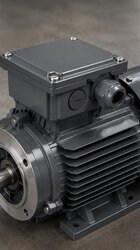

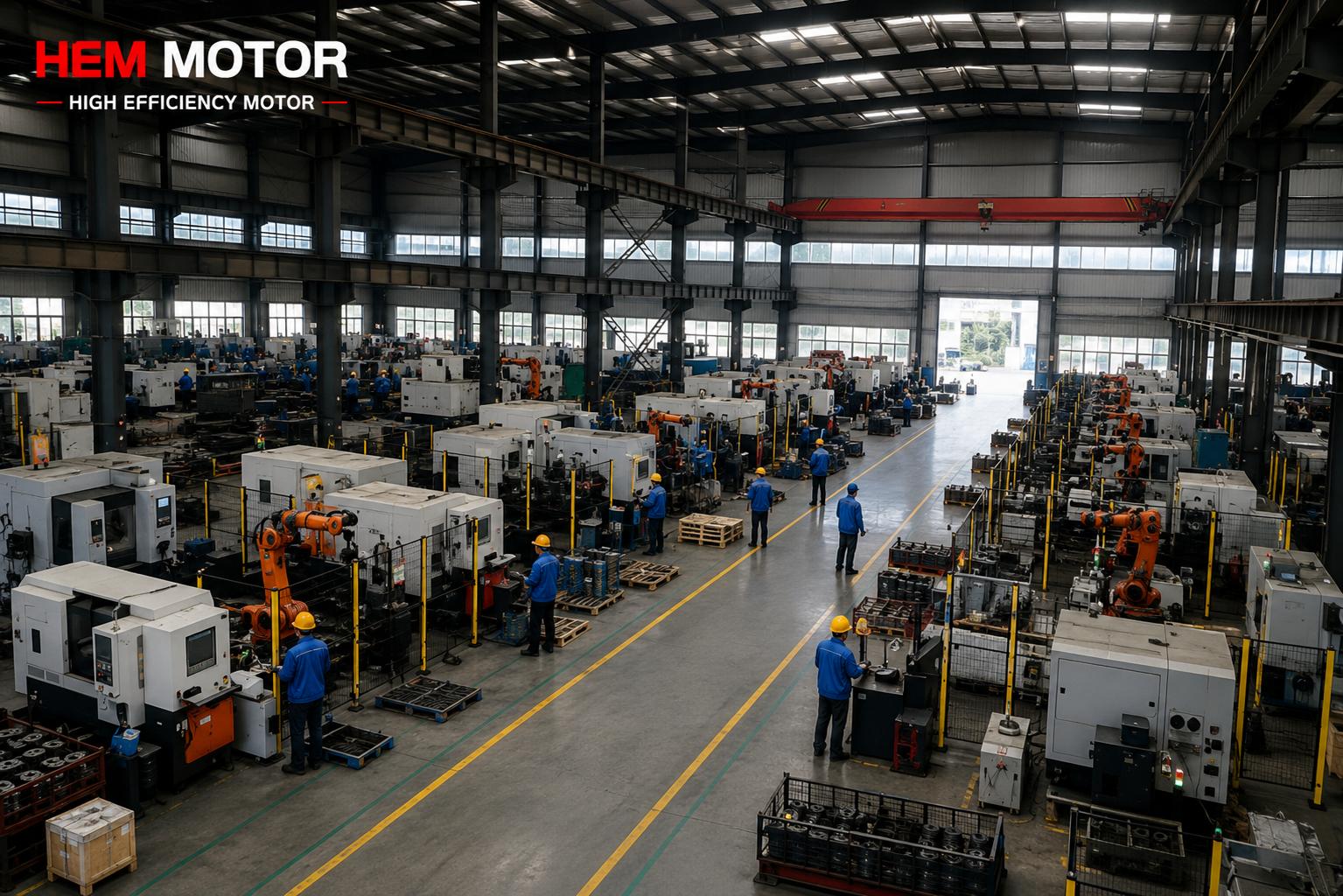

Tomato paste, cannery and juice plants are among the busiest food operations during the summer harvest. From washing tomatoes and passing them through the pulper-finisher, to evaporating water under vacuum in the evaporator, from a cannery filling line filling hundreds of cans per minute to juice pasteurization pumps, every stage turns with an electric motor. In this hot, humid and continuously washed environment, a wrong motor choice leads both to a hygiene risk and to downtime during harvest. In this article we cover motor selection for tomato paste, cannery and juice plants step by step: pulper/finisher drive, evaporator vacuum pump, filling line motors, stainless environment, washability and IP65 protection. As HEM Motor, we keep stock motors ready before the harvest season.
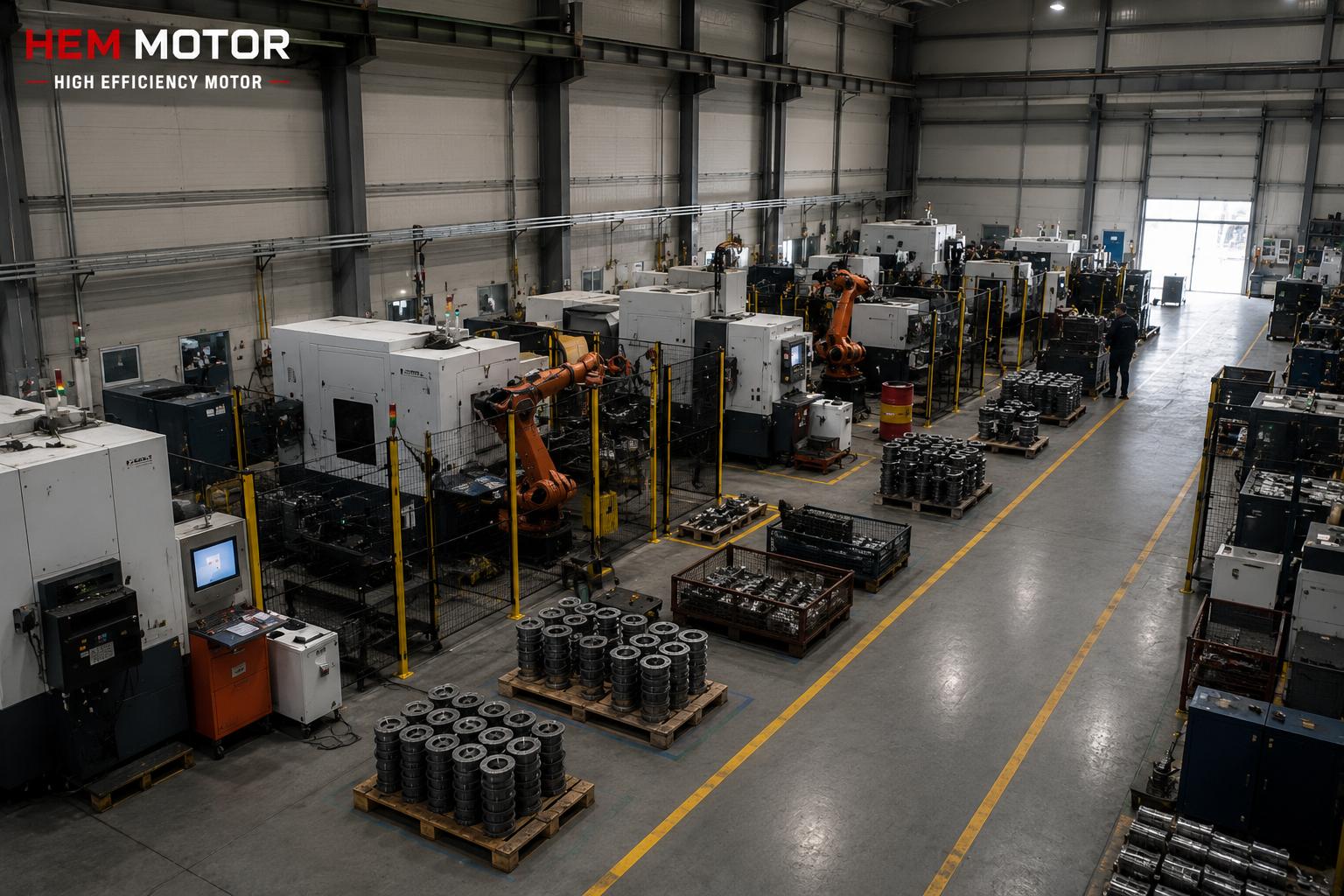
Motorized Equipment on the Paste and Juice Line
The motor-driven equipment in a typical plant includes: washing and conveying conveyors, pulper (mashing) and finisher (sieving) units, feed and transfer pumps, evaporator vacuum and circulation pumps, pasteurizer pumps, filling and capping line motors, and extraction and steam fans. Since each equipment has a different load and hygiene profile, motor selection is done per machine. For similar food lines, our bakery, bread and flour factory motors and dairy, meat and beverage hygienic motors articles are complementary.
Pulper and Finisher Motor
The pulper crushes tomatoes to separate skin and seeds from the flesh; the finisher refines the mash. These units need continuous, balanced torque and usually run with 4-pole (1500 rpm) motors at 4 kW to 22 kW. Even though the product-contact zone is stainless steel, the drive motor sits outside in a washed environment, so IP55/IP65 protection and a corrosion-resistant body matter. On lines needing speed control, using a VFD with an asynchronous motor provides efficiency and process control.
Evaporator Vacuum and Circulation Pump Motor
Paste concentration is achieved by evaporating water at low temperature under vacuum in the evaporator. Vacuum pumps and circulation pumps run continuously and need motors with high sealing. Our vacuum pump and blower motors for continuous duty article is directly relevant here. Pump power is set by flow and head; our centrifugal pump motor selection article guides the calculation. In these continuously running pumps, IE4 high-efficiency motors visibly reduce the energy bill.
Filling, Capping and Conveyor Motors
Cannery and juice filling lines contain many small-power motors (0.18 kW to 4 kW). Conveyor and filling drives mostly use geared solutions; a worm gear reducer provides low, precise output speed. For conveyor drives, the conveyor belt electric motors range is suitable. For IEC compatibility in the reducer-motor match, see matching a motor to a worm gear reducer.
Hot, Humid Environment and Washability
Paste and juice production is an aggressive environment with steam, hot water and sugary/acidic liquids. The line is washed daily with foam and pressure water. Therefore motors near the product contact should be IP65, and at least IP55 in the general environment. For IP differences, our IP protection class selection article is clear. As a body, in hot and humid environments the criteria in our insulation class and cast iron in hot environments article apply; insulation F, and H class under continuous hot load, is preferred. At points exposed to pressure washing, motors with stainless covers or cataphoresis protection ensure long life.
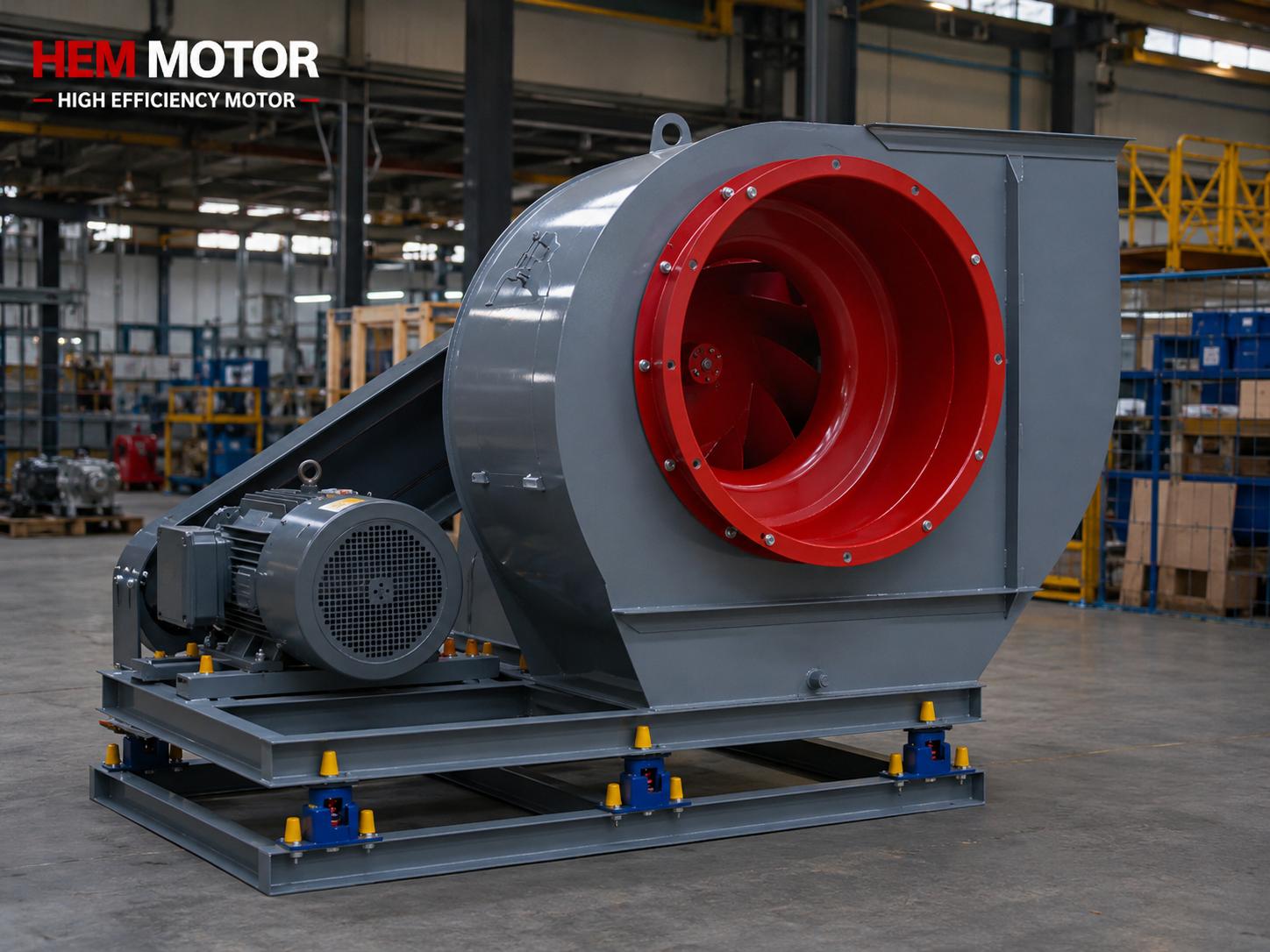
Duty Type S1 and Seasonal Intensity
The paste season is very intense between July and September; the plant runs 24/7. Selecting motors for S1 continuous duty prevents overheating and winding burnout. We explained duty types in S1-S6 duty types. Supporting motor protection with thermal relays and fuses under continuous load is important; our motor protection: thermal, relay and fuse article is a guide.
Speed, Pole and Power Table
- 2-pole / 3000 rpm: Vacuum pumps, high-speed transfer pumps, some fans.
- 4-pole / 1500 rpm: Pulper, finisher, feed pumps, general drive (most common).
- 6-pole and geared: Filling, capping, conveyors, slow mixers.
For pole-speed hesitation see 2, 4, 6 pole selection and for the IE4 threshold in pumps/fans, IE4 2-pole 3000 rpm pump-fan power selection.
Extraction, Steam Fans and Pasteurization
The plant has fans for steam exhaust, odor and extraction. industrial fan motors and ventilation electric motors are suitable for these applications. For power selection by fan type, see centrifugal and axial fan motor selection. In pasteurizer circulation pumps, continuous operation and efficiency are priorities.
Purchasing and Selection Checklist
- Are kW, speed (pole) and, if needed, reduction ratio defined for each equipment?
- Is IP65 selected near product contact and IP55 in the general environment?
- Are insulation F/H, corrosion protection and a washable body requested?
- Is S1 continuous duty confirmed?
- Are the reducer type and output speed clarified for filling/conveyors?
- Is the efficiency class (IE4) evaluated on vacuum and circulation pumps?
- Are thermal protection and temperature monitoring planned?
- Are stock and lead time confirmed before the harvest season?
Mounting Type, Shaft and Mechanical Compatibility
On the paste and juice line, pumps usually run directly coupled with B5 or B35 flange motors; conveyor and mixer drives prefer a B3 foot or a flanged connection to the reducer. If the mounting type does not fit the machine, installation is delayed. For flange types, see our B5 flange electric motors page. Shaft diameter, key and coupling/pulley compatibility should also be clarified at order time; especially when renewing an existing pump, a one-to-one match with the old motor nameplate should be made. For the full product range, review our efficient electric motors category.
Emergency Substitution and Nameplate Matching
If a pulper or vacuum pump motor fails during harvest, the line can stop for hours; this means the unprocessed product spoils. Therefore it is necessary to keep spare motors in critical powers and to record the nameplate data (kW, speed, frame, mounting type) in advance. Correct nameplate matching prevents the wrong motor from being delivered and speeds up the replacement. As HEM Motor, we keep the most requested powers in stock and quickly supply a one-to-one substitute motor from the nameplate.
Energy Efficiency and Regulation
Evaporator vacuum pumps, circulation and transfer pumps run almost without interruption throughout the season, making up a significant part of annual energy consumption. IE3/IE4 efficiency-class motors visibly reduce the electricity bill on these continuously running equipment and pay back the investment quickly. In addition, since the efficiency regulations in force require a minimum efficiency class in certain power ranges, newly purchased motors must meet this requirement. Choosing IE4 on continuously running pumps provides both regulatory compliance and low operating cost.
Bearings, Sealing and Continuous Operation
Since vacuum and circulation pumps run almost without interruption throughout the season, bearing life and oil seal tightness determine the reliability of the motor. In a hot, humid environment a weak bearing soon produces vibration and heating; motors with heavy-duty bearings should be preferred. On pumps exposed to pressure washing, oil seal and terminal box tightness prevent liquid from entering the motor. Checking bearings and sealing before the season prevents unexpected downtime during harvest.
Terminal Box, Cable, Grounding and Commissioning
In a humid, steamy paste plant, terminal box tightness is achieved with a suitable cable gland and gasket; otherwise water ingress causes a short circuit. Grounding is essential for operator safety and motor protection. In three-phase pumps, the correct phase sequence determines the rotation direction; wrong rotation causes efficiency loss and damage in the pump. During commissioning, insulation resistance (megger) should be measured, and motors that have waited a long time should be dried out. At first start, direction, current and temperature should be checked.
Correct Sizing and Load Ratio
On the paste and juice line, calculating the real power need of each equipment and selecting the right motor is critically important. An oversized motor lowers efficiency at low load ratio and increases initial investment; a too-small motor means continuous overload and early failure. The ideal load ratio is the 75-90% band of the rated power. On continuously running vacuum and circulation pumps, correct sizing significantly reduces operating cost and failure risk throughout the season.
Supply Process, Lead Time and Harvest Planning
Since production in paste, cannery and juice plants is compressed into the harvest season, motor supply must be planned in advance. Before the season starts, the spare motor needs of critical equipment (pulper, evaporator pumps, filling line, main transfer pumps) should be identified and stock confirmed. A motor failure mid-season causes unprocessed product to spoil and serious loss. Delivery from manufacturer stock is much faster than a production order. For an accurate and fast quote, the equipment list, existing motor nameplate data and delivery address should be shared. The motor should be protected during shipping, damage checked on delivery, and insulation measured before commissioning.
Conveyor, Screening and Auxiliary Equipment Motors
Beyond the main process, the plant has many auxiliary motors: washing and conveying conveyors, vibration motors of screening units, labeling and packaging line drives, wastewater pumps. Although these motors are small in power, they are critical for line continuity; when one stops, the whole line is affected. For conveyors and handling, the conveyor belt electric motors range provides low, controlled output speed with geared solutions. On auxiliary equipment too, S1 duty type and suitable IP protection should be observed.
Frequently Asked Questions
Is an IP65 motor a must in a paste plant?
IP65 is recommended near product contact and around filling, pulper and evaporator zones washed with pressure water and foam. IP55 is enough in the general environment. The decision depends on washing frequency and splash risk.
Which motor suits the evaporator vacuum pump?
A continuously running motor with high sealing and S1 duty is needed. Power is set by flow and vacuum level. Since it runs continuously, the IE4 efficiency class pays back the investment quickly. See our vacuum pump motors article.
Why are geared motors used on the filling line?
Filling and conveyors require precise, low output speed. A standard motor cannot deliver such low speed; a worm gear reducer drops a 1400 rpm motor to the desired slow speed. This provides filling precision and line synchronization.
Pre-Season Supply with HEM Motor
In paste and cannery regions, pre-season stock is critically important. We provide fast shipping to Bursa and Marmara and Izmir and the Aegean. For stock planning during the agriculture/food season, our pre-season stock planning article and, for a quote, our information to provide when requesting a quote article guide you.
Get a Quote
Share your plant machine list, the nameplate data of your existing motors (kW, speed, frame, mounting type) and your delivery address; we will supply the most suitable motor from manufacturer stock with fast delivery. For an up-to-date, clear quote instead of a fixed price, contact us at +90 (532) 345 49 86 or through our contact page. As HEM Motor, with our identity as both manufacturer and seller, we ship the right motor in the shortest time.